




Vintage Chrome Bedside Lamp
A vintage chrome bedside lamp brings industrial shine and geometric forms to a bedroom, offering focused light through metal and glass.
Vintage Chrome Bedside Lamp
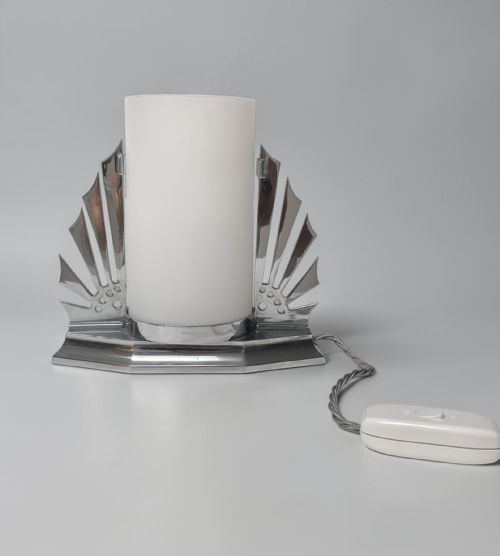
When you search for a vintage chrome bedside lamp, you encounter table lamps produced predominantly in the 1920s, 1930s, and 1940s. The most common examples belong to the Art Deco style, featuring clean lines, polished metallic finishes, and geometric configurations.
These table lamps often incorporate materials such as frosted glass, opal glass, crystal glass, and bakelite alongside chrome and silver plate. Forms range from simple twist columns and zig zag lightening flash designs to figural subjects including athletes holding balls.
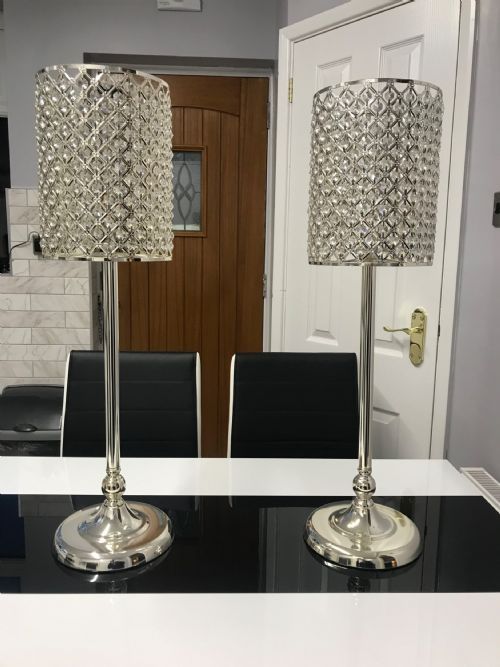
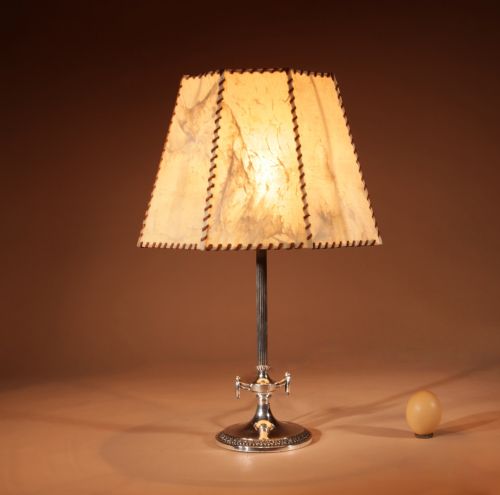
You will also find pairs of lamps suitable for placement on bedside tables, sometimes paired with parchment leather or double shades. The origins span the early to mid-twentieth century, capturing the sleek modernist aesthetic of the period.
How they were made
Makers utilised electroplating techniques to apply chrome and silver plate over base metals like white metal, creating a durable and reflective finish. Structural components were often cast or machined into distinct geometric profiles typical of the Art Deco period.
Shades and decorative elements were formed from moulded glass, including opal, frosted, and crystal varieties, or constructed from early plastics such as bakelite and catalin phenolic. These materials were assembled with metal fittings to support electrical wiring for domestic use.
One exceptional design captures an athlete firmly holding a ball beneath the lamp holder, proving that utility and gymnastics occasionally met in the 1940s.
What varies in quality
The distinction between ordinary and superior examples lies in the integrity of the metallic plating and the complexity of the design. Simpler utilitarian table lamps contrast with sculptural figural pieces or matched pairs that demand greater artistry in manufacture.
The choice of secondary materials also alters the character of a piece, with high-grade crystal glass, catalin bakelite, and parchment leather elevating the overall execution compared to standard glass and plain metal.
The Vintage Chrome Bedside Lamp Glossary
- Chrome
- An electroplated chromium coating applied to base metals to provide a bright, corrosion-resistant surface. This finish defines the reflective sheen seen on twentieth-century modernist lighting.
- Bakelite
- An early form of synthetic plastic cured under heat and pressure. It appears frequently on switches, bases, and decorative accents in early lighting.
- Opal glass
- A translucent, milky-white glass used to diffuse light evenly. It softens the glare from the bulb while maintaining a bright illumination.
- Art Deco
- A design style characterised by sleek geometric shapes, stylised figures, and machine-age materials. It dominated decorative arts through the 1920s and 1930s.
- Catalin
- A cast phenolic resin known for its rich depth of colour and translucency. It served as a premium alternative to standard bakelite in decorative objects.
Vintage Chrome Bedside Lamp: Frequently Asked Questions
How do I style a vintage chrome bedside lamp?
Place the lamp on a wooden or mirrored bedside table to contrast the metallic finish against warmer textures. The compact table lamp format provides adequate reading light without dominating the surface area.
Pair it with complementary twentieth-century accessories or let it stand alone as a distinct focal point in the bedroom.
Were these lamps originally intended for bedside use?
Many of these pieces were manufactured as general table lamps for desks, living rooms, or bedrooms. Their modest scale and directional lighting make them suitable for bedside placement today.
Makers designed them to sit comfortably on smaller furniture surfaces while providing adequate illumination.
How do I identify an Art Deco lamp?
Look for characteristic geometric motifs, stepped bases, zig zag patterns, and stylised figural elements such as athletes. The combination of chrome plating with glass, bakelite, or parchment leather points directly to this era.
Construction methods and materials from the 1920s through the 1940s reinforce the stylistic attribution.
Can I use modern light bulbs in these lamps?
Most vintage lamps accommodate standard modern bulbs, provided the internal wiring and bulb holder meet current safety standards. It is advisable to consult a professional electrician to check the internal components before regular use.
LED bulbs that emit low heat are often suitable for preserving older shade materials and internal fittings.