



Art Deco Frosted Globe Lamp
An art deco frosted globe lamp brings sculptural form and diffused illumination together, offering a striking silhouette for interior spaces.
Art Deco Frosted Globe Lamp
An art deco frosted globe lamp combines spherical glass elements with figurative bases, ceiling mounts, or night light fixtures from the 1920 and 1930 periods. These pieces originate predominantly from England and France, capturing the signature aesthetic of the era.
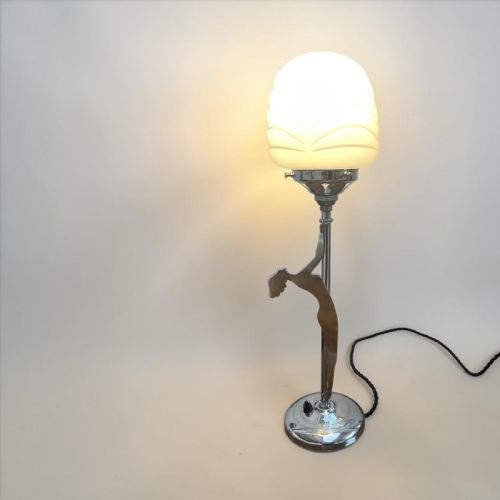
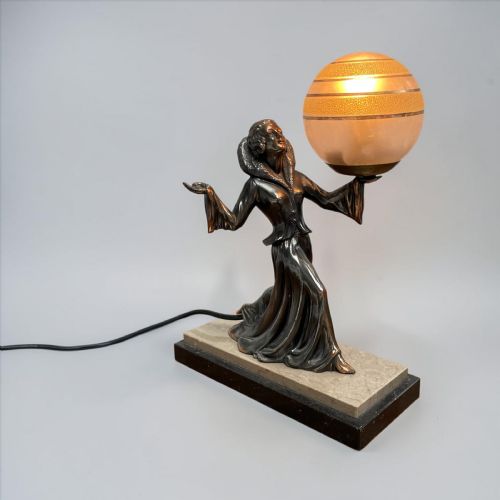
The versions most commonly met on this page include table lamps featuring female figures, nudes, greyhounds, or seagulls paired with marble, bronze, spelter, and chrome elements. Ceiling lights and mood lamps also appear frequently, utilising etched crystal, opaline, and frosted glass.
Buyers seeking an art deco frosted globe lamp will encounter both functional table lighting and architectural ceiling fixtures. Each variation highlights the distinct geometric and figural design vocabulary characteristic of interwar decorative arts.
How they were made
The construction of these lamps relies on the combination of moulded or frosted glass globes and domes with metal or stone foundations. Bases are cast in bronze, spelter, or patinated metal, often mounted on solid marble or granite plinths.
Metalwork components such as chrome and brass provide structural support and framing for the glass shades. Glass elements are treated through frosting, etching, or mottling to soften the light emitted from within the globe or dome.
Art Deco Frosted Globe Lamp Retail Price Guide 2026
Typical asking prices for art deco frosted globe lamp among the pieces listed under this phrase on Sellingantiques today, from the lower quarter to the upper quarter. They describe what is for sale here now, not the wider market.
Listings combine 1920 and 1930 periods, incorporating materials such as frosted glass, marble, chrome, bronze, patinated metal, spelter, and granite.
What varies in quality
The distinction between tiers of quality rests upon the sophistication of the figural casting and the choice of base materials. Higher grade examples utilise dense marble plinths and finely detailed bronze or spelter figures rather than simpler metal mounts.
Quality also appears in the execution of the glasswork, where deeply etched crystal or carefully mottled opaline globes show superior craftsmanship compared to plain frosted glass. The integration between the sculptural base and the lighting element determines the overall coherence of the piece.
The Art Deco Frosted Globe Lamp Glossary
- Spelter
- A zinc alloy commonly used as a cost-effective substitute for bronze in interwar figural castings. It accepts patination well to simulate heavier metals.
- Opaline glass
- A semi-opaque glass with a milky appearance that diffuses light evenly. It is frequently mottled or tinted in interwar lighting designs.
- Patinated metal
- Metal treated with chemical solutions to produce a coloured surface finish or aged appearance. This technique enhances the visual depth of figural bases.
- Etched crystal
- Glass decorated with chemical or mechanical incisions to create translucent patterns. It scatters illumination across ceiling domes and table lamp shades.
- Mood lamp
- A small decorative lighting fixture designed to provide ambient illumination rather than task lighting. These often incorporate animal or human figures into the base.
Art Deco Frosted Globe Lamp: Frequently Asked Questions
Where should I place an art deco frosted globe lamp?
These lamps suit side tables, mantelpieces, or designated surface areas where their sculptural bases can be viewed closely. Their diffused illumination creates ambient lighting rather than bright task lighting.
Ceiling variants require appropriate suspension points in hallways or reception rooms to showcase their globe and dome forms effectively.
How do I identify a French art deco lamp?
French pieces from this category often incorporate sophisticated figural sculpture, such as greyhounds or female nudes, combined with marble and bronze. The glass components frequently utilise advanced etching or opaline techniques characteristic of continental workshops.
Origin indicators can also appear in the styling of the metalwork and the integration of granite or marble plinths.
What is the difference between a table lamp and a night light?
Table lamps in this selection are typically larger figural pieces designed to serve as primary or secondary room illumination. They incorporate substantial marble bases and prominent glass globes or shades.
Night lights are smaller scale ambient fixtures, often featuring compact animal figures like greyhounds or seagulls paired with mottled glass.
How do glass and metal types vary across these lamps?
Glass components range from plain frosted glass to etched crystal, mottled opaline, and coloured glass globes. These diffuse light to varying degrees depending on their opacity and surface treatment.
Metal elements utilise bronze, spelter, chrome, and brass, often mounted on heavy stone bases like marble or granite to provide structural stability.