


Vintage Christening Cup
A vintage christening cup is a traditional metal vessel given to mark a birth, spanning styles from Victorian ornate to mid-century plain.
Vintage Christening Cup
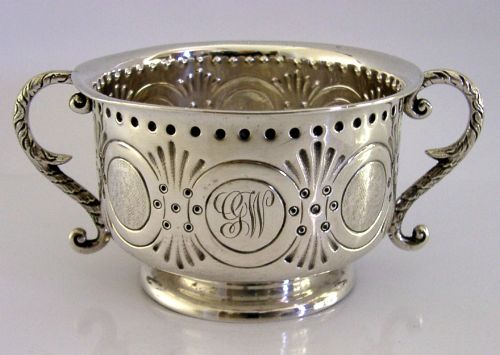
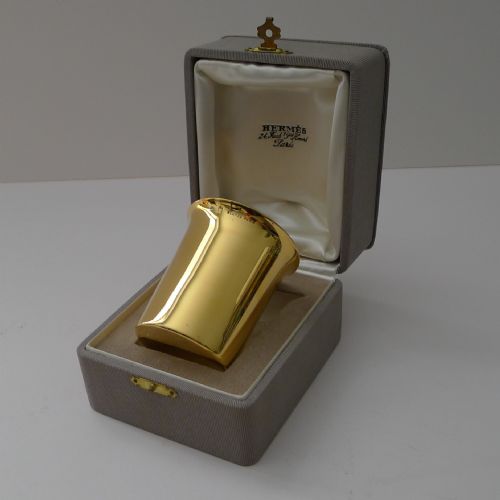
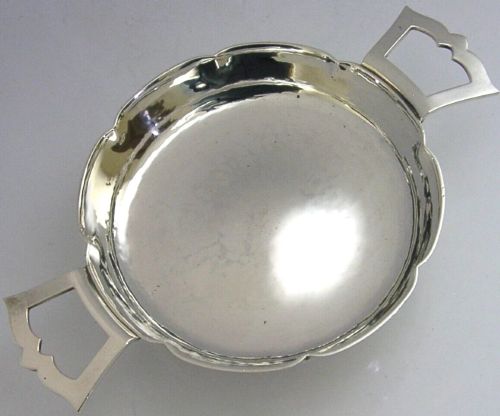
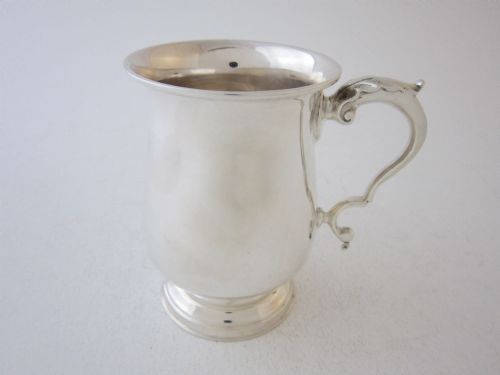
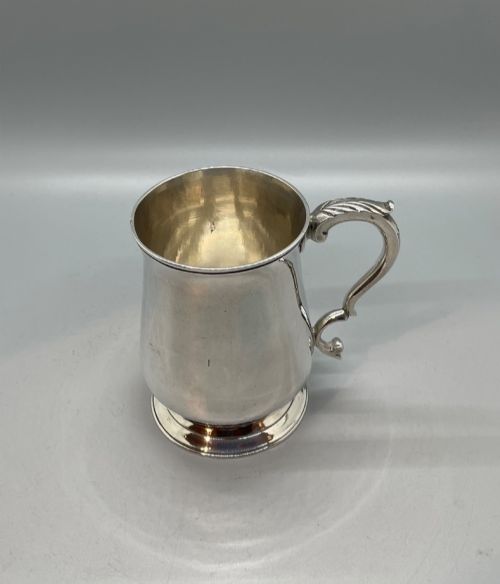
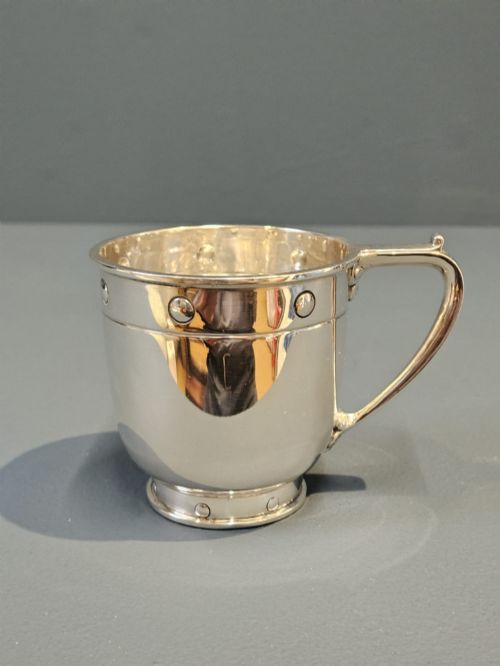
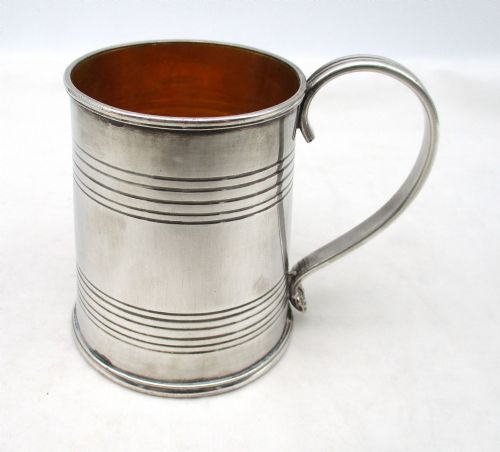
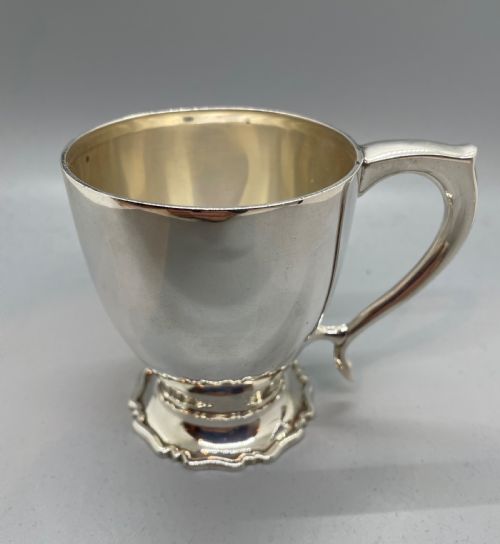
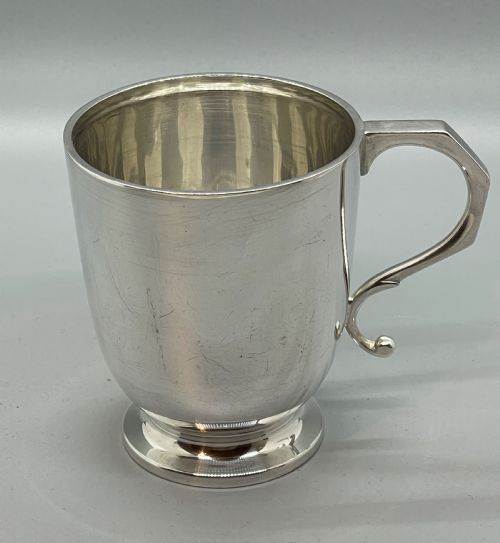
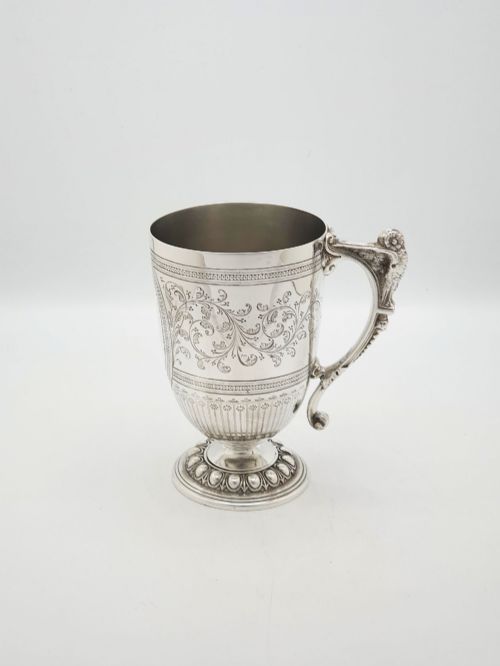
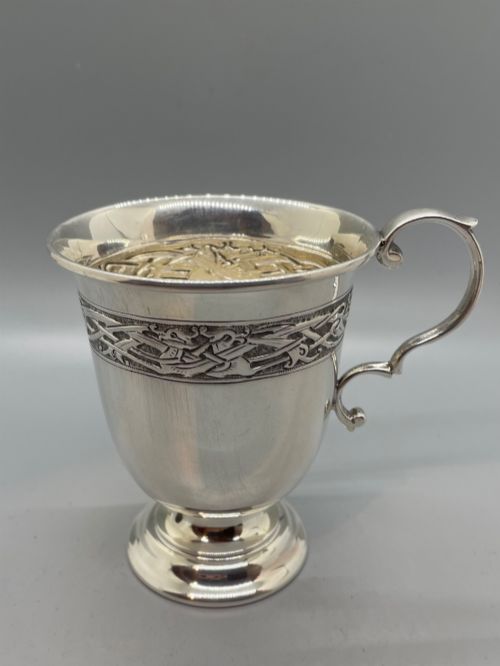
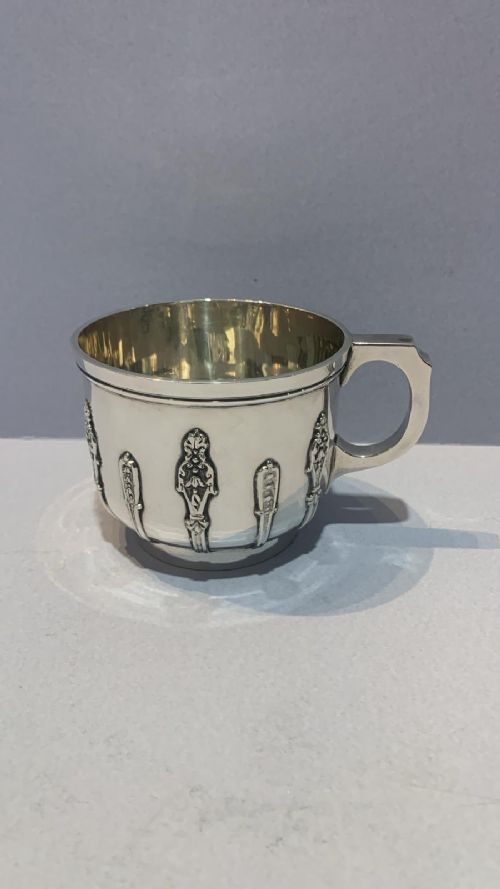
A vintage christening cup typically takes the form of a small tankard, mug, porringer, or quaich designed for a child. These pieces emerge from periods ranging across the nineteenth and twentieth centuries, including Victorian, Edwardian, George V, and mid-century modern eras. Makers span regional British assay offices and international houses like Hermes and Tiffany & Co.
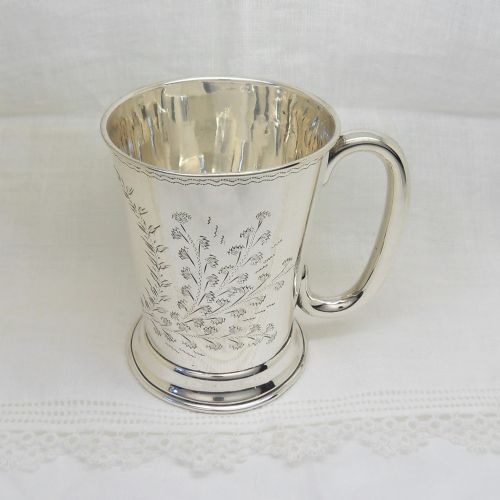
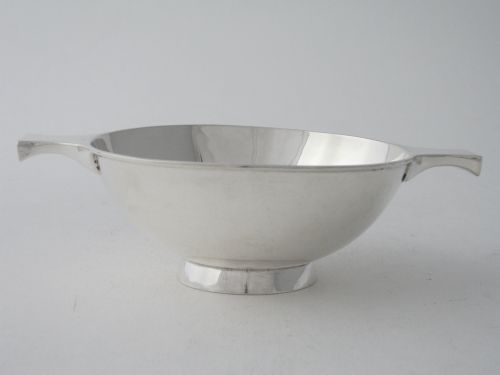
The most common examples encountered on this page are sterling silver mugs and tankards bearing hallmarks from Birmingham, Sheffield, and London. Alongside standard cylindrical and baluster forms, buyers find traditional Scottish quaiches with twin lugs and lidded porringers. Many survive within fitted presentation boxes from their original retailers.
Materials and Technique
Silversmiths constructed the majority of these pieces from solid sterling silver or silver plate, occasionally employing Old Sheffield plate for nineteenth-century examples. Select vessels feature gold gilt or vermeil interiors to protect the metal from acidic contents. Copper and silk appear in specific components and linings within fitted sets.
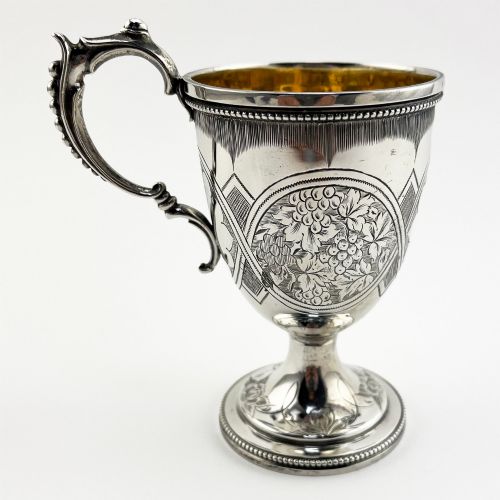
Techniques range from smooth, plain bodies to heavily embossed, engraved, and planished surfaces. Handles frequently display cast scrolls, rococo curves, or figural elements such as owls. Pieces from the arts and crafts period often show visible hammer marks left by the maker.
Vintage Christening Cup Retail Price Guide 2026
Typical asking prices for vintage christening cup among the pieces listed under this phrase on Sellingantiques today, from the lower quarter to the upper quarter. They describe what is for sale here now, not the wider market.
Listings span the nineteenth and twentieth centuries, featuring materials from sterling silver and gold gilt to Old Sheffield plate.
Judging Quality
The distinction between standard production and superior craftsmanship rests in the weight of the metal and the crispness of the hand-engraving. Substantial gauge silver resists dents and maintains structural integrity over generations of handling. Finer pieces display sharply struck hallmarks and balanced proportions in the handle and foot rim.
Artistic execution sets individual maker-signed works apart from anonymous factory output. Planished surfaces executed by recognised designers show deliberate, uniform texturing rather than mechanical regularity. The presence of original fitted presentation cases adds contextual integrity to the piece.
Brook & Son·Joseph Gloster·Hermes Paris·R E Stone·Barker Bros·Tiffany & Co·William Bateman
The Vintage Christening Cup Glossary
- Hallmark
- Official stamps applied to precious metals indicating the standard of purity, the assay office, and the date letter. These marks allow exact dating of British silver.
- Quaich
- A traditional Scottish drinking vessel featuring a shallow circular bowl and two opposing handles called lugs. They appear in both plain silver and planished finishes.
- Porringer
- A small, deep bowl with one or two horizontal flat handles, sometimes supplied with a matching cover. They function historically as children's bowls for porridge or broth.
- Vermeil
- Sterling silver coated with a layer of gold. This technique provides a warm interior finish to drinking vessels.
- Planished
- A metalworking technique where the surface is beaten with a small-faced hammer to create a textured finish. It is characteristic of arts and crafts silver.
Vintage Christening Cup: Frequently Asked Questions
What were christening cups used for?
These vessels served as ceremonial gifts given to infants at their christening or naming ceremony. Families typically kept them as keepsake mementoes rather than daily tableware.
Over time, many passed down through generations within families to mark a child's entry into the community. Some functioned practically for milk or water, while others remained purely decorative.
How do I know the date of a silver cup?
British silver relies on official hallmarks stamped directly onto the metal to establish origin and age. A specific letter punch corresponds to the year the piece passed through the assay office.
Maker marks and town marks narrow down the workshop and location. Comparing the style, such as Edwardian scrollwork or mid-century plain forms, supports the hallmarked date.
Are silver plate and sterling silver different?
Sterling silver consists of a solid alloy containing ninety-two point five percent pure silver throughout the entire object. It holds intrinsic metal value and develops a soft patina with age.
Silver plate involves a thin layer of silver bonded to a base metal core, such as copper or Britannia metal. Old Sheffield plate uses a fused sheet technique distinct from later electroplating methods.
How should I clean an antique silver cup?
Gentle washing in warm water with mild soap removes everyday dust and oils without harming the metal. Pat the surface dry immediately with a soft cotton or microfibre cloth.
Avoid abrasive dips or harsh chemical polishes that strip away the subtle details of hand engraving and soften hallmarks. Natural tarnish often enhances the definition of maker marks and decorative panels.