





Vintage Chinoiserie Lighting Pair
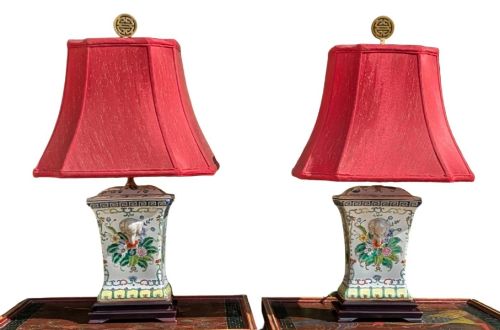
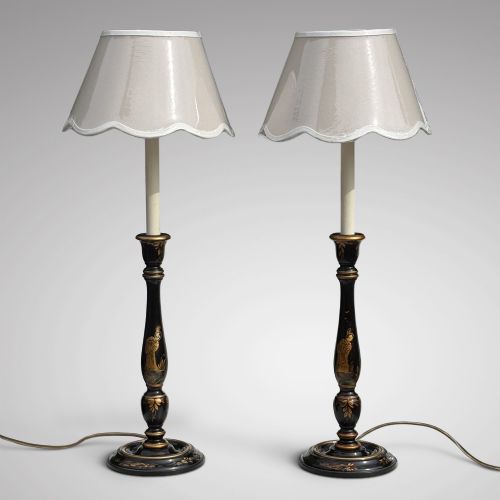
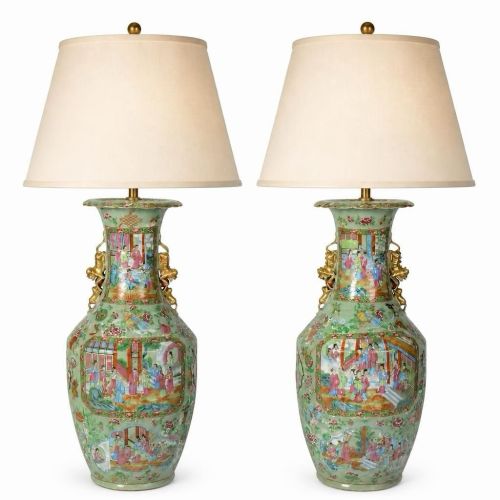
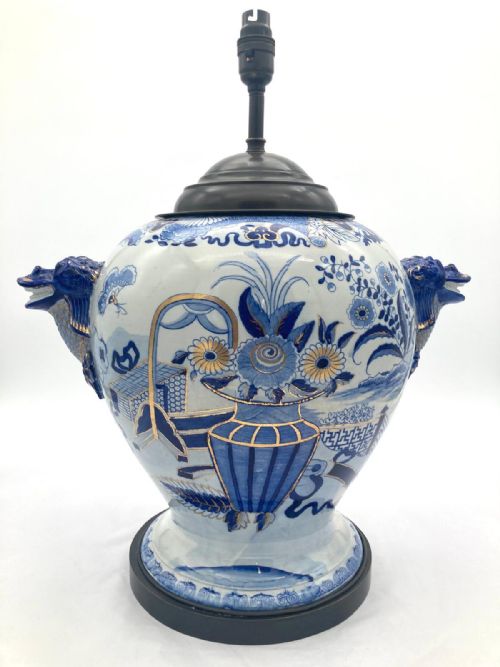
A vintage chinoiserie lighting pair brings balanced decorative presence and patterned colour to a room through matched orientalist forms.
Vintage Chinoiserie Lighting Pair
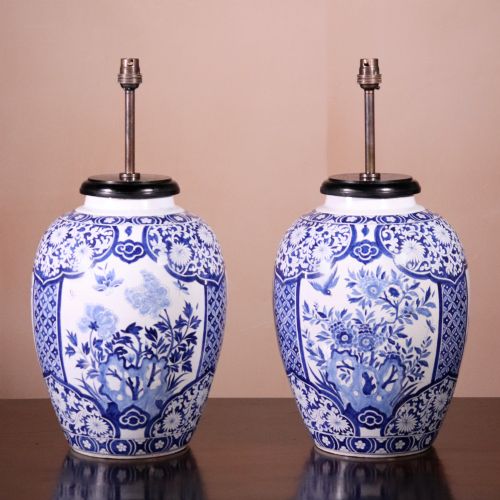
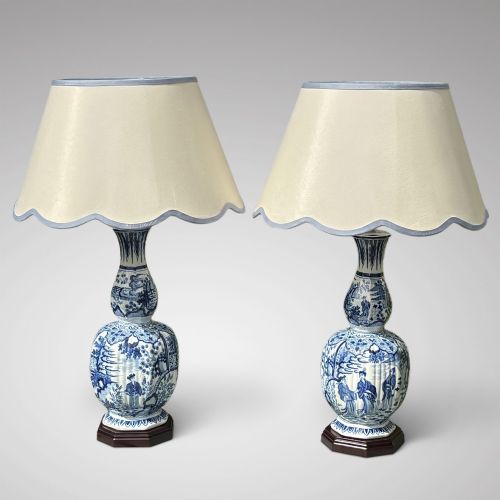
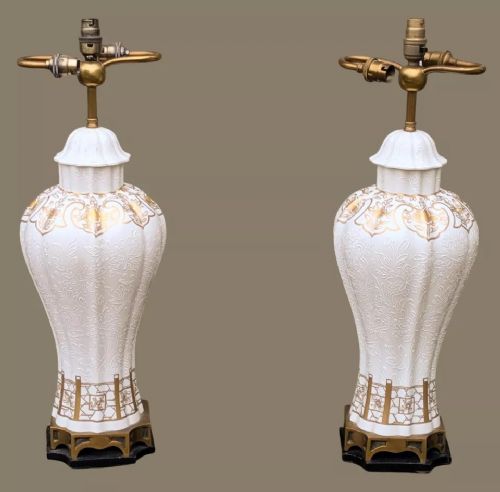
A vintage chinoiserie lighting pair consists of matching dual objects created from earlier vessels, figures, or wall fixtures, adapted to illuminate a space. The selection spans table lamps, wall sconces, and wall lights originating across the eighteenth, nineteenth, and early twentieth centuries.
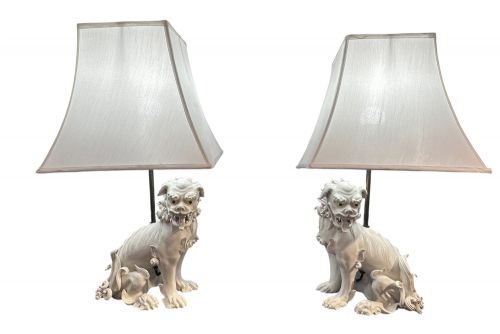
Buyers meet varied forms here, from converted porcelain jars and vases to lacquered wood bases, bronze figures, and metal wall lanterns. These items reflect stylistic influences ranging from Regency interpretation and Dutch Delftware to Meiji period work and Chinese Republic production.
How they were made
Manufacturers utilised ceramic, porcelain, earthenware, and ironstone as primary bodies, often shaping them from preexisting vases, jars, and decorative vessels. Metals such as brass, bronze, and ormolu provided structural mounts, bases, and wiring hardware.
Surface decoration involved hand painting in blue and white, turquoise glaze, polychrome famille verte, and rose medallion palettes, alongside cloisonne enamel work, lacquering, and scarlet japanning on wood or metal.
Materials across this selection include fabric, earthenware, enamel, and gilt alongside porcelain and brass.
What varies in quality
The standard of a pair rests upon the integrity and artistic merit of the original components before conversion, such as the fineness of hand painted porcelain details or the crispness of bronze and ormolu casting. Pairs that retain matching proportions, synchronized patination, and harmonious glaze colours demonstrate superior original manufacture.
The quality of the adaptation matters significantly, particularly how cleanly electrical components integrate with fragile ceramic or metal bodies without compromising the historic vessel. Consistency between both items in a pair determines visual balance when placed symmetrically in an interior scheme.
The Vintage Chinoiserie Lighting Pair Glossary
- Chinoiserie
- European decorative style reflecting Chinese artistic influences, frequently seen in lacquered finishes and painted motifs. This aesthetic shaped much of the decorative lighting produced during the eighteenth and nineteenth centuries.
- Cloisonne
- Metalwork technique where thin wire partitions form cells that hold enamel paste before firing. This method created vibrant decorative patterns across nineteenth century vases and lamps.
- Japanning
- European imitation of East Asian lacquer work, built up in layers of varnish and heat cured. Scarlet japanning appears on select period wall lanterns and sconces.
- Blanc de Chine
- White porcelain produced in Dehua, China, noted for its milky glaze and smooth texture. Figures like Shi lions or dogs of fo often utilise this ceramic body.
- Rose Medallion
- Chinese porcelain decoration style featuring segmented panels filled with figures, flowers, and birds in pink and green enamel. These vibrant painted vessels frequently serve as the base for table lamps.
Vintage Chinoiserie Lighting Pair: Frequently Asked Questions
What is a chinoiserie lighting pair?
A chinoiserie lighting pair comprises two matched lamps, sconces, or lanterns decorated in a European interpretation of East Asian design. These objects combine historical vessels or metalwork with functional lighting adaptations.
They offer symmetrical illumination while introducing rich colours, painted scenes, and decorative motifs into interior spaces.
How were old vases turned into lamps?
Craftspeople converted decorative vessels by drilling holes for electrical wiring and mounting them onto custom metal or wooden bases. Tops were fitted with metal hardware to secure bulb sockets and shades.
This adaptation process preserved the decorative exterior of the original object while updating it for modern use.
Where should I place wall sconces?
Wall sconces and girandoles suit placement flanking a mirror, fireplace, or architectural doorway to provide balanced accent illumination. They create atmospheric lighting layers within dining rooms, hallways, or living spaces.
Matched pairs ensure symmetrical visual weight on either side of a central focal point.
How do I date porcelain lamp bases?
Dating relies on examining the painting style, glaze characteristics, craquelure patterns, and material body of the underlying ceramic vessel. Nineteenth century and earlier pieces often display hand mixed pigments and distinct potting techniques.
Hardware fittings and wiring methods introduced during conversion also provide clues regarding the era of adaptation.