

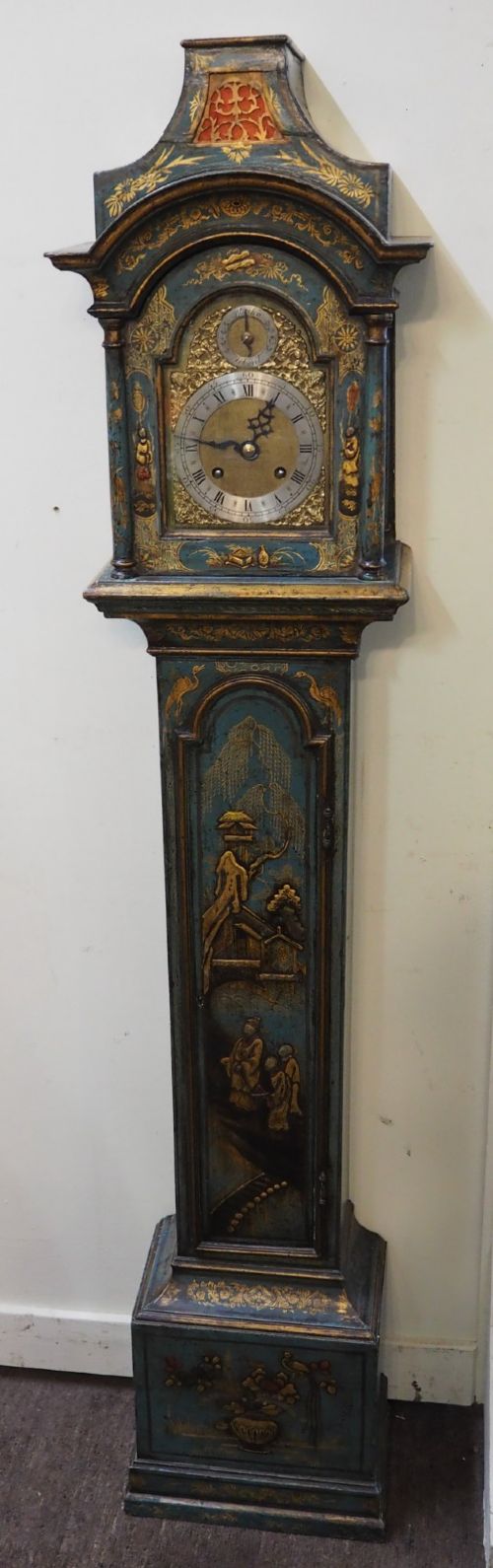


Vintage Chinoiserie Clock
A vintage chinoiserie clock brings hand-painted lacquer and gilded oriental scenes into a room, offering both traditional timekeeping and striking decorative presence.
Vintage Chinoiserie Clock
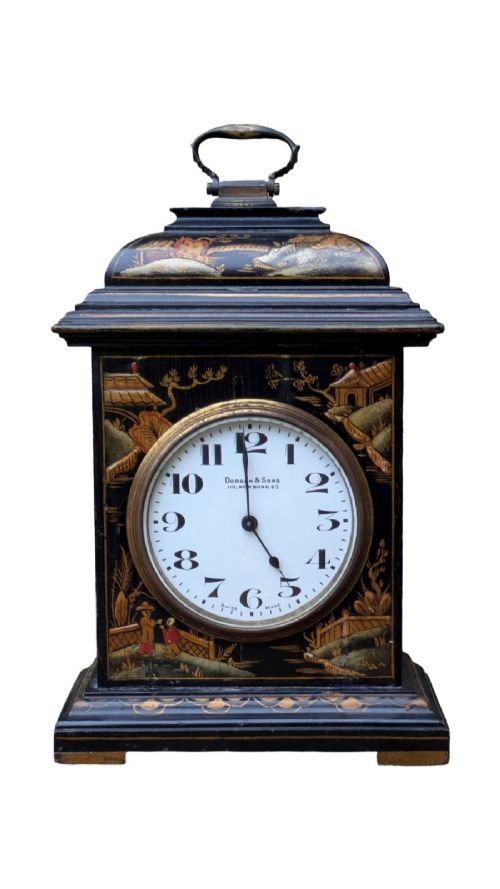
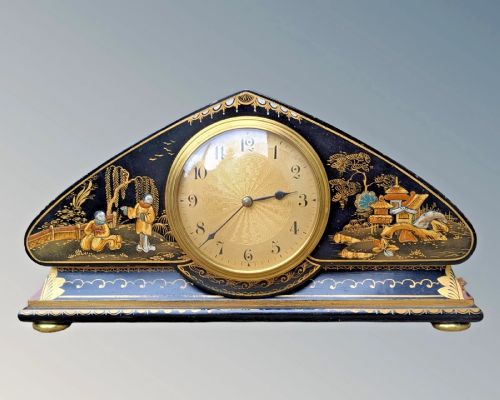
A vintage chinoiserie clock encompasses tall longcase forms alongside smaller mantel and desk designs decorated with European interpretations of East Asian motifs. These pieces span centuries of production, drawing on styles from the seventeenth century onwards through Georgian periods and into twentieth-century revivals.
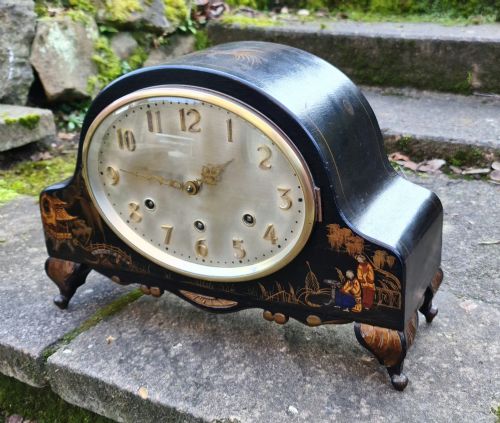
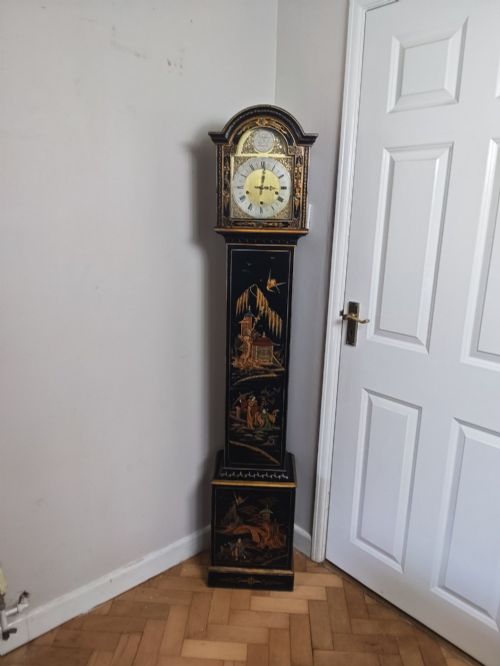
Buyers will most frequently encounter mantel clocks and taller longcase or grandmother clocks finished in coloured lacquers, particularly black, green, and cream. These smaller mantel pieces and larger floor-standing clocks merge functional timekeeping with elaborate hand-painted decoration.
The aesthetic bridges multiple eras, appearing in authentic eighteenth-century examples as well as later twentieth-century interpretations. Each piece relies on lacquered wood surfaces adorned with gilt or metallic detailing to create its distinct visual impact.
How they were made
The construction of these clocks relies on timber cases finished with layers of lacquer, often supplemented by applied gold leaf, gilt bronze, or brass mounts. Artisans built up the smooth polished surfaces before painting or gilding decorative figures, landscapes, and floral patterns.
Movement integration paired these decorated wooden or metal cases with mechanical brass movements, ranging from simple timepieces to complex musical and chiming systems. Craftsmen housed the delicate inner workings within robust longcase trunks, mantel housings, or desk stands.
Vintage Chinoiserie Clock Retail Price Guide 2026
Typical asking prices for vintage chinoiserie clock among the pieces listed under this phrase on Sellingantiques today, from the lower quarter to the upper quarter. They describe what is for sale here now, not the wider market.
Listings feature periods spanning from the seventeenth-century style through Georgian and Edwardian eras up to the nineteen-sixties.
What varies in quality
The refinement of the hand-painted lacquerwork and the complexity of the brass movement distinguish different tiers of pieces. Finer examples feature intricate, multi-layered pictorial scenes and sophisticated mechanisms capable of musical chimes or eight-day running.
Case construction and material selection also define the grade of an item, separating simple timber housings from substantial gilt bronze mounts or finely proportioned longcase bodies. The depth of the lacquer finish and the crispness of the gilt detailing dictate the overall standard.
John fielder of Alton·Gardner of London·Jaeger Le Coultre
The Vintage Chinoiserie Clock Glossary
- Chinoiserie
- European decorative style inspired by Chinese and East Asian art, featuring pictorial scenes of figures, pavilions, and landscapes. This aesthetic defines the surface decoration of these clocks.
- Longcase clock
- A tall pendulum clock enclosed in a wooden case, historically known as a grandfather clock. These grand floor-standing pieces form a significant portion of the larger available designs.
- Grandmother clock
- A scaled-down version of the traditional longcase clock, typically shorter and narrower. They offer the vertical presence of a tall clock in a more compact format.
- Ormolu
- Gilt bronze ornamentation applied to furniture and clock cases. This technique involves coating cast bronze with a finely ground gold mercury amalgam.
- Lacquer
- A durable resin finish applied in multiple coats and polished to a smooth sheen. It serves as the primary coloured background for the painted oriental motifs.
Vintage Chinoiserie Clock: Frequently Asked Questions
What is a chinoiserie clock?
A chinoiserie clock is a timekeeper housed in a case decorated with European interpretations of East Asian art, typically featuring lacquered surfaces and painted gilt motifs.
These pieces range from tall floor-standing longcase designs to compact mantel and desk clocks produced across multiple centuries.
How do I identify the period?
Dating relies on examining the casework style, the complexity of the brass movement, and the specific characteristics of the lacquer finish. Twentieth-century revivals often utilise different movement technology compared to eighteenth or nineteenth-century examples.
Comparing the decorative motifs and timber construction helps place an item within periods such as the Georgian era or the mid-century revival.
Where should I place a longcase clock?
Longcase clocks require a stable, level floor and a wall anchor for safety, particularly given their height and weight. Hallways, living rooms, and landings offer suitable spaces where the pendulum and striking mechanisms can operate without interference.
Avoid positioning these wooden and lacquered pieces in areas subject to direct sunlight or damp conditions.
What maintenance do mechanical clocks need?
Mechanical movements require periodic professional servicing, oiling, and occasional adjustment to keep accurate time. Winding must be done carefully according to the specific weight or spring configuration of the movement.
Keeping the lacquered case clean involves gentle dusting with a soft cloth rather than harsh chemical cleaning agents.