
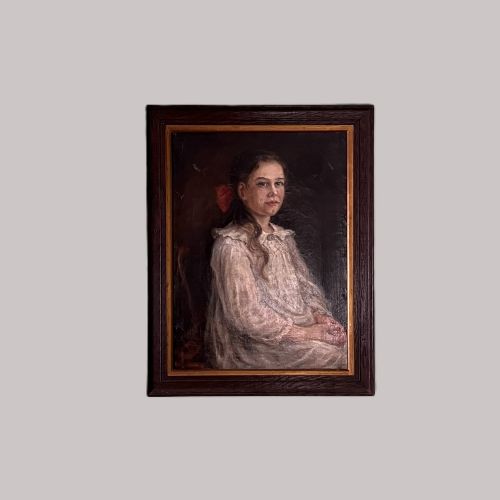


Vintage Child Portrait Oil
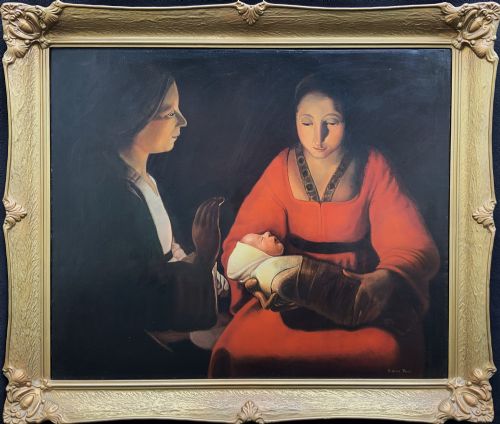
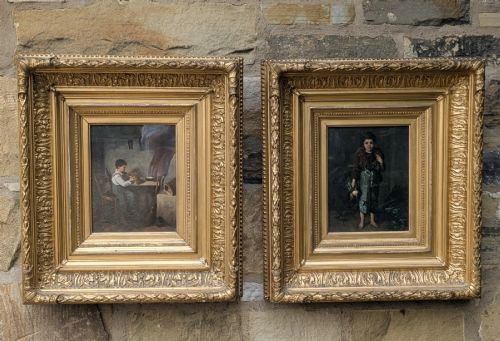
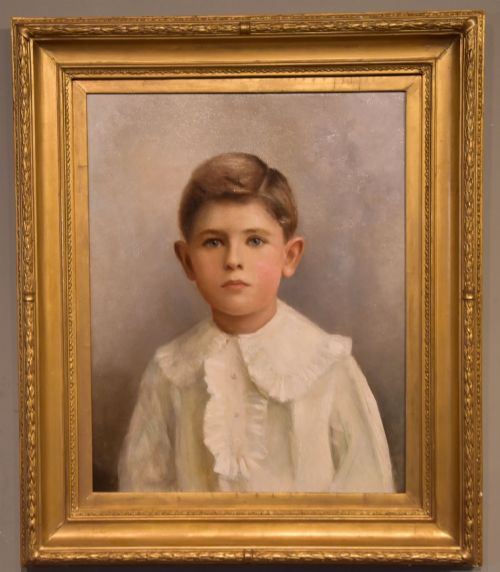
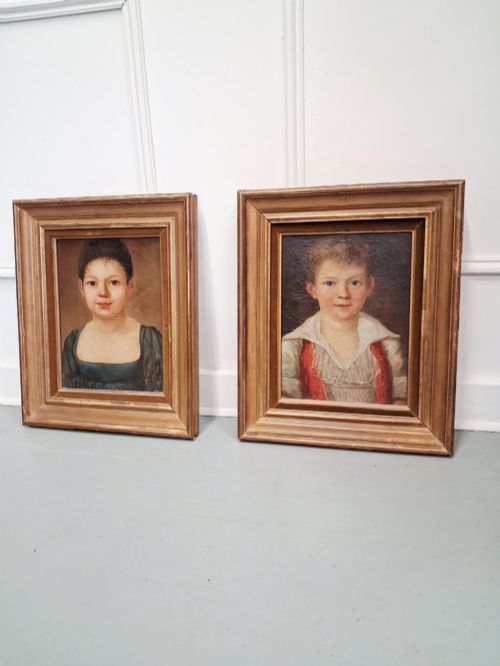
These vintage child portrait oil works capture young subjects through centuries of changing styles, offering intimate glimpses into past lives.
Vintage Child Portrait Oil
A vintage child portrait oil brings historic youth into modern spaces, depicting boys and girls from the nineteenth and twentieth centuries.
You will encounter works spanning the Victorian, Edwardian and later decades, showing single subjects or groups in varied attire.
Subjects range from formal studio commissions to informal character studies rendered on canvas, board or panel.
Materials and methods
Artists painted primarily with oil pigments on stretched canvas, wood panels or board supports.
Many surviving examples retain their original frames constructed from gilt, gesso, giltwood or ebonised wood.
Several young sitters pose proudly alongside their pampered spaniels, terriers and ponies.
Evaluating standard and execution
Technical proficiency in rendering facial expression and fabric distinguishes masterly works from standard output.
The integrity of the underlying canvas and stability of the pigment layer influence long-term preservation.
Henry Windsor Fry·Arthur Percy Dixon·John Alfred Wheeler·Frank Owen Salisbury·Harold Arthur Burke·Cowan Dobson·Harry John Pearson
The Vintage Child Portrait Oil Glossary
- Oil on canvas
- A painting technique using pigment suspended in drying oils applied to woven fabric stretched across a wooden frame.
- Gesso
- A plaster-like mixture applied to wood or canvas to prepare a smooth surface for painting or gilding.
- Ebonised frame
- Wood finished to resemble dark ebony, frequently utilised for nineteenth-century portrait framing.
- Impressionism
- An art movement focusing on light and brushwork rather than rigid detail, seen in selected child studies.
Vintage Child Portrait Oil: Frequently Asked Questions
How do I date a child portrait?
Examine the sitter's clothing, hairstyle and the framing materials used for clues about the period.
Brush technique and stretcher construction also provide reliable indicators of the era in which the artist worked.
Where should I hang an oil painting?
Position portraits away from direct sunlight and damp environments to protect the fragile pigment and canvas.
Stable indoor temperatures prevent the wooden stretcher and gesso frame from warping over time.
Are these works original or reproductions?
The inventory consists of hand-painted original artworks and period studies rather than modern mass-produced prints.
Brush texture and surface crackle visible under close inspection confirm the traditional application of oil paint.
How do I clean an antique painting?
Dust surfaces gently with a soft, dry brush while avoiding water, cleaning solutions or abrasive cloths entirely.
Professional conservators should handle deeper grime removal or varnish restoration to prevent damaging the underlying pigment.