


Vintage Chess Set Box
A vintage chess set box protects pieces and boards together in mahogany, rosewood, or burr walnut for play and display.
Vintage Chess Set Box
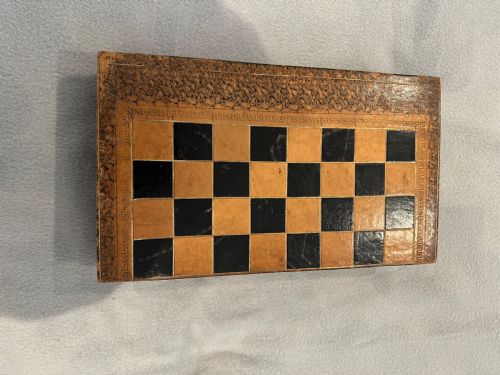
When searching for a vintage chess set box, buyers encounter games compendiums, folding boards, leather bound faux books, and dedicated chess and backgammon boxes. These objects originate primarily from the nineteenth century, including the Victorian and Edwardian eras, as well as around eighteen ninety and nineteen hundred.
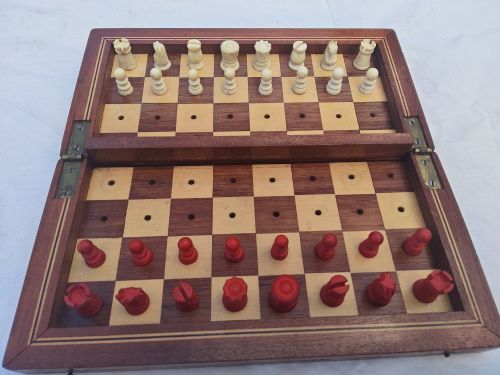
The pieces on this page span travelling sets, miniature editions, and large compendiums housing various pastimes. Materials range from boxwood and ebony sets to rosewood, mahogany, and burr walnut enclosures lined with felt and fitted with brass hardware.
How they were made
Construction relies on traditional cabinet timbers such as mahogany, rosewood, burr walnut, and general wood, often formed into folding boards or lidded games boxes. Interiors frequently incorporate felt to cushion the components during transit or storage.
Game pieces found inside or alongside these boxes utilise boxwood, ebony, bone, and mother of pearl. Specialised sets display distinct turning patterns, weighting, and material contrast typical of nineteenth-century workshops.
Miniature Edwardian sets prove that Victorians and Edwardians packed their intellectual battles into spaces smaller than a pocket.
What varies in quality
The accompanying pieces dictate overall standard, where weighted Staunton sets, Calvert patterns, and Whittington designs demonstrate superior carving and material turning compared to miniature or unweighted alternatives.
British Chess Company·F. H. Ayres
The Vintage Chess Set Box Glossary
- Staunton pattern
- A standardised style of chess pieces introduced in the mid-nineteenth century, characterised by conventionalized, highly recognizable symbols on round bases. This design became the tournament standard used by players worldwide.
- Compendium
- A single fitted box or case containing multiple distinct games, such as chess, backgammon, and draughts. These multi-game containers often feature folding boards and specialised internal compartments.
- Boxwood
- A dense, pale wood frequently utilised for the white pieces in traditional chess sets. Its fine grain permits intricate carving on knights and decorative turning on pawns.
- Calvert pattern
- A distinct nineteenth-century style of carved chess pieces associated with specific maker traditions. These pieces feature characteristic openwork carving on the rooks and bishops.
- Burr walnut
- A highly figured wood veneer derived from walnut tree growths, prized for decorative cabinet work. Victorian games boxes frequently utilised this material for exterior surfaces to display rich grain patterns.
Vintage Chess Set Box: Frequently Asked Questions
What is a games compendium?
A games compendium is a fitted box designed to hold equipment for multiple pastimes, such as chess, backgammon, and cards, within a single portable enclosure.
These boxes typically feature folding boards that form the exterior lid or internal compartments lined with felt to secure every piece.
How do I identify a Victorian chess box?
Victorian chess boxes often feature nineteenth-century cabinet timbers like mahogany, rosewood, and burr walnut, sometimes combined with brass hardware and leather bindings.
Dating relies on construction methods, material choices, and associated patterns like Staunton or Calvert found within the period listings.
Were all sets made for travelling?
Travelling sets were specifically engineered with compact dimensions, folding boards, and secure storage to allow games on the move.
Other items, such as large compendiums and stationary games boxes, remained intended for permanent placement on tables within the home.
What materials are the pieces made from?
Pieces inside these boxes are commonly turned from boxwood and contrasting ebony, or carved from bone and mother of pearl.
Heavier sets incorporate internal weighting to improve stability during play, a technique frequently seen in nineteenth-century examples.