





Vintage Chenets
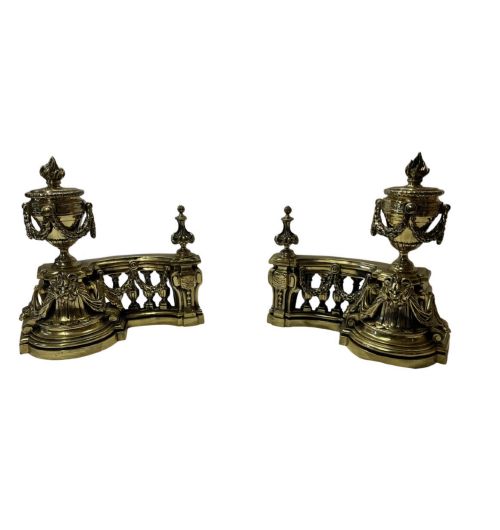
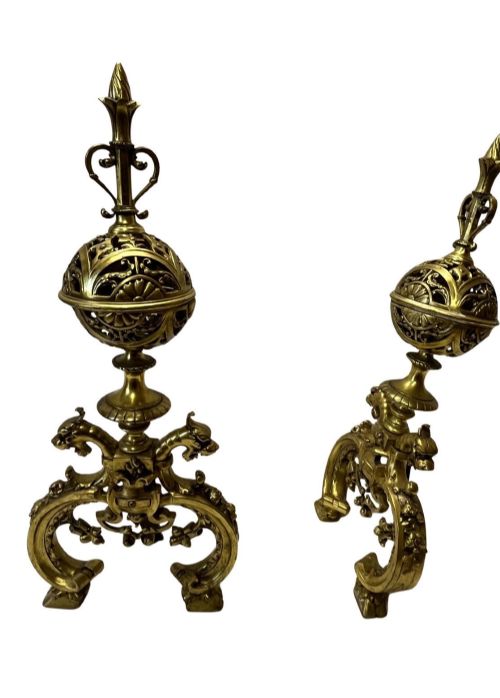
These vintage chenets are sturdy metal supports designed to hold logs above the hearth, bringing both practical function and period character to an open fireplace.
Vintage Chenets
When you search for vintage chenets, you are looking at substantial metal fireplace furniture that elevates firewood for better air circulation and efficient burning. These pieces support logs inside the hearth while adding decorative detail to the chimney breast when the fire is unlit.
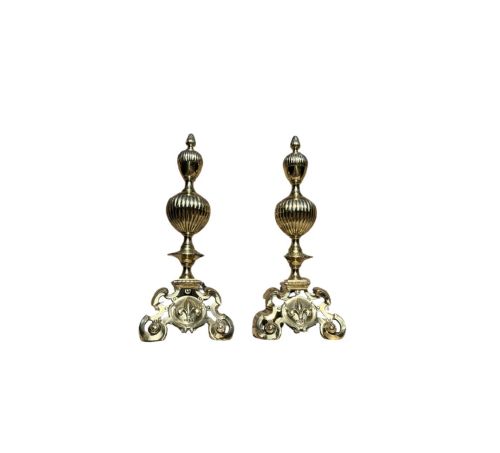
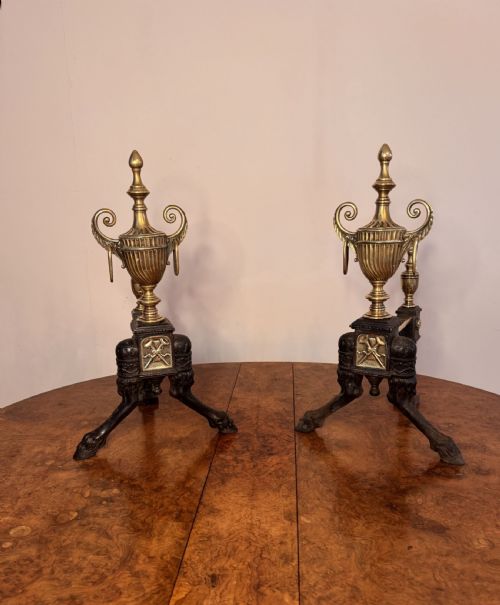
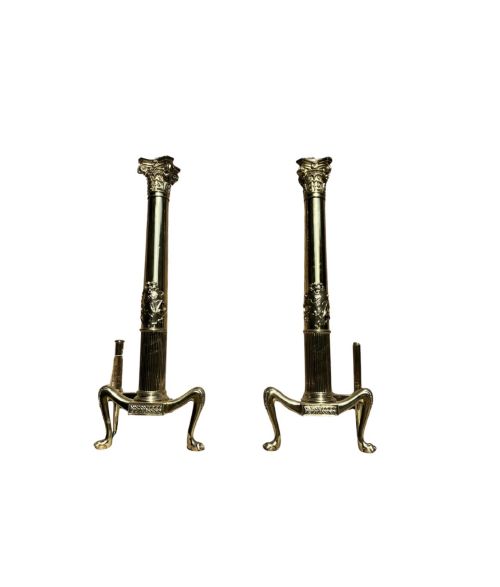
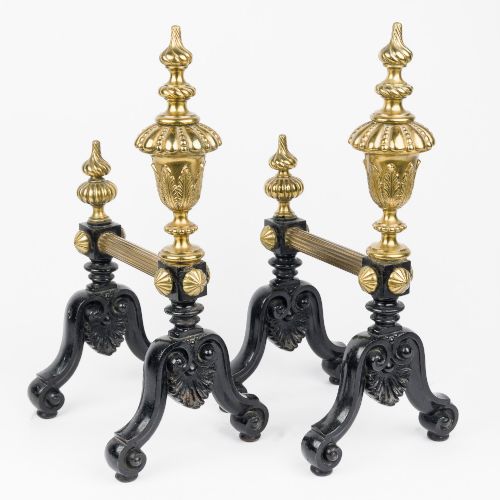
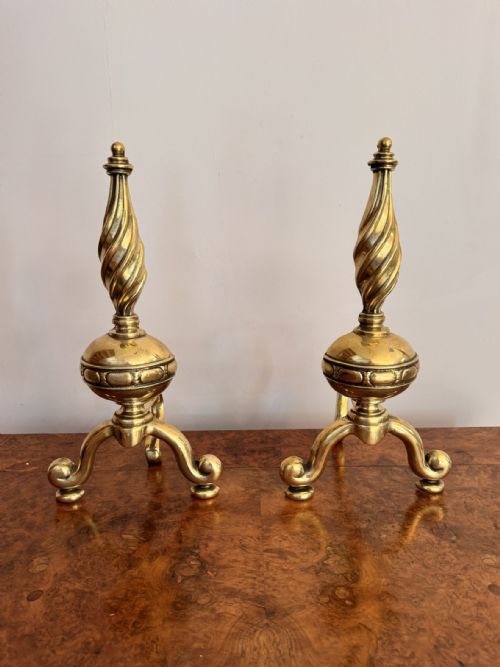
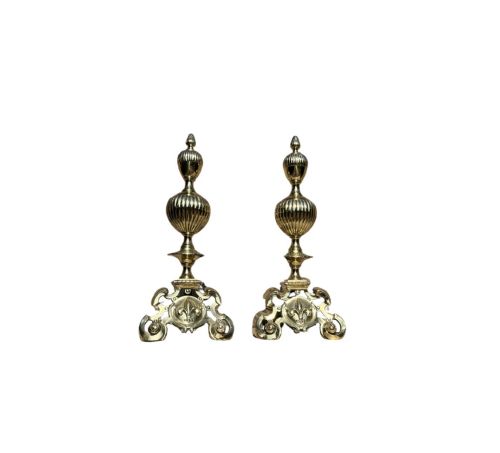
The selection on this page consists primarily of heavy metal pairs originating from the nineteenth century, with strong representation from French workshops and Victorian makers. You will find forms ranging from simple wrought iron supports to ornate cast brass and bronze designs.
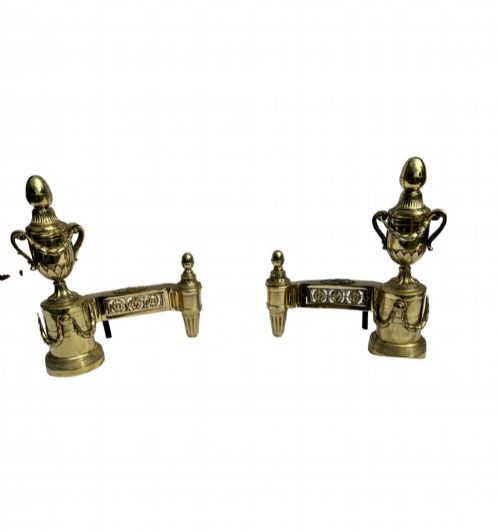
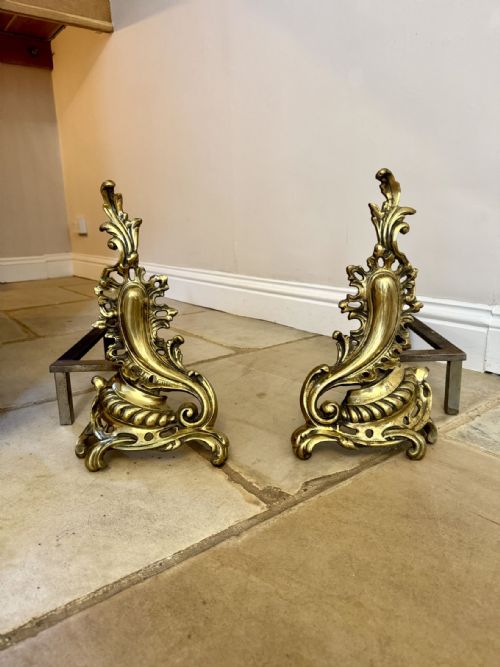
Most examples function as fire dogs or andirons, featuring upright decorative fronts connected to horizontal bars that extend back into the hearth. These objects span various traditional aesthetics, including French Rococo, Neoclassical, and Baroque revival styles.
How they were made
Metalworking techniques for these pieces rely heavily on traditional foundry practices, utilising both cast and wrought methods depending on the workshop and period. Iron was frequently forged or cast to provide structural weight and durability, while brass and bronze components allowed for intricate ornamentation.
Decorative surfaces often combine multiple materials, such as iron bars fitted with cast brass fronts, or bronze bodies enhanced with ormolu mounts. Makers utilised techniques like sand casting for detailed figures and scrolls, followed by hand-finishing and chasing to sharpen the cast details.
Vintage Chenets Retail Price Guide 2026
Typical asking prices for vintage chenets among the pieces listed under this phrase on Sellingantiques today, from the lower quarter to the upper quarter. They describe what is for sale here now, not the wider market.
Some nineteenth-century makers styled their hearth supports with fierce animal paws to keep imaginary hearth beasts at bay.
What varies in quality
The standard of a pair depends heavily on the crispness of the casting and the depth of the hand-finishing applied to the metal. Superior pieces display sharply defined motifs and clean joints, whereas simpler examples show softer contours and less detailed surface work.
Weight and structural substance also dictate the grade of these hearth accessories, with heavier cast brass and substantial bronze pairs sitting at the upper end of the scale. The integration of mixed metals, such as ormolu highlights on bronze, points to a higher level of workshop output.
James Cartland & Son
The Vintage Chenets Glossary
- Chenet
- A French term for an andiron or fire dog used to support logs in an open fireplace. They typically feature an ornate front guard and a horizontal bar stretching backward.
- Ormolu
- Gilded bronze produced by applying a mixture of gold and mercury to a bronze base, commonly used for decorative mounts on finer nineteenth-century examples.
- Andiron
- A heavy metal support placed in pairs inside a hearth to hold burning logs. They lift the fuel off the floor to allow air to circulate underneath.
- Fire dog
- An alternative name for an andiron, originating from the animal-like or utilitarian shapes often given to early hearth supports. They serve the dual purpose of utility and room decoration.
- Rococo
- An ornate design style characterised by asymmetrical scrolls, shell motifs, and curving natural forms. This aesthetic heavily influenced mid-nineteenth-century French hearth furniture.
Vintage Chenets: Frequently Asked Questions
What is the difference between chenets and andirons?
There is no functional difference between the two terms, as both describe metal supports used to hold logs in an open hearth. Chenet is the French term, while andiron is more commonly used in English, though both appear interchangeably in period listings.
Historically, French chenets often placed greater emphasis on decorative front mounts, whereas traditional English andirons sometimes favored heavier utility ironwork. Both types perform the exact same role beside the fireplace.
How do I choose the right size for my fireplace?
You should measure both the width and depth of your hearth cavity before selecting a pair of metal supports. The horizontal bars must fit comfortably inside the fireplace opening without obstructing the safety guard or screen.
Consider the visual scale of the upright fronts relative to the surrounding mantelpiece and chimney breast. Taller pairs suit larger open hearths, while neat, compact designs work better in smaller period rooms.
Can these metal supports be used with a real fire?
Most of these pieces are constructed from durable materials like cast iron, brass, and bronze designed to withstand hearth temperatures. Traditional pairs were built specifically to hold burning logs and endure daily use.
However, delicate ormolu mounts or decorative antique surfaces require careful handling to avoid heat damage or smoke staining. Many buyers choose to use sturdy iron bars for active fires while displaying ornate brass fronts further forward.
How do I clean nineteenth-century brass fire dogs?
You should remove surface dust and ash using a soft dry cloth before attempting any further cleaning. Avoid harsh chemical cleaners that can strip away the aged patina accumulated over decades of existence.
Gentle application of traditional metal polish will restore brightness to brass elements without harming the underlying material. Iron parts benefit from a light application of protective oil to prevent surface oxidation.