

Vintage Chain Necklace
When you search for a vintage chain necklace, you find pieces shaped by long watch-chain lineages and early twentieth-century jewellery design.
Vintage Chain Necklace
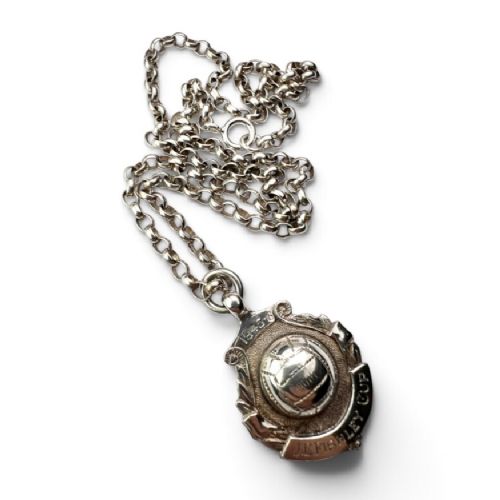
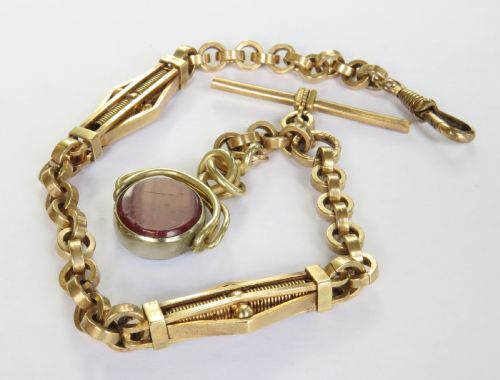
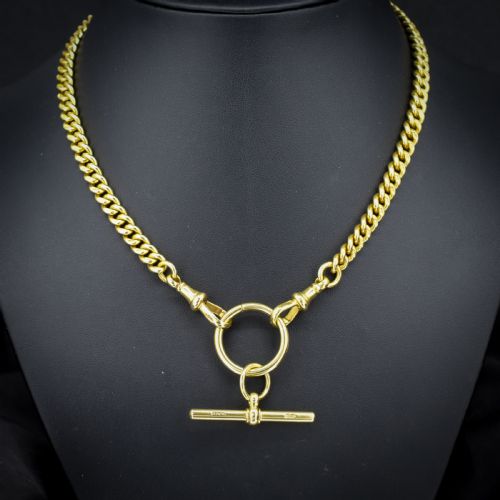
A vintage chain necklace bridges the practical origins of nineteenth-century pocket watch carriers and the decorative shifts of the early twentieth century. Buyers encounter robust albert chains adapted from pocket watch usage alongside delicate gemstone pendants hung from period gold or silver links.
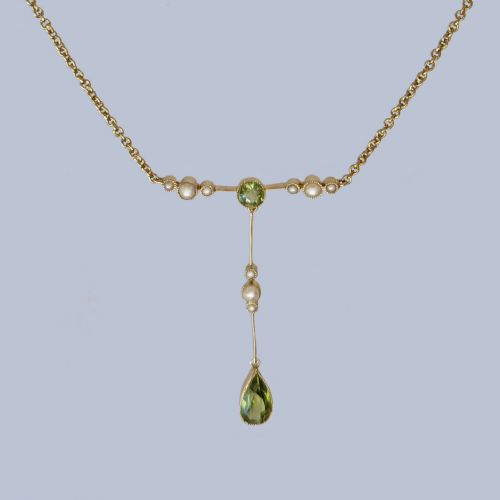
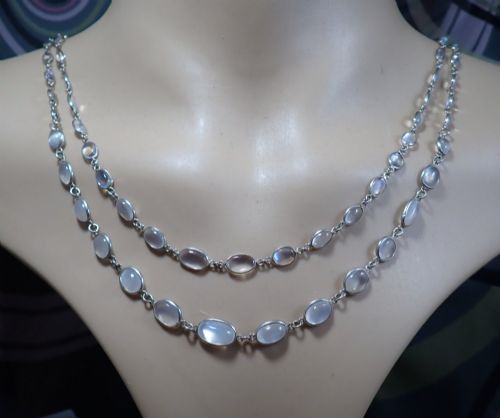
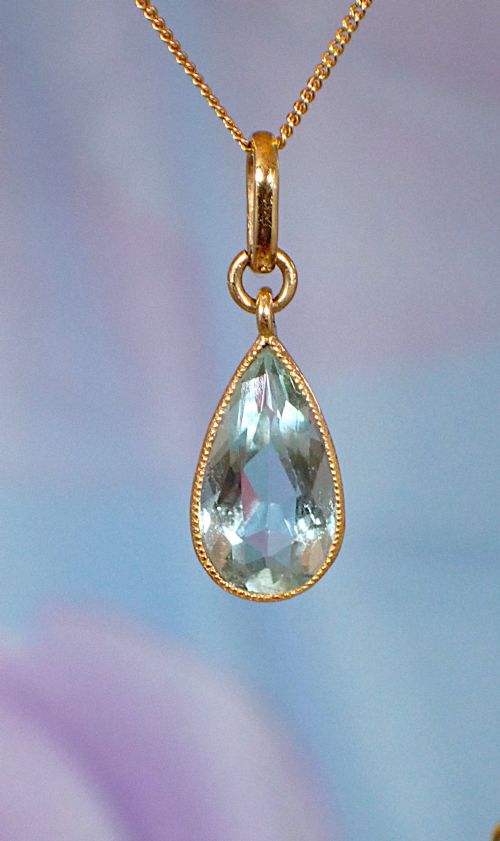
The selection ranges from heavy sterling silver curb links fitted with dog clips and t-bars to Edwardian and Art Deco gold designs set with pearls, aquamarines, and amethysts. Many pieces retain functional hallmarks, dog clips, and swivel clasps that reveal their heritage as utilitarian accessories.
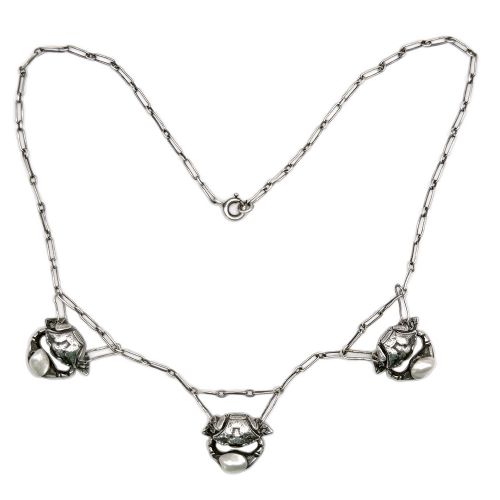
The aesthetic stretches from Victorian and Edwardian refinement through the geometric motifs of the 1920s and 1930s into mid-century Scandinavian and modernist forms. These necklaces combine utility and ornament, offering solid construction alongside distinct period character.
How they were made
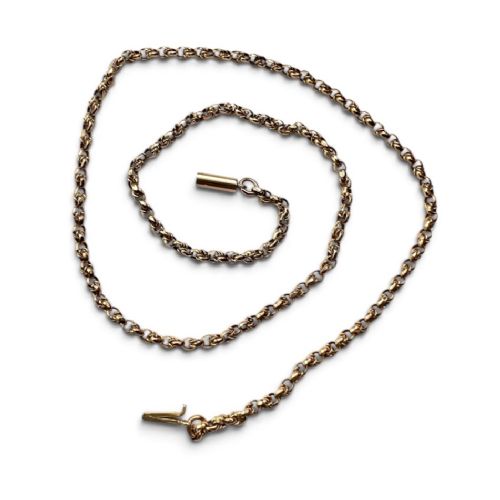
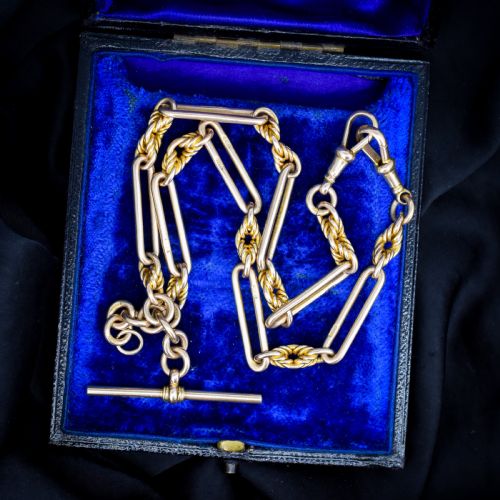
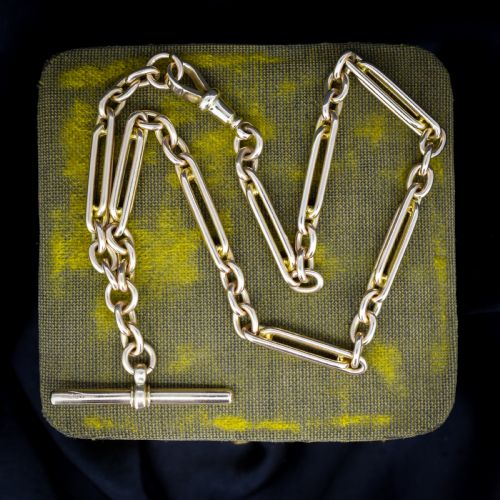
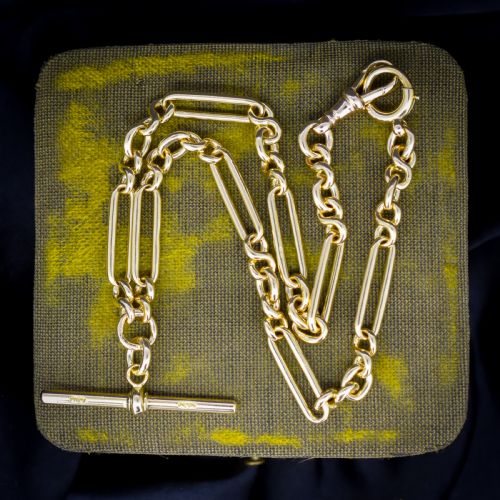
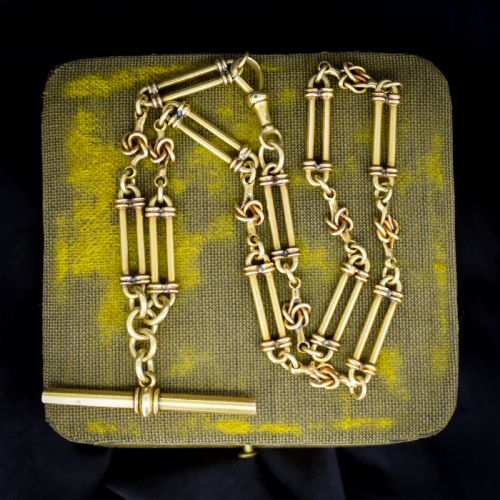
Goldsmiths and silversmiths utilised 9ct, 15ct, and 18ct gold alongside sterling silver and platinum, shaping metal into trombone, curb, belcher, and figaro links. Many albert chains feature individual link hallmarking, reflecting strict assay office standards.
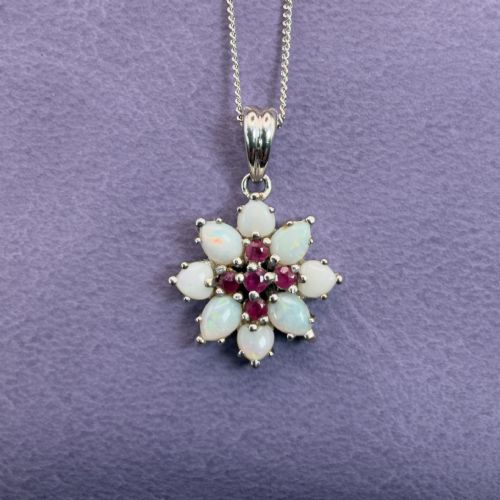
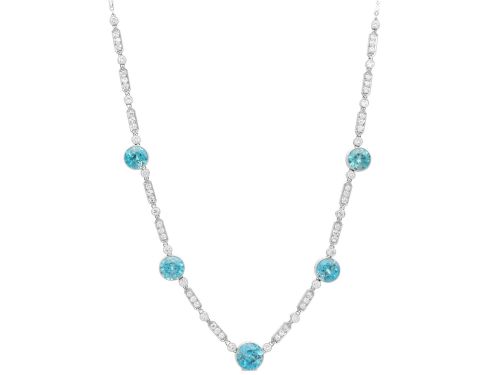
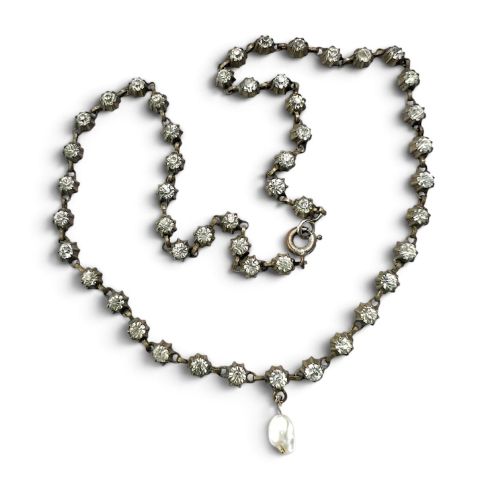
Makers integrated gemstones such as natural pearls, aquamarine, amethyst, garnet, and paste using claw, bezel, and collet settings. Enamel work and hand-cut crystals further define the decorative drops and pendants attached to the primary chain structures.
The inventory includes heavy curb link albert chains alongside delicate seed pearl and amethyst drop pendants.
What varies in quality
The distinction between tiers rests on the integrity of the links, the weight of the precious metal, and the originality of components like dog clips and t-bars. Solid gold and heavy gauge silver pieces demonstrate superior durability compared to hollow or plated alternatives.
Quality also manifests in the precision of the link construction, such as whether every single link bears a clear hallmark, and the secure setting of natural gemstones like pearls and old-cut diamonds.
Charles Horner·Trifari·Chanel
The Vintage Chain Necklace Glossary
- Albert Chain
- A short chain used in the nineteenth century to secure a pocket watch to a waistcoat, frequently converted into a necklace today.
- Dog Clip
- A spring-loaded swivel clasp originally designed to attach a watch chain to a pocket or buttonhole, now serving as a secure necklace fastening.
- T-Bar
- A small transverse bar attached to the centre of an albert chain, historically passed through a buttonhole.
- Trombone Link
- An elongated, rectangular metal link with folded ends, characteristic of nineteenth and early twentieth-century watch chains.
- Paste
- Hand-cut lead glass used from the eighteenth century onward to imitate genuine gemstones with high refractive brilliance.
Vintage Chain Necklace: Frequently Asked Questions
What is an albert chain necklace?
An albert chain necklace is a converted pocket watch chain featuring sturdy links, dog clips, and t-bars designed to be worn around the neck.
These pieces originate from the Victorian and Edwardian eras, combining industrial heft with refined period craftsmanship.
How do I date an antique chain?
Dating relies on assay office hallmarks, metal purity marks like nine carat or sterling, and the specific link style such as trombone or curb.
Design motifs and the presence of original components like swivel clasps and dog clips also provide clear chronological markers.
Are these chains suitable for daily wear?
Solid gold and heavy gauge silver chains offer exceptional durability for regular use, provided the clasps and links remain secure.
Delicate Edwardian gemstone drops require more careful handling to protect seed pearls and softer stones from impact.
Can I hang a pendant from an albert chain?
Albert chains often accommodate pendants using the existing dog clip or t-bar as an anchor point for charms and lockets.
Their robust construction makes them ideal for supporting heavier pendants without straining the metal.