






Vintage Ceramic Wash Set
A vintage ceramic wash set brings the quiet grace of a bygone dressing room into a modern home.
Vintage Ceramic Wash Set
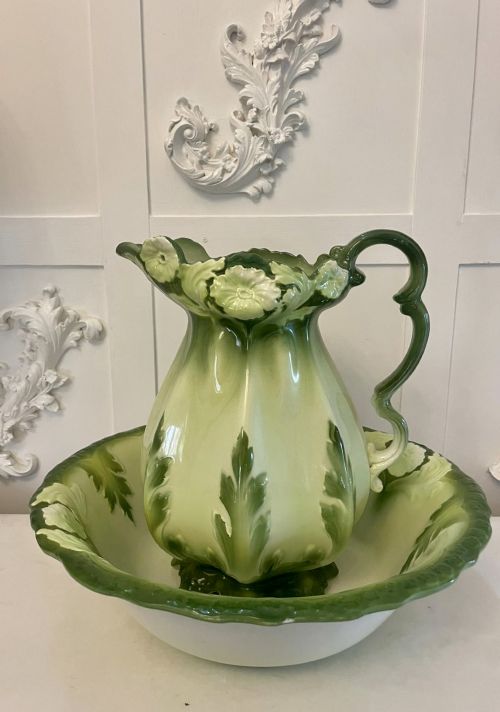
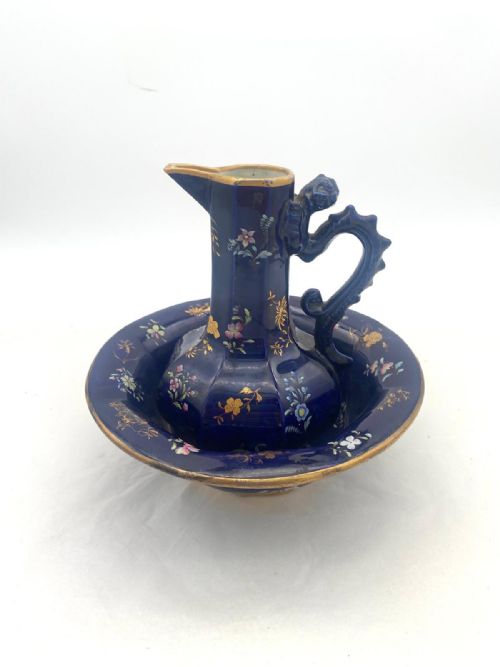
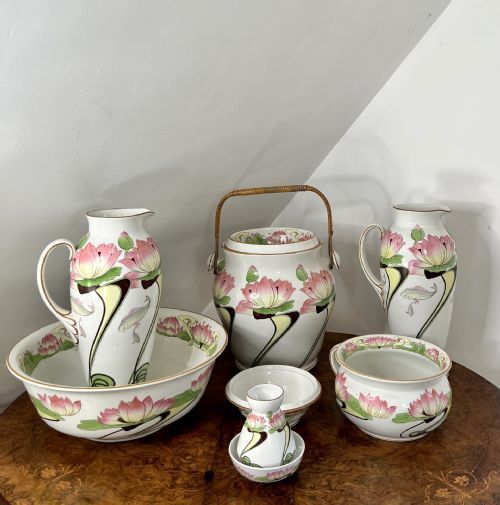
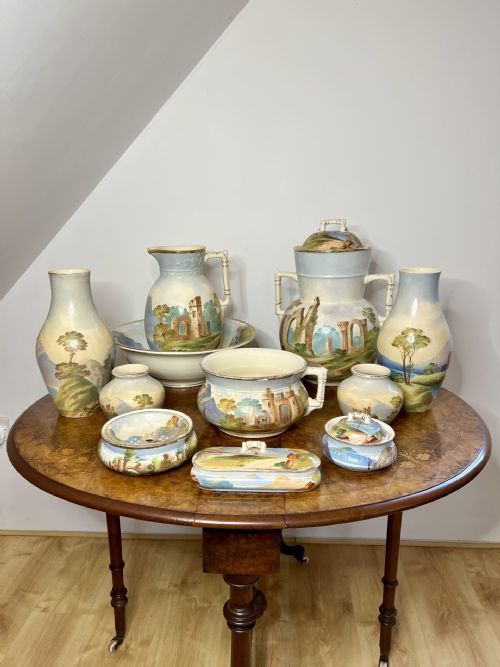
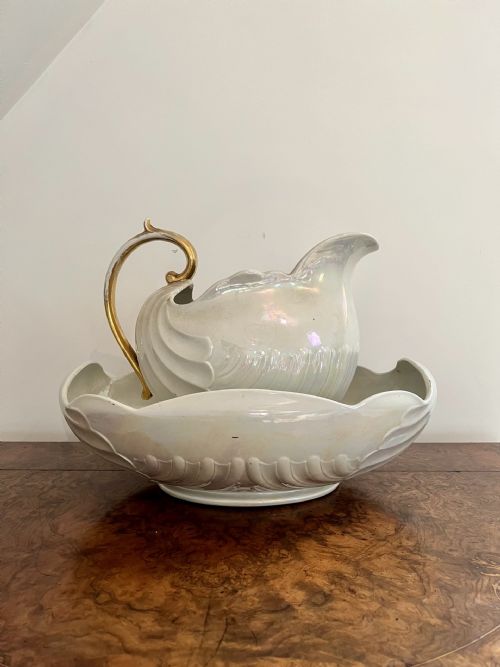
A vintage ceramic wash set combines a large basin and a matching jug, originally designed for the bedroom before plumbed indoor bathrooms became common. These collections survive in various forms such as footbaths, shaving stands, and complete bathroom suites spanning the Victorian, Edwardian, and Art Nouveau periods.
The pieces on this page lean heavily towards Edwardian and Victorian examples, alongside early twentieth-century porcelain and ironstone productions. Buyers will encounter both simple utilitarian items and ornate decorative sets intended for display.
Materials and Construction
Potters relied primarily on earthenware, ironstone, and porcelain to form the heavy bodies of the jugs and basins. These materials provided the necessary durability to withstand daily use with hot water before receiving smooth protective coats of glaze.
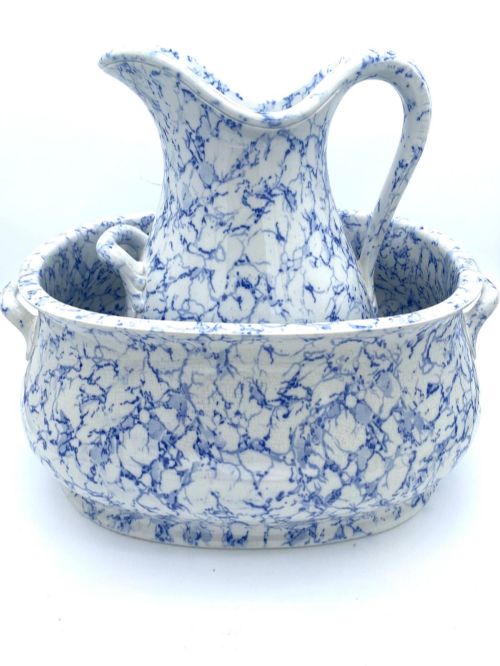
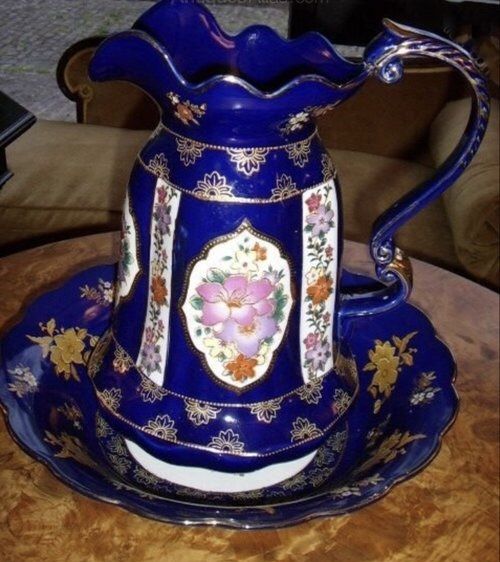
Decoration involved hand-applied enamel, cobalt blue pigments, and occasional touches of gold leaf to accentuate moulded rims and handles. Flow blue printing techniques also created soft, blurred designs beneath the glaze during firing.
Vintage Ceramic Wash Set Retail Price Guide 2026
Typical asking prices for vintage ceramic wash set among the pieces listed under this phrase on Sellingantiques today, from the lower quarter to the upper quarter. They describe what is for sale here now, not the wider market.
Some Victorian jugs feature generous spouts designed specifically to prevent splashing during hasty morning ablutions.
Distinctions in Quality
Quality rests upon the crispness of the moulding and the consistency of the glaze application across both the jug and the matching bowl. Superior pieces maintain exact registration in their transfer-printed patterns without blurring or smudging.
Works from prominent makers demonstrate greater refinement in the weight of the ceramic and the delicate balance of the handle. Lesser examples show minor pooling in the glaze or slight warping from the kiln firing process.
Minton·Masons Ironstone·Doulton Burslem·Mark Jones And Sons·Shelley
The Vintage Ceramic Wash Set Glossary
- Ironstone
- A dense, durable type of earthenware patented in the nineteenth century. It resists chipping better than standard pottery and forms the body of many heavy jugs.
- Flow blue
- A cobalt printing style where the colour intentionally bled slightly into the surrounding white glaze during firing. This produced a misty, atmospheric appearance on the ceramic surface.
- Earthenware
- Porous pottery fired at lower temperatures than porcelain. It requires a complete vitreous glaze to hold water effectively.
- Basin
- A wide, shallow bowl made to hold water for washing. In a wash set, it pairs directly with a matching tall-handled jug.
Vintage Ceramic Wash Set: Frequently Asked Questions
How were wash sets used?
Before indoor plumbing reached bedrooms, people used these sets for morning washing and grooming. Water was poured from the large jug into the basin for face and hands.
Servants would fill the jugs with warm water from the kitchen. The complete set sat atop a wooden washstand fitted with a marble or tile top.
Where can I display a wash set?
These sets suit large bathrooms, hallways, or living rooms where the jug and basin sit safely on a sturdy sideboard or table. Some collectors place them on dedicated wooden washstands.
Keep the pieces away from high traffic areas where the heavy ceramic might get knocked. Placing the jug inside the basin adds stability during display.
How do I date a wash set?
Examine the maker marks stamped or printed on the underside of the ceramic base. Reference books and pottery registry numbers help narrow down the exact decade of manufacture.
Stylistic clues such as floral transfer prints indicate Victorian taste, while flowing organic lines point toward Art Nouveau. The weight of the ceramic and the thickness of the glaze also offer hints about the period.