




Vintage Ceramic Desk Lamp
A vintage ceramic desk lamp brings character and warm illumination to a workspace, combining period craftsmanship with practical daily use.
Vintage Ceramic Desk Lamp
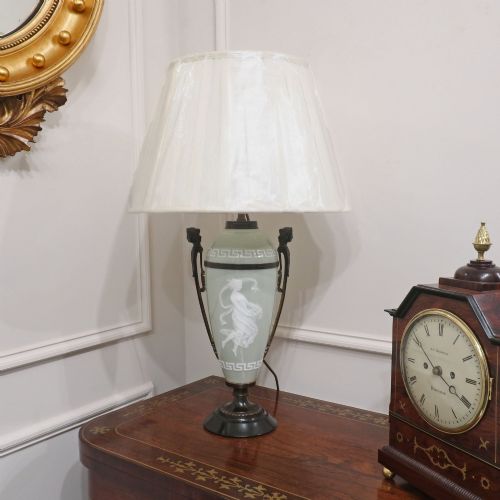
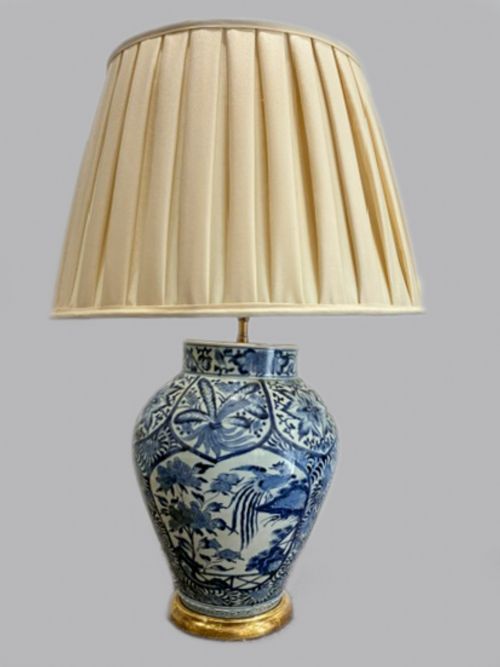
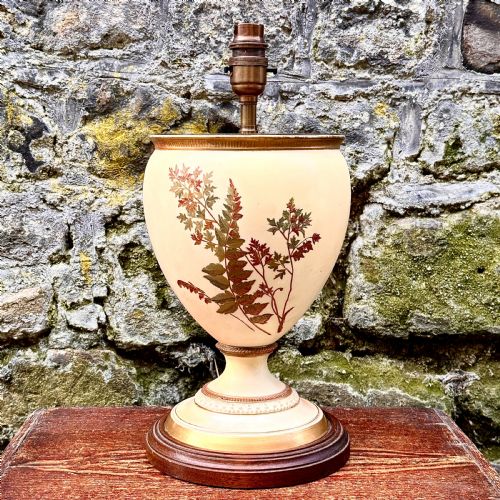
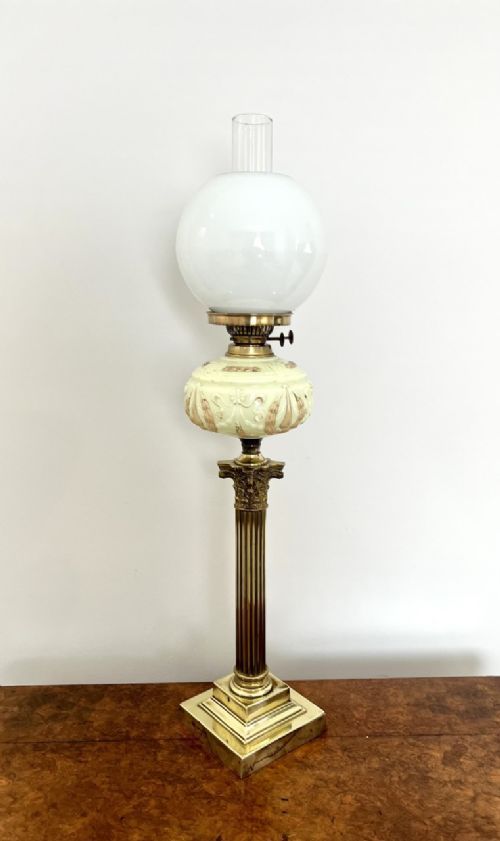
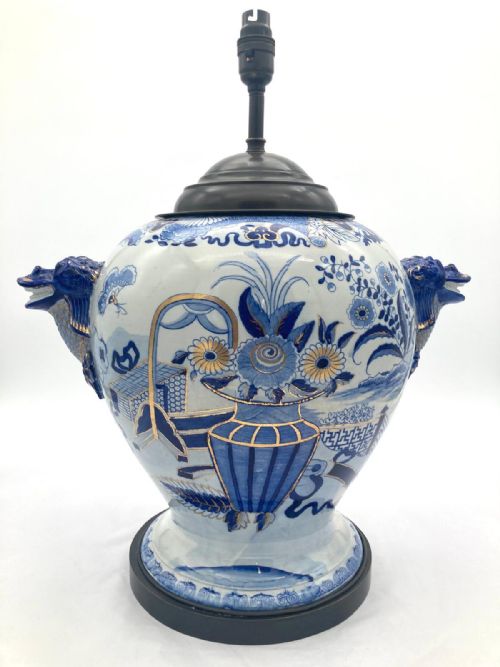
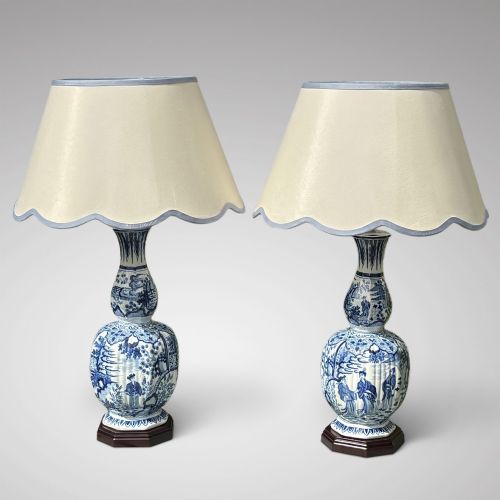
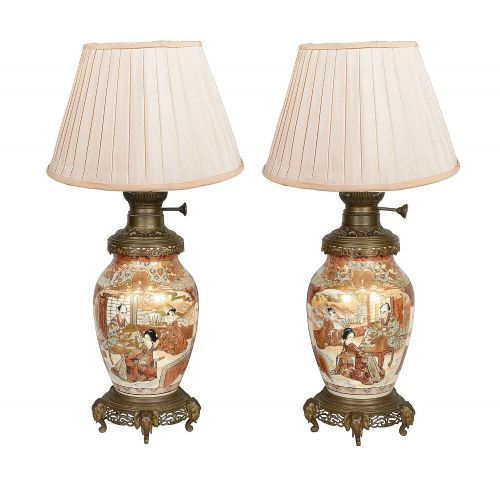
A vintage ceramic desk lamp is typically formed by converting antique vases, oil lamps, and decorative vessels into functional lighting fixtures. The selections here span centuries of global ceramic traditions, including Japanese Satsuma and Imari, Chinese Famille Verte, Dutch Delftware, and European porcelain bodies.
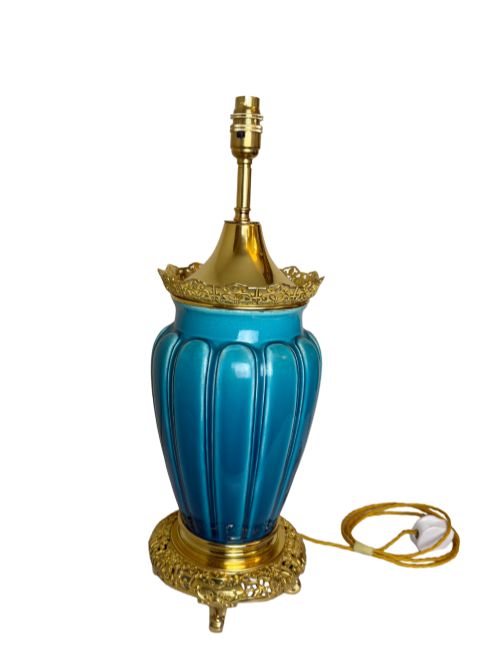
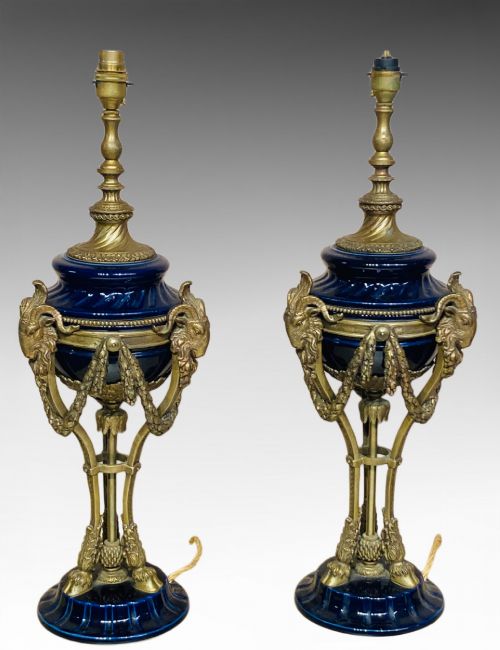
Many examples pair historic ceramic bodies with later electrical fittings or repurposed oil lamp hardware, often incorporating brass, gilt bronze, and ormolu mounts. Buyers frequently encounter pieces originating from the nineteenth and early twentieth centuries, alongside earlier converted vessels.
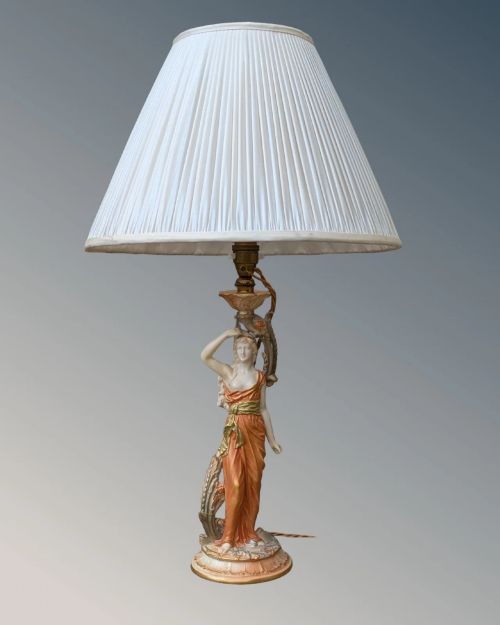
The forms range from small figural animal lamps and spitz dogs to substantial glazed ginger jars and baluster vases mounted for illumination. Each object reflects the prevailing decorative tastes of its period, from Chinoiserie and Art Deco to Victorian and Edwardian stylings.
Materials and construction
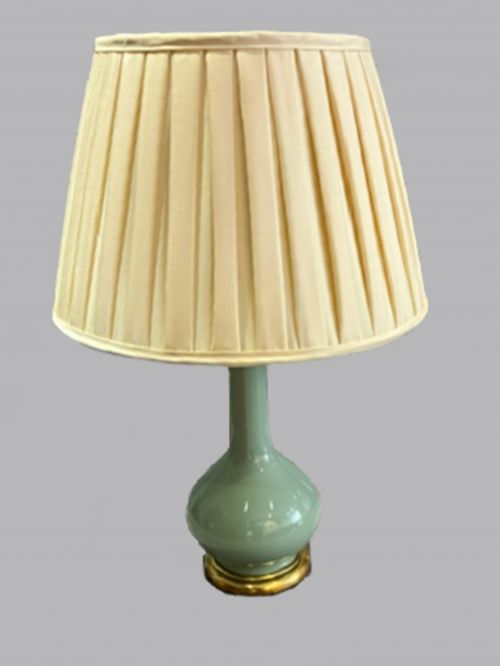
The primary material foundation relies on fired ceramic, porcelain, ironstone, and earthenware bodies, often decorated with hand-painted underglaze blue, polychrome enamels, or crackle glazes. These historic vessels frequently originate as vases or oil lamps before undergoing conversion into electric table lighting.
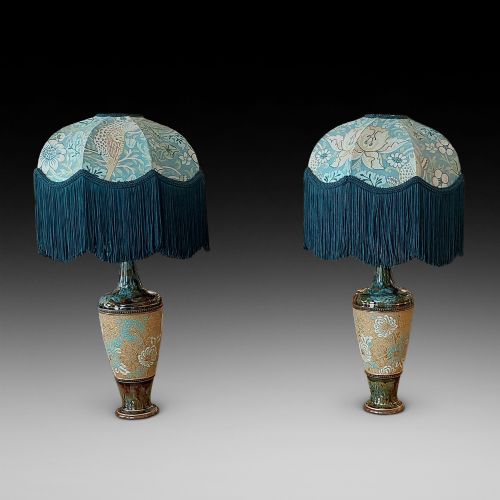
Metal mounts in brass, gilt bronze, and ormolu provide structural support and decorative enrichment, securing the ceramic body to weighted bases. Fabric, silk, and card shades complete the assembly, though many surviving bases are offered ready for bespoke shade pairing.
Materials commonly paired with these ceramic bases include brass, gilt bronze, ormolu, and hand-painted silk shades.
Distinguishing quality
Quality rests in the artistic merit and preservation of the ceramic body, where hand-painted detail, depth of glaze, and clarity of pigment separate standard production from finer studio or factory work. Well-executed mounts cast in brass or gilt bronze align precisely with the contours of the vessel without obscuring the historic ornament.
The integrity of the conversion matters significantly, as professional mounting preserves the original ceramic without causing structural damage or irreversible alteration. Balanced proportions between the vase body and the lighting hardware ensure visual harmony.
Royal Worcester·Ernst Bohne and Sohn·Denby Ware·Hicks and Meigh
The Vintage Ceramic Desk Lamp Glossary
- Ormolu
- Gilded bronze mounts applied to furniture and ceramics. This technique was widely utilised in French decorative arts to accent porcelain forms.
- Satsuma
- Japanese earthenware pottery featuring a crackle ivory glaze decorated with polychrome enamels and gilt. These wares were frequently exported to Europe and later adapted into lamps.
- Delftware
- Tin-glazed earthenware originating from the Netherlands, traditionally finished in blue and white. Pieces often display motifs inspired by imported Chinese porcelain.
- Famille Verte
- A Chinese porcelain palette dominated by green enamel colours, developed during the Qing dynasty. The style frequently depicts narrative scenes, floral arrangements, and natural subjects.
- Pate Sur Pate
- A porcelain decoration method where liquid clay is painted in successive layers onto a coloured body to create a low relief cameo effect.
Vintage Ceramic Desk Lamp: Frequently Asked Questions
Are these lamps recently wired?
Many vintage ceramic lamps undergo rewiring to meet modern safety standards while retaining their historic components and brass fittings.
Buyers should inspect the specific listing details to confirm whether a piece has been recently tested by a qualified professional.
Can I use standard lamp shades?
Most standard harp and spider fittings accommodate contemporary shades, provided the drop and diameter suit the scale of the ceramic base.
Matching the weight and proportions of the vessel ensures the finished lamp remains stable on a desk or table.
How do I clean ceramic lamp bases?
Dust glazed porcelain and ceramic bodies gently with a soft, dry cloth to prevent accumulation in recessed areas or hand-painted details.
Avoid abrasive cleaners or harsh solvents that might damage delicate overglaze enamels, gilt highlights, or historic finishes.
How do I identify the period?
Dating relies on stylistic markers, glaze characteristics, factory marks on the ceramic base, and the style of the associated metal mounts.
Comparing the decorative motifs against known periods such as the Meiji era, Victorian epoch, or Art Deco movement helps confirm origin.