

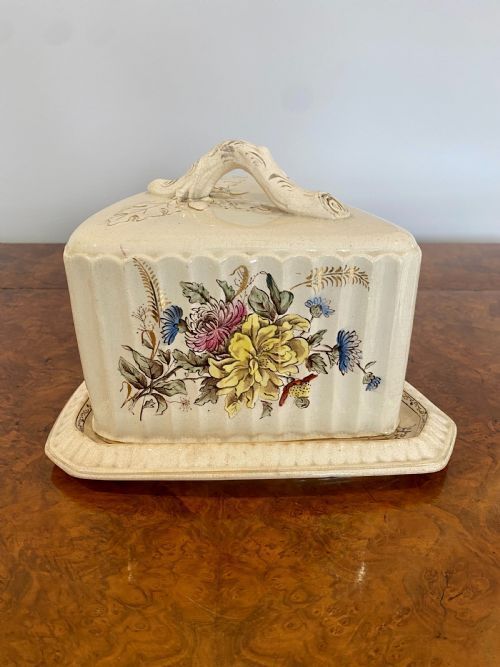
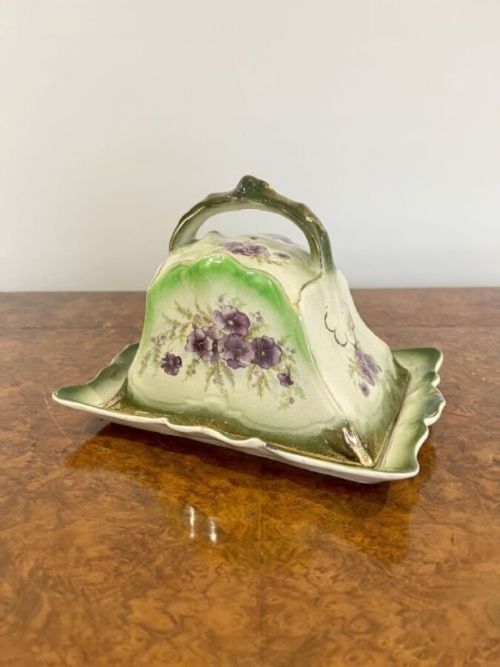
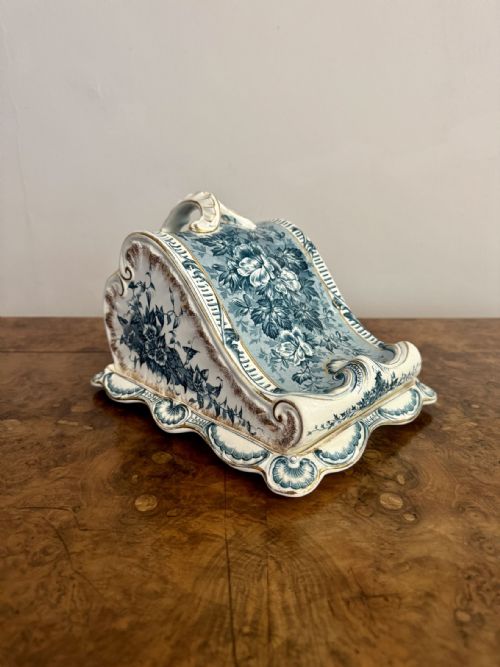


Vintage Ceramic Cheese Cover
A vintage ceramic cheese cover protects the table and keeps the rind moist, bringing genuine utility and Victorian charm to the dining room.
Vintage Ceramic Cheese Cover
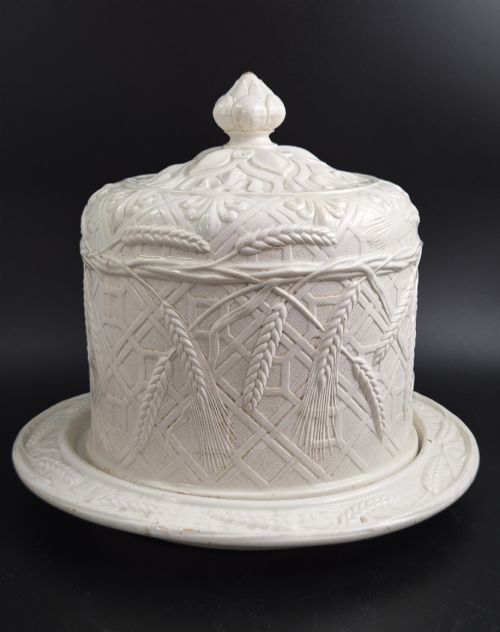
When you search for a vintage ceramic cheese cover, you encounter practical table domes and matching stands designed to store and present cheese in nineteenth-century households. The examples appearing on this page span the Victorian and Edwardian eras, covering dates from around 1845 through to 1900.
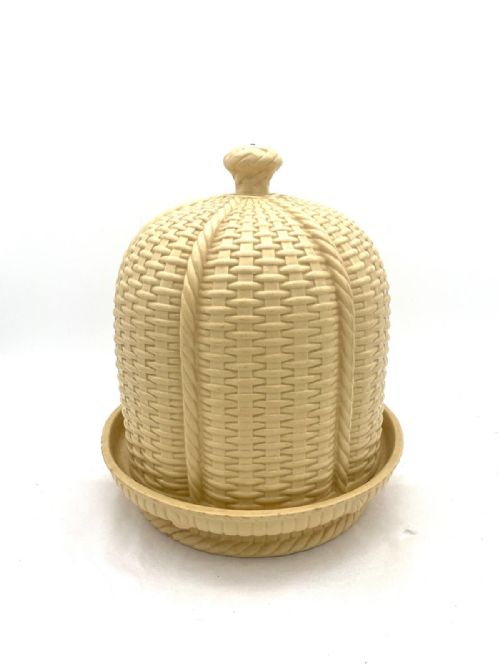
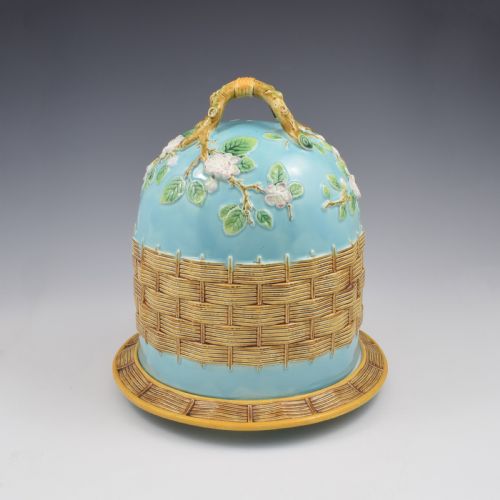
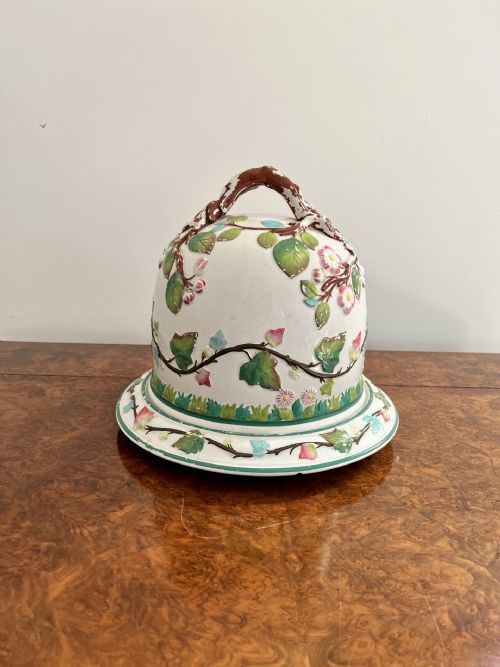
Most items on this page take the form of cheese domes, cheese dishes, and cheese bells complete with their original stands. These pieces range from restrained white ironstone to richly coloured Majolica and drabware.
The styles recorded in the listings include Victorian, Edwardian, and Victorian Majolica. These objects reflect the heavy dining table requirements of the nineteenth century, functioning as both serveware and functional storage.
How they were made
The pieces listed here rely primarily upon earthenware, ironstone, and glazed ceramic bodies. Potters shaped these materials into heavy domes and fitted stands capable of enduring daily household use.
Surfaces received decorative treatments including glaze, gilt, and gilding to enhance their visual appeal. Modelled patterns such as basket weave, wheat and lattice, and apple blossom were frequently applied to the exterior walls.
Vintage Ceramic Cheese Cover Retail Price Guide 2026
Typical asking prices for vintage ceramic cheese cover among the pieces listed under this phrase on Sellingantiques today, from the lower quarter to the upper quarter. They describe what is for sale here now, not the wider market.
Victorian diners relied on these heavy ceramic domes to guard their cheddar from adventurous household cats.
What varies in quality
Quality rests upon the crispness of the moulded decoration and the depth of the glaze. Pieces featuring detailed motifs like apple blossom or basket weave show greater ambition in the ceramicist's craft.
The presence of supplementary ornamentation such as gilt and gilding separates standard utilitarian kitchenware from more decorative dining room pieces. Matching domes and stands that retain their original harmony indicate superior manufacture.
George Jones
The Vintage Ceramic Cheese Cover Glossary
- Ironstone
- A dense, durable type of earthenware patented in the nineteenth century. It provided a robust alternative to porcelain for heavy domestic items like cheese domes.
- Majolica
- A type of earthenware coated in an opaque lead glaze and painted with metallic oxide colours. This technique created the vibrant green, brown, and pink tones seen on Victorian cheese bells.
- Drabware
- A style of pottery characterised by its dull greyish-brown or olive-coloured body. It gained popularity during the early nineteenth century for utilitarian tableware.
- Cheese Dome
- A large domed cover designed to fit over a matching tray or stand. It trapped humidity and kept cheese fresh before the advent of domestic refrigeration.
- Gilding
- The application of gold leaf or gold paint to ceramic surfaces. This decoration was typically reserved for pieces intended for formal dining rooms.
Vintage Ceramic Cheese Cover: Frequently Asked Questions
What is a vintage ceramic cheese cover?
A vintage ceramic cheese cover is a domed lid paired with a matching tray designed to house and protect cheese at the table. These pieces originated in the nineteenth century when households needed a practical way to keep dairy items fresh.
Today, collectors value them for their varied glazes and sculptural forms. They serve as functional kitchenware or decorative dining room centerpieces.
How do I date a ceramic cheese dish?
Dating a ceramic cheese dish relies on identifying the underlying material and decorative style. Items from the mid-nineteenth century often feature drabware or heavy white ironstone, whilst later Victorian examples frequently showcase colourful Majolica glazes.
Examining the moulding technique and any impressed marks helps narrow down the period. Pieces listed here stretch from the 1840s through to the Edwardian era.
How were cheese covers used?
Victorian families placed large blocks of cheese on the matching stand and covered them with the ceramic dome between meals. This prevented the cheese from drying out and kept insects away in an era without refrigeration.
They were brought out during breakfast or after dinner when cheese was served as a separate course. The heavy earthenware also helped maintain a stable temperature for the dairy.
What is Victorian Majolica?
Victorian Majolica is a type of glazed earthenware developed in the nineteenth century featuring bright, blended coloured enamels. Potters used this technique to render naturalistic motifs such as apple blossom and basket weave with high relief.
Such pieces stand out for their glossy finish and rich palette. They represent some of the more decorative examples found among nineteenth-century serveware.
How do I care for an antique cheese dome?
Antique cheese domes require gentle hand washing in warm water using mild soap to preserve their historic glazes. Avoiding harsh scrubbers protects delicate surface details like gilt work and painted enamel.
Displaying them away from direct heat sources prevents thermal shock to the old ceramic body. Regular dusting keeps the raised moulded patterns clear of debris.