





Vintage Ceramic Charger
A vintage ceramic charger brings weight and bold pattern to a wall or table, drawing the eye with rich colour.
Vintage Ceramic Charger
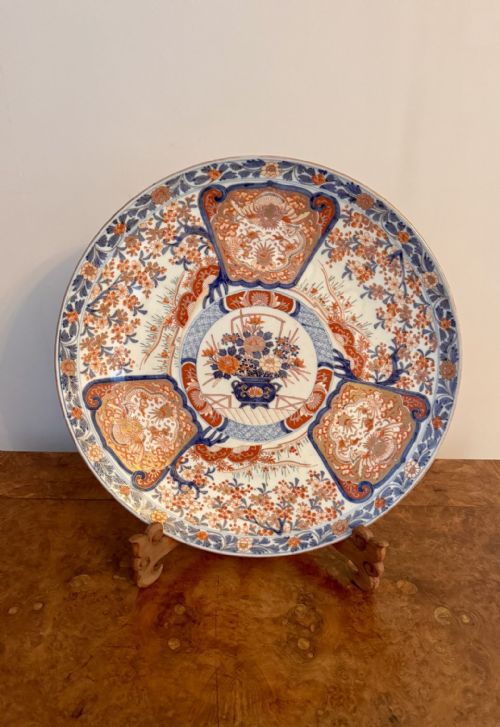
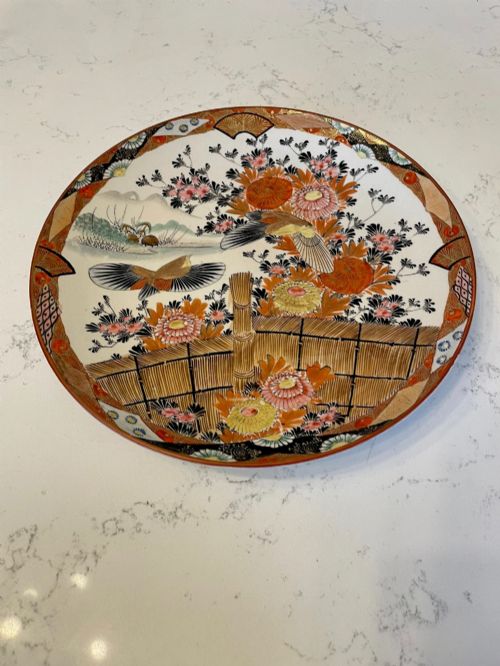
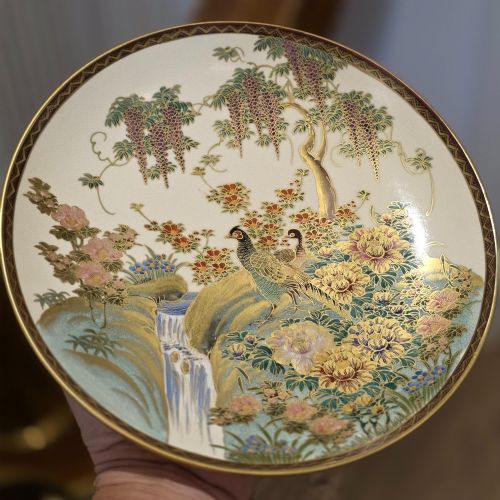
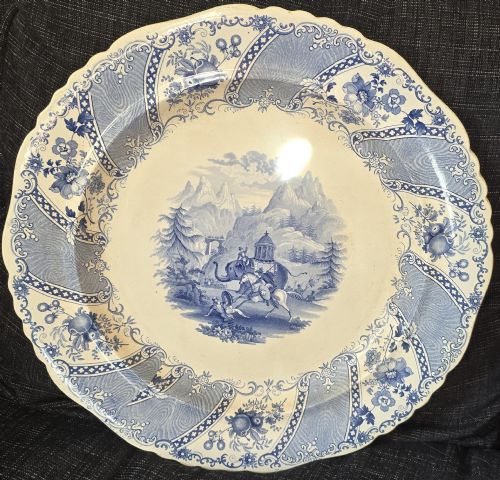
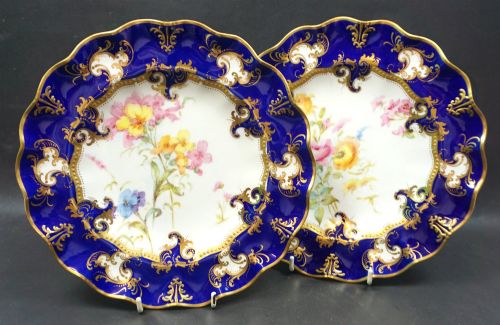
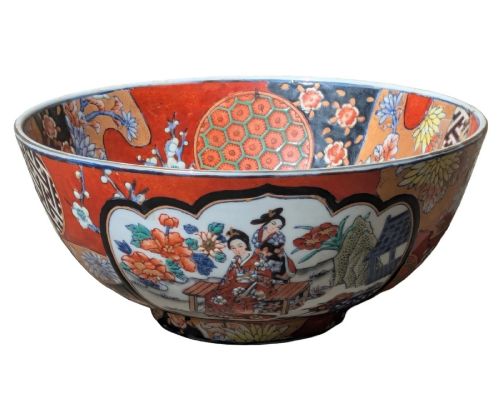
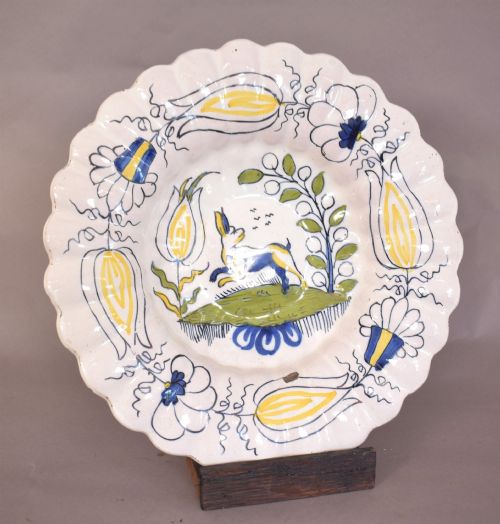
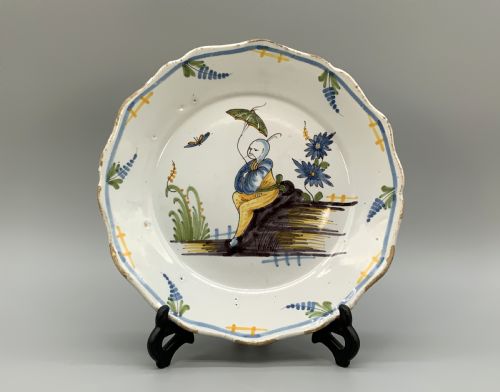
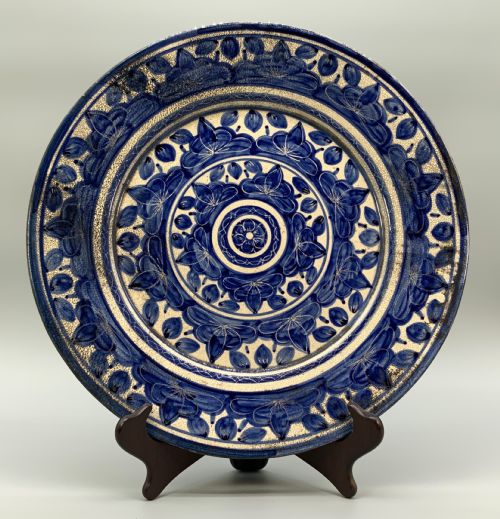
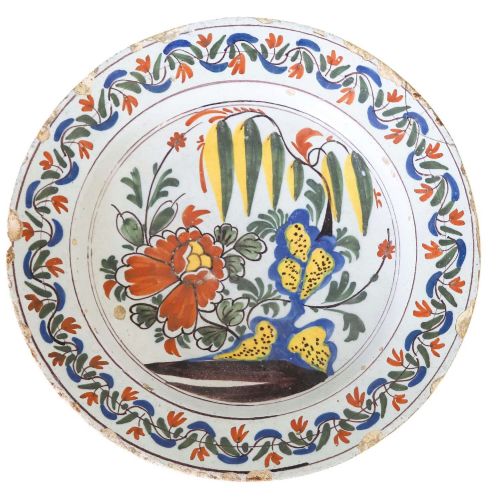
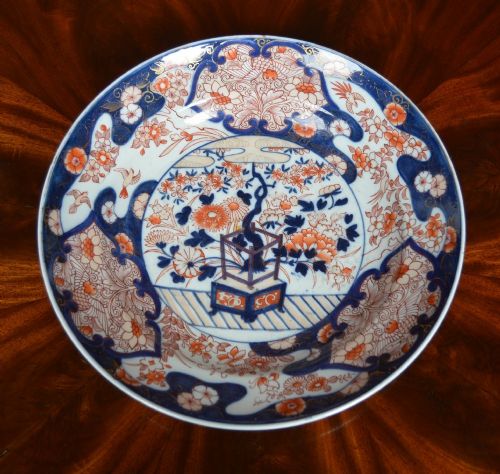
A vintage ceramic charger stands as a large decorative plate or shallow dish, traditionally meant for display rather than everyday dining. When searching for a vintage ceramic charger, buyers encounter pieces spanning from eighteenth-century Delftware to nineteenth-century Japanese Imari porcelain and transferware platters. These substantial vessels were designed to command attention on sideboard furniture or dining tables.
The pieces appearing here include tin-glazed earthenware, porcelain, and pottery decorated with hand-painted motifs or transfer prints. Styles range from Dutch Baroque and Georgian blue and white to Japanese Meiji period Imari and Moorish designs. Such variety offers collectors a broad spectrum of historical ceramics to examine.
How they were made
Potters shaped these large plates from clay bodies including earthenware, porcelain, and tin-glazed earthenware, often firing them in kilns before applying decorative techniques. Artisans utilised hand-painting with polychrome pigments or cobalt blue, alongside transfer printing methods seen on nineteenth-century transferware. Gold leaf and enamel additions appear on select porcelain pieces to enhance the surface detail.
Glazes played a fundamental role in finishing these ceramic surfaces, providing a glossy protective layer over the painted or printed designs. Tin-glazing created an opaque white ground suited for European delftware painting, while high-fired porcelain bodies relied on transparent glass-like coatings.
Vintage Ceramic Charger Retail Price Guide 2026
Typical asking prices for vintage ceramic charger among the pieces listed under this phrase on Sellingantiques today, from the lower quarter to the upper quarter. They describe what is for sale here now, not the wider market.
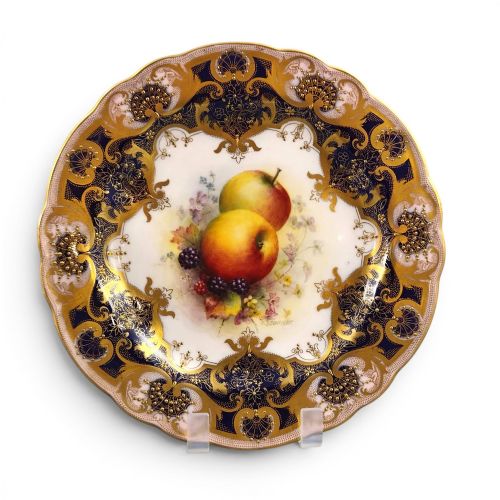
Listings feature ceramics spanning multiple centuries, from eighteenth-century Delftware to twentieth-century porcelain cabinet plates.
What varies in quality
The distinction between standard production and exceptional work rests in the precision of the hand-painting and the clarity of the design. Master painters achieved finer brushwork and richer colour saturation on cabinet plates and large chargers, whereas lesser examples display simpler, hurried execution.
Material choice and firing success also dictate standard. Well-preserved glazes with minimal kiln flaws, crisp transfer prints, and robust porcelain bodies separate high-grade chargers from ordinary utilitarian pottery.
William Smith & Co·Royal Crown Derby·Royal Worcester·John Rogers & Son
The Vintage Ceramic Charger Glossary
- Charger
- A large decorative plate or shallow bowl typically measuring over thirty centimetres across. These pieces were historically used for ceremonial service or displayed on sideboards.
- Imari
- A style of Japanese porcelain featuring a distinctive palette of cobalt blue, iron red, and gilt highlights. Originating in Arita, these export wares became hugely popular across Europe.
- Tin-Glazed Earthenware
- Pottery covered with a lead glaze made opaque by the addition of tin oxide. This white surface provided an absorbent ground for painted decoration before a final firing.
- Transferware
- Ceramic pottery decorated by applying a printed design from an engraved copper plate onto tissue paper, which was then transferred to the biscuit ware. This technique allowed intricate pictorial scenes to be produced efficiently.
- Cabinet Plate
- A high-quality decorative plate intended for display in a glass-fronted cabinet rather than practical use at the dining table.
Vintage Ceramic Charger: Frequently Asked Questions
What is a vintage ceramic charger used for?
These large ceramic plates serve primarily as decorative centrepieces for walls, sideboards, or dining tables. Historically, similar vessels held food during formal meals or sat beneath smaller serving dishes.
Today, collectors use them to introduce bold colour and historic pattern into interior spaces. Wall mounting requires specialised plate hangers designed to support the substantial weight of these chargers safely.
How do I identify Delft chargers?
Delft chargers typically feature tin-glazed earthenware bodies with hand-painted blue and white or polychrome designs. Turn the piece over to examine the unglazed earthenware foot rim, which often shows typical reddish or buff clay beneath the white glaze.
Eighteenth-century examples frequently exhibit minor glaze flaking along the rim and slight warping from the kiln firing process. The brushwork on older pieces shows fluid, confident hand-painted motifs rather than mechanical precision.
Are Japanese Imari chargers porcelain?
Traditional Imari chargers are made from high-fired Japanese porcelain rather than softer earthenware. They feature the characteristic palette of underglaze cobalt blue and iron red, frequently enriched with gold leaf.
These pieces date across various periods including the Meiji era and earlier, showing dense floral, landscape, or figurative panels. The reverse sides often carry painted maker marks or stylized symbols.
How should I clean a ceramic charger?
Dust these decorative plates gently with a dry, soft cloth to remove everyday particles. Avoid submerging antique tin-glazed earthenware or pieces with gilt details in water.
Harsh chemical cleaners will damage fragile old glazes and painted surfaces. Professional conservation methods should be consulted for valuable cabinet plates requiring deeper cleaning.