

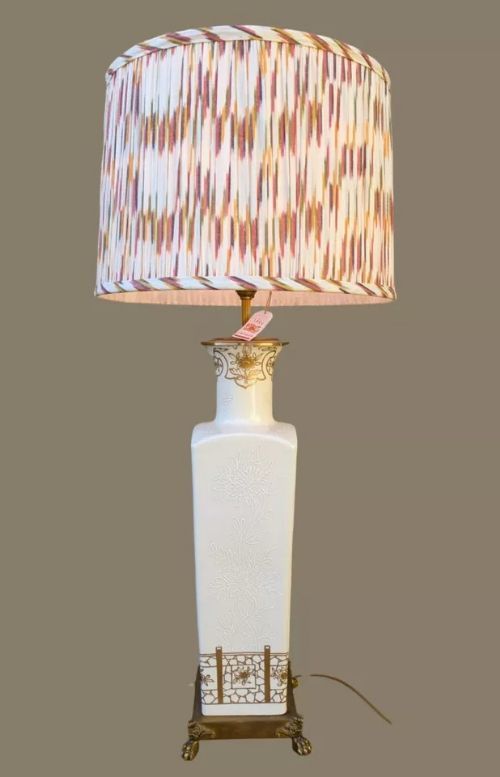
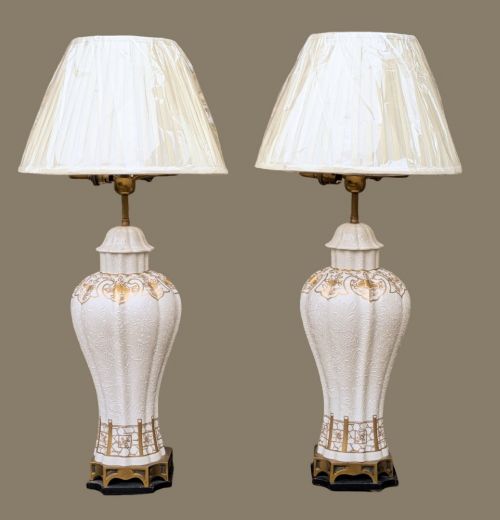
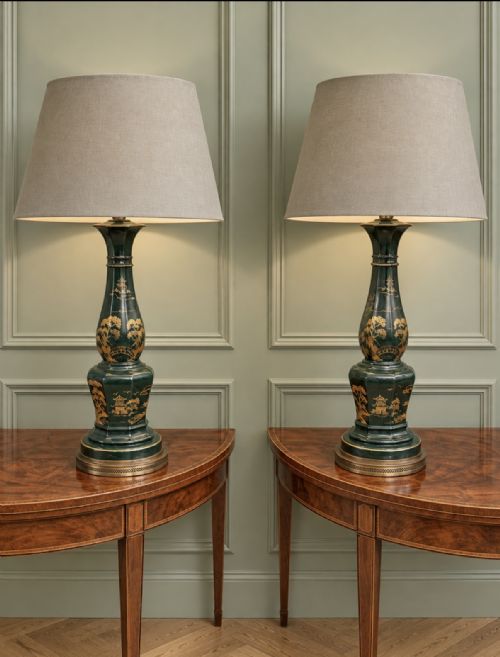
Vintage Ceramic Bedside Lamps
These vintage ceramic bedside lamps bring historical character and soft evening illumination to a room, drawing on centuries of porcelain, earthenware and pottery traditions.
Vintage Ceramic Bedside Lamps
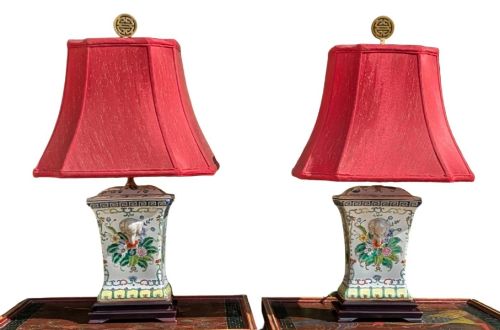
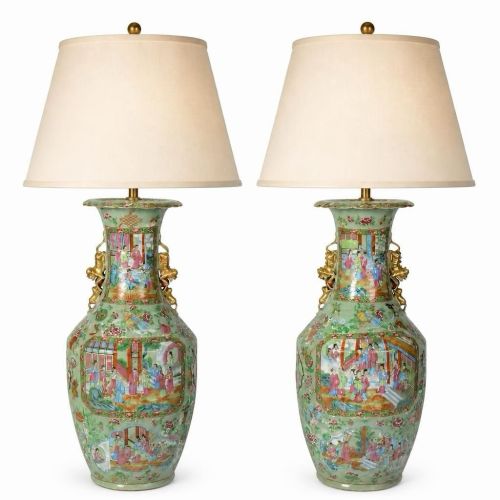
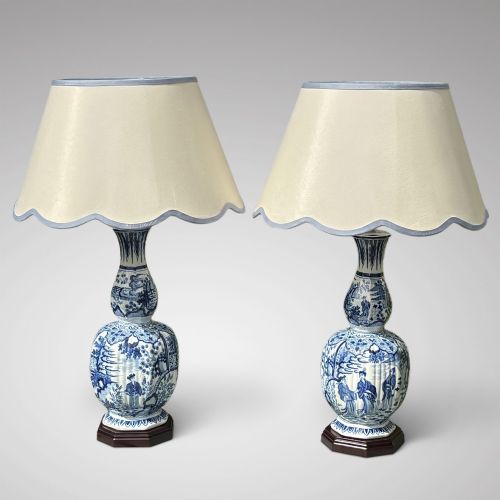
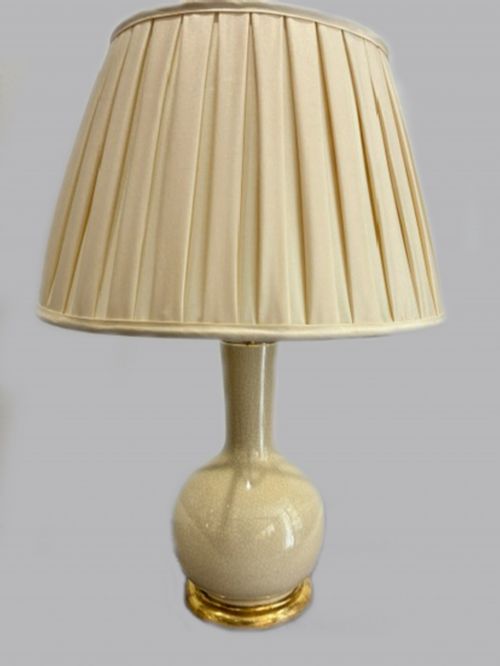
Vintage ceramic bedside lamps encompass table lamps fashioned from historical porcelain, earthenware and majolica bodies. When searching for vintage ceramic bedside lamps, buyers encounter diverse forms ranging from converted Chinese vases to European pottery bodies.
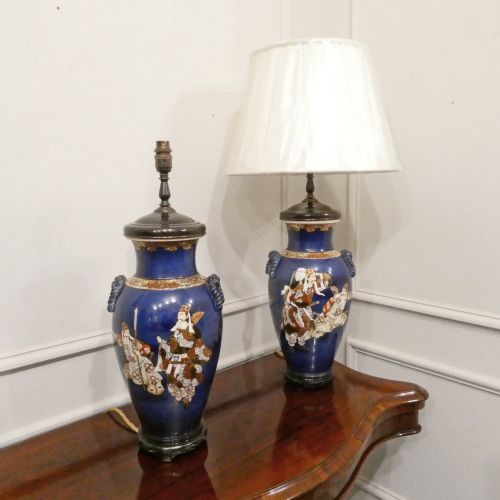
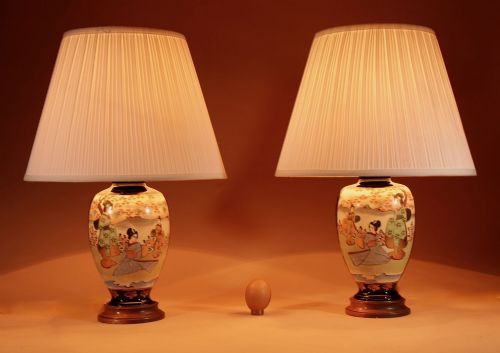
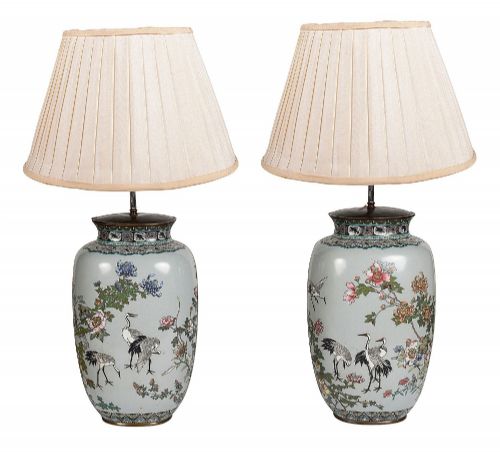
The selection includes pieces originating from nineteenth-century France, Victorian England and various Asian traditions including Japanese Satsuma and Kutani wares. Many examples adapt earlier vessels, such as ginger jars, tobacco jars and apothecary containers, into functional lighting.
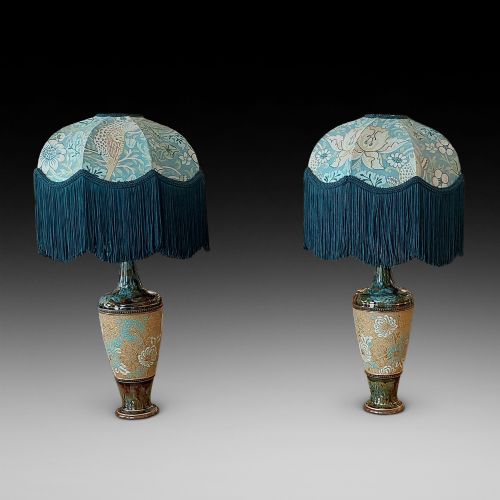
Pairs appear frequently among the listings, alongside individual statement pieces dating from the late nineteenth century through the Art Deco era of the nineteen-thirties. These luminaires merge decorative ceramic artistry with domestic utility.
Factors of quality and execution
Quality rests significantly on the artistic merit of the ceramic body, from hand-painted Satsuma enamel work to finely potted Paris porcelain. The precision of the original vessel and the skill of its decoration dictate the standing of the finished lamp.
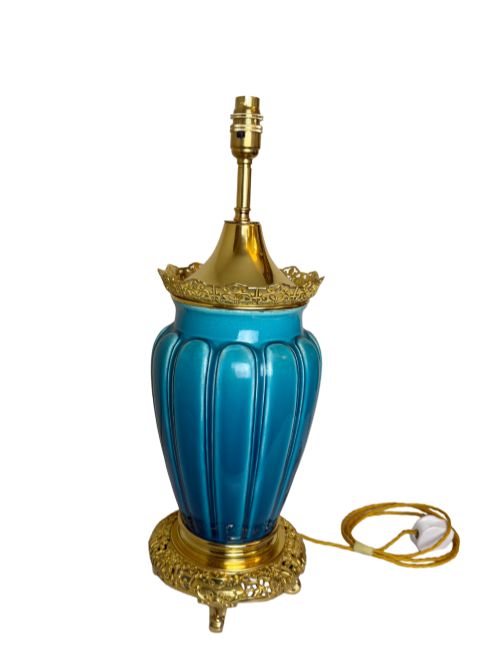
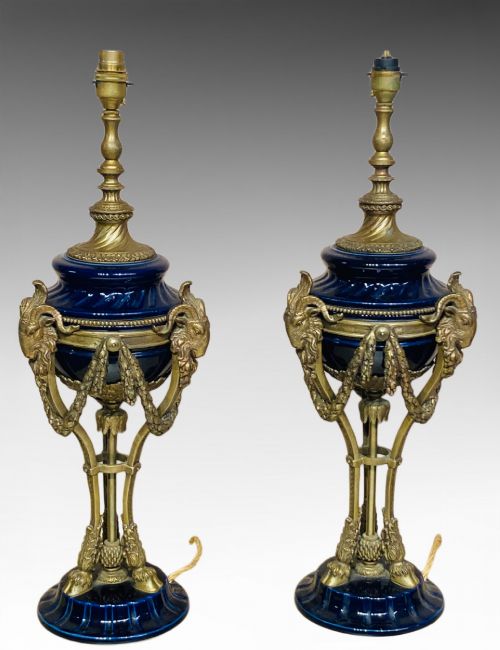
The integration of metal mounts, such as gilt bronze or ormolu trim, marks the distinction between standard utility lighting and superior decorative pieces. Harmonious proportions between the ceramic base and the metal fittings elevate the overall execution.
Vintage Ceramic Bedside Lamps Retail Price Guide 2026
Typical asking prices for vintage ceramic bedside lamps among the pieces listed under this phrase on Sellingantiques today, from the lower quarter to the upper quarter. They describe what is for sale here now, not the wider market.
The listings span periods from the nineteenth century through the Art Deco era, featuring materials such as brass, silk and porcelain.
Royal Doulton·Royal Worcester·Moorcroft Art Pottery·Ernst Bohne Sohn·Sitzendorf
The Vintage Ceramic Bedside Lamps Glossary
- Ormolu
- Gilt bronze ornamentation applied to furniture and lighting mounts. It provides a rich metallic contrast to glazed ceramic bodies.
- Satsuma
- Japanese earthenware pottery featuring a crackle glaze and elaborate polychrome enamel designs. These wares frequently depict figures, flora and fauna.
- Pate-sur-pate
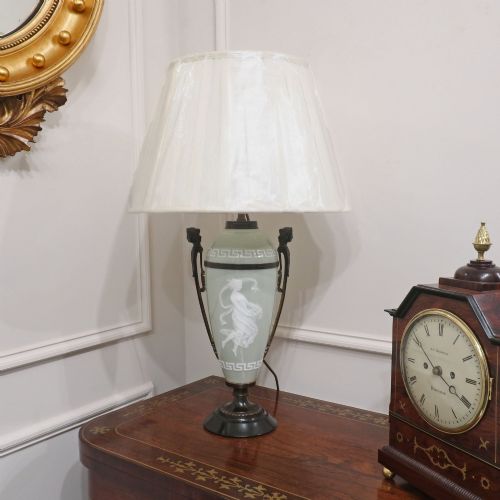
- A ceramic decoration technique where liquid clay is applied in successive layers to create a low relief cameo effect. This delicate method was favoured by advanced European porcelain factories.
- Cloisonne
- Enamel work created by placing metal wires on a base to form compartments filled with paste before firing. The technique produces intricate patterns in vibrant colours.
- Majolica
- Tin-glazed earthenware decorated with brightly coloured metal oxide paints on an opaque white glaze. Italian and European makers produced these vibrant vessels.
Vintage Ceramic Bedside Lamps: Frequently Asked Questions
Are these lamps safe to use today?
Most antique and vintage lamps retain older wiring that requires professional rewiring to meet current safety standards.
Qualified electricians can easily update the internal components while preserving the historic ceramic exterior and original metal mounts.
How do I choose the right shade?
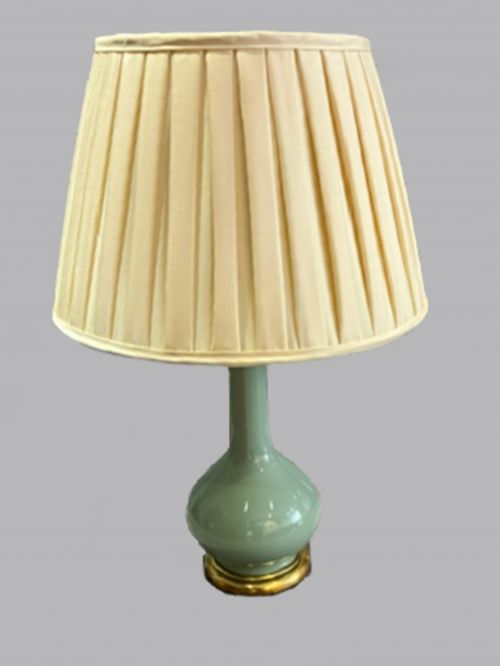
Selecting a shade involves balancing the height and width of the ceramic base with an appropriate fabric proportion.
Silk and linen shades in neutral tones or complementary colours help direct the light and highlight the glaze details.
How do I identify a converted vase?
Converted vessels often feature drilled holes at the base or modified rims to accommodate internal rods and electrical wiring.
Inspecting the underside or collar usually reveals the adaptation points where the original jar or vase became a lamp.
How should I clean porcelain bases?
Gentle dusting with a soft dry cloth removes everyday debris without risking delicate painted glazes or gilt bronze mounts.
Liquid cleaners and abrasive agents should be avoided to protect the historic surface finishes and hand-painted enamel details.