
Vintage Central Asian Tapestry
These vintage central asian tapestry pieces bring together tribal needlework and nomadic textiles from the nineteenth and early twentieth centuries.
Vintage Central Asian Tapestry
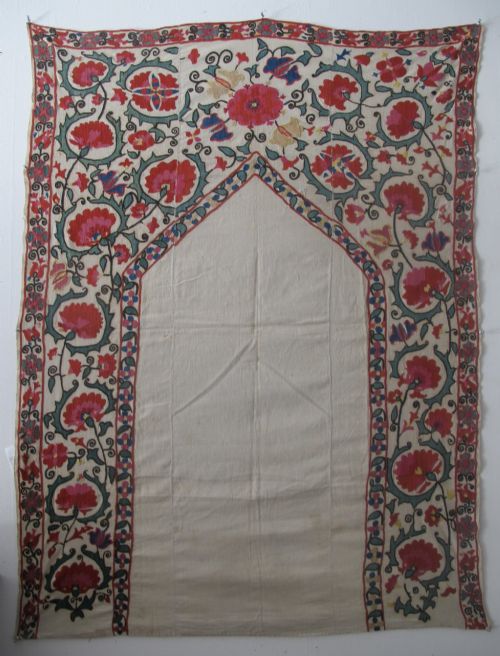
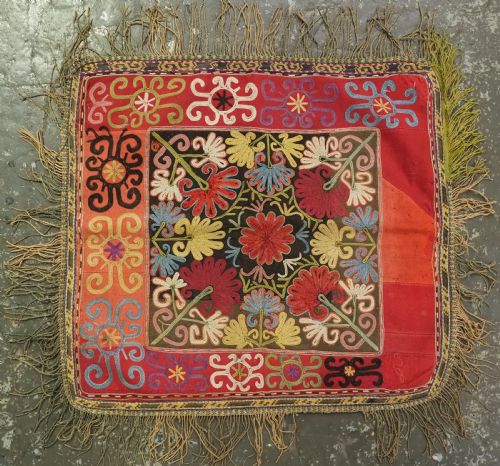
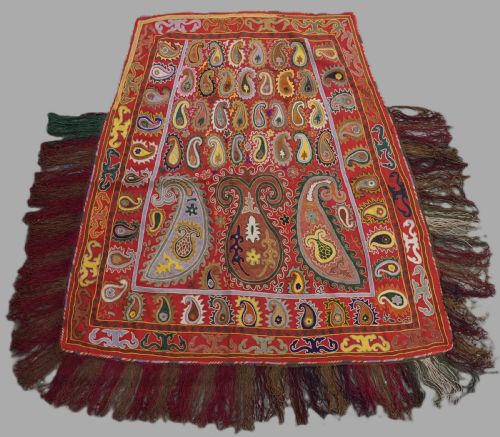
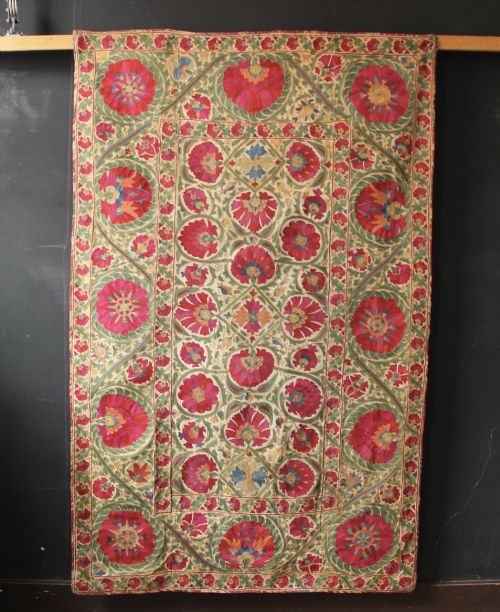
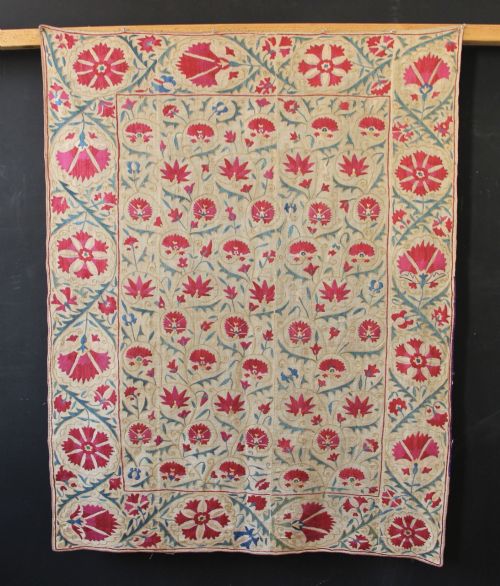
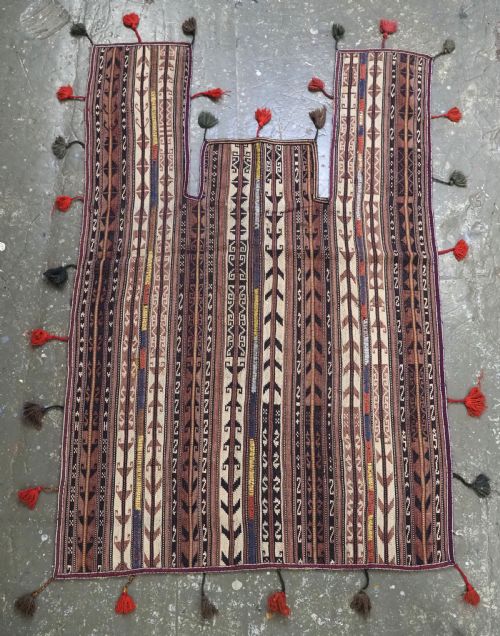
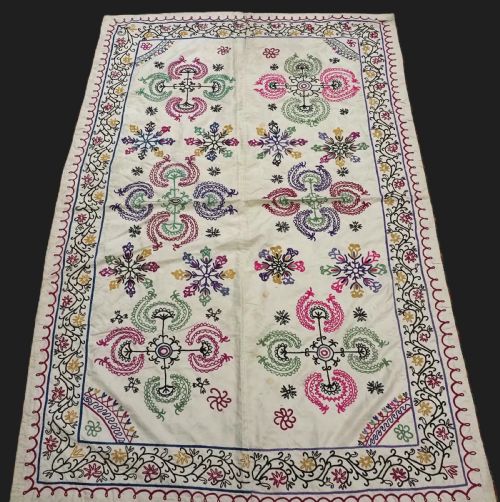
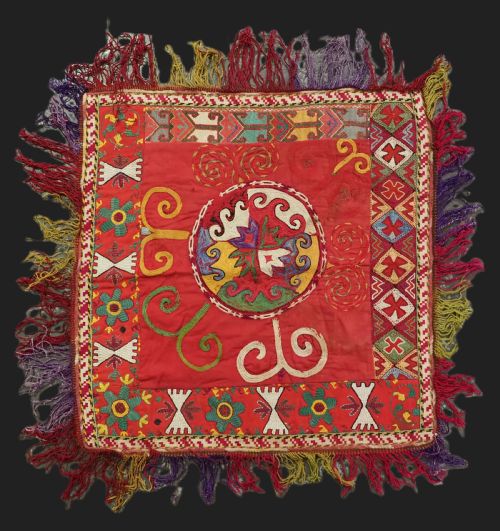
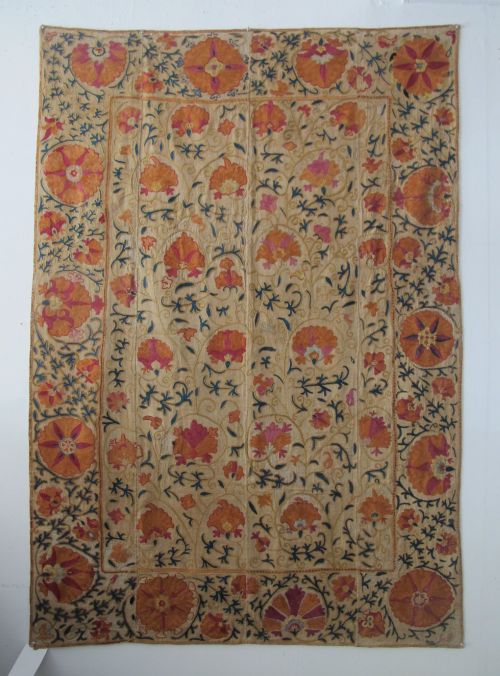
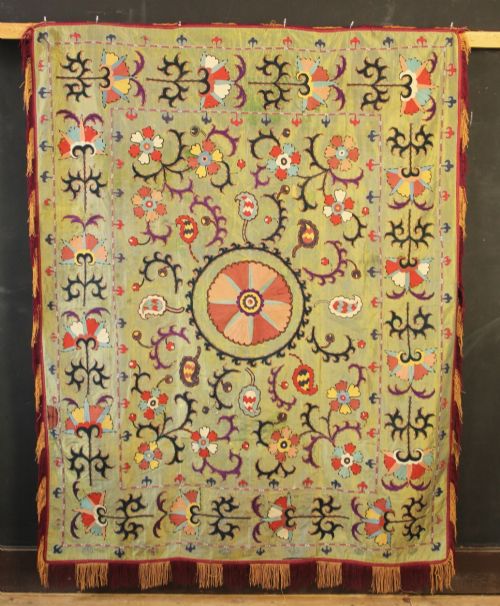
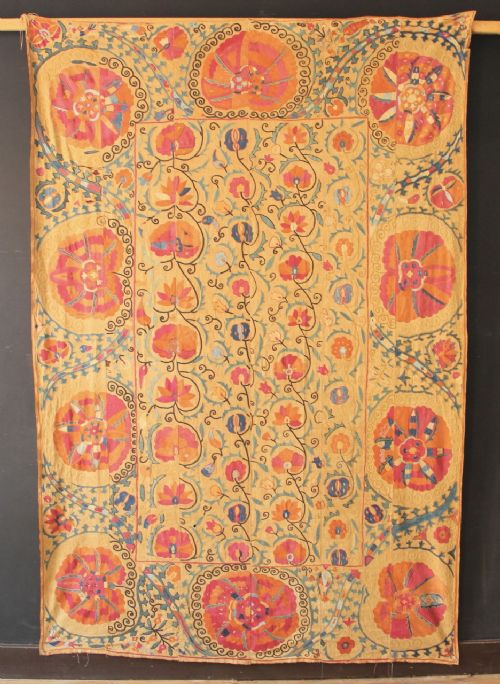
When buyers search for a vintage central asian tapestry, they encounter a range of embroidered and woven textiles originating from Uzbekistan, Turkmenistan, and surrounding regions. These objects include suzani embroideries, dowry hangings, tent bands, and ceremonial horse covers produced by tribal groups such as the Lakai, Yomut, and Tekke.
The selections span from the mid-nineteenth century through the early decades of the twentieth century. Wall hangings, bed covers, and small nim suzanis dominate the forms encountered in these listings.
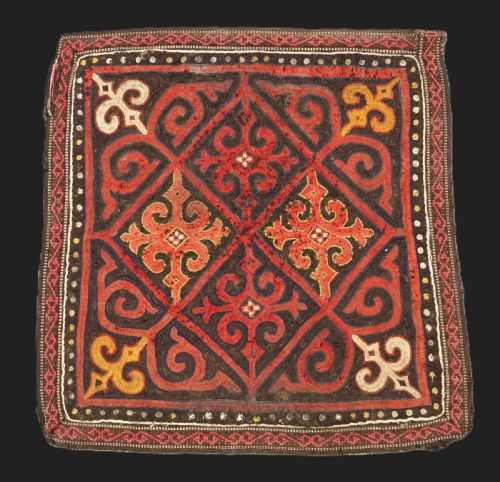
Regional variations shape the character of each piece, ranging from Bokhara and Shakhrisabz suzanis to Kyrgyz yurt wall hangings and kilim woven panels.
How they were made
Artisans constructed these textiles using hand-spun wool, cotton, and silk thread applied to cotton or wool foundations. Felt panels and camel hair also appear within the regional production methods.
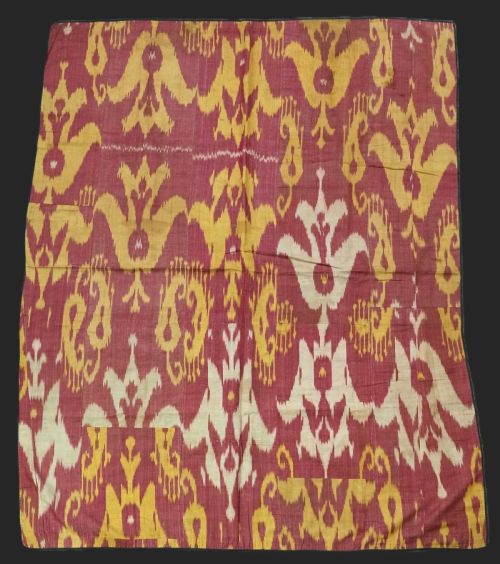
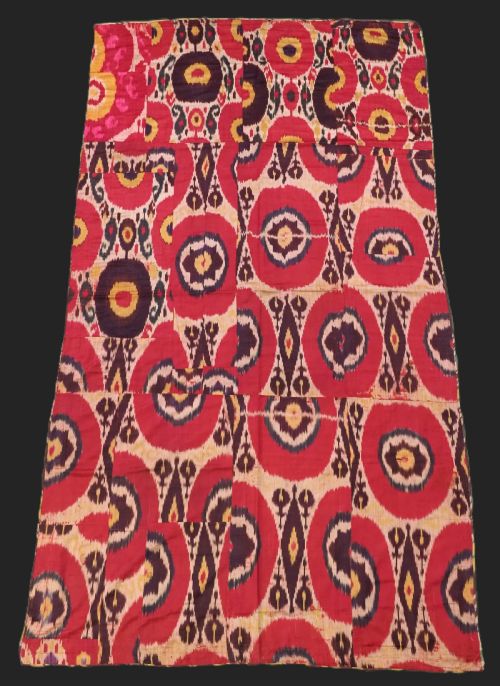
Surface ornamentation relies heavily on needlework, featuring silk embroidery stitches laid over woven grounds. Certain pieces incorporate ikat dyeing techniques or strips joined together to form larger panels.
Listings feature items dated from the 1850s through the 1930s, constructed from silk, wool, cotton, and felt.
What varies in quality
The density and fineness of the silk embroidery work define the upper tier of these textiles. Full work panels display meticulous needle control compared to sparser regional examples.
The integrity of the ground fabric and the vibrancy of natural dye colours influence the standing of individual pieces. Survival of original hanging loops and intact borders preserves the historical context of tribal items.
The Vintage Central Asian Tapestry Glossary
- Suzani
- An embroidered tribal textile from Central Asia, traditionally made as part of a bride's dowry. These pieces typically feature floral or medallion motifs stitched in silk on a cotton or linen ground.
- Ikat
- A dyeing technique where yarns are tie-dyed before weaving to create intricate patterns with characteristic blurred edges. These fabric panels appear frequently in Uzbek textiles.
- Asmalyk
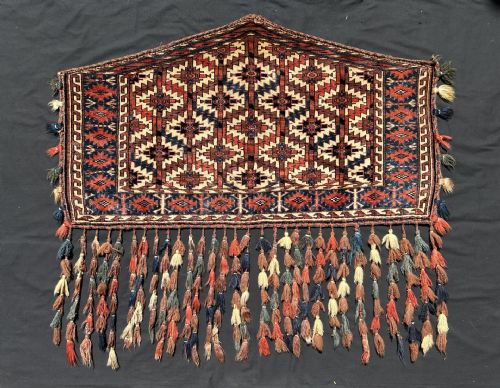
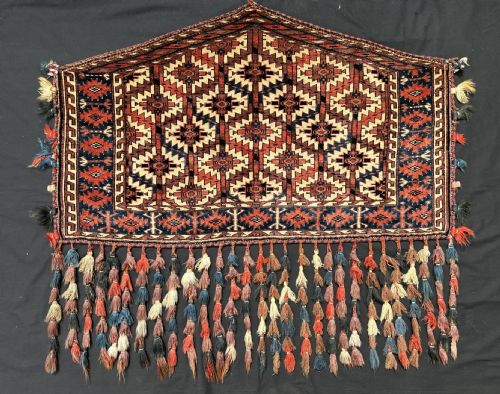
- A pentagonal trapping produced by the Yomut tribe in Turkmenistan, used during wedding processions on the flanks of a camel. They display geometric tribal guls.
- Gul
- A primary medallion motif used in Turkmen carpets and tribal trappings. These repeating octagonal patterns identify specific tribal groups.
- Nim
- A designation for a smaller-sized suzani embroidery, often half the scale of a standard wall hanging. These compact formats function well in domestic interior settings.
Vintage Central Asian Tapestry: Frequently Asked Questions
How were suzanis used originally?
These embroidered textiles served primarily as dowry items created by brides and family members for domestic use. Families hung them on yurt walls, laid them over beds, or draped them during ceremonial occasions.
Later, many were adapted as wall hangings in modern interiors while retaining their traditional function as decorative focal points.
What is a Lakai ilgich?
An ilgich is a small embroidered dowry hanging produced specifically by the Lakai tribe in Uzbekistan. They feature distinctive energetic geometric needlework and bright silk threads.
Collectors prize these pieces for their departure from formal floral suzani styles into bolder folk art expressions.
How do I care for an antique textile?
Protect these historic fabrics by keeping them away from direct sunlight to prevent silk and cotton thread fading. Mount them professionally without tension to support the weight of the textile.
Avoid moisture and abrasive cleaning methods, relying instead on gentle surface dusting by conservation specialists.
How do I date a Central Asian embroidery?
Dating relies on examining the types of dyes, ground fabrics, and regional stylistic markers present in the textile. Earlier nineteenth-century examples often utilise softer natural colour palettes and hand-spun wool foundations.
Mid to later pieces from the early twentieth century frequently incorporate commercial cotton grounds and synthetic highlights alongside traditional embroidery.