



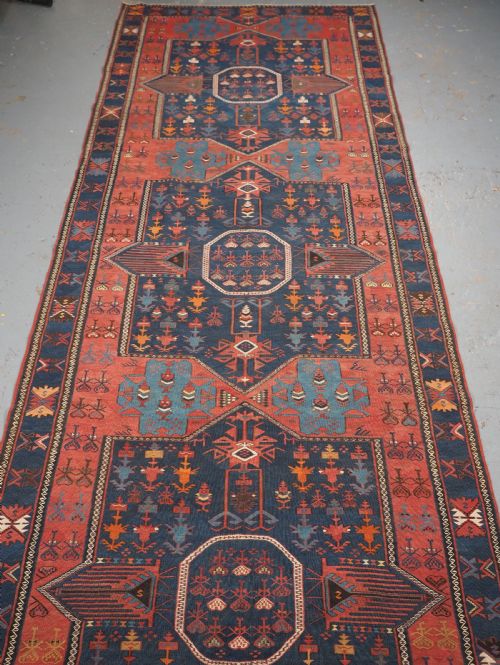


Vintage Caucasian Kilim
A vintage caucasian kilim brings bold tribal geometry and rich natural dyes directly onto the floor.
Vintage Caucasian Kilim
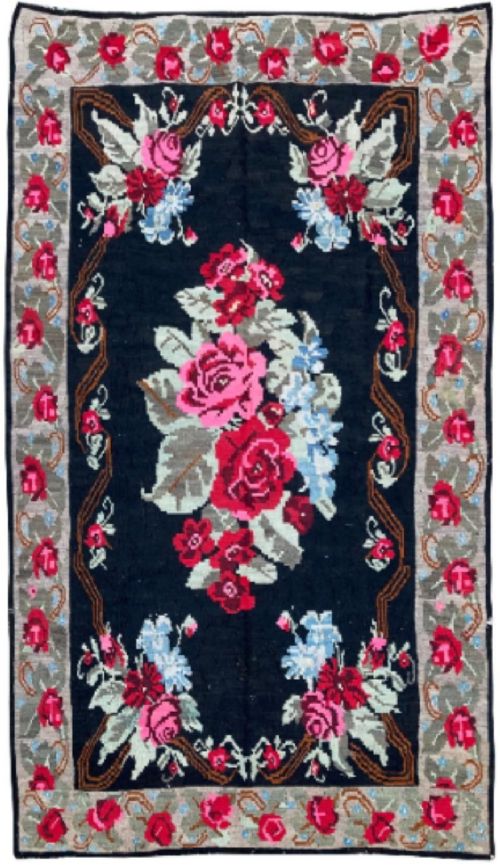
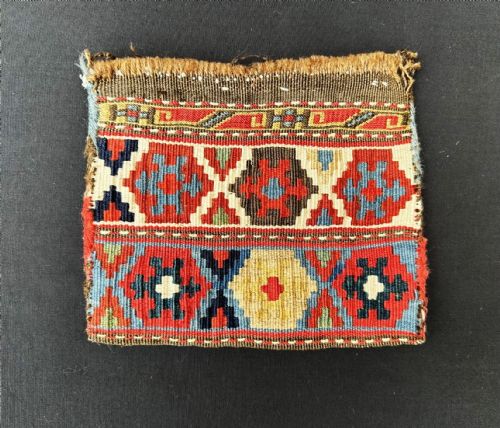
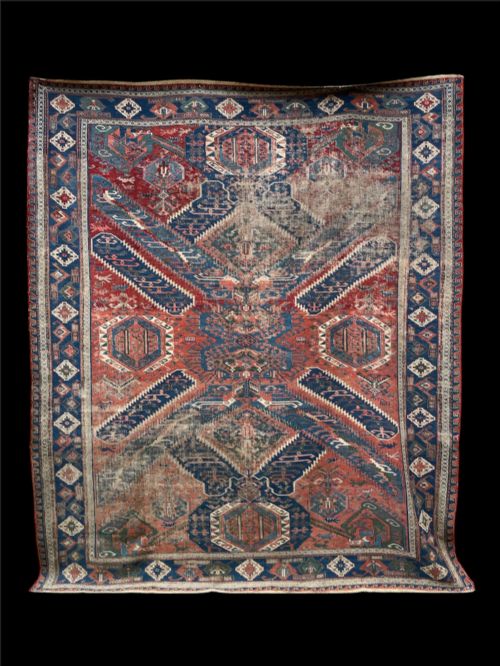
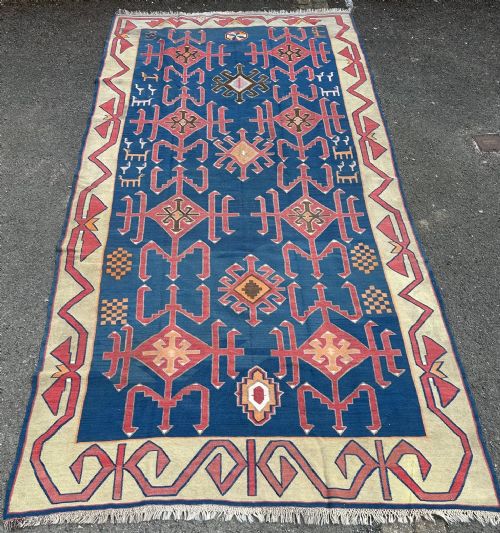
A vintage caucasian kilim is a flat-woven textile originating from the Caucasus region, spanning tribal weaving traditions from Karabagh, Shirvan, Kuba, and Daghestan. These pieces include large carpets, long narrow runners, and utilitarian items such as saddle bags and vanity bags.
Most examples encountered on this page date from the late nineteenth century up to the mid-twentieth century. Buyers will frequently find specific regional identifiers such as Shahsevan, Avar, and Armenian in the titles, reflecting distinct local weaving dialects.
The format varies from large banded carpets to smaller panels adapted into cushions or assembled from mafrash storage sides. Each format demonstrates the practical nomadic heritage of weaving without pile.
Assessing quality and weave
Quality rests upon the tightness of the weave and the precision of the geometric layout. Finer wool preparation and denser packing of the weft threads produce a more resilient textile that maintains its structural form.
The nuance and depth of the natural dyes distinguish superior examples from standard ones. Harmony in the colour palette and clarity in regional motifs mark the higher tier of these tribal works.
Vintage Caucasian Kilim Retail Price Guide 2026
Typical asking prices for vintage caucasian kilim among the pieces listed under this phrase on Sellingantiques today, from the lower quarter to the upper quarter. They describe what is for sale here now, not the wider market.
Several bags retain their original nomadic utility, having spent a century carrying bedding before finding a quiet retirement on a sofa.
The Vintage Caucasian Kilim Glossary
- Kilim
- A flat-woven carpet or rug produced without a pile by tightly interweaving warp and weft strands. This technique creates a smooth, reversible textile with sharp geometric patterns.
- Soumak
- A brocading technique where coloured weft threads are wrapped around the warp threads before being beaten down. This creates a textured surface that resembles a heavier tapestry weave.
- Mafrash
- A large rectangular storage bag used by nomadic tribes for bedding and household goods. Panels from these containers are frequently repurposed into flat-woven rugs or cushions.
- Shirvan
- A geographic weaving region in the eastern Caucasus known for precise geometric designs and balanced compositions. Rugs from this area often feature soft colour palettes.
- Warp
- The vertical foundation threads stretched tightly on a loom before weaving begins. All horizontal weft threads pass over and under these structural strands.
Vintage Caucasian Kilim: Frequently Asked Questions
What is a vintage caucasian kilim?
A vintage caucasian kilim is a flat-woven tribal textile produced in the Caucasus mountains during the nineteenth or early twentieth century. These pieces were made by nomadic and village weavers using traditional geometric patterns.
Unlike knotted pile carpets, kilims have no raised surface. They rely on tightly woven coloured weft threads to create flat, durable floor coverings and household furnishings.
How were these textiles used originally?
Nomadic and village communities utilised these flat-weaves as floor coverings, blankets, and functional storage containers. Items like saddle bags and mafrash panels served practical transport needs during seasonal migrations.
Over time, many of these utilitarian containers have been preserved as flat panels or converted into smaller decorative cushions for modern domestic interiors.
How do I care for a flat-weave rug?
Regular gentle vacuuming without a rotating brush roll helps remove embedded dust and protects the wool fibres. Keeping the textile out of direct, harsh sunlight prevents natural dyes from fading prematurely.
Professional cleaning tailored to antique wool textiles is recommended when deep maintenance is required. Using a quality underlay prevents slipping and reduces friction against hard floors.
How do I identify different regional styles?
Regional identification relies on studying the specific geometric vocabulary, border arrangements, and colour combinations characteristic of areas like Karabagh, Shirvan, or Daghestan. Shirvan pieces often display banded designs with soft tones, while other groups favour bold central medallions.
Examining the weave structure and material composition also provides clues to the specific tribal group that produced the textile.