




Vintage Cat Portrait Painting
A vintage cat portrait painting captures feline character with enduring charm, offering both historical intrigue and domestic warmth for any room.
Vintage Cat Portrait Painting
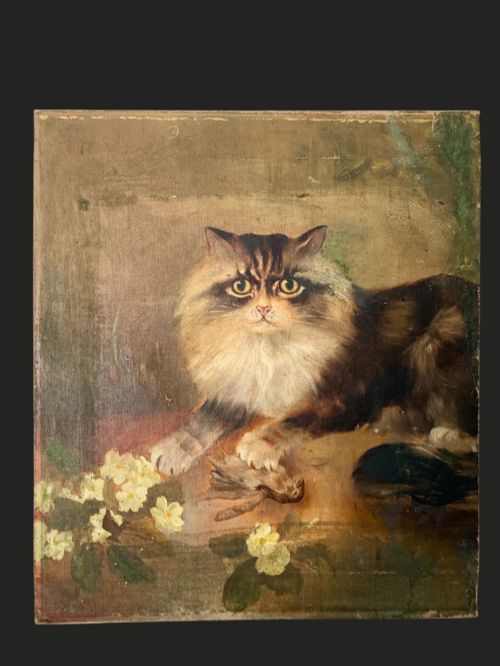
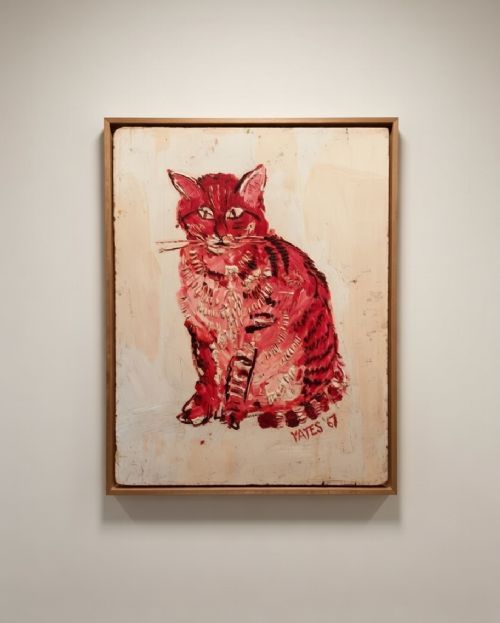
A vintage cat portrait painting brings together centuries of artistic observation focused solely on domestic felines and their larger relatives. When searching for a vintage cat portrait painting, collectors encounter various interpretations spanning from Victorian realism to mid-century naive art. The selection includes works created across multiple eras, ranging from nineteenth-century studies to twentieth-century compositions.
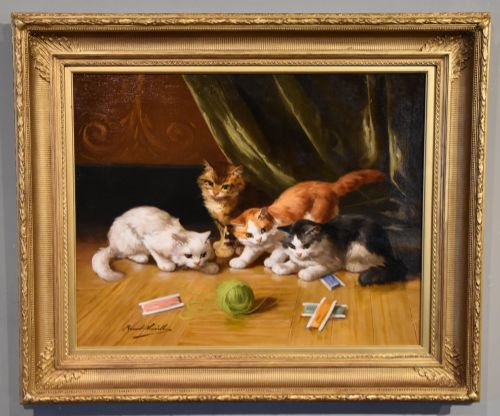
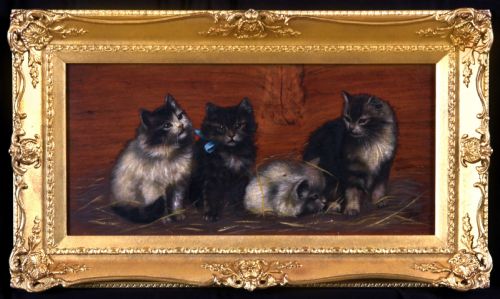
These works appear across different formats, including oil on canvas, oil on board, oil on panel, and glass paintings. Certain examples capture single subjects in traditional realism, while others depict playful groups of kittens sharing tea parties or resting together. Originating from British, French, Japanese, and continental European makers, each piece reflects the distinct aesthetic priorities of its period.
How they were made
Makers utilised traditional mediums such as oil paint applied to canvas, wood panels, or supportive boards to build up rich textures and lifelike fur details. Gilt wood frames frequently complement these oil paintings, providing a traditional border that enhances the visual depth of the artwork. Alternative techniques represented in the evidence include oil pastels on paper and reverse glass painting methods.
Support structures varied according to the period and scale of the work, with artists mounting canvases onto wooden boards or utilising sturdy panels for smaller compositions. Signatures, stamps, and artist markings often appear directly on the surface or frame, documenting the provenance of the piece.
Several artists preferred cats attending tea parties over more conventional subjects.
What varies in quality
The preservation of the original paint layer and the condition of the accompanying gilt wood or wooden frame contribute significantly to the overall integrity of the piece. Works that retain their original mounting and display clear artist attribution demonstrate stronger historical coherence.
Alfred Arthur Brunel de Neuville·Fred Yates·Agnes Augusta Tallboys·Francisco José Domingo y Marqués·Raymond Arthur Roadnight·Geza Vastagh·Bessie Bamber
The Vintage Cat Portrait Painting Glossary
- Naive school
- An art movement characterised by a childlike simplicity in perspective and proportion, often produced by self-taught painters. These works focus on directness of expression over academic rules.
- Oil on panel
- A painting executed on a flat wooden support rather than stretched canvas. This medium provided a stable surface favoured by artists depicting fine details.
- Gilt wood
- Wood that has been treated with a thin layer of gold leaf or gold-coloured gilt paint. It is commonly found on traditional frames surrounding nineteenth-century artworks.
- Genre painting
- The pictorial representation of scenes from everyday life, often featuring domestic animals and human companions interacting in ordinary settings. Such works document the social contexts of their creation.
- Reverse glass painting
- An art form where the image is painted directly onto the back of a glass sheet and viewed from the front. This technique produces a glossy surface finish.
Vintage Cat Portrait Painting: Frequently Asked Questions
How do I date a cat painting?
Examine the framing materials, the type of support used such as canvas or wooden board, and the stylistic conventions of the brushwork. Nineteenth-century examples often employ traditional realism or naive techniques, whereas twentieth-century pieces incorporate mid-century modern sensibilities.
Maker signatures, stamps on the reverse, and biographical records of the artist provide precise chronological anchors. Comparing the subject's styling and the garment details in associated human portraits also helps determine the era.
What surfaces were used?
Artists utilised stretched canvas, wooden panels, and sturdy boards to support their oil compositions. Glass surfaces appear in specific international traditions, notably in Japanese reverse glass painting.
Frames were predominantly constructed from wood, frequently enhanced with gesso and gilt finishes to complement the painted imagery. Support selection often depended on the scale of the artwork and the period's standard studio practices.
Are these works signed?
Many examples feature artist signatures, monograms, or studio stamps either within the painted composition or on the reverse of the panel. Some historical pieces remain unsigned, reflecting the anonymous output of nineteenth-century naive schools or workshop traditions.
Documentation such as exhibition labels or gallery markings occasionally accompanies signed works, offering additional context regarding their provenance and past ownership.
How should I display them?
Hang these artworks away from direct sunlight and excessive moisture to protect the oil paint layers and wooden supports. Maintaining stable indoor temperatures prevents warping in panels and cracking in gesso frames.
Pairing them with complementary period furniture or traditional wall colours enhances their decorative impact. Ensure secure wall fixings are used, particularly for heavier framed oil paintings on canvas.