

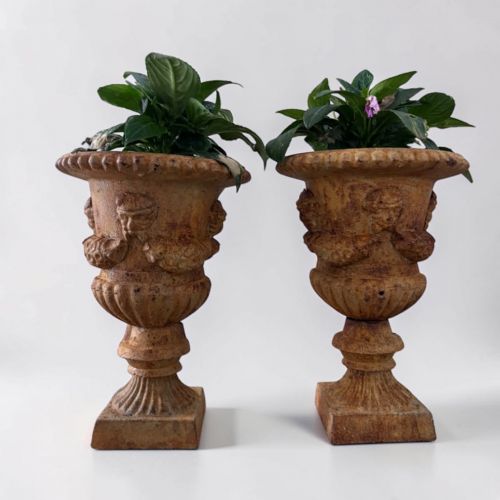

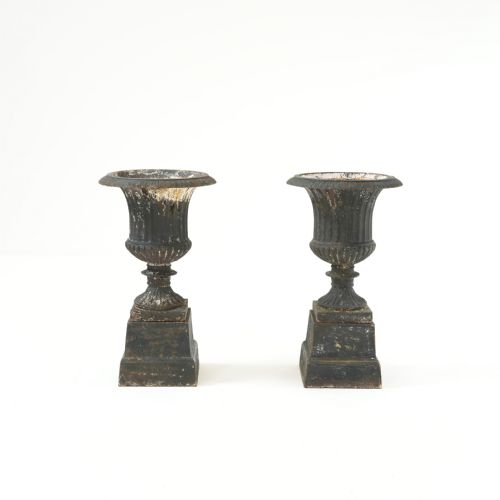
Vintage Cast Iron Urns
These vintage cast iron urns bring classical presence to gardens and terraces, offering enduring form and robust structure.
Vintage Cast Iron Urns
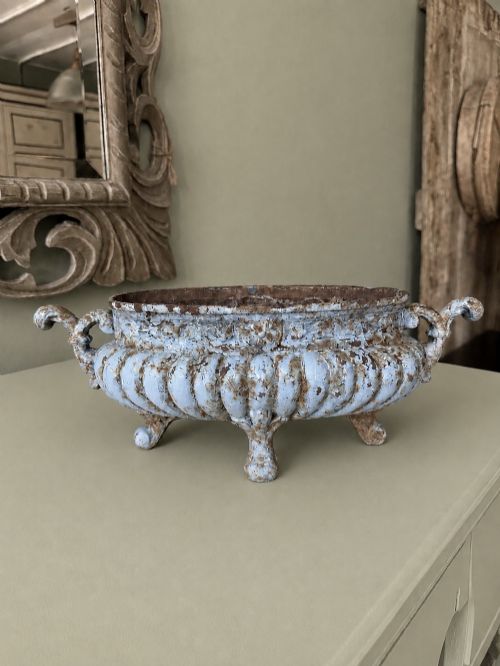
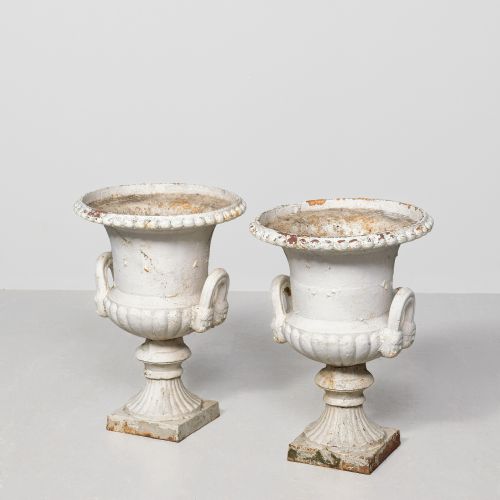
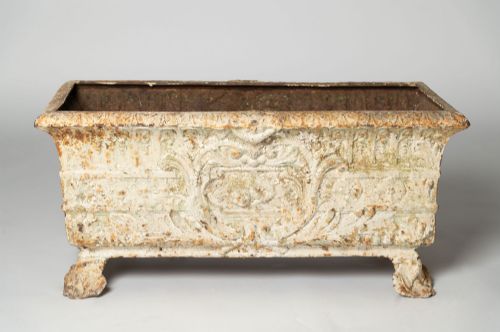
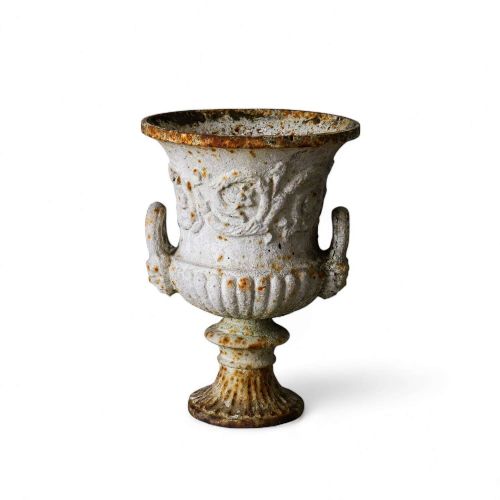
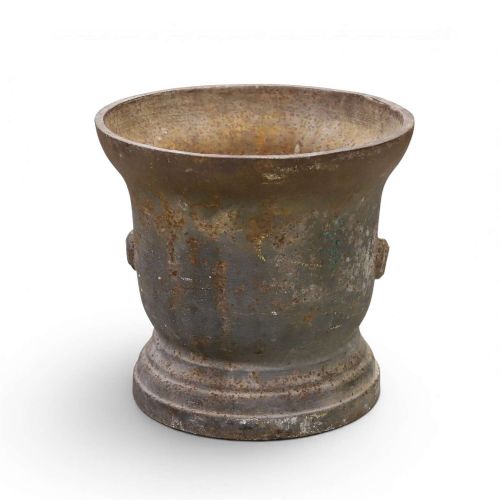
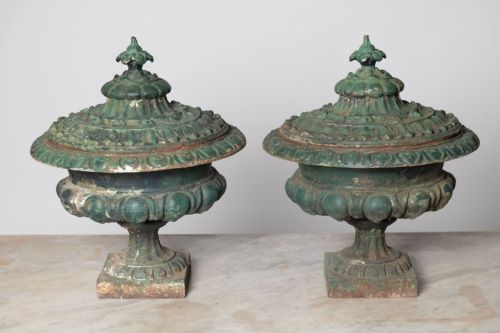
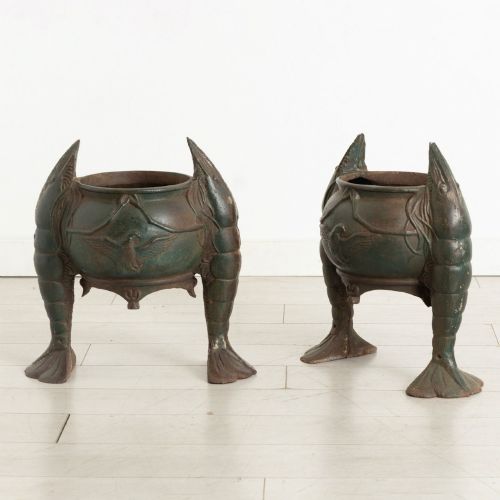
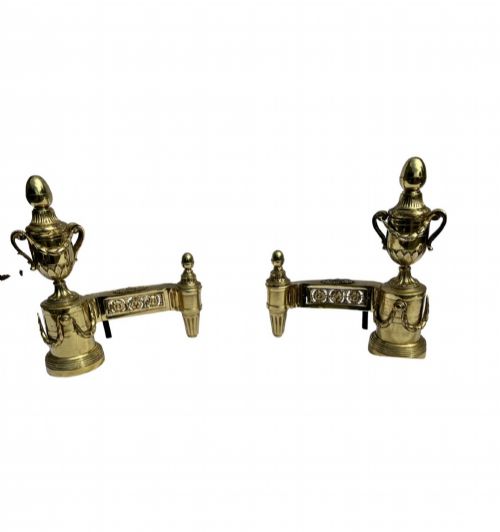
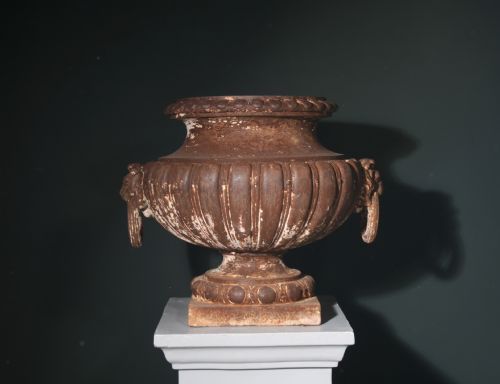
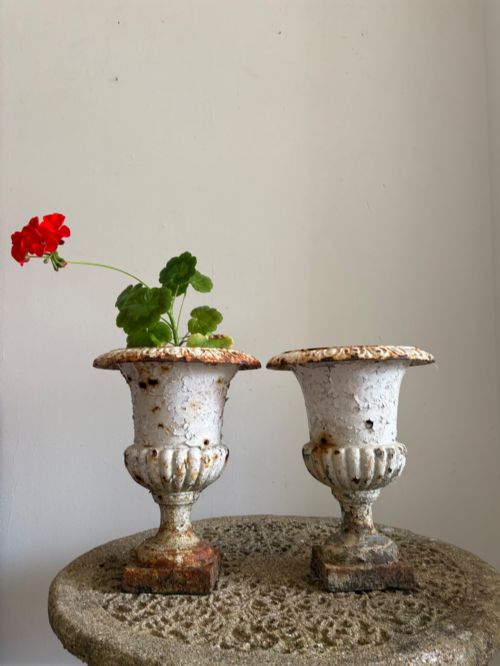
Vintage cast iron urns appear primarily as garden urns, planters, and campana forms designed to anchor outdoor spaces. The pieces span the nineteenth century through the Edwardian period, with Victorian classical revivals and French chateau styles dominating the selection.
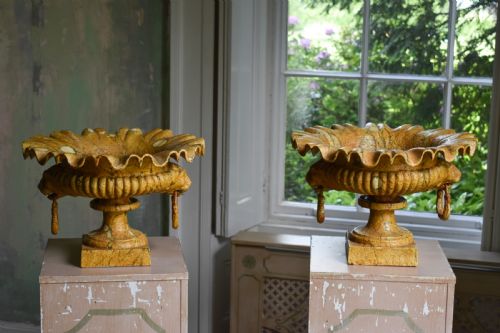
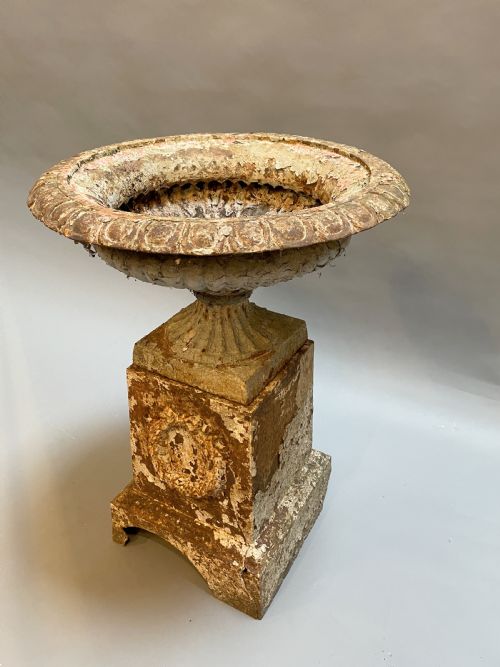
Buyers will encounter pairs on plinths alongside individual table urns and jardinieres. The forms draw heavily on neoclassical vocabularies, featuring gadrooned bodies and classical profiles suited for display.
Function ranges from grand garden focal points to smaller kitchen mortars and decorative vessels. The majority emerge from nineteenth-century British and French foundries specialising in durable outdoor metalwork.
How they were made
Foundries poured molten iron into sand moulds to achieve the crisp relief seen on these classical urns. Makers utilised heavy-gauge cast iron to withstand the rigours of garden placement.
Surface finishes often involve applied paint or weathered patinas that interact with the cast metal substrate. Certain specialised forms integrate brass, stone, or firebrick components depending on their intended utility.
Vintage Cast Iron Urns Retail Price Guide 2026
Typical asking prices for vintage cast iron urns among the pieces listed under this phrase on Sellingantiques today, from the lower quarter to the upper quarter. They describe what is for sale here now, not the wider market.
Period examples span the Victorian era, the nineteenth century, and Edwardian production.
What varies in quality
The crispness of the casting defines the upper tier, where intricate details like gadrooning remain sharp and well-defined. Lesser examples suffer from softened relief due to worn production moulds.
Proportion and the integrity of matched pairs dictate desirability. Pieces retaining original plinth bases and integrated stands demonstrate superior original conception.
Coalbrookdale Urns·Andrew Handyside·Val D'Osne Foundry
The Vintage Cast Iron Urns Glossary
- Gadrooned
- Decorated with a series of convex vertical curves or flutes. This ornamental carving often encircles the lower bowl of an urn.
- Tazza
- A shallow cup or bowl mounted on a stem and foot. In cast iron pieces, this shape provides an open vessel for planting.
- Plinth base
- A square or rectangular solid block supporting an urn. It elevates the vessel and adds architectural weight.
- Jardiniere
- An ornamental pot or stand designed to hold plants or flowers. These items appear in both domestic and garden contexts.
Vintage Cast Iron Urns: Frequently Asked Questions
Where should I place a cast iron urn?
These heavy vessels suit gardens, terraces, and entranceways where their weight provides stability.
Pairs look particularly striking flanking pathways or set upon stone plinths.
How do I care for cast iron garden urns?
Cast iron withstands outdoor conditions well, though periodic inspection of surface paint helps prevent rust.
Allowing the metal to develop a natural weathered patina adds character over time.
Are these urns heavy to move?
These pieces utilise solid cast metal and require multiple people or equipment to reposition safely.
Once placed, their substantial mass keeps them secure against strong winds.
How do I identify a Victorian urn?
Victorian examples frequently display neoclassical motifs such as campana shapes and gadrooned bodies.
Foundry marks and nineteenth-century construction methods further help date the metalwork.