


Vintage Cast Iron Cannon
These vintage cast iron cannon pieces are robust examples of historical artillery models and garden ornaments that bring maritime and military history directly into a study or garden.
Vintage Cast Iron Cannon
When you search for vintage cast iron cannon, you encounter objects ranging from small signal cannons to heavy garden ornaments and model artillery. The listings span periods from pre-sixteenth century artefacts to Victorian and early twentieth-century pieces.
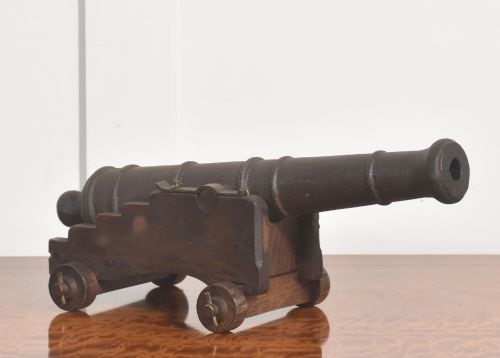
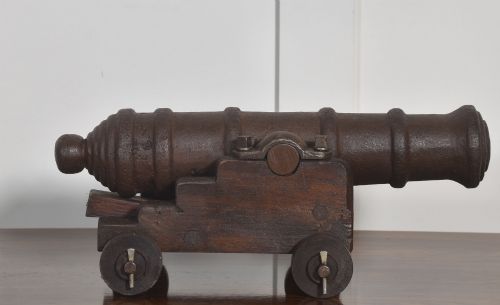
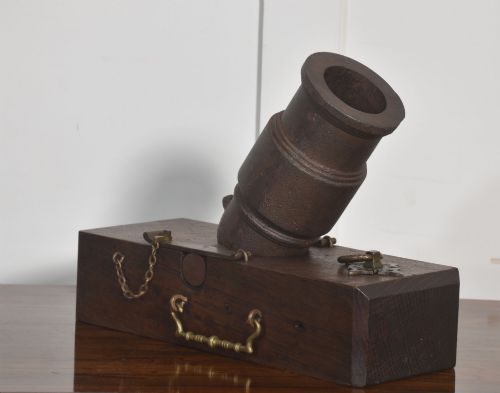
You meet various forms on this page, including signal cannons mounted on oak carriages, signal mortars, and scale models of field guns. These pieces encompass categories such as militaria, decorative objects, and desk ornaments.
The origins represented in the evidence include English and French military designs, featuring both functional signal pieces and decorative models. Each object reflects the distinct aesthetic of its period, from Renaissance influences to Victorian maritime styles.
What varies in quality
Quality differences emerge in the fidelity of the scale modeling and the robustness of the materials used in the carriage construction. Finer examples show careful attention to historical proportions and integrated details across both the metal barrel and the wooden mount.
The separation between standard decorative items and superior pieces lies in the integration of mixed materials, such as combining cast iron with bronze elements or seasoned oak for the carriage support.
The Vintage Cast Iron Cannon Glossary
- Signal cannon
- A small cannon utilised for firing blanks to signal times, start races, or salute vessels. These pieces were common in maritime and estate contexts.
- Signal mortar
- A short, thick-walled piece designed to project noise straight up into the air rather than firing a projectile across a field.
- Gribeauval field gun model
- A scale representation of the standardised artillery system introduced in France by Jean-Baptiste de Gribeauval. This design reorganised French artillery during the eighteenth and nineteenth centuries.
- Militaria
- Collectable items and artefacts connected with armies, warfare, and military history. This category includes models, equipment, and decorative ordnance.
- Oak carriage
- The wooden mounting frame, typically constructed from sturdy oak timber, designed to hold the barrel of a cannon steady.
Vintage Cast Iron Cannon: Frequently Asked Questions
What is a signal cannon?
A signal cannon is a small piece built primarily to create a loud noise using gunpowder rather than to fire a projectile at a target. They were frequently employed for maritime signalling or estate celebrations.
These devices range from desk-sized models to larger deck-mounted versions, often secured to wooden bases or carriages for stability during firing.
How are cast iron cannons mounted?
Many cast iron cannons are mounted on wooden carriages constructed from durable timbers like oak. These carriages replicate the design of full-sized military artillery mounts.
Some models also incorporate brass or bronze fittings to secure the heavy iron barrel to its wooden base, reflecting historical ordnance engineering.
Where were these pieces used?
These pieces served multiple functions, from practical maritime signaling on ships and coastal stations to decorative displays in gardens and libraries. Scale models were also created as desk ornaments or military displays.
Examples span various eras, including nineteenth-century French and English military styles as well as early twentieth-century garden ornaments.
What materials make up these cannons?
The primary material is cast iron, which forms the heavy barrel and body of the cannon. Other materials appearing alongside iron include brass, bronze, and oak.
Combinations of iron barrels with bronze components and wooden carriages are common in nineteenth-century and Victorian pieces.