


Antique Desktop Cannon
An antique desktop cannon is a small-scale artillery piece designed for ornamental display or signalling, prized for its mechanical detail and maritime history.
Antique Desktop Cannon
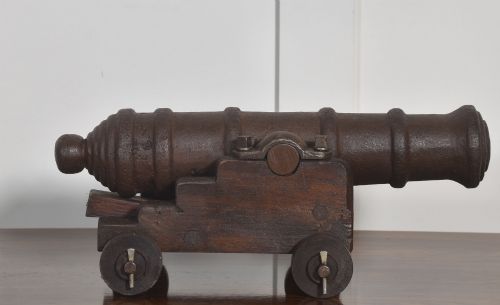
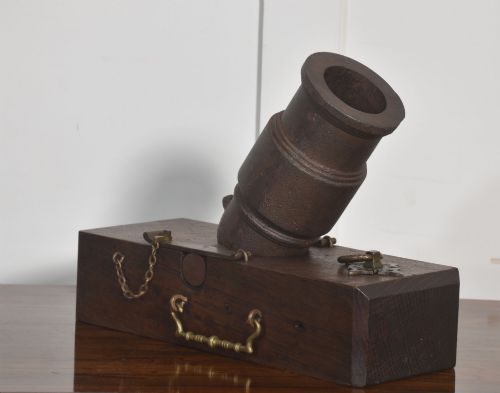
When you search for an antique desktop cannon, you encounter miniature artillery pieces that range from decorative desk ornaments to functional signal cannons mounted on wheeled carriages.
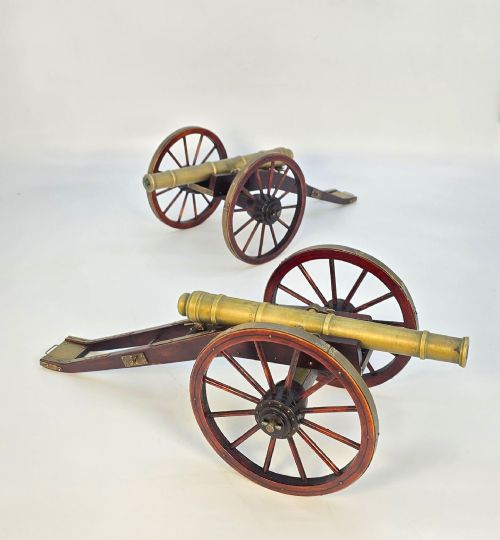
The versions most frequently met on this page date from the nineteenth century, including Victorian maritime examples and French military models.
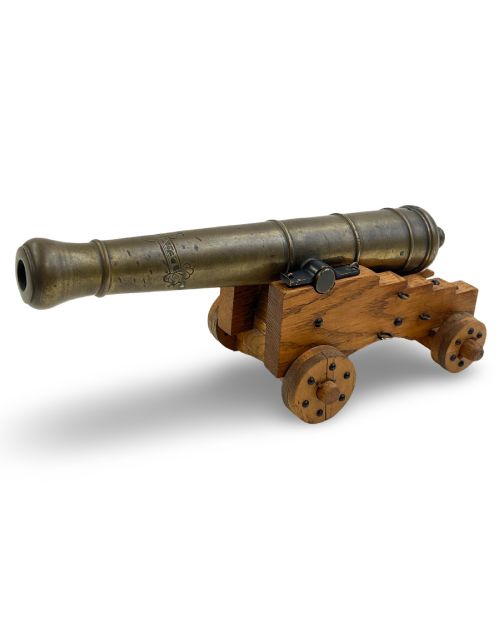
Makers produced these desktop pieces as scale models and signal mortars, often utilising sturdy hardwoods like oak for the carriages to support metal barrels.
Materials and construction methods
Makers cast barrels in metals such as bronze, iron, brass, and polished steel, sometimes inscribing them with names or historical commemorations.
Carriages are predominantly constructed from oak and other hardwoods or cast iron, supporting muzzle-loaded field gun designs and signal mortars.
Some miniature French cannons arrived on desks bearing the proud inscription Le Tonnant, ready to thunder.
Distinctions in quality
Superior examples display precise metal casting and careful rendering of field gun components, whereas simpler pieces lack fine surface finish and detailed carriage construction.
Quality also rests in the historical accuracy of the scaling and the integrity of the materials used for both the barrel and the supporting mount.
The Antique Desktop Cannon Glossary
- Signal cannon
- A small ordnance piece utilised to create a loud report for alarms, celebrations, or maritime signalling. These desktop versions often duplicate the mechanics of full-sized pieces.
- Gribeauval system
- A standardised system of French artillery developed in the eighteenth century. Models replicating this design feature specific military proportions.
- Carriage
- The mounting structure that supports the cannon barrel. These are typically fashioned from oak, hardwood, or cast iron.
- Muzzle-loaded
- A firearm or cannon that is loaded with propellant and shot through the muzzle end. Most desktop models follow this historical loading method.
Antique Desktop Cannon: Frequently Asked Questions
What is an antique desktop cannon?
These pieces are miniature artillery models and signal cannons produced during the eighteenth, nineteenth, and early twentieth centuries.
They combine metal barrels cast in brass, bronze, or iron with wooden or cast iron carriages.
Were these cannons actually fired?
Certain examples are signal cannons designed to produce a loud noise for maritime or ceremonial use.
Others function strictly as decorative desk ornaments and scale models without a functional bore.
How do I date an antique cannon?
Dating relies on stylistic clues, metal casting techniques, and material combinations typical of periods like the Victorian era or the nineteenth century.
Inscriptions or historical commemorations marked on the barrel also provide specific chronological reference points.
What woods were used for carriages?
Carriages are predominantly constructed from oak and other dense hardwoods to withstand the recoil or weight of the metal barrel.
Some models utilise cast iron for the carriage structure instead of wood.