
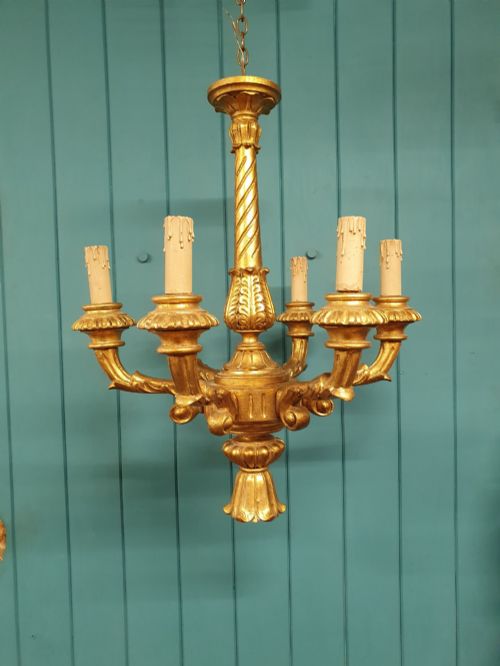


Vintage Carved Wood Chandelier
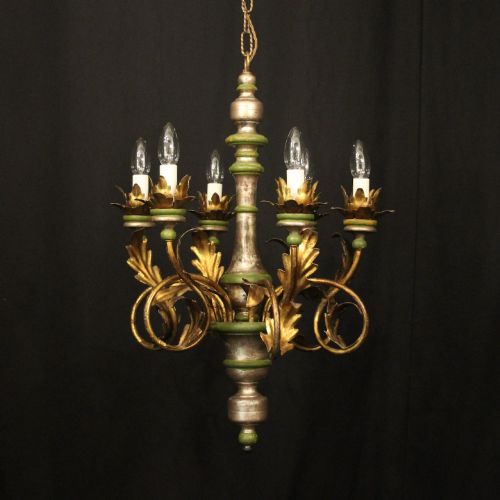
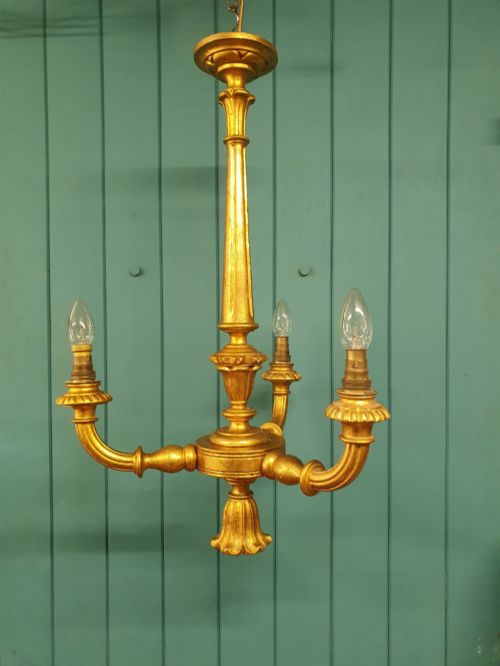
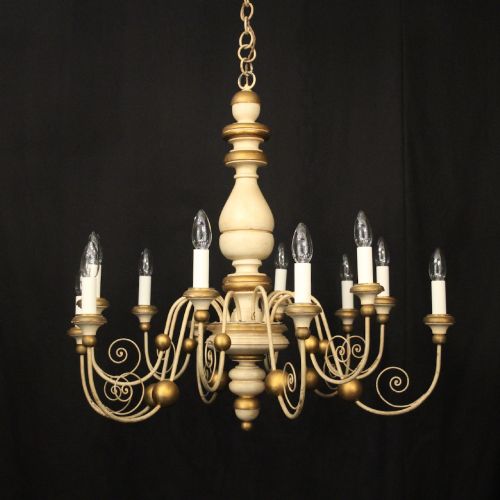
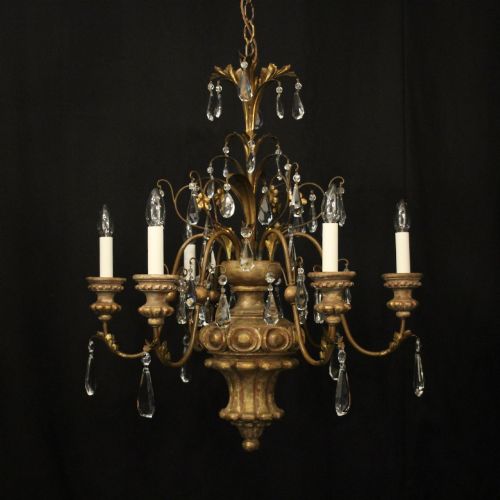
These vintage carved wood chandeliers bring warmth and intricate craft to a room, offering the rich textures of giltwood, gesso, and painted finishes.
Vintage Carved Wood Chandelier
A vintage carved wood chandelier is a hanging ceiling light featuring carved wooden structures, often finished in giltwood, gesso, or polychrome paint. These fixtures provide illumination through multiple arms designed to hold candles or electric bulbs.
Buyers browsing this selection encounter pieces originating from the eighteenth, nineteenth, and early twentieth centuries. Styles range from Florentine and Italian Baroque to French Chateau and Edwardian designs.
The most common examples on this page are Florentine giltwood chandeliers dating from the 1920s and 1930s, typically fitted with multiple light branches. Alongside these, nineteenth-century pieces and earlier Italian works appear in smaller numbers.
How they were made
Craftsmen shaped these chandeliers from solid wood, applying layers of gesso to smooth the surface before carving intricate details. Wrought metal components and iron work were frequently integrated to provide structural support for the arms.
Surfaces received finishes of gold leaf, giltwood, or polychrome paint, often burnished to create a luminous appearance. Glass elements and candle prickets were incorporated depending on the period and the specific lighting requirements.
Materials recorded across these listings include giltwood, gesso, wrought iron, and glass, spanning the 18th, 19th, and 20th centuries.
What varies in quality
The depth and crispness of the carving distinguish finer examples from simpler work, as skilled carvers achieved greater fluidity in foliage and scrollwork. The quality of the original gilding and the preservation of the gesso layer also determine visual richness.
Proportion and balance across the arms dictate the overall presence of the fixture when suspended. Heavier structural framing in wrought iron ensures durability in larger multi-light configurations.
The Vintage Carved Wood Chandelier Glossary
- Giltwood
- Wood that has been coated with gold leaf or a gold-coloured finish. This technique was widely utilised on Italian and French chandeliers to reflect candlelight.
- Gesso
- A plaster-like mixture applied to wood surfaces to create a smooth base for carving and gilding. It allows for sharp relief details before the application of gold leaf.
- Pricket
- A sharp metal spike on a candleholder designed to secure a wax candle from the base. These are commonly found on earlier antique candle chandeliers.
- Polychrome
- Decorated in several colours. Polychrome chandeliers feature painted surfaces alongside gilding to create contrasting decorative effects.
- Florentine
- A regional Italian style characterised by ornate carved scrolls, acanthus leaves, and rich gilt finishes. Florentine chandeliers often feature multiple light branches.
Vintage Carved Wood Chandelier: Frequently Asked Questions
How do I hang a heavy antique chandelier safely?
Suspension requires fixing directly into the ceiling joist or using a heavy-duty pattress box capable of supporting the weight of wood and metal. Professional installation by an electrician ensures the internal wiring and structural hook meet safety standards.
Larger multi-light fixtures demand reinforced ceiling brackets to distribute the load evenly across the overhead structure.
Can these old chandeliers be converted to electricity?
Many pieces have already been adapted for modern electrical wiring while retaining their original candle tubes or drip pans. Rewiring is straightforward for a qualified restorer who can thread modern flex through the central wooden core.
Careful positioning of internal wiring preserves the exterior carved surface without altering the historical appearance.
How do I clean a giltwood chandelier?
Dusting requires a soft feather duster or a gentle dry paintbrush to remove surface particles without disturbing the delicate gold leaf. Moisture and harsh cleaning agents must be avoided to prevent damage to the gesso and gilt layers.
Regular, gentle maintenance preserves the aged patina of the painted and gilded surfaces over time.
What is the difference between an 18th century and a 1930s piece?
Eighteenth-century examples typically feature hand-carved details intended strictly for wax candles, showing deep patination on the bare wood and gesso. Pieces from the 1930s frequently incorporate adaptations for electric lighting alongside traditional Florentine carving techniques.
Examining the construction methods of the arms and the wear on the gold leaf helps distinguish the earlier period pieces from later revivals.