
Vintage Carved Trunk
A vintage carved trunk brings tactile warmth and robust storage to a room, ranging from English oak coffers to camphorwood chests from distant trade routes.
Vintage Carved Trunk
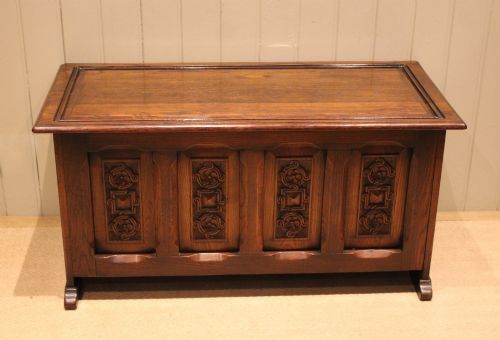
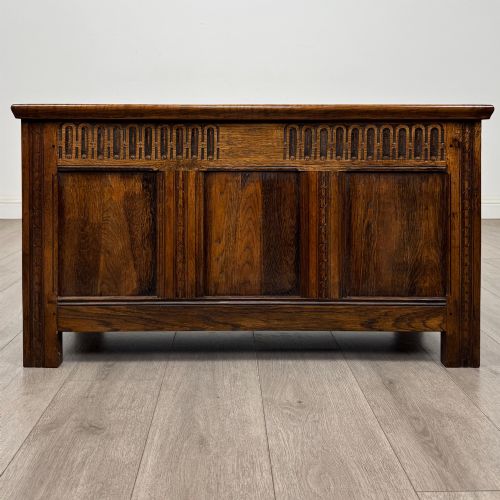
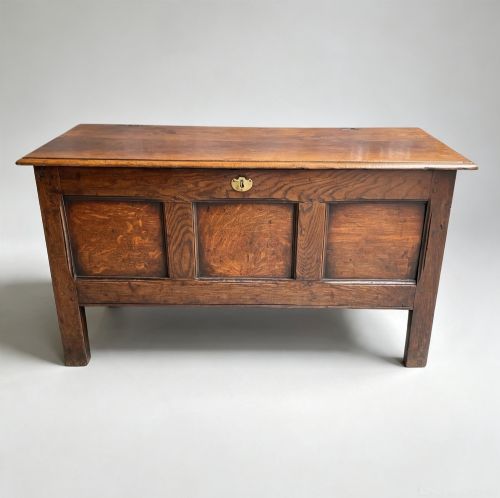
When you search for a vintage carved trunk, you encounter a broad category of substantial storage furniture encompassing oak coffers, camphorwood blanket chests, and iron-banded dowry chests. These pieces served practical domestic purposes across centuries, from holding household linen to securing valuables during travel.
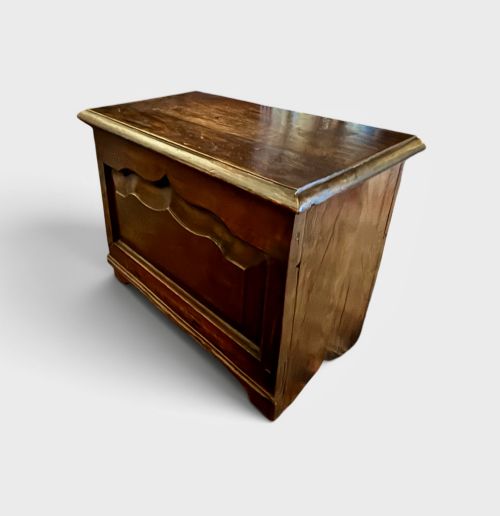
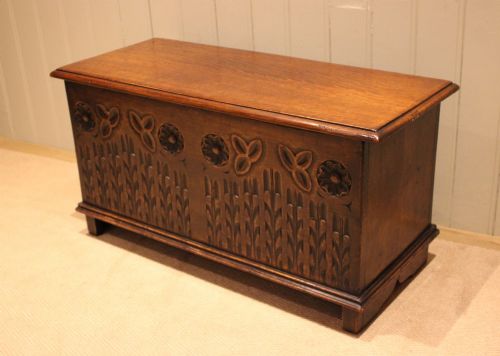
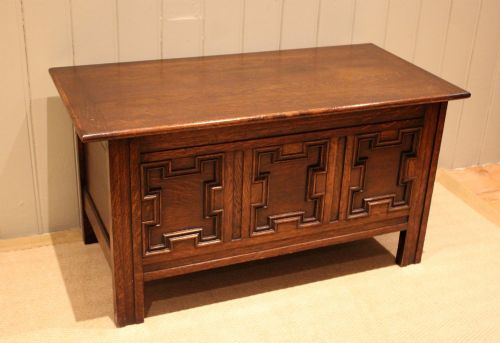
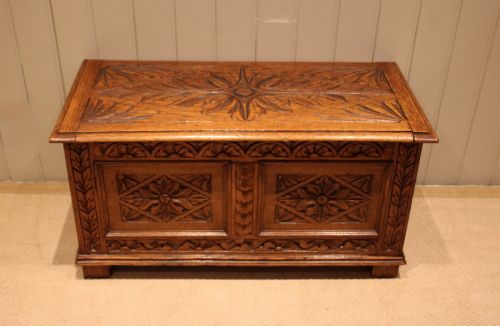
The version you are most likely to meet on this page is the oak coffer or blanket chest dating from the nineteenth or early twentieth century. These items display surface carving executed in styles ranging from plain rustic panels to dense regional motifs.
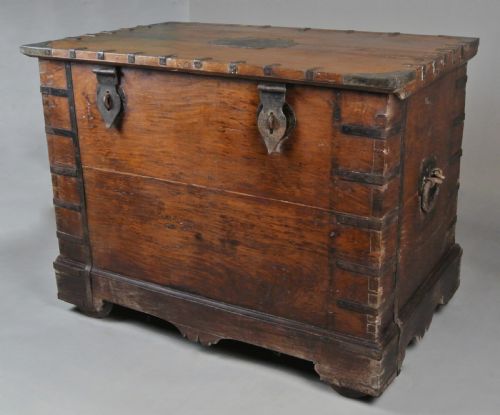
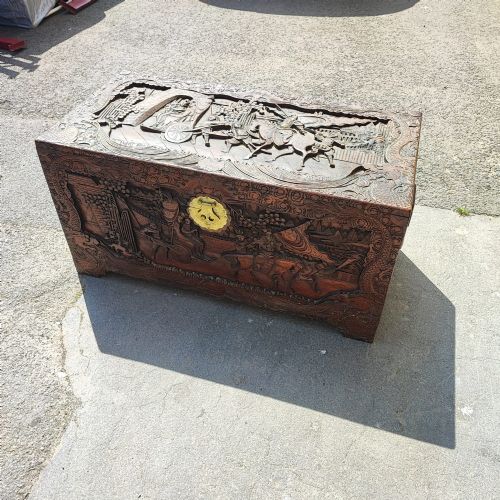
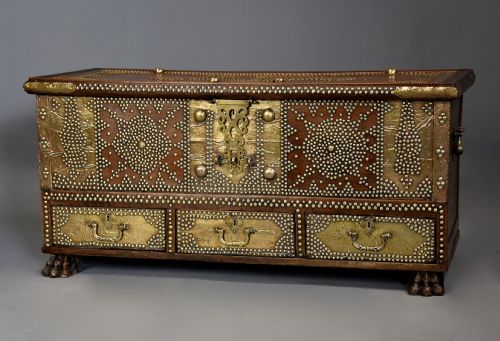
Beyond domestic European oak, the selection expands into global trade pieces including Chinese camphorwood chests, Zanzibar traders chests set with brass studs, and Rajasthan damchiya dowry chests. Each regional variation utilises native timbers and distinctive decorative techniques suited to its origin.
How They Were Made
Timbers dictate the fundamental character of these pieces, with solid oak dominating European production while teak, camphor wood, and various dense hardwoods define regional trunks from Asia and the Middle East. Carpenters selected woods for durability and grain pattern, often housing panels within sturdy mortise and tenon frames.
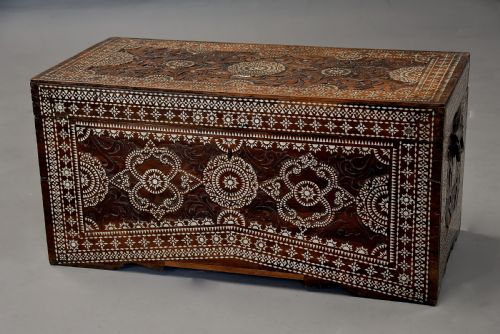
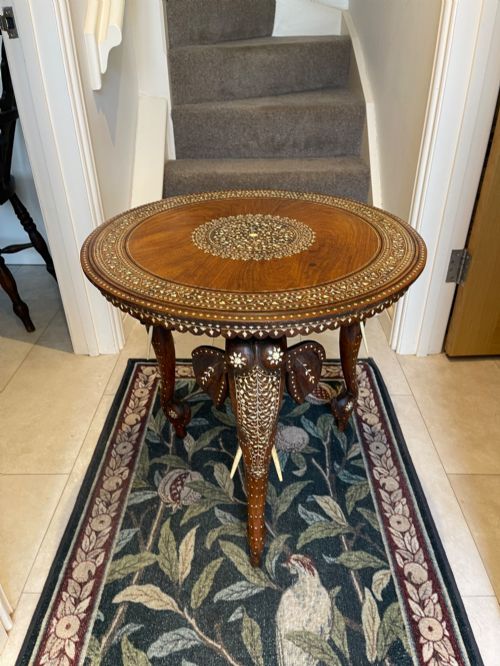
Carving and metalwork provide the primary surface ornamentation, executed using hand chisels for vegetal and figural reliefs or supplemented by applied brass studs, strapwork, and iron bindings. Inlaid elements such as mother-of-pearl also appear on specific Middle Eastern storage forms, requiring meticulous recessing into the timber base.
Zanzibar chests carry brass studs originally intended to deflect boarding sabres on nineteenth-century merchant ships.
What Varies in Quality
The distinction between standard utility storage and superior examples rests in the crispness of the hand carving and the integrity of the timber selection. Master carvers achieved depth and proportion in panels such as figural medallions or geometric strapwork, whereas lesser pieces rely on shallow, mechanical incision.
Original hardware and structural retention govern the standing of individual pieces. Trunks retaining period brass studs, working locks, hinges, and untouched timber patination represent the upper tier of survivals compared to those altered by replacement elements or heavy modern intervention.
The Vintage Carved Trunk Glossary
- Coffer
- A heavy wooden chest traditionally used for holding valuables, documents, or personal belongings. Most examples seen here are constructed from solid oak with hinged lids.
- Mule chest
- A traditional storage chest featuring one or more drawers beneath the main internal compartment. They bridge the design gap between simple coffers and modern chest of drawers.
- Camphor wood
- An aromatic timber native to Asia, prized for furniture making due to its natural insect-repellent properties. It forms the body of many imported nineteenth-century trunks.
- Damchiya
- A traditional low dowry chest from Rajasthan, constructed with heavy timber frames and often secured by elaborate iron bands and specialised locking mechanisms.
- Dowry chest
- A large storage trunk prepared to hold household goods and textiles brought by a bride to her marriage. These pieces frequently display the finest decorative work available in their region.
Vintage Carved Trunk: Frequently Asked Questions
What is the difference between a coffer and a trunk?
A coffer typically denotes a heavy, rigid wooden chest constructed with frame and panel techniques, traditionally associated with European oak furniture.
Trunks often imply travel or imported storage forms, encompassing brass-studded trade chests and camphorwood boxes designed for maritime transport.
How were antique camphorwood trunks used?
Camphorwood trunks served primarily as maritime luggage and domestic storage for clothing and textiles during long sea voyages.
The natural aromatic oils of the timber protected stored fabrics from moths and damp conditions.
Can I use an antique trunk as a coffee table?
Many people place low chests and coffers in living spaces to function as coffee tables while providing concealed storage for blankets and books.
Ensure the lid is stable and flat enough to support drinks and decorative items safely.
How do I identify the age of an oak coffer?
Age is determined by observing construction methods such as hand-cut dovetails, pegged mortise and tenon joints, and the tool marks left by early carpenters.
Surface patination, timber shrinkage, and regional carving styles also provide reliable indicators of the period.