
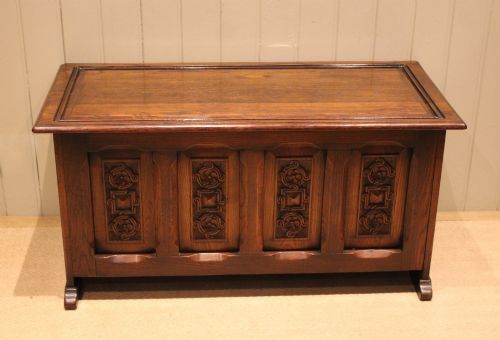
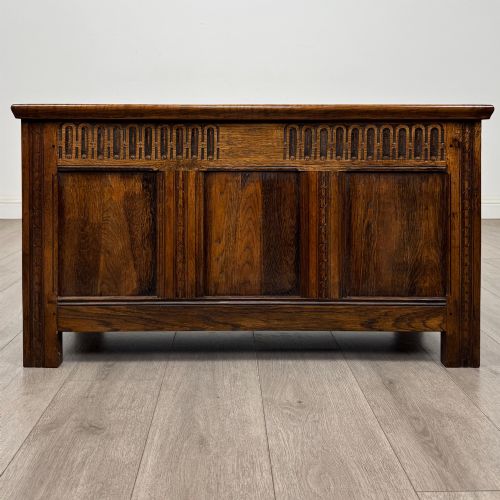

Vintage Carved Oak Trunk
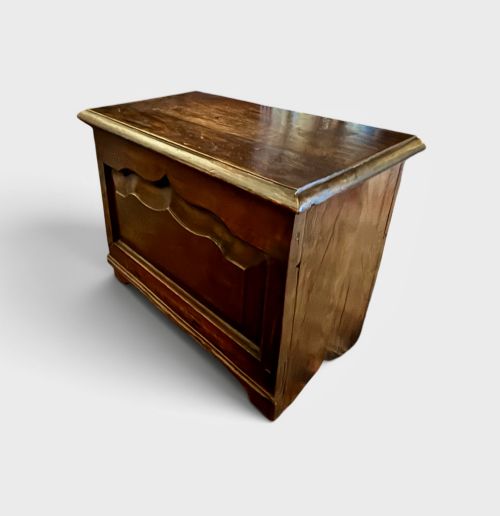
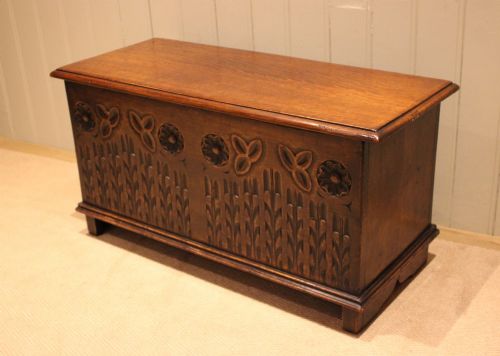
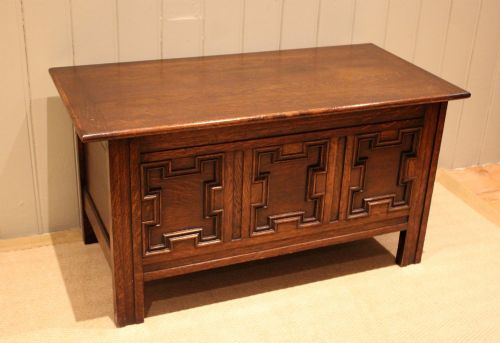
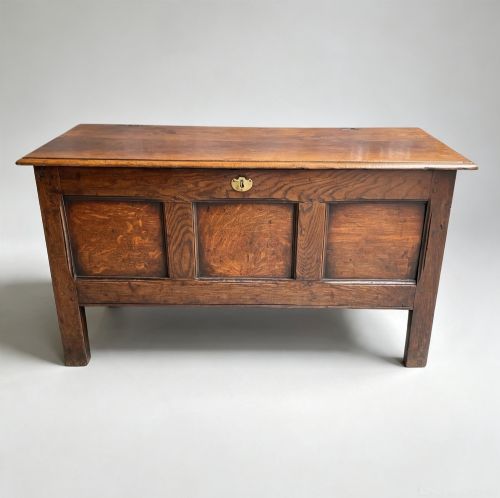
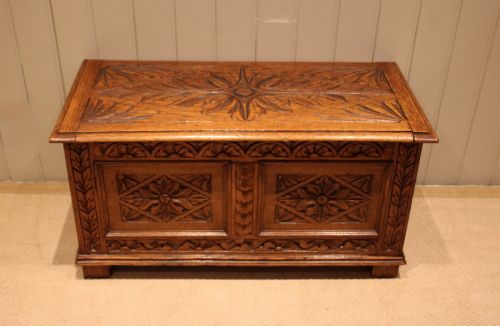
A vintage carved oak trunk brings heavy timber storage into a room, offering sturdy panels and traditional hand-carved decoration that anchors modern spaces.
Vintage Carved Oak Trunk
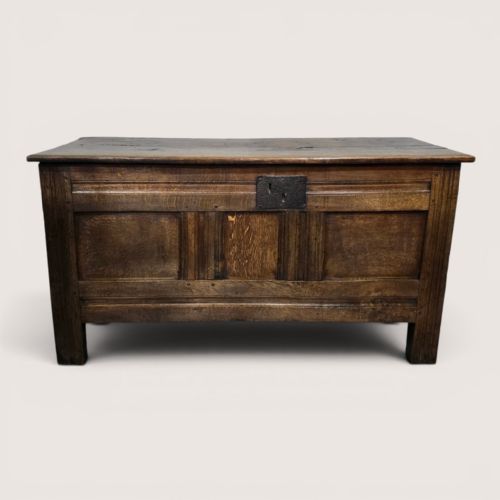
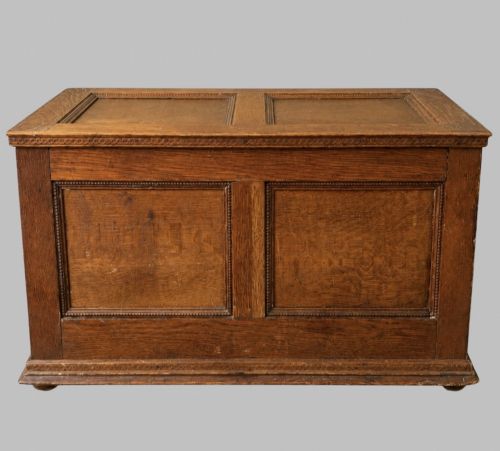
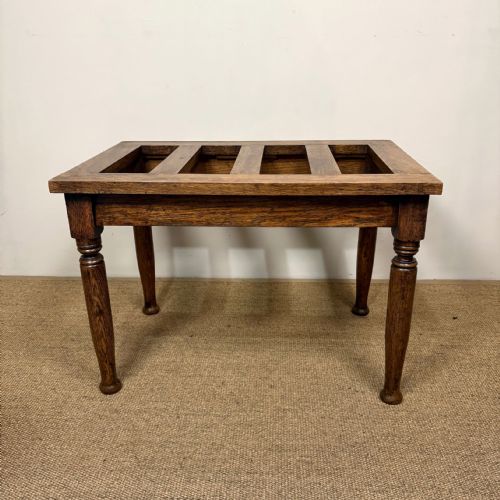
A vintage carved oak trunk spans multiple centuries of storage furniture, appearing primarily as coffers, blanket chests, and mule chests alongside occasional luggage stands and document boxes. Buyers searching for a vintage carved oak trunk encounter pieces ranging from the seventeenth century through to the Edwardian period, the 1920s, and 1930s.
The heavier examples draw on seventeenth-century English and Jacobean styles, while later decades introduce Arts and Crafts influences, limed oak treatments, and Cotswold school aesthetics. Regional variations also surface, including continental blanket chests and Lancashire coffers, providing diverse forms within the same fundamental storage category.
Materials and construction
Makers built these pieces primarily using solid oak, often supplemented by walnut, camphor wood, or general solid timber. Structural reinforcement relied upon iron and brass hardware, such as hinges, handles, and lock plates.
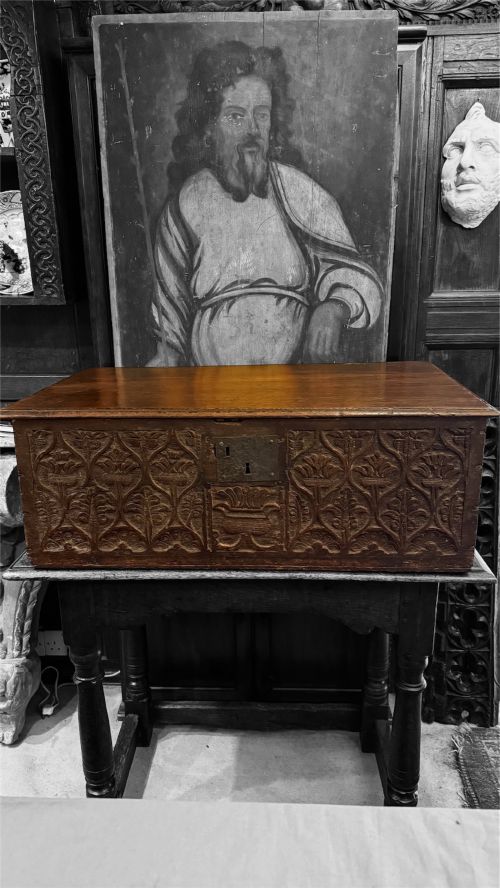
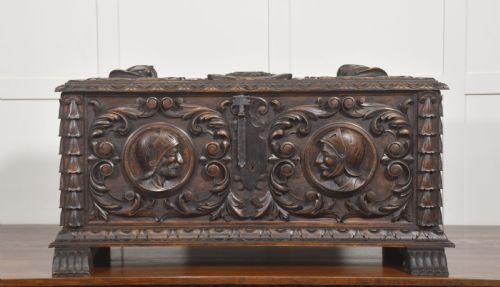
Surface decoration involved hand-carving directly into the timber panels, utilising styles that ranged from geometric Jacobean motifs to figural medallions, Green Man carvings, and simpler rustic details.
Listings include oak alongside walnut, brass, iron, and camphor wood across periods from the seventeenth century to the 1930s.
Judging quality and execution
Quality rests upon the depth and crispness of the hand-carving, alongside the integrity of the solid oak panels and framing joints. Pieces displaying confident chisel work and substantial timber sections sit comfortably above simpler, mechanically produced boxes.
The treatment of the timber surface further distinguishes the work, with well-preserved patination and thoughtful finishing, such as limed oak or traditional wax polish, elevating the presence of the piece.
Jn Smith·Richard Corless
The Vintage Carved Oak Trunk Glossary
- Coffer
- A large wooden chest used historically for storing valuables, documents, or household goods. Most examples feature a hinged lid and heavy panel construction.
- Mule chest
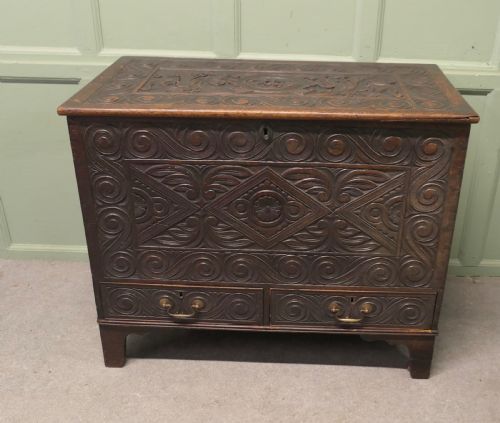
- A traditional storage chest featuring one or more drawers built into the base beneath the main compartment. They bridge the design gap between simple blanket boxes and chest of drawers.
- Jacobean revival
- A decorative style popular in later furniture making that imitates the heavy, carved oak characteristics of the early seventeenth century. It frequently appears on pieces dating from the nineteenth and early twentieth centuries.
Vintage Carved Oak Trunk: Frequently Asked Questions
What is the difference between a coffer and a blanket chest?
A coffer is traditionally a heavy wooden chest used for storing valuables and general household goods, often featuring more elaborate panel carving. A blanket chest specifically designates a piece intended for bedding storage.
While their construction methods overlap significantly, blanket chests frequently appear in domestic bedroom contexts, whereas coffers served multiple functional roles across various rooms in a historic interior.
How do I date an oak trunk?
Dating relies upon examining the construction techniques, tool marks, joinery methods, and the style of the carved decoration. Seventeenth-century examples display hand-split boards and pegged mortise and tenon joints.
Later nineteenth and twentieth-century pieces incorporate machine-sawn timber and different hardware fixings, even when adopting earlier Jacobean revival styles.
Where were these trunks placed in a home?
Historically, these sturdy chests stood in hallways, bedrooms, or living spaces to secure textiles, clothing, and important household documents. Their flat lids also allowed them to function as makeshift tables or seating.
Today, they integrate well into modern hallways as shoe storage or sit at the foot of a bed for spare blankets and cushions.
What is a mule chest?
A mule chest is a variation of the standard storage chest that incorporates one or more drawers beneath the main upper compartment. This design allowed access to everyday items stored in the drawer without needing to lift the heavy top lid.
They emerged as domestic storage needs evolved, combining the deep capacity of a traditional coffer with the organisational convenience of drawer storage.