
Vintage Carved Desk Chair
These vintage carved desk chair options combine solid timber frames with supportive seating, offering sturdy workspace utility and period character.
Vintage Carved Desk Chair
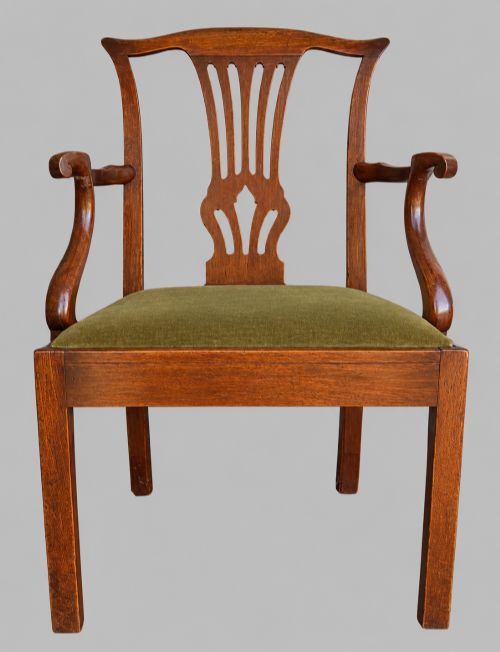
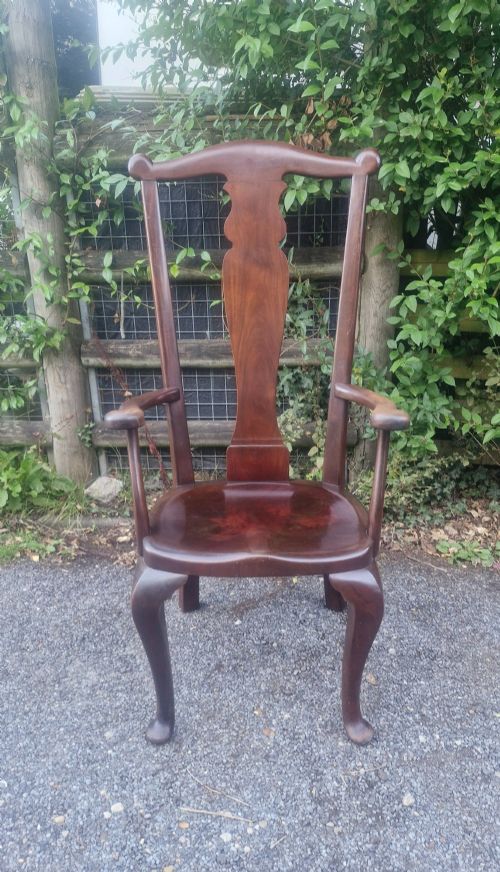
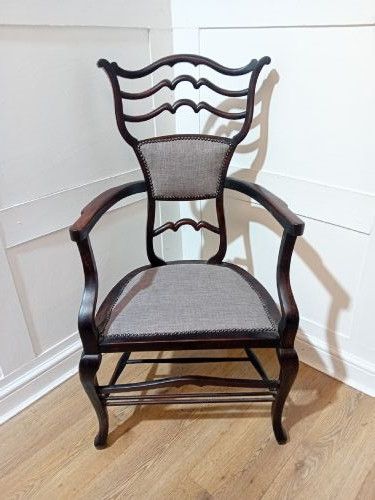
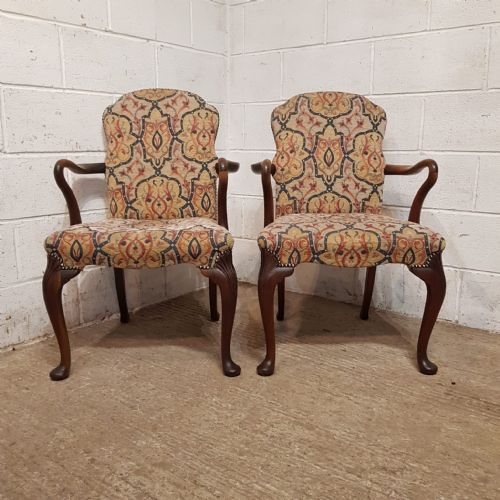
A vintage carved desk chair brings traditional timber construction and supportive seating into a modern study or workspace, drawing on forms from the eighteenth century to the early twentieth century. Buyers encounter styles ranging from straightforward oak captain chairs to elaborate mahogany Chippendale revival designs and Regency library armchairs.
The selection on this page relies heavily on nineteenth-century pieces alongside Edwardian examples and specific Georgian and eighteenth-century items. Common configurations include open armchairs, tub chairs, high-back variants, and compact models suited for dressing tables or smaller desks.
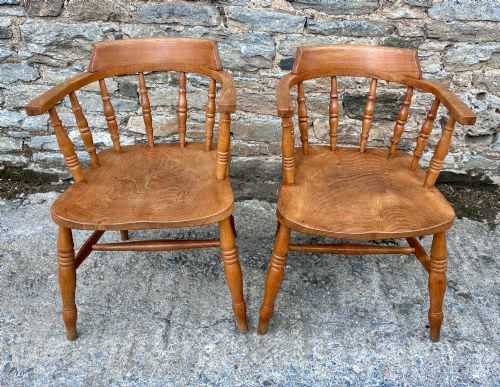
Makers and workshops often utilised regional English timber traditions, producing sturdy elm windsors, beech lyre-back frames, and substantial walnut library seats. These pieces range from vernacular farmhouse seating to formal revival designs featuring carved details on the crest rails and arms.
Materials and construction methods
Makers constructed these chairs primarily using solid hardwoods such as mahogany, oak, elm, walnut, and beech, selected for structural strength and grain pattern. Frames were joined using traditional mortise and tenon joints, dowels, and turned spindles to ensure durability under daily use.
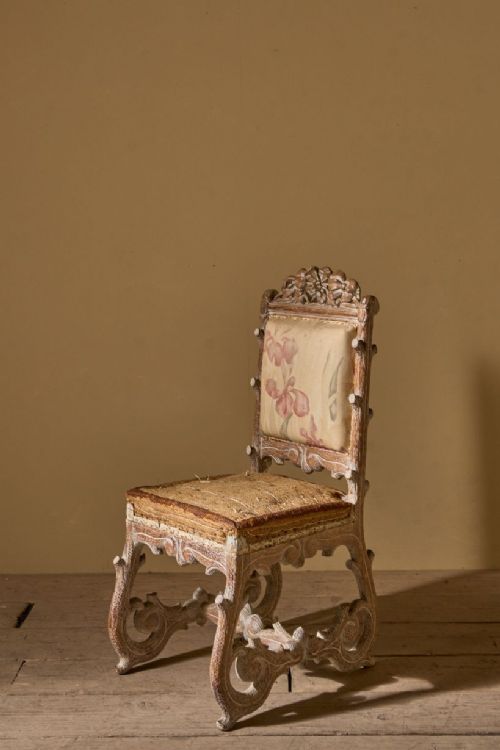
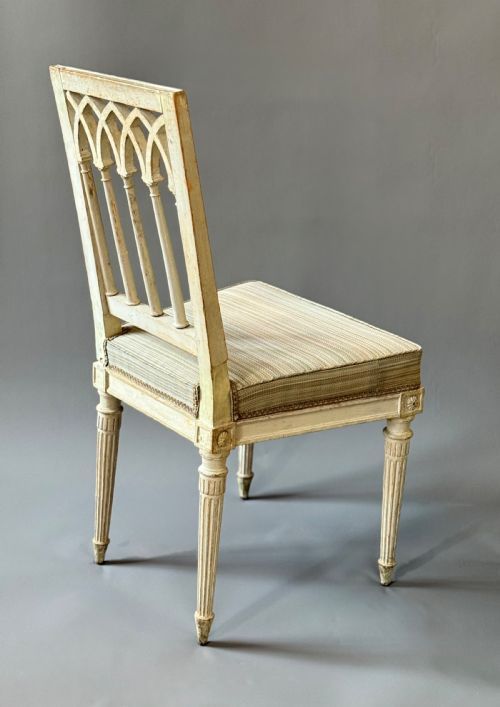
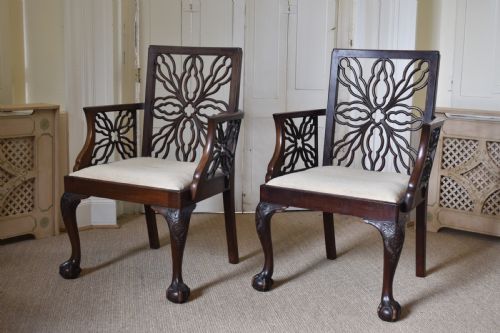
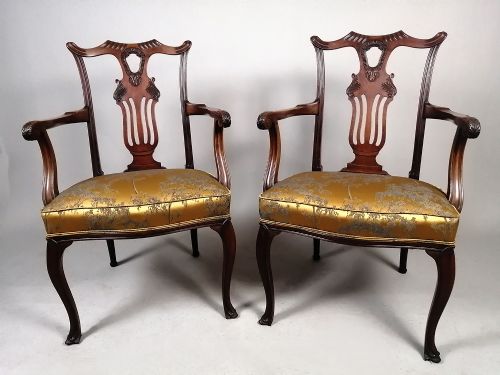
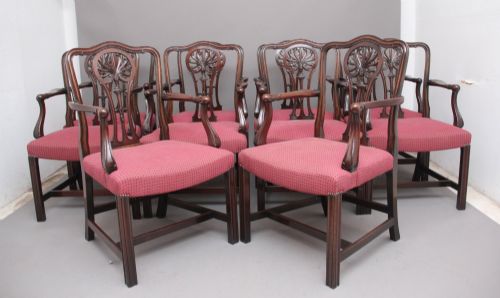
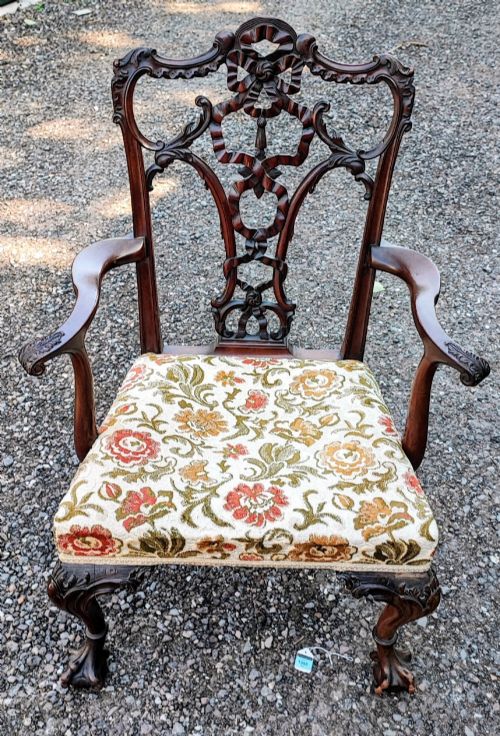
Carved ornament appears directly on the solid timber components, particularly along the top rails, arm terminals, and splats, often following Chippendale, Gothic Revival, or Regency style books. Seating surfaces incorporate cane work, solid carved timber, or upholstered pads finished in leather and fabric.
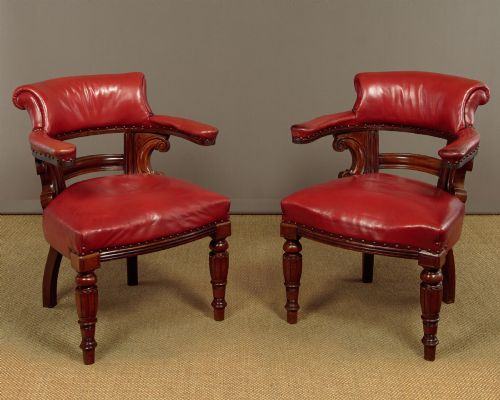
Secondary materials include brass fittings, castors for mobility on swivel or adjustable desk models, and iron or brass hardware securing the underframes. Surface finishes typically consist of traditional wax or polish applied directly to the bare wood.
Several chairs include cane seats designed to flex gently under the sitter, proving that nineteenth-century ergonomics had a distinct bounce.
Assessing quality in period seating
Quality rests upon the choice of timber and the precision of the joinery, distinguishing heavy, stable hardwood frames from lighter or more fragile constructions. Denser mahogany and quarter-sawn oak provide better resistance to twisting and joint failure over decades of sitting.
The depth and crispness of the carving indicate the skill of the hand that shaped the timber, separating plain production pieces from finely articulated revival seating. Original components, such as unreplaced cane seats, hand-dyed hide leather, and matching brass castors, maintain the integrity of the piece.
Alfred Allen of Birmingham
The Vintage Carved Desk Chair Glossary
- Chippendale Revival
- A late nineteenth or early twentieth-century reinterpretation of mid-eighteenth-century furniture designs associated with Thomas Chippendale. These pieces often feature carved ribbon backs, cabriole legs, and intricate fretwork.
- Captain's Chair
- A sturdy, low-backed wooden armchair designed for shipboard or office use, typically featuring a rounded top rail supported by spindles. Elm and oak examples appear frequently in nineteenth-century vernacular furniture.
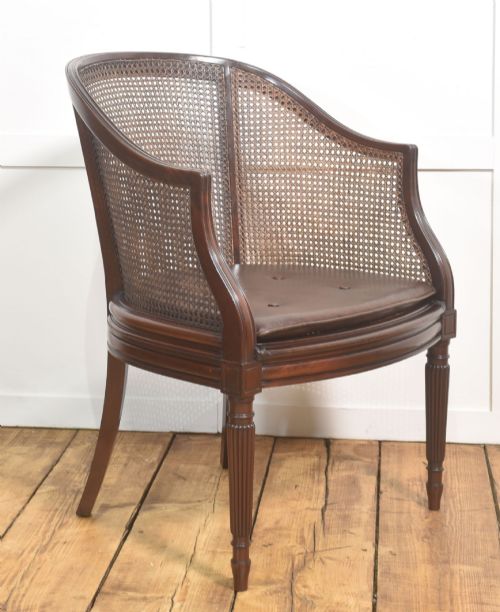
- Tub Armchair
- An upholstered or cane-sided chair with a continuous curved back and armrest forming a protective enclosure. This form provides lateral support suitable for prolonged desk work.
- Lyre Back
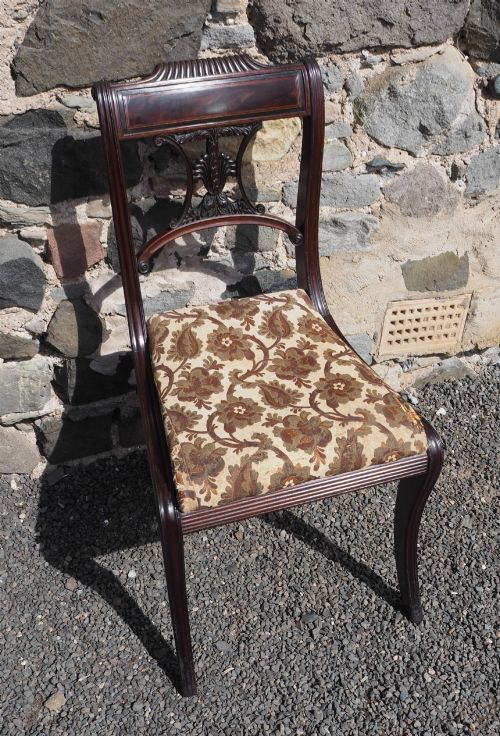
- A chair back featuring an open splat shaped in the outline of a classical musical lyre. This motif recurs frequently in Regency and nineteenth-century mahogany seating.
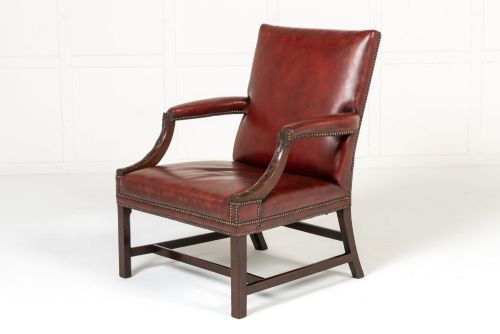
- Gainsborough Chair
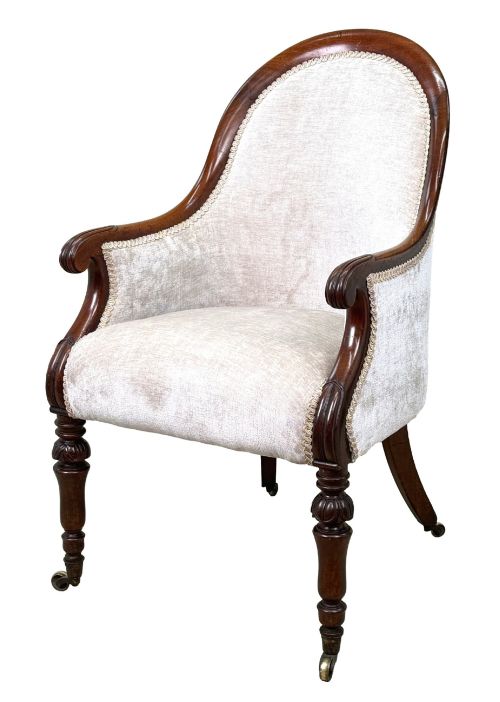
- A wide, open-armed armchair with a padded back and seat, standing on short legs, originating in the mid-eighteenth century. They are frequently utilised as comfortable desk or library seating.
Vintage Carved Desk Chair: Frequently Asked Questions
What makes a desk chair antique?
An antique desk chair is typically classified by its age, originating from the nineteenth century or earlier, though Edwardian and early twentieth-century pieces also appear. These items are distinguished by period construction methods, traditional timber selections, and historical design revivals.
Makers built these chairs by hand using solid woods like mahogany, oak, and elm, employing joinery techniques that differ significantly from modern mass-produced office furniture. Their historical context and patinated surfaces separate them from contemporary reproductions.
How do I use an antique chair at a modern desk?
Using a vintage carved desk chair requires checking the seat height against your desk clearance, as older chairs were often built lower than modern standards. Adding a thin, period-appropriate leather or fabric squab cushion can adjust the sitting height without altering the frame.
Ensure the chair base fits comfortably beneath the desk drawer or apron before purchase. Arm height is another critical measurement to verify so the chair slides in properly when not in use.
Are these chairs comfortable for long work hours?
Many period desk chairs provide upright support through their high backs and supportive armrests, though comfort levels vary by design. Tub chairs and upholstered library models offer more cushioning than solid wood captain chairs or Windsor variants.
If you require soft seating for extended daily work, consider models upholstered in leather or fabric. Alternatively, adding a removable cushion preserves the antique timber seat while increasing daily usability.
How do I identify the wood type?
Identifying the timber involves examining the grain pattern, colour depth, and weight of the chair frame. Mahogany typically displays a deep reddish-brown hue with straight or ribbon grain, whereas oak shows prominent medullary rays and an open grain texture.
Elm and beech present tighter, paler grain patterns often found in nineteenth-century Windsor and vernacular seating. Walnut is distinguished by its rich, darker brown coloration with occasional swirling figures.