



Vintage Carved Bookends
These vintage carved bookends bring character to shelves through animal subjects and regional timber work spanning the nineteenth and twentieth centuries.
Vintage Carved Bookends
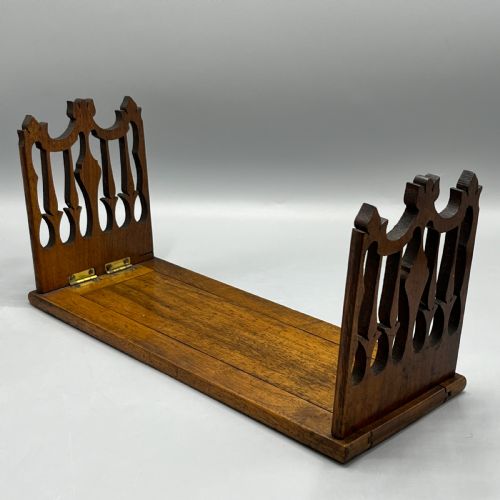
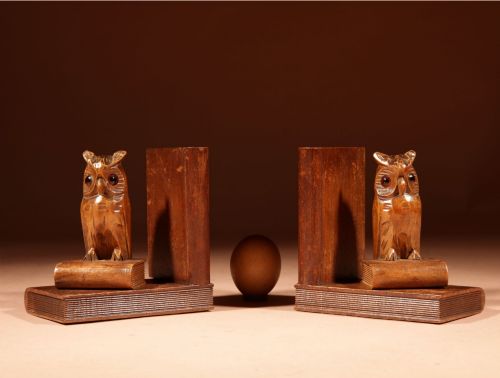
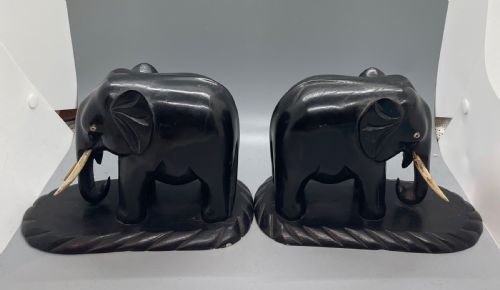
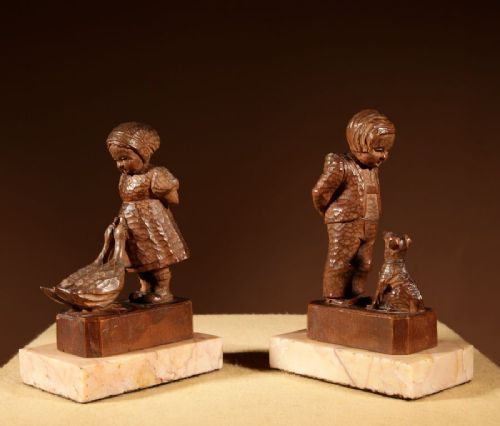
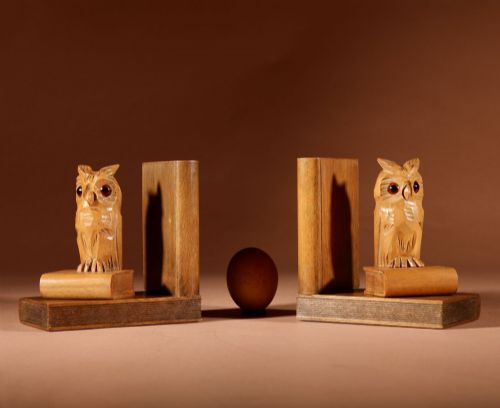
Vintage carved bookends encompass sturdy shelf supports and extending book slides shaped from timber, stone and bone across multiple stylistic eras. The selections here heavily feature Black Forest animal carvings from the early twentieth century alongside Art Deco depictions of elephants and dogs.
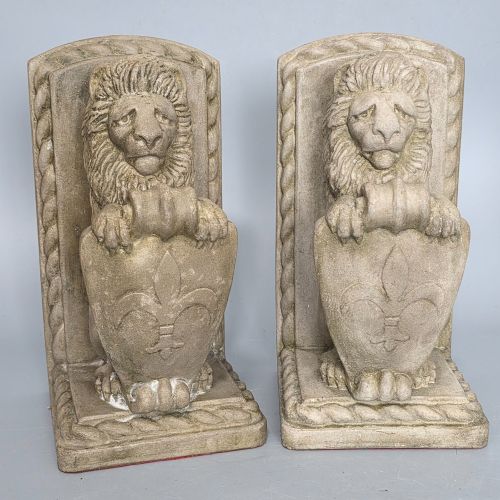
Makers utilised various regional styles, ranging from Anglo-Indian and Kashmiri woodwork to European Gothic Revival and Neoclassical motifs. Functional desk accessories and sculptural pairs dominate the selection, serving libraries and studies alike.
Materials and Technique
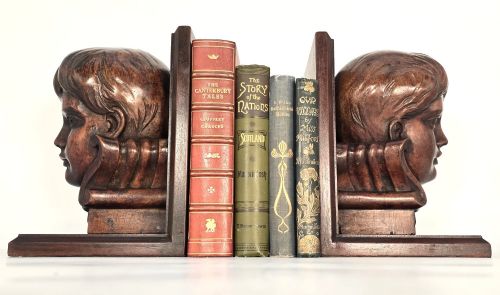
Craftsmen worked primarily in hardwoods such as oak, mahogany, olive wood, ebony and linden wood, applying detailed hand-carving techniques to shape realistic figures of animals and architectural elements. Alabaster, marble and cast stone appear in geometric and figural Art Deco designs, often combined with metal components.
Specialised techniques include delicate penwork in the chinoiserie style and intricate surface incisions on bone and soapstone. Timber pieces frequently display natural grain finishing or dark polishing to accentuate the depth of the carving.
Cricket enthusiasts can secure a matched pair of carved wooden bat and ball bookends.
Standard and Execution
Execution depends upon the precision of the carving and the natural expression captured in animal subjects, distinguishing lifelike forms from generic commercial production. Depth of relief and complexity of the timber grain dictate visual success.
The integrity of the supporting base relative to the carved sculpture dictates the balance and stability of the pair on the shelf. Signed pieces or works with distinct regional provenance maintain stronger artistic identity.
Thornton Smith Co·V Ramirez Bolivia
The Vintage Carved Bookends Glossary
- Black Forest
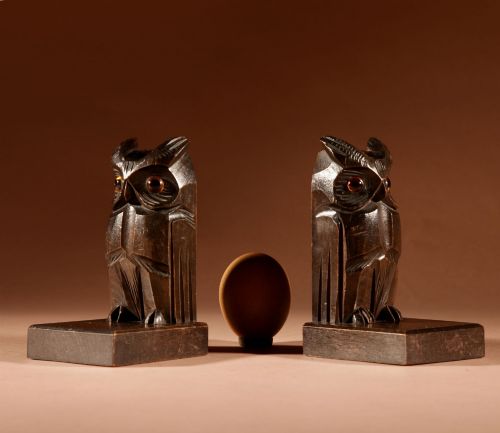
- A style of wood carving originating from central Europe, typically depicting bears, owls and other wildlife with expressive detailing.
- Book slide
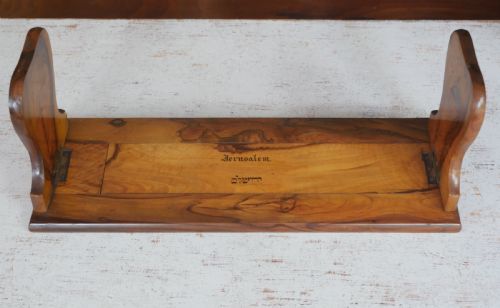
- An extending desk accessory featuring sliding wooden or metal sections designed to hold a varying number of volumes upright.
- Shi Shi
- Traditional Chinese guardian lions, frequently carved from jade marble or soapstone for desk ornaments and seals.
- Anglo-Indian
- Furniture and decorative objects made in India by native craftsmen using local timbers like coromandel and beech for Western markets.
Vintage Carved Bookends: Frequently Asked Questions
How do I care for wooden bookends?
Keep wooden pieces away from direct heat sources and strong sunlight to prevent the timber from drying out or splitting over time. Dust gently with a dry cloth and apply occasional specialist wax if the finish requires nourishment.
Avoid using liquid cleaners or water on unsealed carved surfaces, as moisture damages older polishes and grain structures. Proper placement ensures the wood maintains its natural tone and stability.
What periods do these bookends cover?
The selection spans from nineteenth-century Victorian and Regency examples through to twentieth-century Art Deco designs. Early twentieth-century Black Forest animal carvings sit alongside mid-century cast stone pieces.
Each period brings distinct material preferences, moving from heavy mahogany and ebony libraries to streamlined marble and hardwood sculptures.
How were book slides used?
Book slides sat on desks or tables to corral working volumes within easy reach during daily reading and writing tasks. The expanding mechanism allowed owners to adjust the length as books were added or removed.
They functioned as portable library shelves before settling into stationary display roles on mantelpieces and study surfaces.
Are animal motifs common?
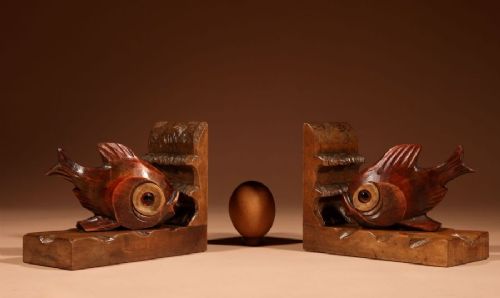
Animals form a major part of the selection, featuring prominently in Black Forest carvings and Art Deco sculptures. Elephants, owls, dogs, bears and hounds appear frequently across various timber and stone mediums.
These subjects reflect popular taste from the Victorian era onward, blending utility with decorative animal portraiture.