




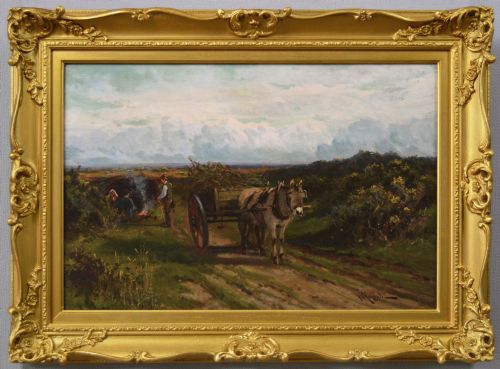


Vintage Cart Painting
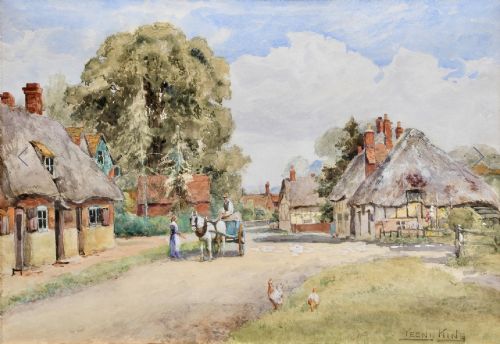
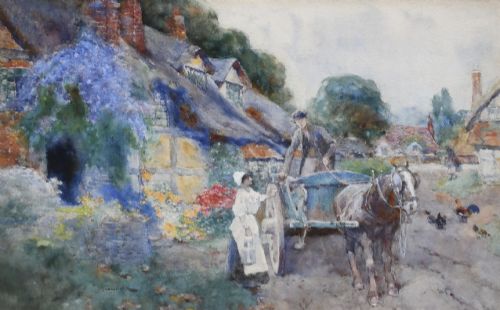
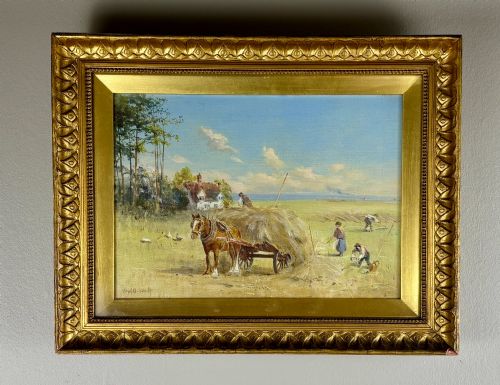
These vintage cart painting works capture rural labour and transport across oil and watercolour, offering a direct view into past working life.
Vintage Cart Painting
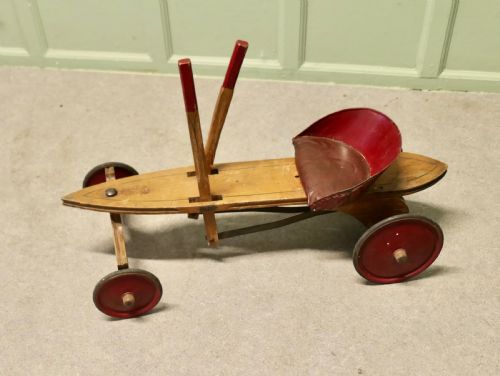
A vintage cart painting depicts rural transport, farm labour and agricultural scenes, spanning watercolours and oil paintings from the nineteenth century through the 1930s. Buyers searching this phrase meet works featuring farm carts, harvest scenes, market carts and delivery vehicles alongside actual wooden and iron cart objects.
The material record includes oil on canvas, paper, watercolour, gouache and wood, reflecting both fine art landscape traditions and utilitarian advertising pieces. These works range from detailed Victorian pastoral watercolours to British Impressionist and Realist canvases depicting horses, donkeys and carts.
Originating predominantly from British and French artistic traditions, the selection balances framed landscape watercolours with oil paintings of rural life and architectural cart sheds. The form encompasses artists capturing coastal scenes, village life and agricultural harvests across distinct regional settings.
Materials and methods in construction
Paintings utilise oil on canvas or watercolour and gouache on paper, capturing pigment application typical of the nineteenth and early twentieth centuries. Artists employed traditional brushwork to render figures, horses and wooden cart structures within landscape settings.
Physical objects in the evidence combine hand-carved wood, cast iron and giltwood frames, showing craftsmanship applied to scale models, advertising sides and carriage wheels. These materials reflect both fine art framing techniques and utilitarian rural manufacture.
Vintage Cart Painting Retail Price Guide 2026
Typical asking prices for vintage cart painting among the pieces listed under this phrase on Sellingantiques today, from the lower quarter to the upper quarter. They describe what is for sale here now, not the wider market.
Listings feature works spanning the 1880s through the 1930s, executed in watercolour, oil on canvas, and gouache on paper.
Distinctions in execution and grade
The distinction between standard works and exceptional examples lies in the precision of brushwork, compositional balance and atmospheric depth. Superior pieces demonstrate confident handling of light and shadow, particularly in landscape watercolours and oil paintings depicting horses and figures.
Provenance and artist recognition elevate certain works, as seen in signed pieces by named nineteenth and early twentieth-century painters. The integration of period frames and the preservation of original paper or canvas surfaces further distinguish the top tier of the range.
James William Booth·Léon Joseph Voirin·John Augustus Atkinson·George Hamilton Constantine·Herbert Royle·Frederick William Jackson·Walter Duncan·George Turner·Arthur Walker Redgate·Nora Munro Summers·Fred C. Jones·Frank Saltfleet·William Kay Blacklock·Alfred George Stevens·Fred Lawson·John Baragwanath King·Reginald Mills·Robert Thorne Waite·JE Hood·Kershaw Schofield·Lois Wilton·Maurice Wiliquet
The Vintage Cart Painting Glossary
- Watercolour
- A painting method where fine pigment is suspended in water-based solution on paper. This medium dominates rural harvest landscapes and detailed topographical scenes.
- Oil on Canvas
- Pigment mixed with drying oil applied to a stretched woven fabric support. This technique provides rich colour depth for nineteenth-century pastoral and impressionist works.
- Gouache
- An opaque water-based paint medium that creates denser, heavier colour application than traditional watercolour. It appears in architectural and landscape compositions from the early twentieth century.
- Victorian Pastoral
- An artistic style focusing on idealized rural life, agricultural labour and pastoral landscapes. This genre frequently incorporates farm carts, hayricks and harvest workers.
- British Impressionism
- A painting approach emphasising light, rapid brushwork and everyday subject matter. Works in this style capture outdoor scenes of rural transport and country tracks.
Vintage Cart Painting: Frequently Asked Questions
What subjects appear in these paintings?
The compositions focus on rural transport, agricultural labour, and country landscapes. Common motifs include hay carts, harvest time, farmyard scenes, and delivery vehicles.
Figures, horses, and donkeys frequently accompany the carts, placed within village settings, coastal views, or wooded tracks across the nineteenth and early twentieth centuries.
How do I date a vintage painting?
Dating relies on recorded artist active periods, stylistic movements such as Victorian pastoral or early twentieth-century realism, and framing materials. Signatures and gallery inscriptions also provide chronological markers.
Paper quality, canvas types, and written dates on the reverse offer further confirmation of the decade in which the work was produced.
Where were these pieces created?
The works originate primarily from British and European artistic traditions, reflecting regional landscapes from Yorkshire to Cornwall and continental European settings. Painters often recorded specific local topography.
Workshops and studios across Britain produced both the fine art paintings and the physical items like wooden scale models and cast iron cart wheels.
How should I display watercolour art?
Watercolours require placement away from direct sunlight to prevent fading of the pigments on paper. Proper framing under glass with acid-free mounts protects the delicate surface.
Maintaining stable indoor humidity levels ensures the paper support and giltwood or wooden frames remain preserved over time.