
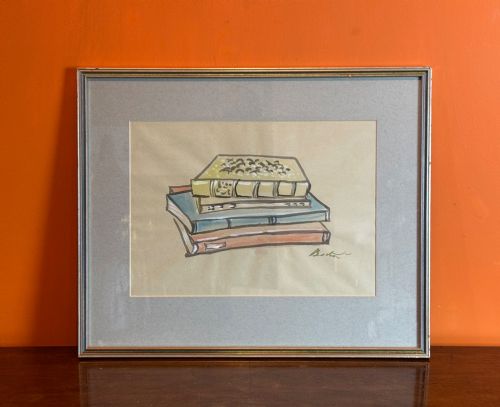

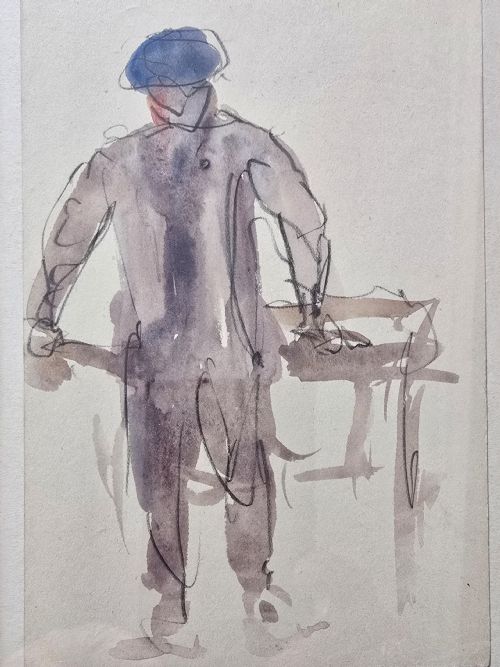
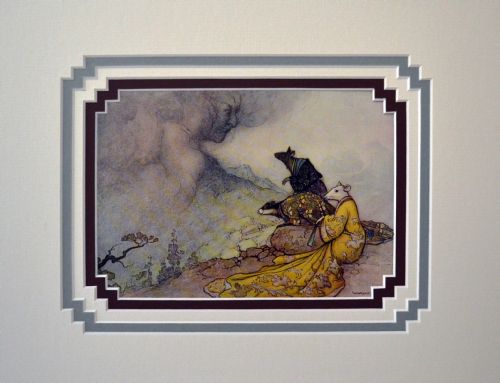


Grey Paper Watercolour Art
Grey paper watercolour art captures subjects across British landscapes, coastal scenes and town views using toned supports that alter light and shadow.
Grey Paper Watercolour Art
Grey paper watercolour art consists of paintings and sketches executed on tinted supports, using watercolour pigment, bodycolour and ink. These works range from loose topographical sketches to finished coastal and marine scenes.
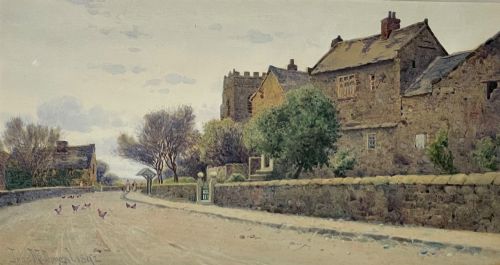
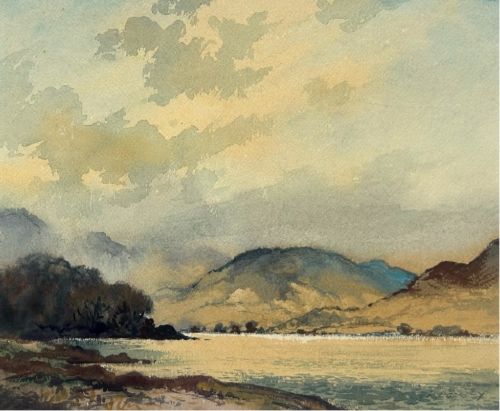
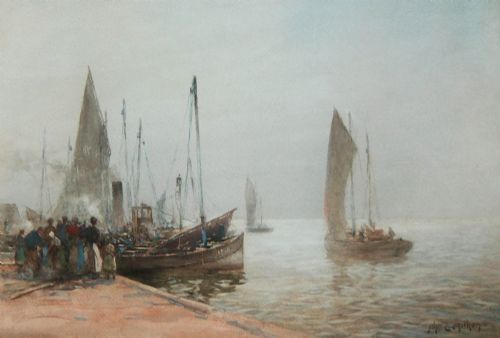
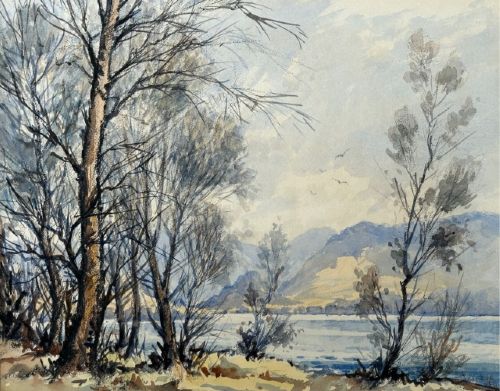
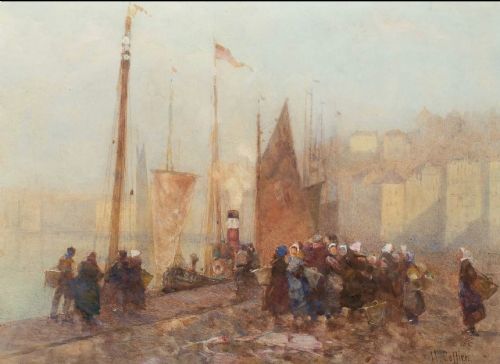
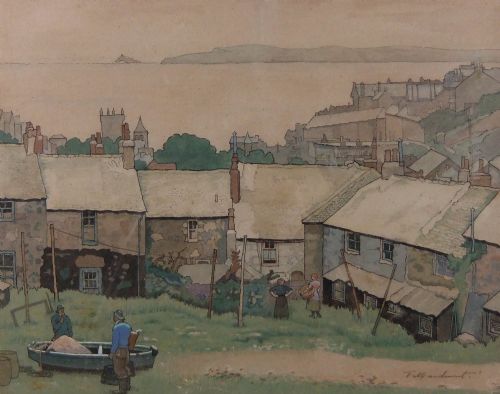
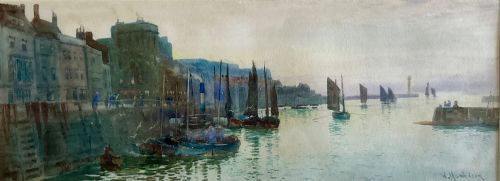
The pieces appearing here span the nineteenth, twentieth and mid-century periods, representing British Impressionist, Victorian and Edwardian styles. Subjects include Yorkshire harbours, Lake District landscapes, Parisian street life and architectural studies.
Most examples originate from British artists working in domestic settings, alongside occasional continental European and Japanese subjects. The fundamental characteristic uniting them is the use of a neutral grey or toned paper ground to hold the pigment.
How they were made
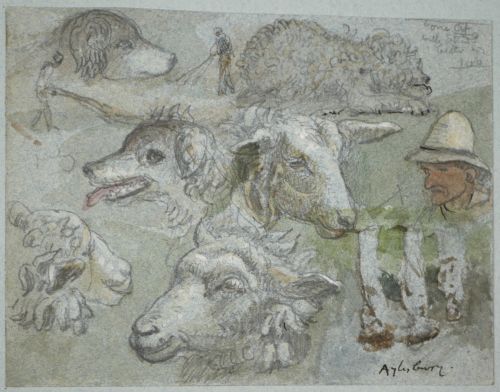
Artists applied watercolour paint and ink directly onto paper supports, often building highlights with opaque white bodycolour to contrast against the grey background. This technique allowed the neutral tone of the paper to act as a mid-tone shadow across the composition.
Works are frequently framed behind glass with wooden surrounds to protect the delicate water-soluble pigments and the paper ground from atmospheric moisture and light damage.
Subject matter spans British Impressionist marine views, Victorian coastal harbours, architectural prints and mid-century landscape sketches.
What varies in quality
Quality rests in the handling of the medium against the coloured ground, where confident brushwork uses the exposed paper to define atmospheric light. Stronger works demonstrate a secure control of tone and pigment density rather than merely filling the sheet.
Condition plays a part, as works exposed to excessive light suffer fading in the pigments and discolouration in the paper support. Pieces retaining their original palette and strong contrast command greater appreciation.
James Smetham·John McDougal·Robert Leslie Howey·James E. Aitken·Hector Caffieri·Thomas Maidment·William Matthison·Cecil Beaton·Albert Ludovici Jnr·Michael Healy·Warwick Goble·Fred Lawson·Arthur Reginald Smith·Cuthbert Crossley·Thomas Bush Hardy·Edward Seago·Tom Clough·Rowland Henry Hill·Stanley Orchart·Edward Dayes·Florence Hess·John Augustus Atkinson·Henri Joseph Harpignies·Frank H. Mason·George Hamilton Constantine
The Grey Paper Watercolour Art Glossary
- Watercolour
- A painting method where finely ground pigments are suspended in a water-soluble binder for application on paper. It relies on the white or tinted ground shining through translucent washes.
- Bodycolour
- Watercolour mixed with a dense white pigment to make it opaque. This allows artists to paint light highlights directly over darker washes and grey paper.
- Support
- The underlying physical material, such as paper or card, upon which the artistic medium is applied. Toned supports provide an immediate mid-tone background for the composition.
- Impressionism
- A style focusing on the visual impression of the moment, particularly shifting light and atmosphere. British practitioners applied these principles to coastal and rural scenes.
- Topographical
- Representing specific real-world locations with a degree of descriptive accuracy. These works often record buildings, harbours and landscapes as they appeared at a given date.
Grey Paper Watercolour Art: Frequently Asked Questions
What is grey paper watercolour art?
These works are paintings and sketches created on toned grey paper supports rather than traditional white stock. The tinted background serves as a built-in mid-tone for the composition.
Artists utilised this method to let opaque highlights and dark washes interact directly with the neutral paper colour. This approach appears frequently in nineteenth and twentieth-century British watercolours.
How should these watercolours be displayed?
Framed works under glass require placement away from direct sunlight to prevent the pigments and paper ground from fading. Maintaining stable indoor humidity levels protects the paper from warping.
Professional framing with acid-free mounts ensures the artwork remains preserved for future years. Proper placement balances aesthetic appreciation with material conservation.
How do I identify the period of a piece?
Stylistic clues such as framing, signature styles and subject matter often point toward specific eras like the Victorian period or mid-century modernism. Costume, architectural details and maritime vessel types also provide chronological context.
Artists active during specific decades frequently employed distinct handling of watercolour pigment and bodycolour. Comparing signatures and exhibition labels helps narrow down the date of execution.
Why did artists use grey paper?
Painting on grey paper allowed artists to bypass the time-consuming step of washing a mid-tone across a white sheet. The neutral background immediately established a unified tonal value for the entire scene.
Highlights applied with white bodycolour pop dramatically against the grey surface, creating rapid atmospheric effects. This technique suited outdoor sketching and rapid landscape studies.