





Vintage Card Index
These vintage card index pieces are practical multi-drawer storage units designed for filing and sorting, offering timeless utility for the modern home.
Vintage Card Index
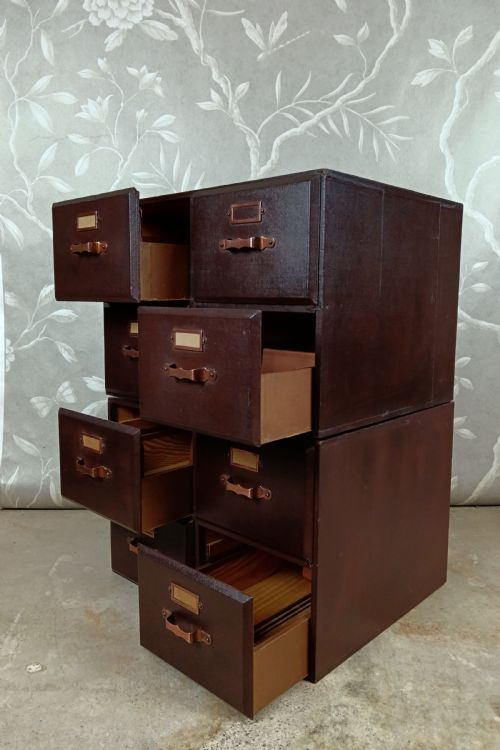
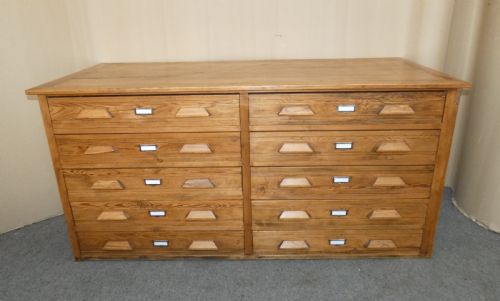
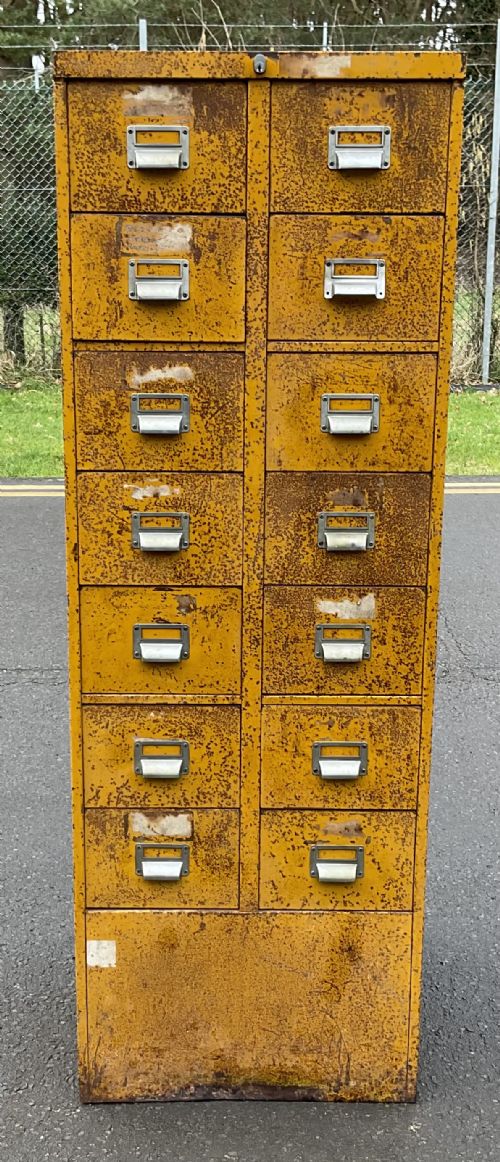
When you search for vintage card index furniture, you encounter robust storage solutions designed for offices, libraries, and shops. These items range from compact desktop filing drawers to large industrial banks of drawers and shop fittings.
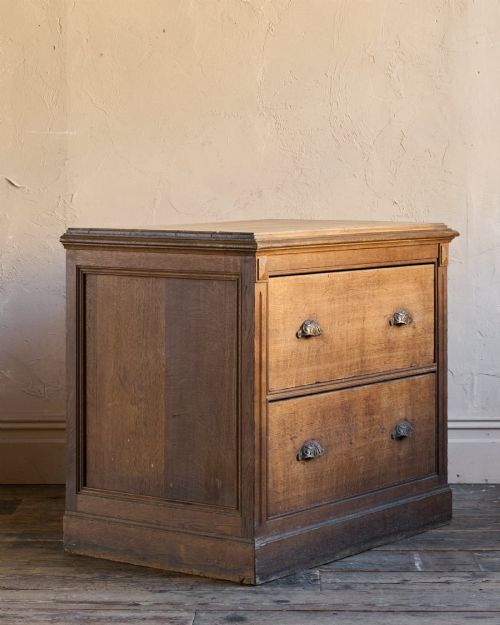
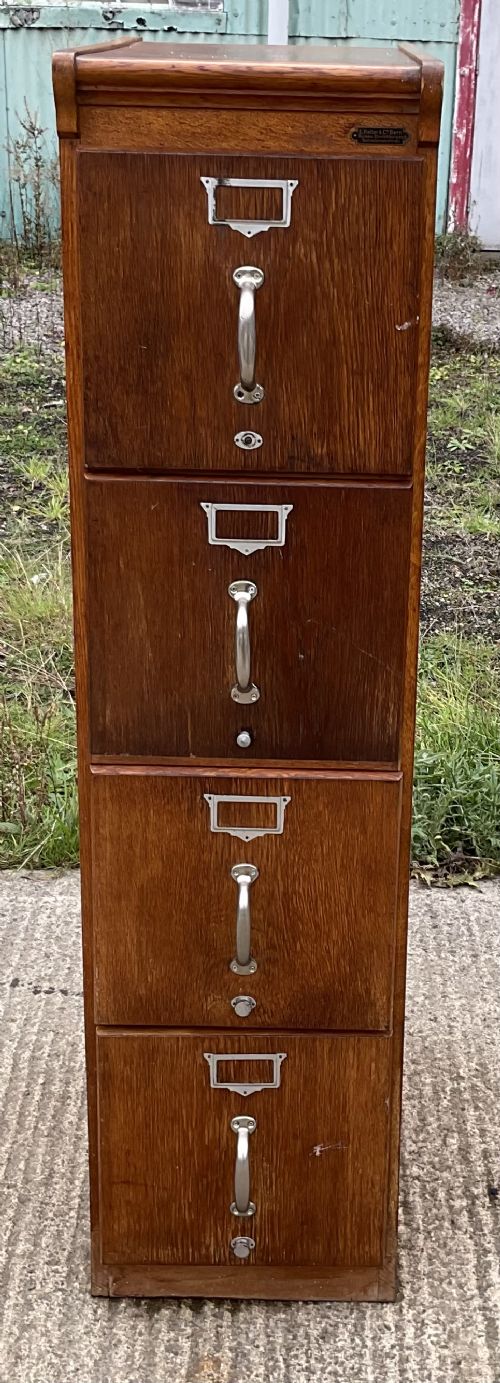
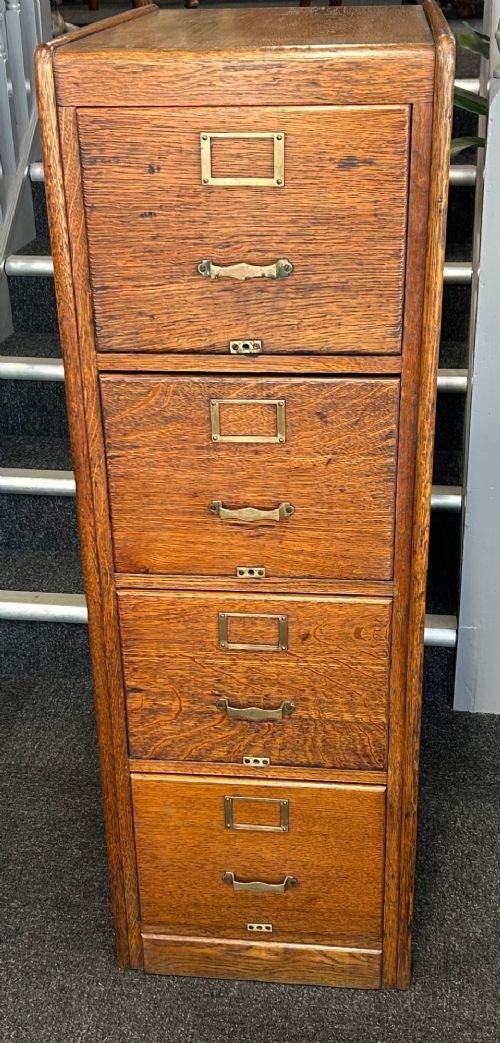
The pieces on this page span several distinct periods, including Victorian, Edwardian, and the early twentieth century. Common forms include vertical filing cabinets, multi-drawer chests, and specialised haberdashery or letter file cabinets.
Most examples originate from commercial or institutional settings, constructed to house index cards, correspondence, or small goods. Their multiple small compartments provide exceptional organisation alongside strong visual character.
How they were made
Cabinet makers utilised a variety of timbers such as oak, mahogany, walnut, pine, and beech for the main carcases and drawer fronts. Hardwoods provided durability for heavy daily office use, while softer woods served internal structural roles.
Metal components played a crucial role in construction, with brass and steel used for handles, label holders, and internal mechanisms. Painted wood finishes also appear, particularly on pieces intended for utilitarian commercial environments.
Vintage Card Index Retail Price Guide 2026
Typical asking prices for vintage card index among the pieces listed under this phrase on Sellingantiques today, from the lower quarter to the upper quarter. They describe what is for sale here now, not the wider market.
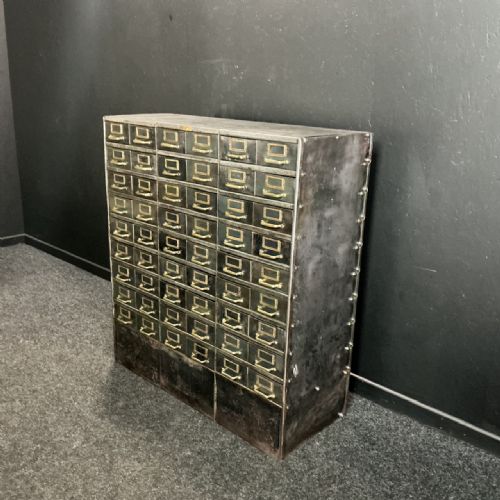
Some multi-drawer units contain up to sixty-six tiny compartments, perfect for organising endless collections of buttons, stamps, or screws.
What varies in quality
The distinction between standard utility items and finer examples lies in the selection of timber and the complexity of the drawer configuration. Cabinets featuring figured mahogany or quarter-sawn oak represent a higher standard of craftsmanship than basic pine office furniture.
Hardware details and patent mechanisms elevate certain pieces above standard storage units. Original brass label holders, smoothly operating multi-tier runners, and maker-specific locking systems distinguish superior commercial editions from plain workshop drawers.
Amberg·Shannon
The Vintage Card Index Glossary
- Bank of Drawers
- A multi-drawer storage unit typically featuring numerous small compartments arranged in rows and columns. These were originally utilised in shops and offices for sorting small items or index cards.
- Haberdashery Cabinet
- A specialised storage piece with shallow drawers, often featuring glass fronts, designed to display and store small dry goods. They share a similar multi-drawer aesthetic with large filing systems.
- Vertical Filing Cabinet
- A tall storage unit designed to hold documents or cards upright within drawers. These pieces maximise floor space while offering extensive organisational capacity.
- Quarter-Sawn Oak
- A method of timber cutting that produces distinctive grain patterns and superior dimensional stability. Furniture constructed using this technique resists warping over decades of use.
Vintage Card Index: Frequently Asked Questions
What were vintage card index cabinets used for?
These cabinets served primarily in offices, libraries, and commercial premises to organise paper records, index cards, and correspondence.
Their numerous small drawers allowed clerks to categorise information alphabetically or numerically before the widespread adoption of digital databases.
How do I clean a wooden filing cabinet?
Maintain the timber surfaces by applying a traditional beeswax polish with a soft cloth to nourish the grain.
Avoid using modern liquid silicone sprays, which can build up a residue and damage antique or vintage wood finishes over time.
Are these drawers suitable for modern paper sizes?
Many vintage index cabinets were built for specific card sizes or older stationery formats rather than contemporary A4 paper.
Buyers should check internal drawer dimensions carefully if planning to store modern office documents or standard folders inside them.
How do I identify an Edwardian filing cabinet?
Edwardian pieces generally date from the early twentieth century and frequently feature rich timbers like mahogany, walnut, or oak.
They often display refined proportions and traditional brass hardware that reflect the domestic and commercial cabinet-making standards of that era.