


Vintage Card Games
These vintage card games and related tables span walnut, mahogany, and sterling silver from the eighteenth century to the art deco period.
Vintage Card Games
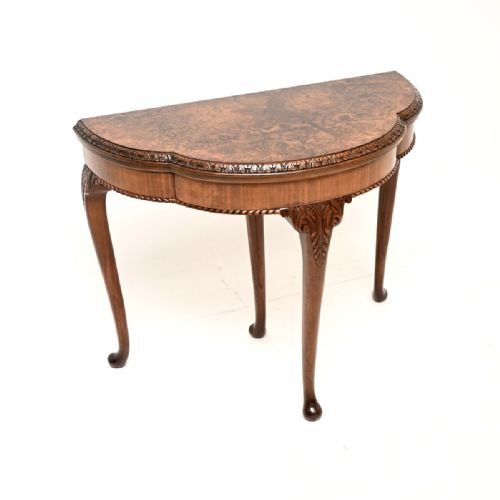
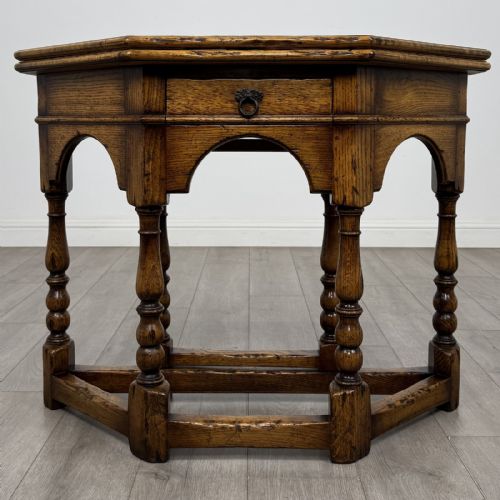
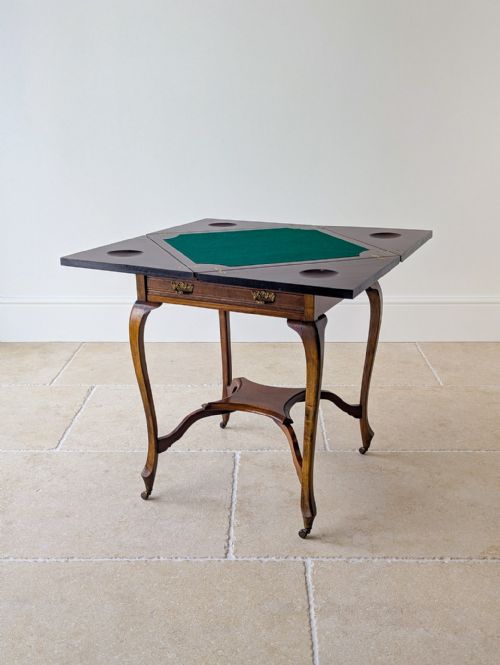
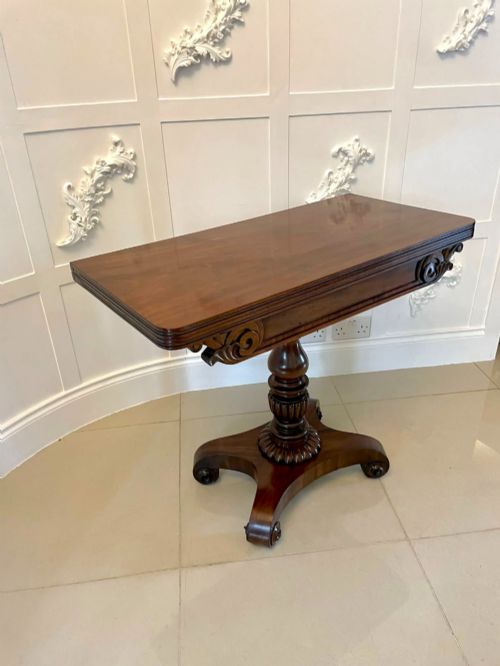
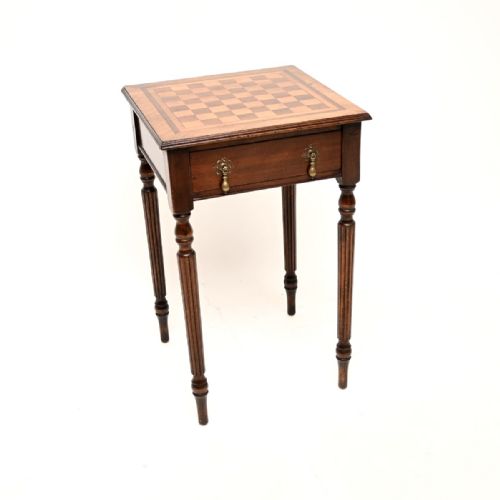
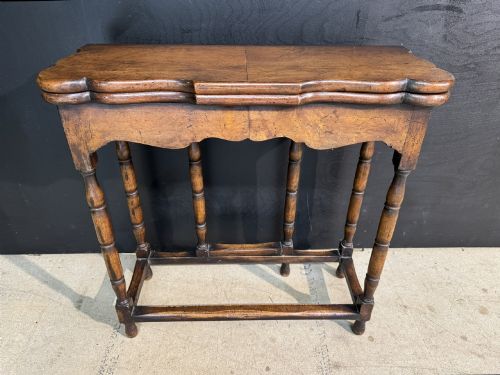
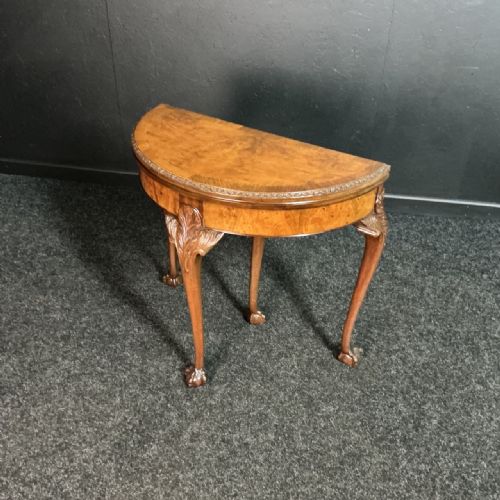
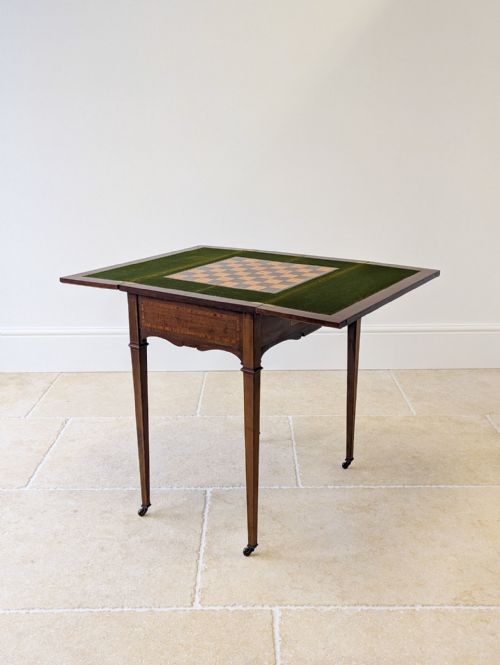
When you search for vintage card games, you encounter a diverse range of furniture and accessories designed for indoor pastimes, dominated by walnut and mahogany card tables alongside smaller silver requisites. These pieces encompass folding games tables, tea tables with fold-over tops, and dedicated games boxes originating from periods such as the Edwardian era, the Victorian epoch, and the eighteenth century.
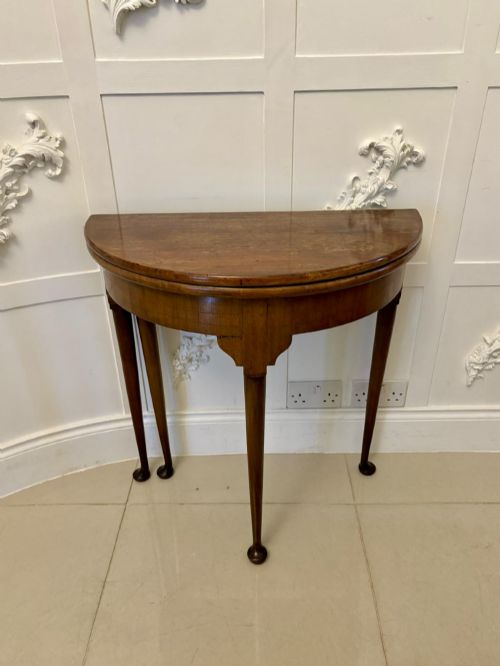
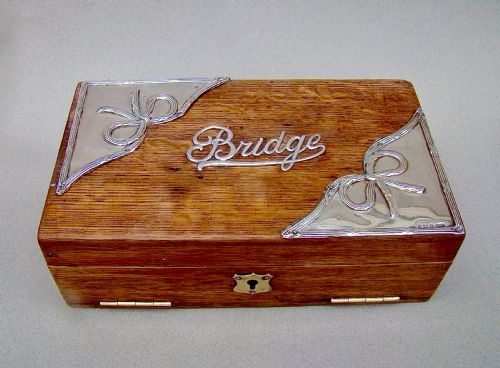
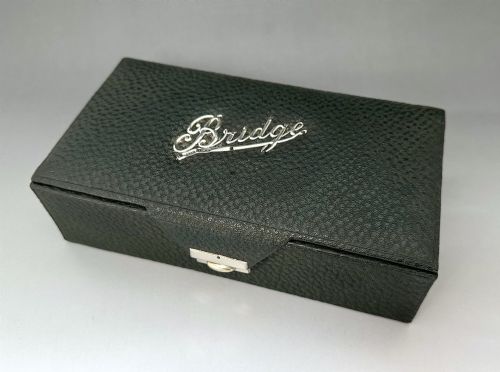
The most common forms on this page are Edwardian and early twentieth-century walnut or mahogany card tables, often featuring folding or revolving tops supported by slender legs. Alongside these larger items, buyers frequently find smaller accoutrements like sterling silver place card holders, trump markers, cribbage boards, and specialised bridge boxes.
How they were made
The construction of these pieces relies heavily on cabinet timbers such as mahogany, walnut, and burr walnut, frequently enhanced by cross-banding, marquetry, and satinwood inlays. Joinery techniques from the eighteenth to the twentieth century ensure stability in folding mechanisms, allowing heavy timber tops to pivot or fold smoothly over hidden compartments.
Precious metals and specialised materials complement the woodwork, with sterling silver, brass, enamel, and leather appearing extensively in markers, bridge boxes, and menu holders. Metal components involve casting, silver-plating, and detailed hallmarking, while smaller items incorporate baize lining for card surfaces and carved bone or dice.
Vintage Card Games Retail Price Guide 2026
Typical asking prices for vintage card games among the pieces listed under this phrase on Sellingantiques today, from the lower quarter to the upper quarter. They describe what is for sale here now, not the wider market.
An English folk art dice shaker comes complete with six dice and instructions for past parlor wagers.
What varies in quality
The distinction between standard examples and superior specimens rests on timber selection, such as richly figured burr walnut or dense mahogany, paired with crispness in cabinet-making and inlay. Finer tables exhibit seamless folding mechanisms, harmonious proportions, and meticulous attention to secondary timbers within interior compartments.
Levi and Salaman·Epstein and Co
The Vintage Card Games Glossary
- Baize
- A coarse woolen fabric used traditionally to line the playing surfaces of card and games tables. It provides a soft, tactile surface that prevents cards from sliding during play.
- Demi-Lune
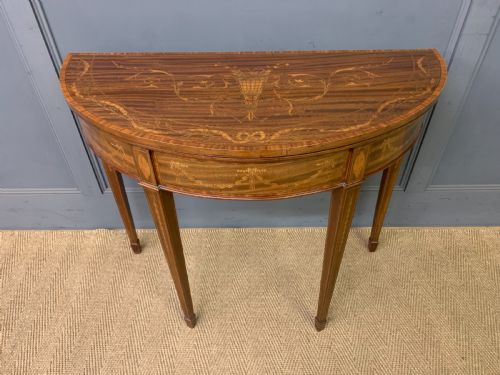
- A half-moon shape characteristic of certain card and console tables designed to sit flush against a wall when folded. These tables often feature a fold-over top supported by a swinging rear leg.
- Trump Marker
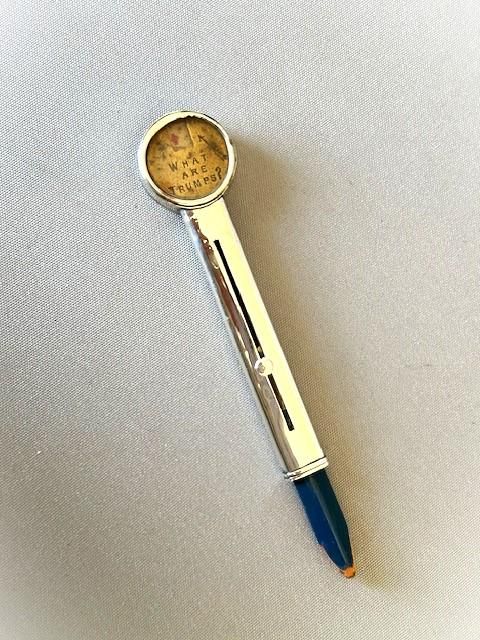
- A small device or dial used in card games, particularly bridge, to indicate which suit is currently trumps. They are frequently fashioned from sterling silver or plated brass.
- Cribbage Board
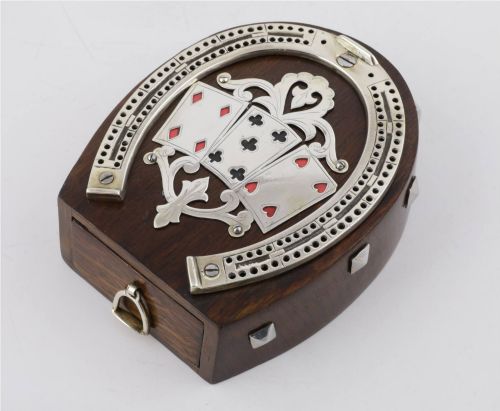
- A board used to keep score in the card game cribbage, typically featuring tracked holes for pegs. Antique examples often double as storage boxes for playing cards.
Vintage Card Games: Frequently Asked Questions
How do you date a vintage card table?
Dating relies on timber choices, leg styles, and construction methods characteristic of specific eras like the Edwardian period or the eighteenth century. Walnut and heavy mahogany point to distinct stylistic revivals and reigns.
Hardware, hinges, and the presence of maker marks or silver hallmarks also provide precise chronological markers. Examining the secondary woods underneath clarifies the period of manufacture.
What were place card holders used for?
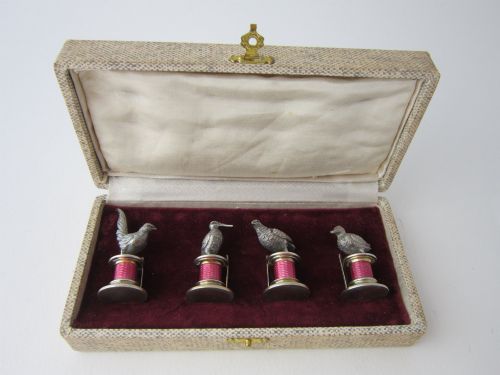
Place card holders directed guests to their designated seats at formal dinner parties during the Edwardian and Victorian eras. They were typically cast in sterling silver or decorated with enamel.
These small accessories often took whimsical forms, such as animals or seasonal motifs. Today, they serve as collectible silver tabletop objects.
How do you care for a baize-lined table?
Caring for baize involves gentle brushing and keeping the fabric away from direct sunlight to prevent fading. Avoid using liquid cleaners on the wool surface to protect the underlying timber.
When folding the table, ensure no debris remains trapped between the surfaces. Proper humidity control in the room preserves both the fabric and the antique wood.