



Vintage Canine Print
A vintage canine print brings character to a room through inked lines and paper studies of dogs from past centuries.
Vintage Canine Print
A vintage canine print covers framed prints, etchings, engravings, and watercolours depicting dogs across various eras. When searching for a vintage canine print, buyers encounter works ranging from Victorian engravings to mid-twentieth-century drawings.
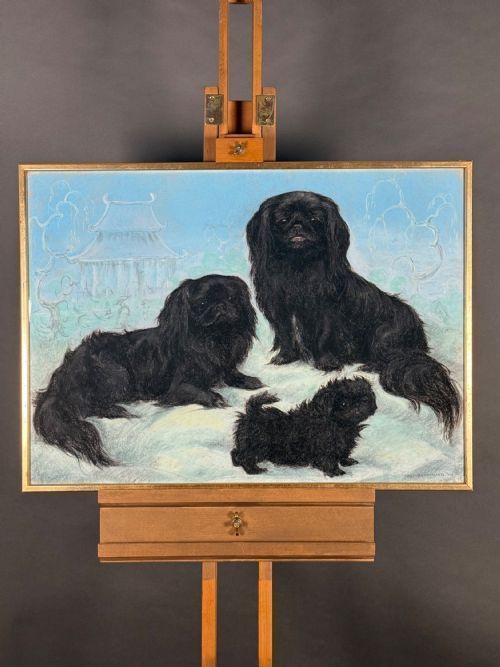
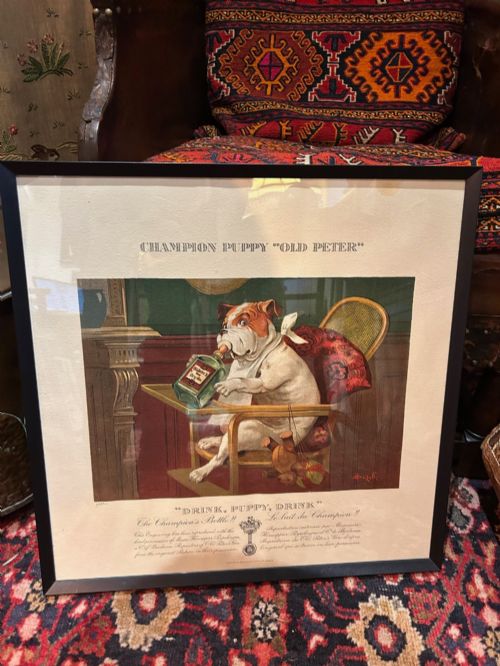
The pieces on this page span the nineteenth century through to the 1960s, capturing sporting dogs, terriers, spaniels, and bulldogs. Etchings by notable printmakers sit alongside watercolour paintings and pastel studies on paper.
Framed works dominate the selection, utilising materials such as wood and giltwood alongside glass protection. Domestic dogs and sporting hounds form the primary subjects of these historical depictions.
Materials and technique
Printmakers utilised paper, ink, and drypoint techniques to produce detailed etchings and engravings, often signing their plates by hand. Painters employed watercolour, pastel, and oil on canvas to capture the texture of dog coats and the expressions of individual animals.
Frames incorporate wood and giltwood, sometimes paired with glass to protect fragile works on paper. These traditional mounting methods safeguard the integrity of nineteenth and twentieth-century pieces.
Vintage Canine Print Retail Price Guide 2026
Typical asking prices for vintage canine print among the pieces listed under this phrase on Sellingantiques today, from the lower quarter to the upper quarter. They describe what is for sale here now, not the wider market.
Listings feature works spanning the nineteenth century through to the 1960s, utilising paper, canvas, watercolour, and pastel.
Assessing quality
The strength of the impression in etchings and engravings separates finer plates from worn examples, where the inked lines lose their crisp definition. In hand-painted watercolours and oils, the precision of brushwork and the accurate capture of canine anatomy determine the merit of the piece.
The preservation of the paper, the absence of heavy foxing, and the harmony of the original frame contribute to the overall standard of a work. Signed plates and distinct artist attribution elevate the standing of individual prints.
Herbert Dicksee·Florence Mabel Hollams·Mabel Gear·Tom Carr·Marcellin Auzolle
The Vintage Canine Print Glossary
- Etching
- A printmaking method where lines are bitten into a metal plate with acid before ink is applied and pressed onto paper. This technique allows for fine, painterly detail.
- Drypoint
- A printmaking process in which an artist scratches directly into a metal plate with a sharp needle. This creates a distinctive velvety burr along the printed lines.
- Engraving
- A method of cutting a design directly into a hard plate using a burin. It yields clean, precise lines without the burr found in drypoint.
- Foxing
- Brown spots and discolouration that appear on old paper due to chemical reactions over time. It is common in works from the nineteenth century and earlier.
- Giltwood
- Wood carved and covered with a thin layer of gold leaf. It is frequently found on traditional picture frames.
Vintage Canine Print: Frequently Asked Questions
How do I date a dog print?
Examine the paper type, printing technique, and framing style to estimate the period of creation. Signatures and publisher inscriptions often provide direct clues to the exact decade.
Compare the subject's breed characteristics and artistic conventions with known historical periods, ranging from Victorian realism to mid-century modern works.
What is a drypoint etching?
A drypoint etching is created when an artist scratches an image directly onto a metal plate using a sharp stylus. This manual incision raises a ridge of metal called a burr.
When inked, this burr holds extra pigment, giving the printed lines a soft, rich quality that distinguishes it from standard line engravings.
How should I frame vintage prints?
Protect works on paper by using acid-free mounts and framing materials to prevent chemical degradation over time. Keep prints away from direct sunlight to avoid fading the ink and paper.
Retain original frames where possible, provided they offer adequate structural support and protection for the artwork inside.
Are these prints hand signed?
Some prints feature original pencil signatures by the artist beneath the image area, indicating a limited or artist-approved edition. Other pieces are unsigned book plates or published engravings from period periodicals.
Check the listing details and visible margins to determine whether a signature is present on the specific plate.