
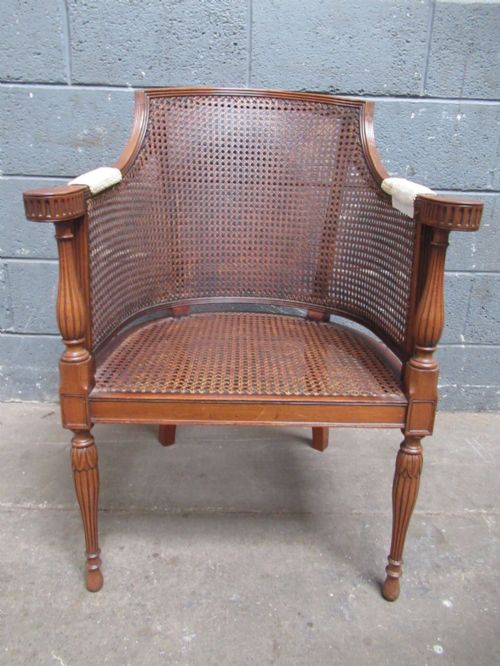
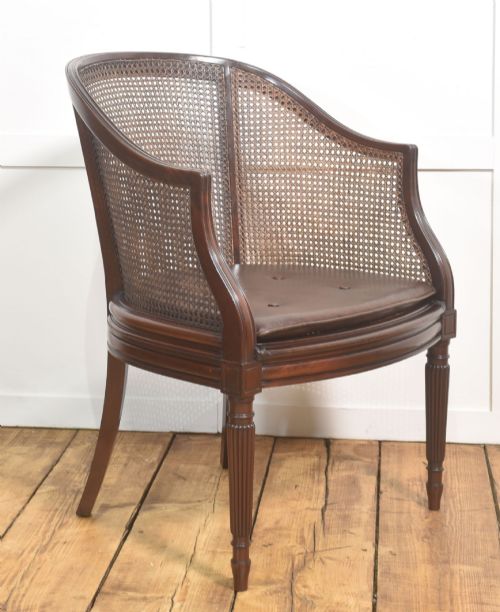


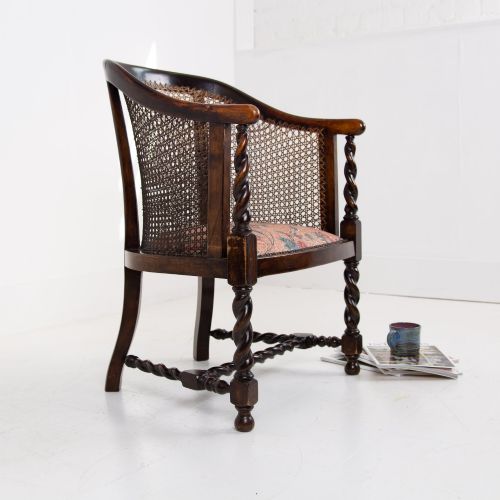
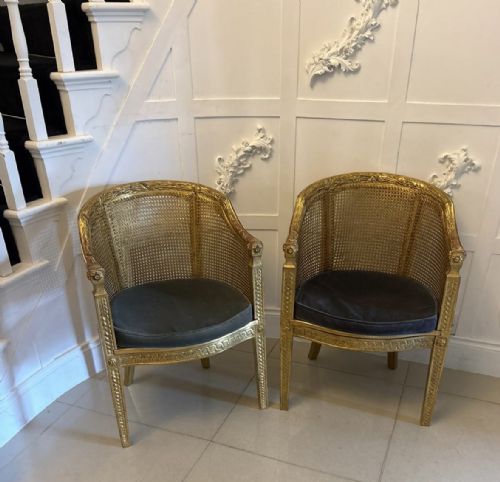



Vintage Caned Tub Chair
A vintage caned tub chair brings curved comfort and natural texture into a room, offering an inviting seat shaped by history.
Vintage Caned Tub Chair
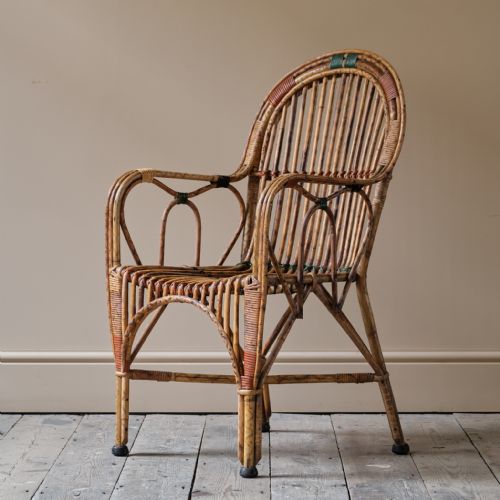
A vintage caned tub chair combines a rounded, enclosing backrest with woven panels, creating an armchair designed to envelop the sitter in structured support. These pieces emerge across various periods from the nineteenth century through the early twentieth century, spanning Edwardian, Victorian, Regency, and Art Deco aesthetics.
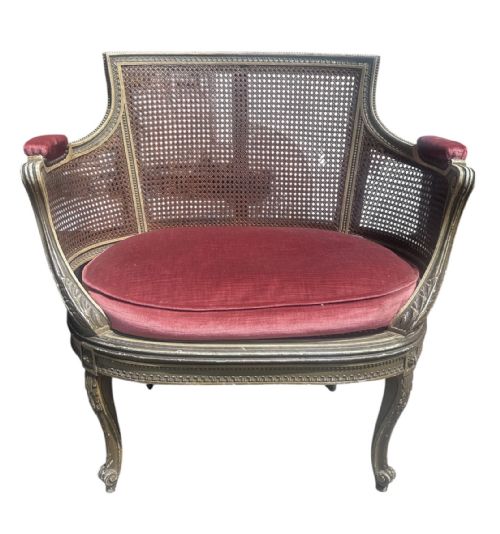
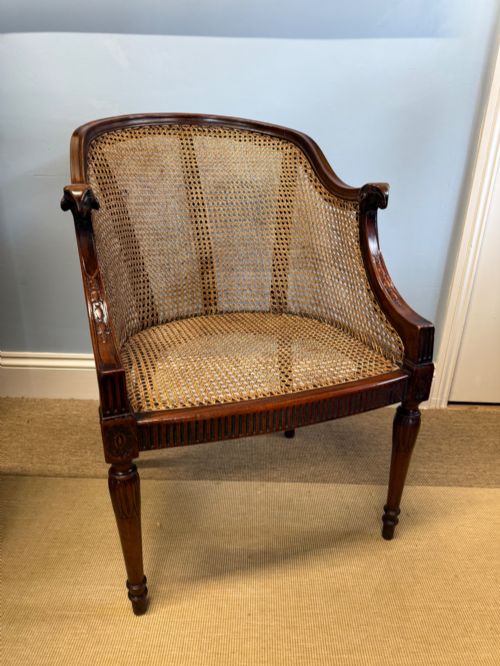
The most common forms on this page include mahogany and walnut frames styled after French Louis XV designs or traditional English library seating. Makers often paired the characteristic curved tub silhouette with low arms and open cane or rattan work to balance solid timber frames with visual lightness.
Alongside standard armchairs for the study or drawing room, the selection includes related variants such as deep bergère chairs and child high chairs. Each piece relies on the distinctive barrel-like back to define its profile, whether constructed in plain timber, painted finishes, or giltwood.
Materials and construction
Cabinetmakers built the structural frames of these chairs using dense hardwoods like mahogany, walnut, satinwood, teak, and oak. These timbers were carved, turned, or painted to achieve the prevailing styles of the nineteenth and twentieth centuries, from clean Regency lines to elaborate Louis XV curves.
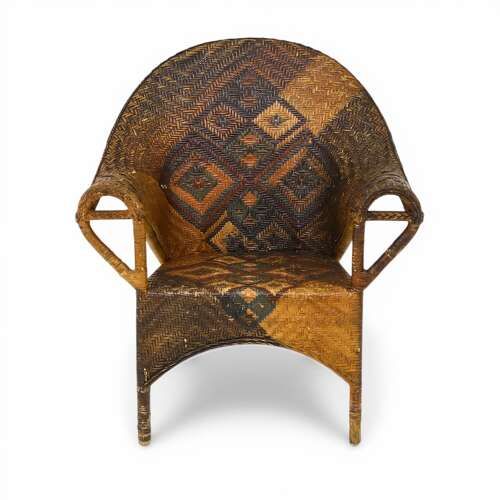
The characteristic back and seat panels utilise woven cane, wicker, and rattan threaded directly through drilled holes or secured within channels in the wooden framework. Artisans frequently integrated upholstered elements such as leather or velvet cushions to complement the rigidity of the timber and the elasticity of the woven mesh.
Listings feature frames in mahogany, walnut, satinwood, oak, teak, and painted or gilt wood, paired with cane, wicker, and rattan.
Assessing craftsmanship and finish
The distinction between ordinary and exceptional examples lies in the precision of the timber carving and the tightness of the cane weaving. Superior pieces display crisp mouldings, harmonious proportions, and resilient natural webbing that maintains uniform tension across the curved frame.
Finer chairs integrate choice secondary timbers, sophisticated surface treatments such as fine lacquer or original paint, and well-integrated brass details. The integration of the curved back into the seat rail demonstrates the joiner's skill in handling complex compound angles without excess bulk.
Dryad & Co·Dryad of Leicester
The Vintage Caned Tub Chair Glossary
- Bergère
- An upholstered enclosed armchair with wooden framing, often featuring cane sides and back panels. This French form gained popularity in various revival styles throughout the nineteenth and twentieth centuries.
- Tub chair
- An armchair featuring a continuous curved backrest that drops down to form low arms, wrapping around the sitter like the side of a tub. This shape provides enclosed seating comfort.
- Cane
- Strips of peeled rattan plant bark woven into open or closed patterns for chair seats and backs. It provides flexible, breathable support.
- Rattan
- A climbing palm used whole for structural framing or stripped into thin strands for weaving. It underpins much of the basketry and seating work found in early twentieth-century pieces.
- Satinwood
- A lustrous hardwood with a golden yellow sheen utilised for fine cabinetwork and decorative veneer. It adds brightness to library and salon seating.
Vintage Caned Tub Chair: Frequently Asked Questions
Where should I place a vintage caned tub chair?
These chairs suit reading corners, studies, or drawing rooms where their curved backs create an intimate seating node. Their open woven panels allow light to pass through, making them useful in smaller spaces where heavy furniture might feel oppressive.
Pairing a timber frame with existing wooden decor helps integrate the piece, while the low profile ensures it functions well alongside standard sofas and side tables.
How do I care for cane and rattan panels?
Natural cane requires moderate humidity to prevent the fibres from becoming brittle and snapping under tension. Wiping the surface with a damp cloth periodically removes dust from the woven interstices.
Avoid placing these chairs directly next to intense heat sources or in prolonged direct sunlight, which dries out the natural plant material and weakens the weave over time.
Are these chairs comfortable for daily sitting?
The curved tub shape naturally supports the back and arms, offering an ergonomic posture for reading or conversation. Many examples include loose cushions upholstered in velvet or leather to provide a softer seat base.
While the cane panel offers a springy and supportive backing, the addition of a well-padded cushion makes these armchairs suitable for extended periods of use.
How do I distinguish Edwardian pieces from earlier styles?
Edwardian examples often display lighter proportions, simpler mahogany or satinwood frames, and influences from earlier French or Arts and Crafts movements. Earlier nineteenth-century pieces tend to feature heavier mahogany frames, deeper carving, and more formal Regency or Victorian lines.
Examining the construction methods, such as the way the cane is bound and the treatment of the wood finish, helps clarify the period of manufacture.