


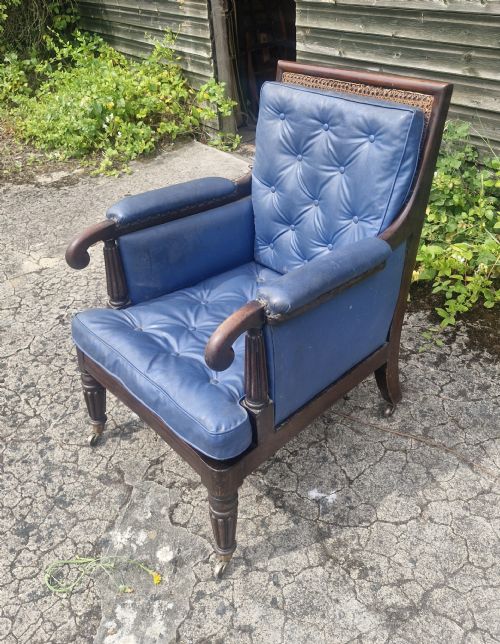


Vintage Cane Library Chair
A vintage cane library chair is a low, deep-seated armchair designed for reading, and you want one for its comfort and architectural silhouette.
Vintage Cane Library Chair
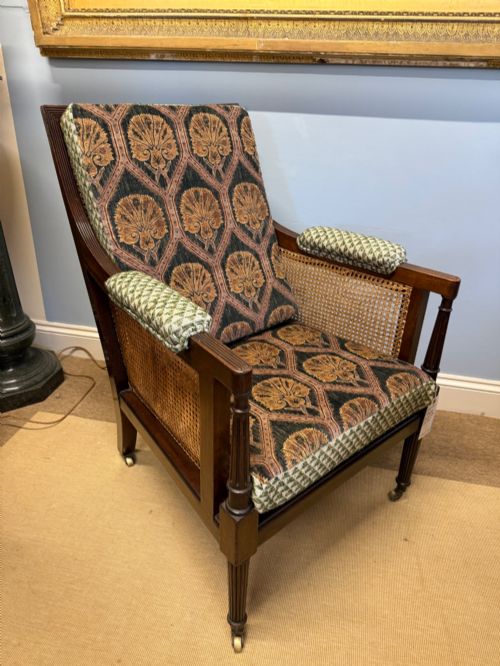
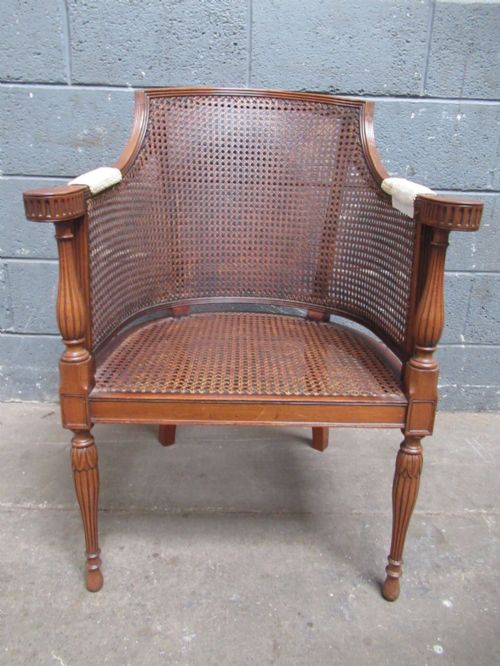
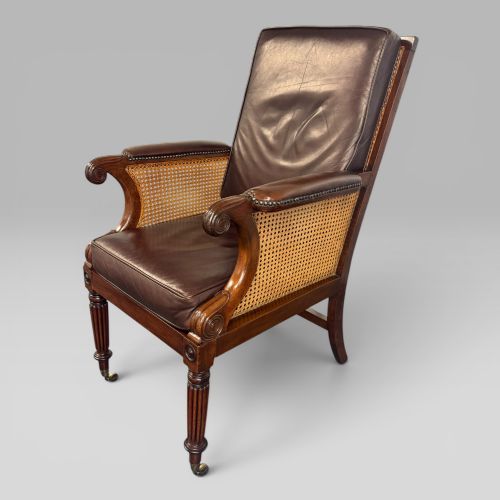
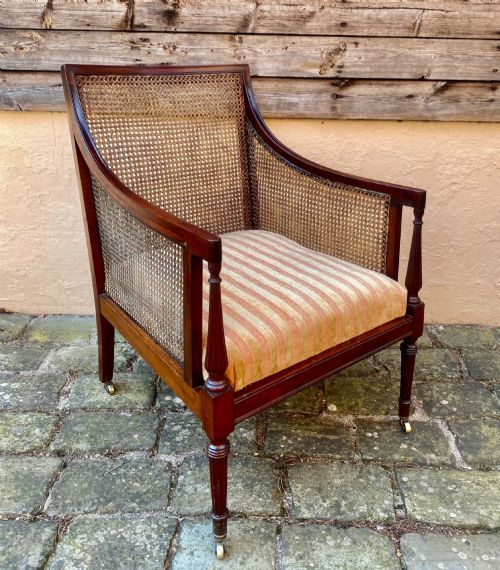
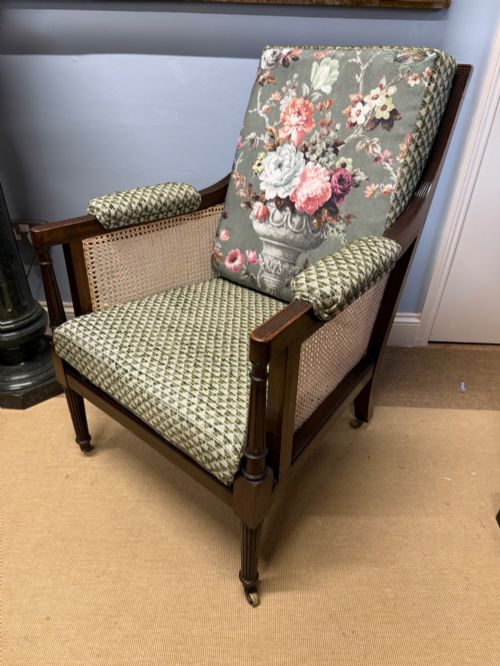
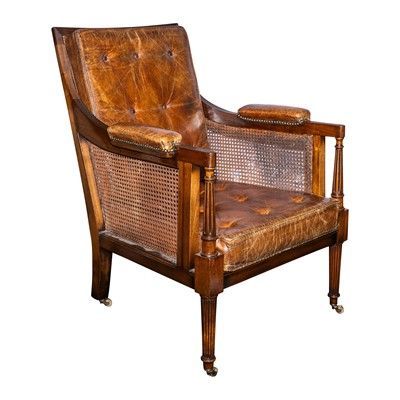
A vintage cane library chair is a deep, low armchair designed for long hours of reading in the study or drawing room. You will find examples spanning from the Regency period through to the Edwardian era, often taking the form of a spacious bergère.
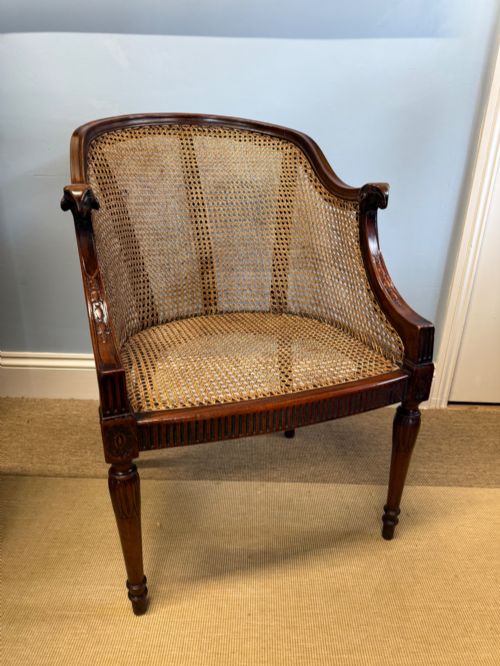
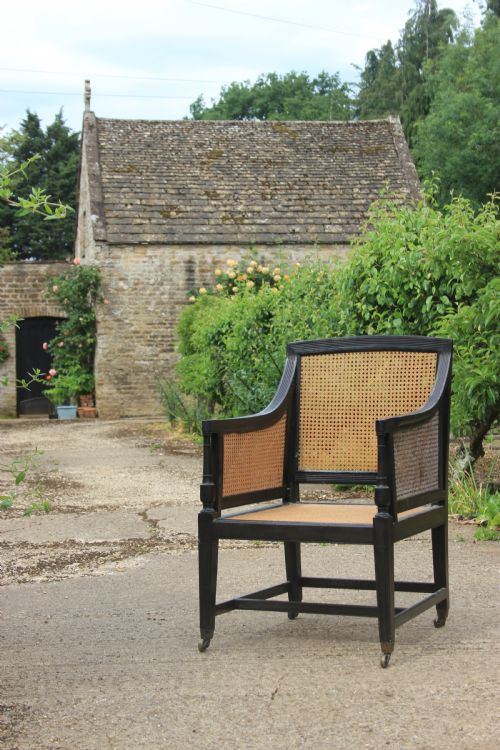
The most common form on this page is the mahogany bergère armchair, frequently featuring woven cane panels to the back and sides. Pieces range from solid ebony and rosewood models to walnut, oak, and satinwood variants dating across the nineteenth and early twentieth centuries.
Materials and Construction
The frames rely heavily on dense hardwoods such as mahogany, walnut, and satinwood, occasionally appearing in exotic timbers like solid ebony or rosewood. Cabinetmakers shaped these timbers into generous proportions, sometimes incorporating brass mounts or subtle inlay work.
Caning and rattan cane provide the characteristic woven panels for the back and arms, creating a light, flexible support. These frames are frequently paired with upholstered cushions trimmed in leather, fabric, or velvet.
Timbers represented include mahogany, walnut, oak, satinwood, rosewood, and solid ebony.
Distinctions in Quality
Quality rests in the fluidity of the frame's curvature and the generosity of its proportions, separating simpler workshop pieces from well-drawn examples. The crispness of carved details on walnut or mahogany frames dictates the visual weight of the chair.
The tightness and regularity of the hand-woven cane panels show the maker's skill. Superior execution involves harmonious pairing of timber grain with the supporting upholstery or leather squabs.
The Vintage Cane Library Chair Glossary
- Bergère
- An enclosed upholstered armchair with a wooden frame, where the sides and back are frequently filled with cane work. This French form became immensely popular in British libraries during the Regency period.
- Caning
- A method of weaving rattan or cane slips to create a porous, resilient panel. It provides structural support while maintaining a lighter appearance than solid timber.
- Regency
- A style period spanning the early nineteenth century defined by classical restraint and archaeological revival forms. Furniture from this era often utilises dark timbers like mahogany and rosewood.
- Tub chair
- An armchair featuring a rounded back that curves continuously into the arms. It offers a protective, enveloping seat suitable for reading rooms.
Vintage Cane Library Chair: Frequently Asked Questions
What is a bergere chair?
A bergère is an enclosed upholstered armchair featuring a wooden frame with cane panels to the back and sides.
They originated in France and became a staple of British libraries for comfortable reading.
How do I date a cane armchair?
Dating relies on identifying stylistic markers such as Regency classical lines or Edwardian inlay work.
Timber choices like solid ebony, satinwood, or mahogany also point to specific nineteenth and early twentieth-century periods.
Where should I place a library chair?
These chairs suit studies, living rooms, and reading corners where their low, deep proportions can be appreciated.
Their finished backs mean they look correct when positioned away from walls in open spaces.
Are cane library chairs comfortable?
The low profile and deep seat make them exceptionally comfortable for extended periods of reading.
Most examples include loose squab cushions upholstered in leather, velvet, or fabric for extra softness.