

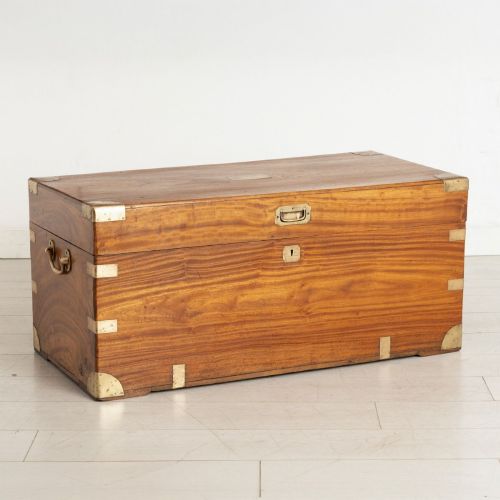


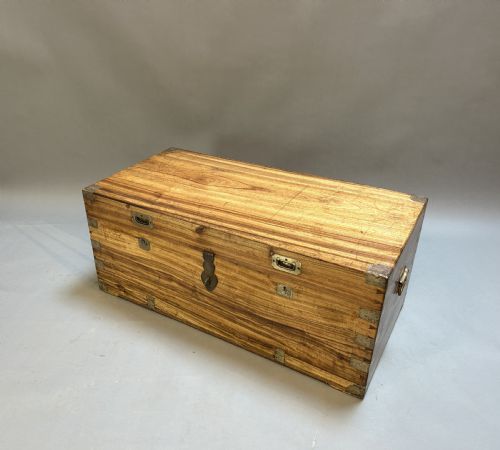
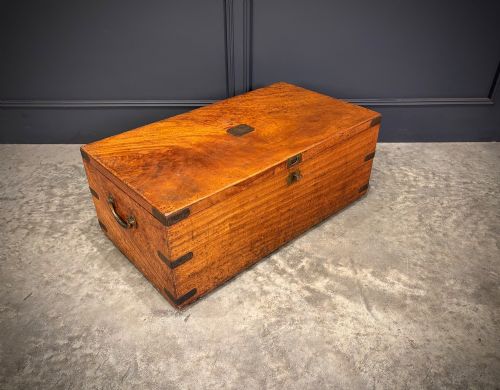


Vintage Camphor Wood Box
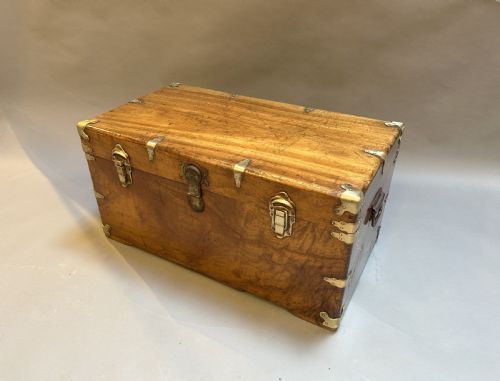
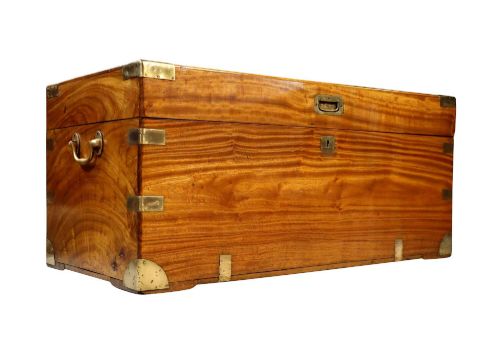
A vintage camphor wood box delivers robust storage and distinct fragrance, built for travel and daily use across the nineteenth and twentieth centuries.
Vintage Camphor Wood Box
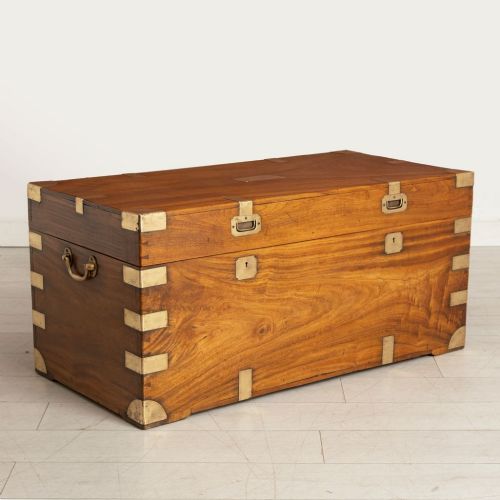
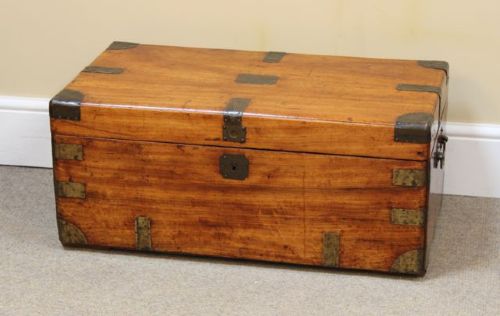
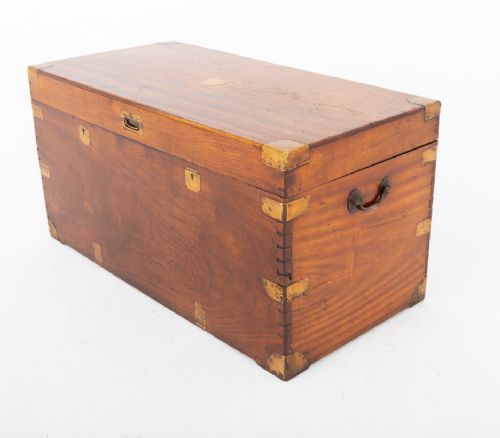
A vintage camphor wood box serves primarily as practical storage, encompassing items described as trunks, chests, blanket boxes, and luggage pieces. These containers appear in forms designed for travel and domestic utility, often associated with military campaign use or trade.
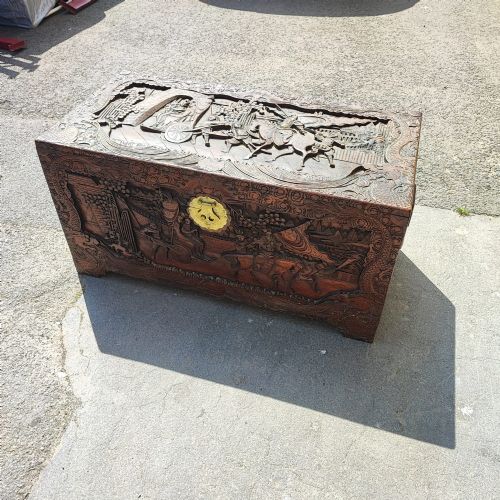
The pieces on this page span the nineteenth century into the early decades of the twentieth century, including Victorian and Chinese export styles. Buyers frequently encounter nineteenth-century campaign trunks equipped for transport alongside later carved or painted storage chests.
Makers and origins bridge British military requirements and traditional Chinese craftsmanship, reflecting a global circulation of goods. Such trunks function today as statement furniture pieces that double as blanket boxes or coffee tables in contemporary interiors.
Materials and construction methods
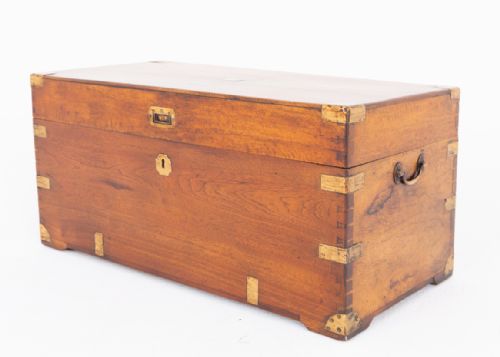
Makers built these chests using solid camphor wood, valued for its aromatic qualities and natural resistance to insects. This timber pairs with brass fittings, including corner braces, straps, and recessed carrying handles designed to withstand frequent movement.
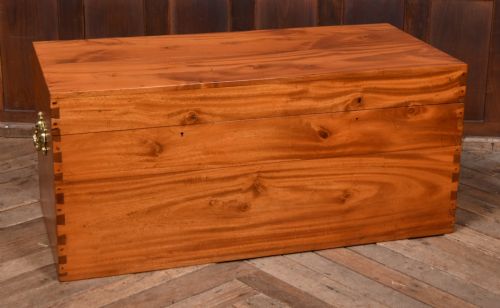
Many examples feature dovetailed joints and robust wooden framing to ensure structural integrity under travel conditions. Surface finishes range from natural polished timber and richly carved relief decoration to painted leather coverings and iron accents.
Opening an untouched nineteenth-century campaign chest often releases a powerful cloud of aromatic camphor that has lingered inside the timber since the age of steamships.
Distinctions in craftsmanship and condition
Quality separates primitive utility boxes from finely appointed campaign furniture through the precision of the joinery and the weight of the hardware. Superior examples retain original brass locking mechanisms, keys, and integrated interior compartments.
The crispness of hand-carved relief work defines the upper tier of Oriental export chests, whereas plain utilitarian trunks rely on the grain of the wood and the integrity of the brass bindings. Original surface patination and intact leather or painted details elevate certain specimens above standard variants.
The Vintage Camphor Wood Box Glossary
- Campaign chest
- A portable storage trunk designed for military officers on active service, featuring recessed handles and protective brass corners. These boxes break down or stack for ease of transport.
- Chinese export
- Goods manufactured in China specifically for Western markets during the nineteenth and early twentieth centuries. These pieces combine traditional local materials with styles suited to European tastes.
- Camphorwood
- A fragrant tropical timber utilised for cabinetry and chests due to its insect-repellent properties. The distinct scent remains active over decades.
- Brass bound
- A method of reinforcing wooden chest edges and corners with metal plates and strips fastened by screws or nails. This protection prevents splitting during transit.
- Steamer trunk
- A lower-profile luggage chest created for ocean liner travel in the late nineteenth and early twentieth centuries. These pieces fit into restricted cabin spaces.
Vintage Camphor Wood Box: Frequently Asked Questions
How do I clean a camphor wood box?
Wipe interior and exterior surfaces gently with a dry or barely damp cloth to remove dust without damaging the timber.
Avoid harsh chemical cleaning products that strip the natural oils and diminish the characteristic aroma of the wood.
Why do these chests smell so strong?
Camphor wood naturally secretes aromatic oils that protect the living tree from insects and decay. This scent persists within the timber fibres for generations.
Leaving the lid open in a well-ventilated room for a short period helps reduce the intensity of the fragrance if required.
Are these boxes safe for storing blankets?
The natural insect-repelling properties of camphor wood make these chests traditional choices for woollens, textiles, and blankets. The tight-fitting lids also keep out dust and light.
Ensure fabrics are completely dry before storage to prevent moisture retention inside the enclosed space.
How do I date a campaign trunk?
Examine the style of the brass hardware, the construction of the dovetails, and the type of fasteners used. Nineteenth-century examples often feature hand-beaten brass and heavier timber frames.
Makers' marks, paper labels inside the lid, and specific lock stamps can also help narrow down the decade of production.