


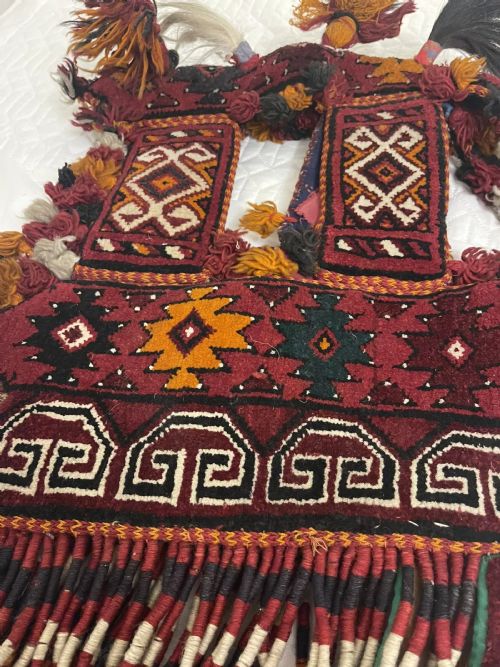


Vintage Camel Rug
These vintage camel rug pieces bring tactile nomad weaving and warm wool grounds into modern interiors.
Vintage Camel Rug
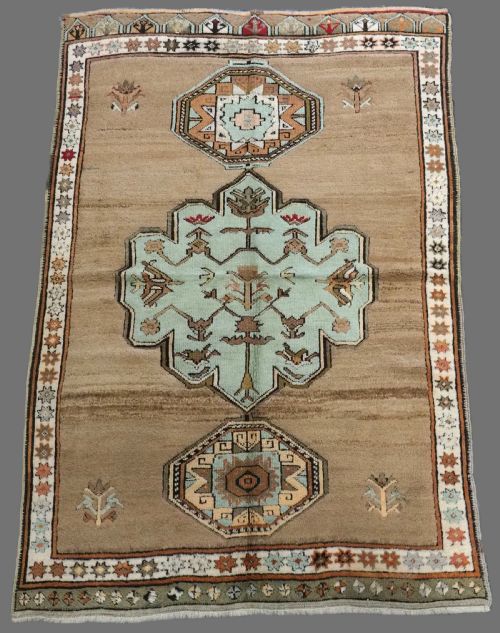
A vintage camel rug encompasses tribal and village weaving traditions from Central Asia, Persia, and Anatolia, often displaying natural camel hair grounds. These textiles span runner rugs, prayer formats, wall hangings, and ceremonial trappings created by nomadic groups. The selection on this page centres on pieces utilising wool, cotton, and camel fibre produced from the mid nineteenth century into the twentieth century.
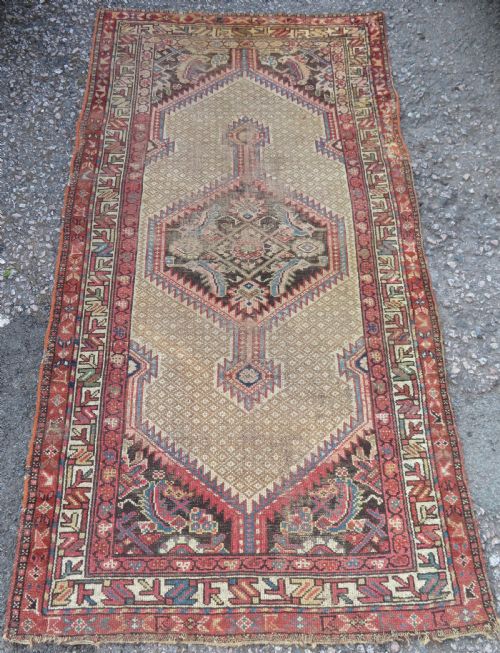
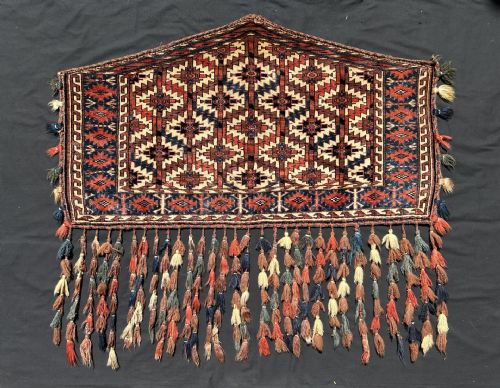
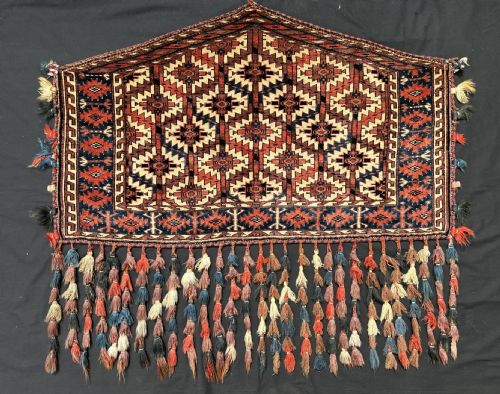
Buyers will encounter tribal formats such as Baluch prayer rugs with tree of life designs, Sarab village runners, and Turkmen asmalyks or chuval faces. Many examples originate from specific tribal groups including the Yomut, Tekke, Ersari, and Taimani peoples. These floor coverings and wall hangings display traditional geometric motifs, latch hook medallions, and repeating guls.
How they were made
Weavers constructed these textiles primarily using wool, cotton, and undyed camel hair for the pile and foundation fibres. Artisans deployed hand-spun natural materials alongside mixed techniques, incorporating embroidery on kilims and sturdy wool knots on cotton or wool warps. Certain specialised pieces utilised camel hair grounds to provide a resilient, soft texture and a natural golden-brown hue.
Nomadic and village workshops relied on upright or horizontal looms to produce pile rugs, narrow runners, and tent trappings. Chuval faces and wedding trappings often required meticulous knotting and structural finishing, sometimes including attached hanging loops or original backing fabric.
Some nineteenth-century Turkmen chuval faces still retain their original hanging loops, ready to return to nomadic duties on a modern wall.
What varies in quality
The fineness of the knotting, the density of the wool pile, and the clarity of tribal design execution determine the distinction between ordinary and superior pieces. Expert handling of natural camel grounds and the retention of original borders or hanging loops elevate a weaving's standing. Condition also plays a role, with intact structures and minimal distress marking the more preserved examples.
The complexity of regional motifs, such as multiple guls on Turkmen chuvals or detailed tree of life depictions on Baluch prayer formats, demonstrates artisan skill. Consistency in hand-spun wool and balanced proportions across runners or tribal trappings indicate superior workshop or nomadic production standards.
The Vintage Camel Rug Glossary
- Chuval
- A large storage bag face made by Turkmen tribes, frequently featuring multiple guls and used inside a nomadic tent. These flat or piled textile faces are now often collected and displayed as wall hangings.
- Asmalyk
- A pentagonal bridal trapping produced by Yomut and other Turkmen groups to decorate camel flanks during wedding processions. These ceremonial textiles display intricate tribal motifs and geometric field designs.
- Gul
- A medallion or primary repeating motif utilised in Turkmen carpet design to identify specific tribes and lineages. These octagonal or gabled shapes anchor the field pattern of chuvals and main carpets.
- Prayer rug
- A small rug featuring a mihrab or arch design indicating the direction of prayer, common in Baluch and Anatolian weaving traditions. They often incorporate tree of life motifs or camel wool grounds.
- Runner
- A long, narrow carpet format designed for hallways and corridors, frequently produced in Persian village centres such as Sarab and Hamadan. These pieces rely on repeating geometric medallions or camel grounds.
Vintage Camel Rug: Frequently Asked Questions
How were camel rugs used?
Nomadic and village weavers produced these textiles for practical floor coverings, hallway runners, tent storage bags, and ceremonial wedding camel trappings. Many functioned as prayer mats or wall hangings within traditional households.
Over generations, these woven objects transitioned into decorative elements for modern interiors, prized for their earthy wool tones and historical tribal artistry.
What is a camel wool ground?
A camel wool ground refers to the undyed background field of a rug, woven from the soft inner fleece of camels. This natural fibre provides a distinct golden-brown or warm fawn colour palette.
Weavers in regions like Persia and Central Asia utilised this durable hair to create a resilient base that contrasts with brighter dyed wool motifs.
How do I identify tribal Turkmen pieces?
Turkmen tribal weavings often feature distinct octagonal guls, deep madder red or camel grounds, and precise geometric borders. Sub-groups like the Yomut, Tekke, and Ersari produced characteristic chuvals, asmalyks, and tent bags.
Examining the structure, knot density, and specific tribal motifs helps distinguish these Central Asian pieces from Persian village work.
How do I live with a vintage rug?
Integrating these textiles into a home involves placing them in low-to-moderate traffic areas to preserve the antique wool pile and foundation. Using a quality underlay prevents slipping and cushions the vintage weave against hard floors.
Regular gentle vacuuming without a beater bar keeps the camel hair and wool clean while respecting the fragile structure of nineteenth and twentieth-century materials.