



Vintage Buttoned Stool
A vintage buttoned stool brings tactile comfort and period character to a room, ranging from compact footstools to large centre pieces.
Vintage Buttoned Stool
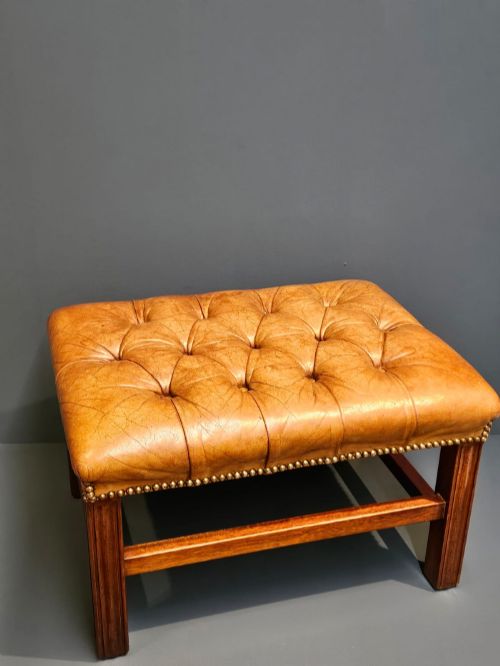
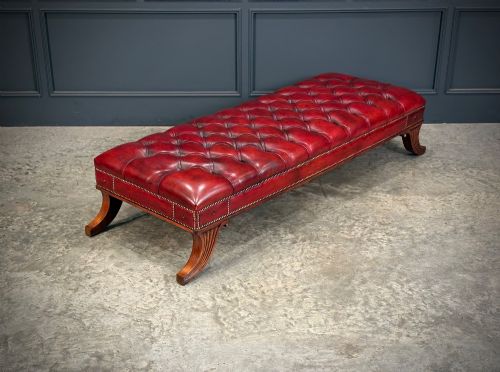
When you search for a vintage buttoned stool, you encounter low upholstered seating designed for rest or display, frequently upholstered in leather or silk. The selection spans compact footstools alongside larger salon and centre stools.
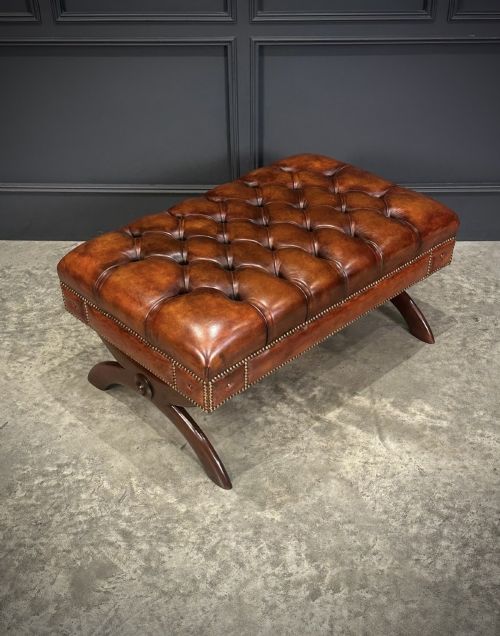
The pieces emerge from the Regency, Victorian, and Edwardian eras, displaying traditional British and English country house aesthetics. Common forms include rectangular walnut frames, mahogany structures, and X-frame supports fitted with castors.
Victorian examples dominate the selection, often featuring deep buttoning and turned or cabriole legs. You also find associated items such as ottomans, matching armchairs, and brass-framed seats.
How they were made
Timbers such as mahogany, walnut, oak, and rosewood form the structural framework of these stools, shaped with turned, cabriole, or X-frame legs. Brass components appear in frames and castors to provide mobility and decorative accent.
Upholstery relies on traditional textiles including leather, velvet, damask, and red silk. Deep buttoning secures the padding into distinct geometric patterns across the top surface.
Vintage Buttoned Stool Retail Price Guide 2026
Typical asking prices for vintage buttoned stool among the pieces listed under this phrase on Sellingantiques today, from the lower quarter to the upper quarter. They describe what is for sale here now, not the wider market.
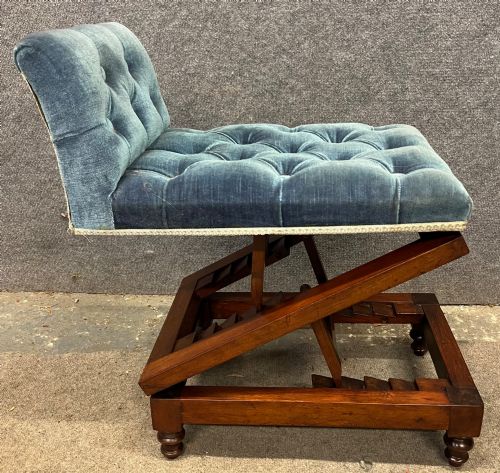
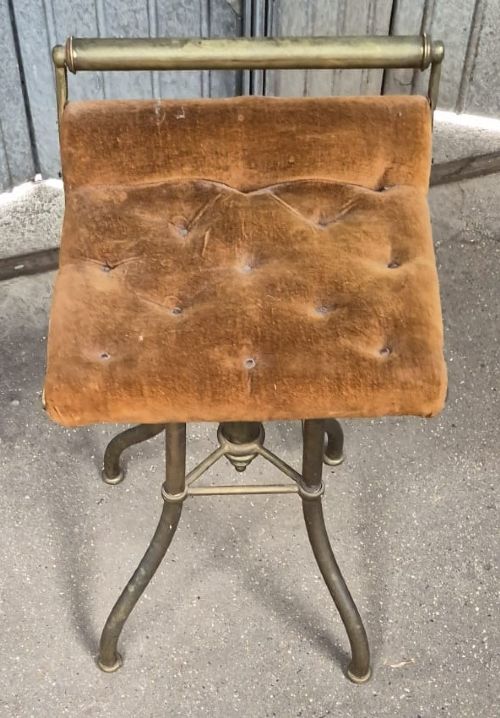
A Victorian harpist needed a dedicated brass-framed seat to play comfortably, proving that nineteenth-century musicians took their posture very seriously indeed.
What varies in quality
The refinement of the woodwork dictates much of the distinction, separating simple turned frames from finely carved cabriole legs or rosewood construction. Timber selection ranges from utilitarian oak to figured walnut and mahogany.
Upholstery execution defines the upper tier, seen in hand-dyed leathers, neatly executed buttoning, and the choice of durable silks or damasks. The presence of original brass castors and structural integrity further elevates a piece.
The Vintage Buttoned Stool Glossary
- Buttoning
- An upholstery technique where twine pulls the fabric tight against stuffing to form recessed tufts. Deep buttoning creates the characteristic surface texture of these stools.
- X-frame
- A structural base formed by two crossed members creating an X shape. This style appears on nineteenth-century walnut examples.
- Castor
- A small wheel mounted on a swivel attached to the foot of a piece. Many nineteenth-century stools incorporate castors for ease of movement.
- Ottoman
- A low upholstered seat or bench without a back or arms. These function as larger variants of the standard footstool.
Vintage Buttoned Stool: Frequently Asked Questions
How do I date a vintage buttoned stool?
Dating relies on timber choice, leg style, and upholstery methods characteristic of periods like the Regency or Victorian era. Examining the construction underneath often reveals age through tool marks and wood oxidation.
Design motifs such as cabriole legs or X-frames further help align a piece with specific decades between the early nineteenth and early twentieth centuries.
Are these stools sturdy enough for daily use?
Most examples were built using solid hardwoods like mahogany and walnut to withstand heavy domestic demands. Their robust frames make them suitable for regular seating or as occasional footrests.
Weight distribution on larger centre pieces also accommodates casual use as improvised coffee tables when paired with a tray.
What is the difference between an ottoman and a footstool?
Ottomans typically offer a larger surface area designed to accommodate multiple feet or serve as low seating benches. Footstools tend to be more compact and portable.
Both forms frequently share the characteristic deep buttoning and upholstered finish seen across nineteenth-century examples.
Can I use a stool as a coffee table?
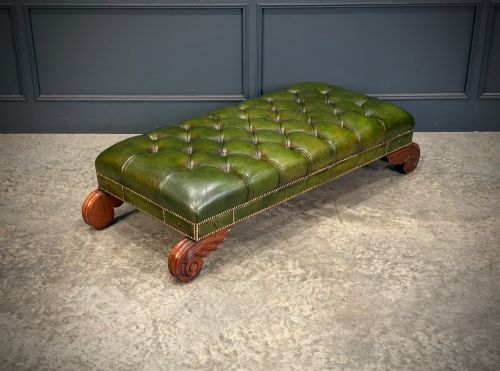
Large rectangular leather stools function well as coffee tables when combined with a firm flat surface or tray. Their padded leather tops provide a softer alternative to traditional wood tables.
Victorian leather examples in particular offer the proportions and durability required for this role.
What maintenance do leather upholstered stools need?
Leather upholstery benefits from periodic conditioning to keep the hide supple and prevent cracking over time. Gentle dusting maintains the surface finish without harsh chemical cleaners.
Hand-dyed English leathers on older pieces particularly respond well to traditional wax treatments.