


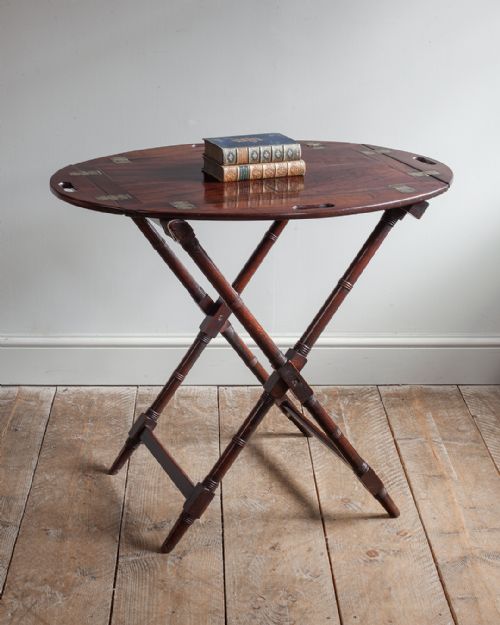


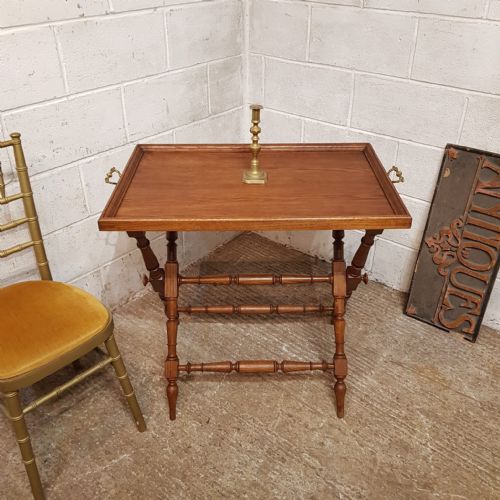


Vintage Butler Tray Stand
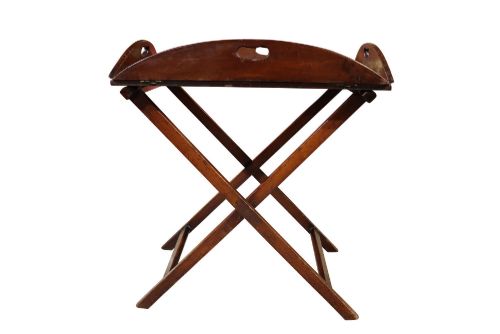
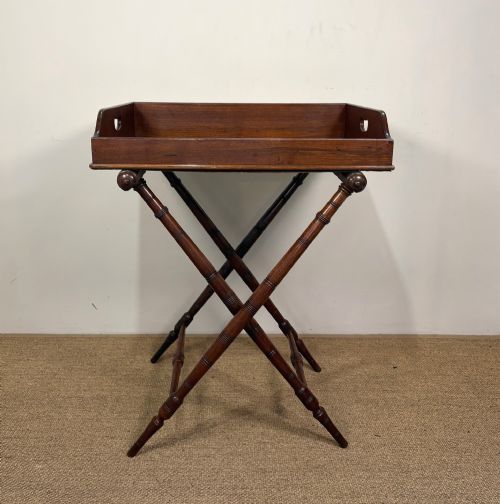
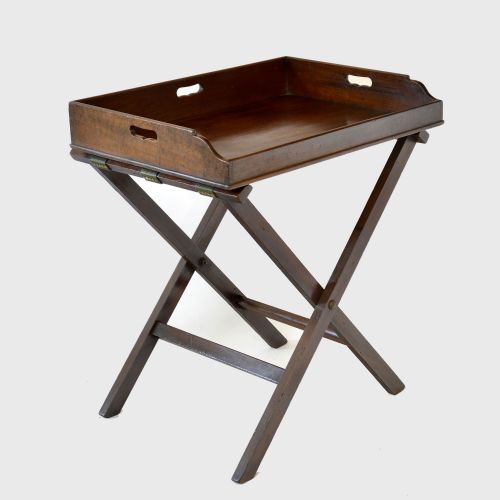
A vintage butler tray stand provides a portable, folding surface that serves equally well for drinks or occasional display.
Vintage Butler Tray Stand
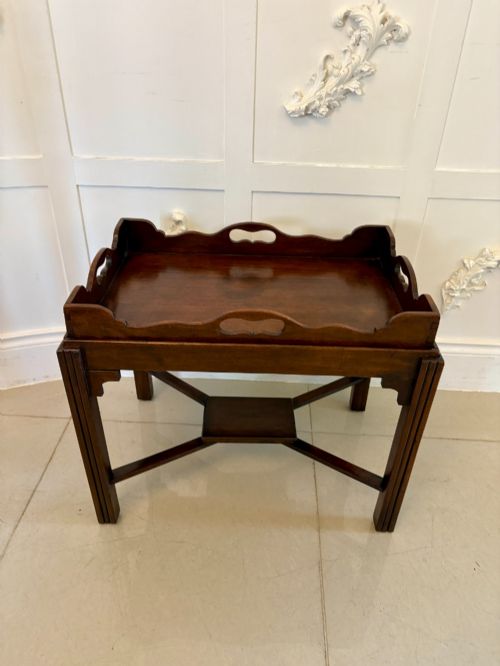
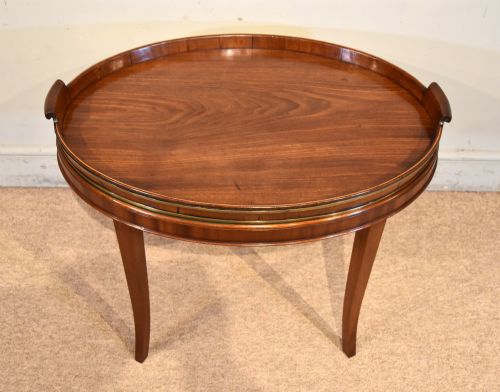
When searching for a vintage butler tray stand, a buyer encounters pieces designed to hold a removable tray upon a collapsible wooden base. The most common examples on this page date from the nineteenth century through the Edwardian period, constructed to function as flexible serving furniture.
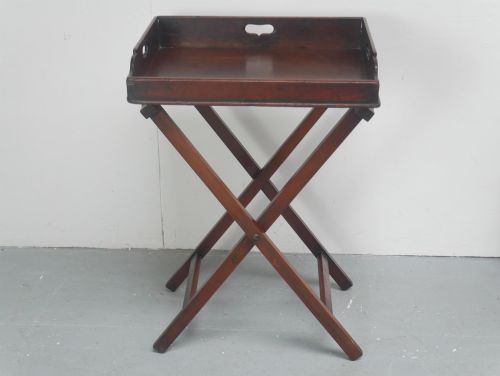
The combination typically unites a rectangular tray, often featuring shaped or hinged sides, with an X-frame folding stand. These items trace their origins to Georgian and Victorian domestic service, where staff carried provisions through country houses before placing them on dedicated supports.
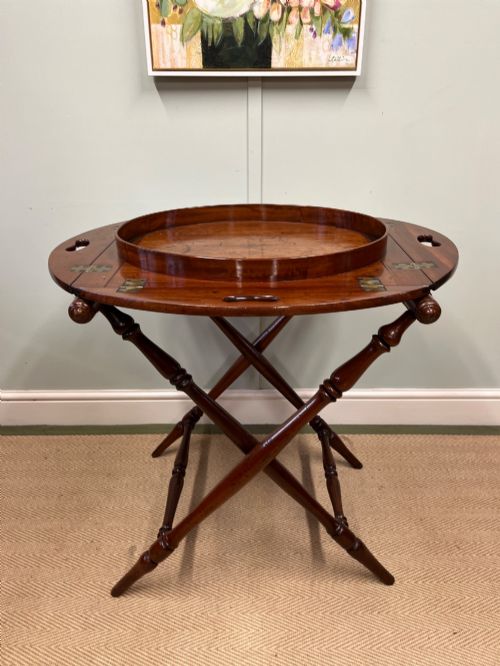
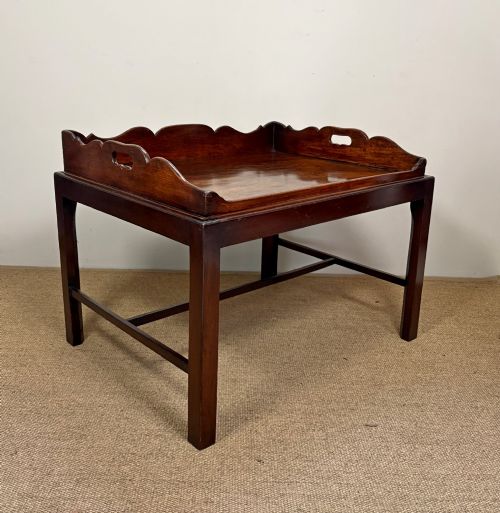
Today, these stands frequently adapt to modern interiors as coffee tables, side tables, or occasional surfaces. The inventory spans straightforward oak and mahogany iterations alongside more ornate examples featuring marquetry, brass fittings, or carved walnut details.
Materials and construction
The pieces recorded here rely heavily on dense hardwoods such as mahogany and oak, chosen for their durability under heavy daily use. Walnut and lighter timbers also appear, sometimes complemented by decorative boxwood stringing or intricate marquetry patterns on the tray surface.
Folding stands utilise functional carpentry joints and cross-frame designs that allow the base to collapse flat when not in use. Metal components typically include brass hinges, handles, or campaign-style mounts that reinforce the corners and edges of the tray.
Surface finishes range from simple waxed oak to polished mahogany, highlighting the natural grain of the timber. Occasional variations incorporate canvas or cotton webbing within the structure or feature carved wood details along the gallery edges.
Vintage Butler Tray Stand Retail Price Guide 2026
Typical asking prices for vintage butler tray stand among the pieces listed under this phrase on Sellingantiques today, from the lower quarter to the upper quarter. They describe what is for sale here now, not the wider market.
One notable oak tray even retains its provenance direct from Bäckaskog Castle.
What separates the finest examples
Quality in a vintage butler tray stand rests primarily on the integrity of the timber and the precision of the folding mechanism. Superior examples display tight joinery in both the tray gallery and the X-frame base, ensuring the surface remains level and stable when open.
The choice of materials also dictates distinction, with finely figured mahogany grains, original brass campaign mounts, or crisp hand-carved detailing elevating a piece above utility grade. The presence of an original matching stand rather than a later replacement secures greater historical cohesion.
Proportion and execution define the visual appeal, as finer trays feature well-balanced handles cut directly from the solid wood sides rather than applied later. Subtle touches like boxwood inlay or finely turned legs separate standard service items from more decorative drawing room pieces.
The Vintage Butler Tray Stand Glossary
- Butler tray
- A portable wooden tray with a raised gallery and cut-out handles designed for carrying service items. These trays lift off their supporting base entirely.
- Folding stand
- A collapsible wooden X-frame base built to support a removable tray. It allows the entire assembly to be stored flat when not in use.
- Campaign style
- Furniture construction featuring brass corners, inset handles, and portable designs originally intended for travel. This style emphasises durability and ease of transport.
- Marquetry
- Decorative veneer work arranged in pictorial or geometric patterns using various coloured woods. It appears on the flat surfaces of finer tabletop pieces.
- Gallery
- The raised wooden border surrounding the edge of a tray to prevent items from sliding off. Galleries often feature hinged flaps or shaped cut-outs.
Vintage Butler Tray Stand: Frequently Asked Questions
How were butler trays used historically?
Servants used these trays to transport food, tea, and drinks from kitchens to dining rooms or drawing areas in large houses. Once the destination was reached, the tray was placed upon its folding stand to serve as an instant table.
This portable system allowed households to set up temporary serving stations wherever guests gathered. After use, the tray and stand separated so staff could clear the room quickly and store the furniture flat.
Are the tray and stand usually original to each other?
Many surviving trays and stands have stayed together through generations, while others were paired together at a later date. Examining the timber species, wear patterns, and age of the joints helps determine if the components share the same origin.
An original stand often displays matching patination and wear consistent with the tray above it. Even when matched later, a sympathetic pairing maintains the practical utility and aesthetic appeal of the piece.
How do I use a tray stand as a coffee table?
A tray stand functions naturally as a coffee table due to its low height and manageable surface area. The raised gallery keeps books, cups, and decorative objects securely contained within the perimeter.
The folding nature of the base also makes it simple to reposition the table within a room or store it away when floor space is needed. Selecting a sturdy mahogany or oak version ensures the surface handles daily living without wobble.
What is the difference between Georgian and Victorian stands?
Georgian versions generally display restrained elegance, featuring solid mahogany construction, subtle handling cut-outs, and understated lines. They reflect an era focused on clean proportions and functional refinement.
Victorian examples frequently introduce heavier carvings, darker oak timbers, or more elaborate walnut and marquetry decoration. They often incorporate sturdier folding mechanisms and brass campaign hardware suited to expanding domestic requirements.