


Vintage Butler Stand
A vintage butler stand combines a portable serving tray with a folding support, offering versatile surface space rooted in practical domestic history.
Vintage Butler Stand
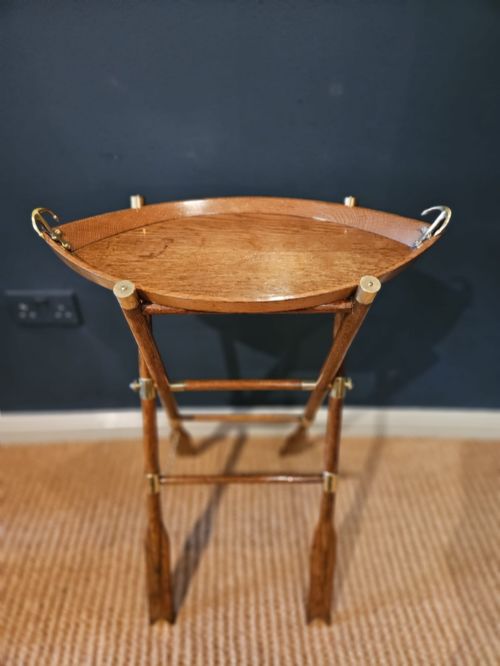
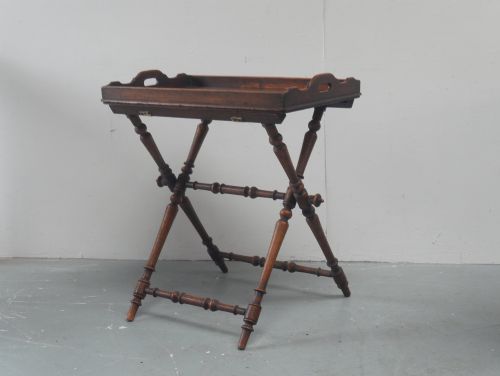
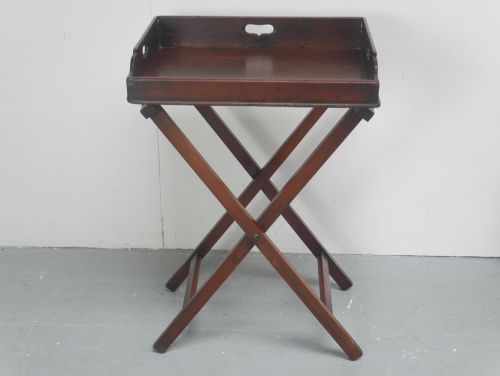
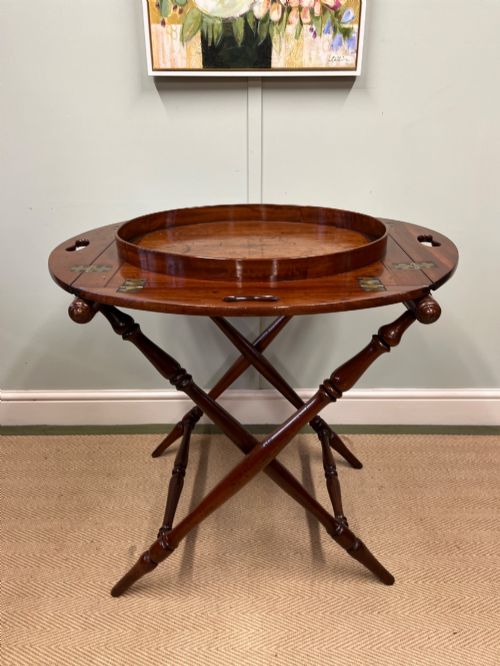
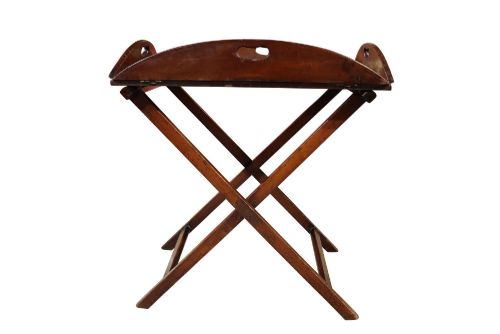
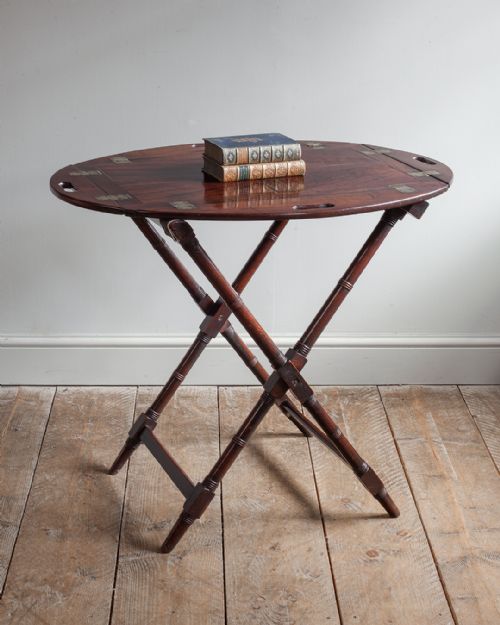
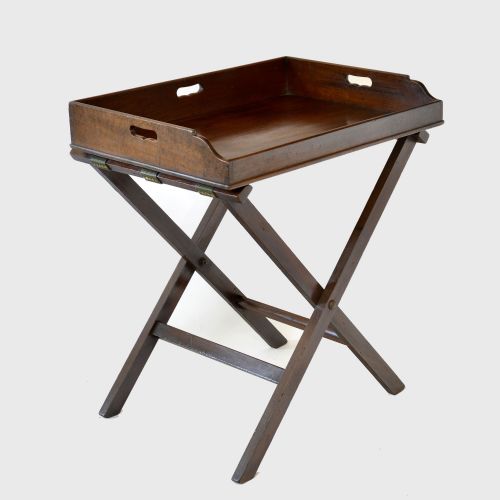
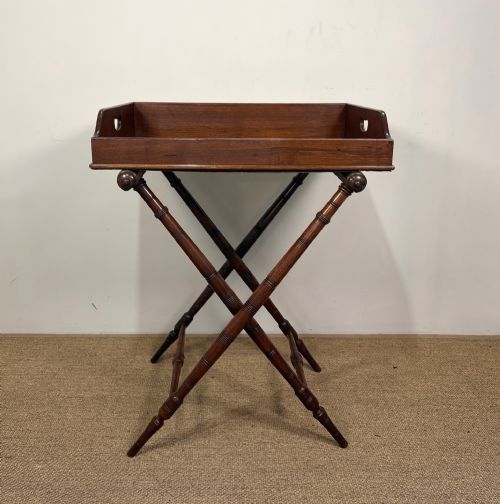
A vintage butler stand typically pairs a detachable wooden tray with a collapsible X-frame base, designed for flexible service and compact storage in historic dining rooms. These pieces emerged across the eighteenth and nineteenth centuries, spanning Georgian, Victorian, and Edwardian periods.
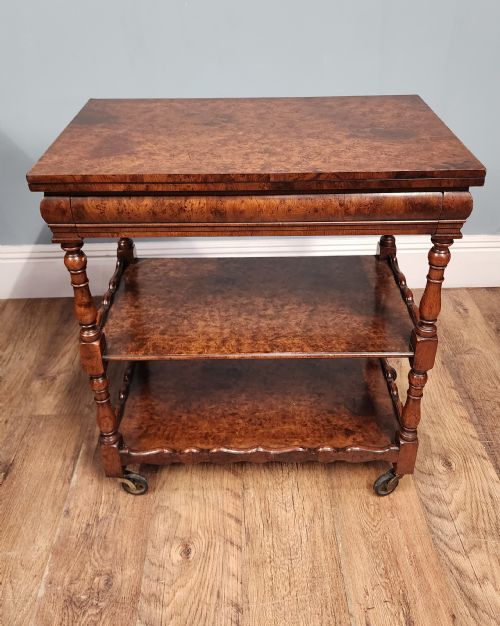
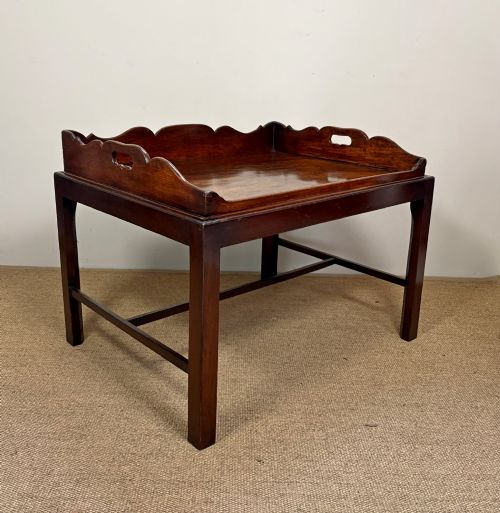
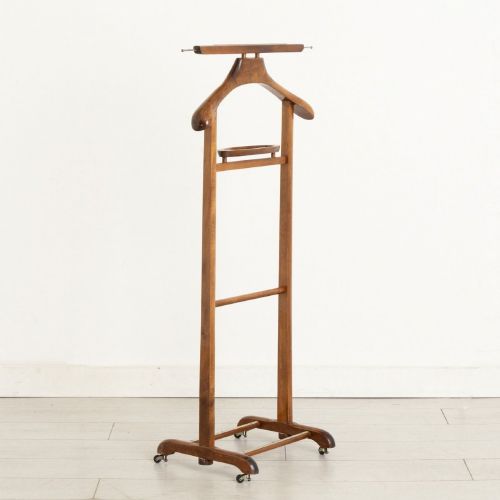
The versions most frequently met on this page include mahogany and oak trays resting on folding stands, alongside occasional valet stands and tray tables. The selection also encompasses variations from the Regency era through to mid-century revivals.
Makers utilised sturdy timbers to ensure these items could bear the weight of heavy tableware and silver. Surviving examples demonstrate how domestic service adapted portable furniture for drawing rooms and dining spaces.
How they were made
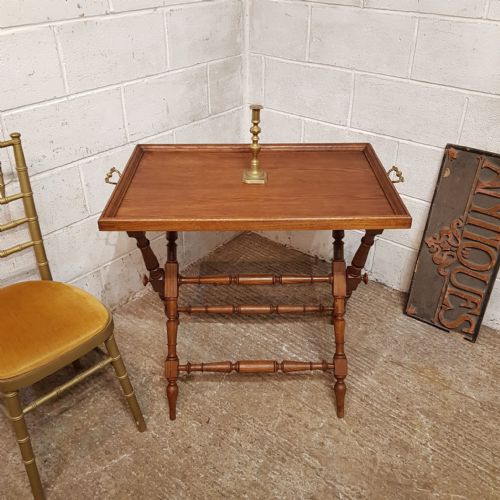
Cabinet makers relied primarily on mahogany and oak for structural integrity, often incorporating brass hinges, carrying handles, and corner brackets for durability. Burr walnut veneer and beech appear on specific stylistic variants from later periods.
Folding stands utilise pivoting cross-frames that collapse flat when the tray is removed, demonstrating precise joinery designed for frequent movement. Trays themselves often feature hinged or raised sides with hand-cut apertures for lifting.
Listings span from the 18th century through the Victorian era and Edwardian period, up to 1930s revivals in mahogany, oak, and walnut.
What varies in quality
The distinction between standard utility items and finer examples rests on timber selection and decorative restraint. Pieces featuring finely figured mahogany, crisp hand-carved edges, and original brass campaign hardware sit at the upper end of the scale.
Structural cohesion of the folding stand dictates long-term utility, particularly the tightness of the pivot joints and the alignment of the tray recess. Later reproductions or utilitarian pieces often display simpler secondary woods and heavier, less refined fixings.
Fratelli Rugitti
The Vintage Butler Stand Glossary
- Butler's tray
- A removable wooden tray with raised or hinged sides designed to sit upon a separate folding support frame. They were historically used by domestic staff to transport food and drink.
- Valet stand
- A specialised piece of furniture designed for hanging garments, suits, and accessories overnight. They often incorporate small trays for pocket items.
- Campaign style
- Furniture constructed with portability in mind, typically featuring flush brass handles, reinforced corners, and folding elements. These pieces were originally packed for travel during military campaigns.
- Tray table
- A low or counter-height table configuration where the top functions as an independent serving tray. This form blends occasional table utility with portable surface design.
- X-frame
- A folding support structure formed by two intersecting wooden legs that pivot centrally. This mechanism allows the base to collapse flat when not in use.
Vintage Butler Stand: Frequently Asked Questions
How were butler stands originally used?
Domestic staff utilised these pieces to transport food, silver, and beverages from kitchens to dining or drawing rooms. The removable tray allowed servants to clear tables efficiently without moving the heavy support base.
Once service concluded, the wooden stand folded flat for storage against a wall or in a pantry. This dual functionality made them essential furnishings in large nineteenth-century households.
Are the trays permanently attached to the stands?
Traditional butler stands feature entirely detachable trays that lift straight off the folding base. This design allowed the tray to function independently as a serving vessel.
Some later variations or related tray tables incorporate fixed tops or secure locking ledges, but the classic nineteenth-century form relies on gravity and a fitted frame recess.
How do I care for a antique wooden tray?
Maintain timber surfaces by dusting with a dry, soft cloth and occasionally applying natural beeswax to nourish the grain. Avoid placing damp items directly onto antique polish to prevent water marking.
Keep these pieces away from direct heat sources and strong sunlight, which can dry out old mahogany or oak and weaken historical joints.
How can I tell an older stand from a later revival?
Examine the construction methods, such as hand-cut dovetails on tray corners and the patina of the underlying timber. Eighteenth and nineteenth-century examples often display minor wear consistent with hand tools and age.
Revival pieces from the twentieth century frequently feature machine-cut elements, standardised modern brassware, and cleaner, more uniform surface finishes without centuries of handling.