
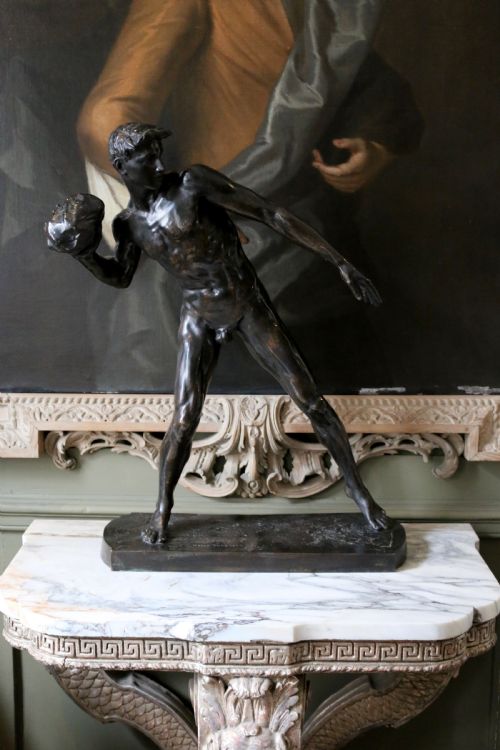



Vintage Bronzed Male Figurine
A vintage bronzed male figurine brings sculptural muscle and classical posture into a room, capturing athletic energy in metal.
Vintage Bronzed Male Figurine
A vintage bronzed male figurine encompasses athletic studies, mythological figures, and historical subjects produced across the nineteenth and twentieth centuries. These works draw heavily upon classical sculpture, representing figures such as gladiators, harvest dancers, tennis players, and power lifters.
The pieces on this page range from Victorian and Grand Tour productions to striking Art Deco and Art Nouveau interpretations. Makers captured the male form through distinct stylistic lenses, moving from nineteenth-century academic realism to the stylised lines of the nineteen-thirties.
Objects vary in scale from tabletop studies to substantial sculptural works, frequently mounted upon stone or marble plinths. Collectors encounter genuine cast bronze alongside patinated metal, spelter, and slip-cast earthenware finished to resemble metal.
Materials and construction
Foundry work relies heavily upon traditional casting methods, capturing fine anatomical detail in metal before applying surface finishes. Artisans often treated the surface with patination to achieve deep brown, green, or metallic bronze tones.
Alternative compositions utilise spelter and slip-cast earthenware, employing a bronzed finish to mimic heavier metal sculpture while remaining lighter in weight. Heavier examples incorporate integral bases of marble or stone to anchor the standing figure.
Listings feature works spanning the nineteenth century, Victorian era, and nineteen-thirties Art Deco period in bronze, spelter, and earthenware.
Distinctions in craftsmanship
The depth and integrity of the patination or finish contribute significantly to the visual weight of the sculpture. Furthermore, the integration of the figure with its marble or stone plinth demonstrates the original maker's attention to overall balance.
Hamo Thornycroft·Jules Dalou·Friedrich Goldscheider·Rudolf Küchler·Bruno Zach
The Vintage Bronzed Male Figurine Glossary
- Patinated bronze
- A metal sculpture treated with chemical solutions to produce a specific surface colour and tone. This process protects the alloy while enhancing the visual depth of the contours.
- Spelter
- A zinc alloy frequently used as a cost-effective substitute for bronze in figurine production. It is softer than bronze and generally requires a applied surface finish to simulate metal.
- Grand Tour
- A cultural tradition of nineteenth-century travel where affluent collectors acquired small-scale bronzes of classical antiquities. These souvenir pieces replicate famous statues found in European museums and archaeological sites.
- Slip-cast
- A ceramic manufacturing technique where liquid clay slip is poured into a plaster mould. This method allows for the efficient production of detailed figural earthenware before firing and finishing.
- Academic realism
- An artistic style governed by the strict rules of nineteenth-century art academies. It prioritises precise anatomical accuracy, classical proportions, and lifelike textures in sculptural representations.
Vintage Bronzed Male Figurine: Frequently Asked Questions
What periods do these figurines date from?
The pieces span from the nineteenth century through the early twentieth century, taking in Victorian, Art Nouveau, and Art Deco movements.
Earlier works reflect academic realism and Grand Tour traditions, while later examples embrace stylised athletic themes from the nineteen-thirties.
Are all these figures made of solid bronze?
While many are cast in bronze, the selection also includes patinated metal, spelter, and slip-cast earthenware with a bronzed finish.
Each material offers a different weight and surface texture while maintaining the visual appearance of traditional metal sculpture.
How were these figures displayed originally?
These sculptures were designed for interior display on mantelpieces, desks, and dedicated pedestals within domestic or institutional settings.
Many incorporate marble or stone plinths to provide stability and elevate the figural composition above the supporting surface.
How do Art Deco figures differ from Victorian ones?
Victorian figures generally adhere to classical proportions and realistic anatomy, drawing inspiration from mythology and historical athletics.
Art Deco pieces favour geometric lines, stylised muscle definition, and modern subjects such as tennis players and power lifters.