




Vintage Bronze Dog
When you search for vintage bronze dog, you are looking at cast metal animal figures spanning the nineteenth and early twentieth centuries.
Vintage Bronze Dog
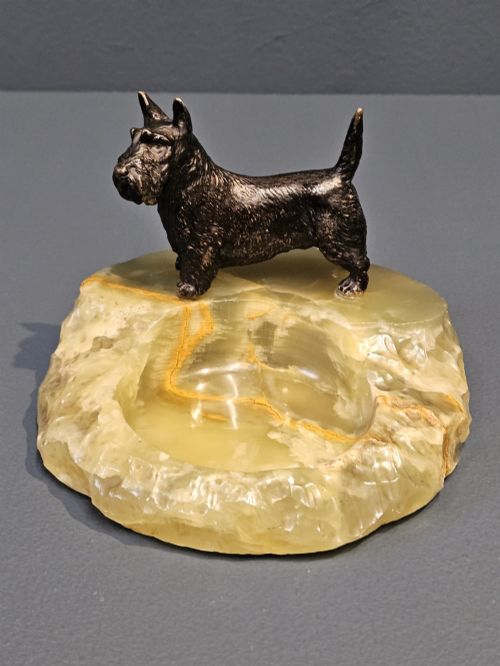
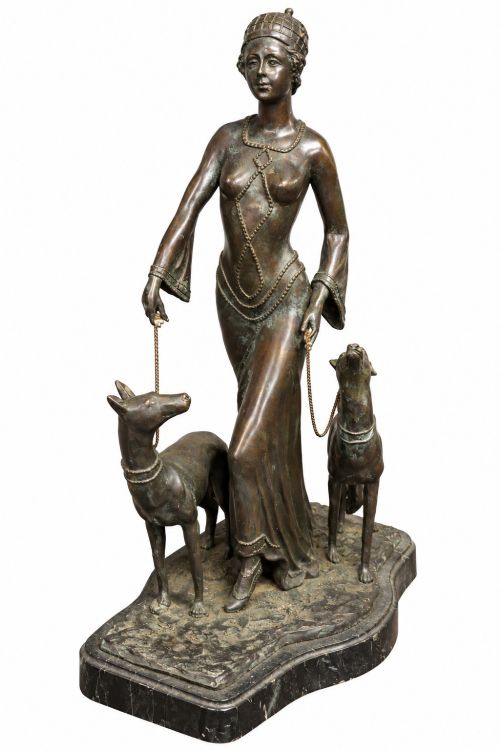
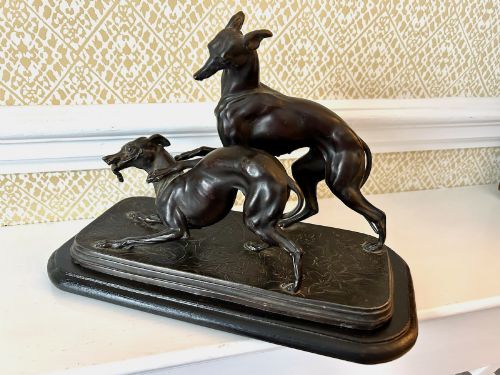
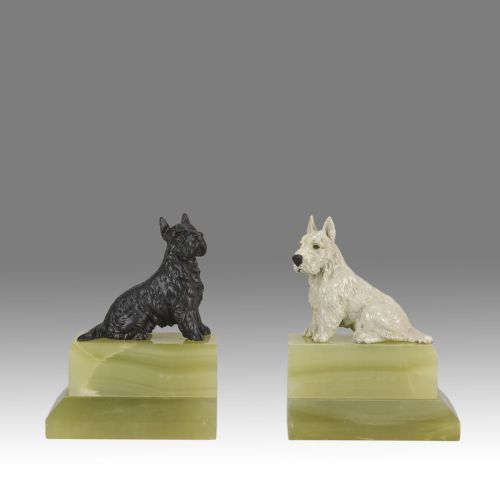
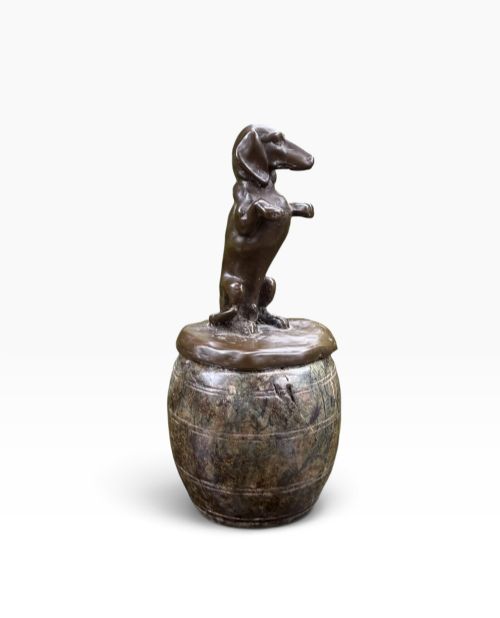
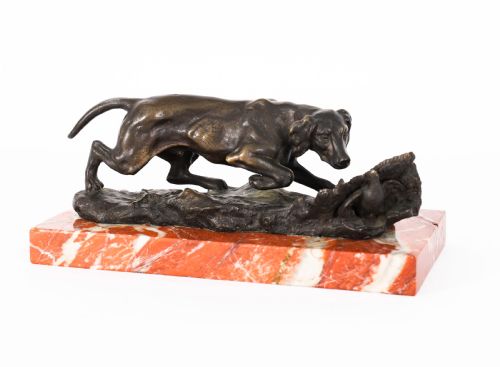
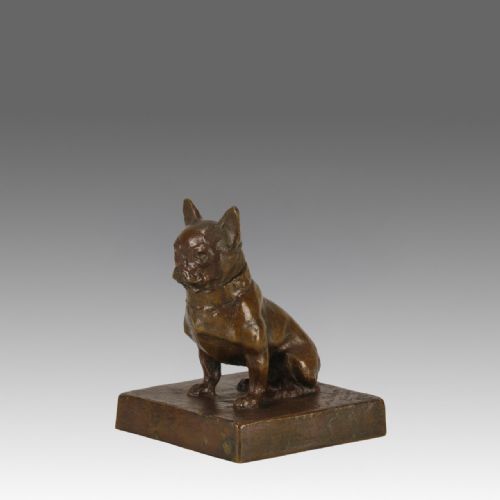
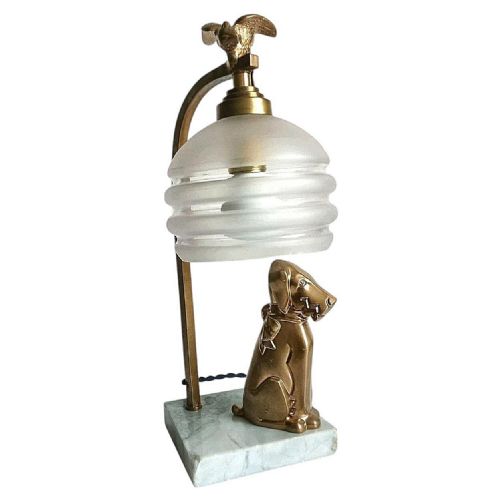
A vintage bronze dog brings together sculptural animal studies and functional objects like bookends, desk clocks, and car mascots from the Victorian, Edwardian, and Art Deco periods. These pieces range from small cold-painted table ornaments to large French Animalier hounds mounted on marble bases.
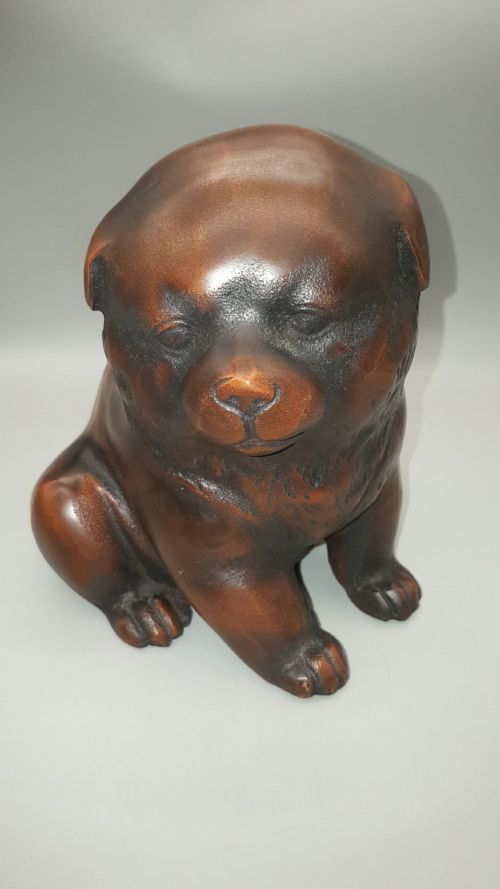
The selection here encompasses realistic hunting dog studies alongside stylised Art Deco greyhounds, whippets, and terriers. Foundries across Britain, France, Austria, and Asia produced these casts in varying sizes to serve as mantel ornaments, paperweights, and doorstops.
How they were made
Foundries used the lost-wax casting method or sand casting to shape molten bronze into canine forms, frequently mounting completed sculptures onto weighted bases of marble, onyx, or slate. Artisans then applied patination by hand, ranging from warm brown tones to vibrant polychrome cold-painted finishes.
Alternative metals such as spelter, brass, and cast iron appear alongside true bronze, offering similar sculptural detail through distinct casting weights and metallic compositions. Ormolu mounts and painted highlights frequently complement the primary metal body.
Vintage Bronze Dog Retail Price Guide 2026
Typical asking prices for vintage bronze dog among the pieces listed under this phrase on Sellingantiques today, from the lower quarter to the upper quarter. They describe what is for sale here now, not the wider market.
What varies in quality
The fidelity of the casting dictates quality, separating sharp anatomical articulation in muscle and fur from soft, indistinct surfaces. Finer pieces retain crisp chisel work and deliberate patination applied by the foundry.
Signatures from recognised sculptors and foundry marks elevate certain casts above anonymous commercial production. The integrity of the original mount, such as a heavy marble or onyx base, also distinguishes finer works.
Carl Kauba·Dora Heber·Prosper Lecourtier·Edith Parsons·Jules Moigniez·Arthur Waagen·Antoine Louis Barye·Franze Bergman
The Vintage Bronze Dog Glossary
- Animalier
- A nineteenth-century artistic movement dedicated to the realistic portrayal of animals, particularly predators and hounds. Sculptors in this tradition studied anatomy closely.
- Cold-painted bronze
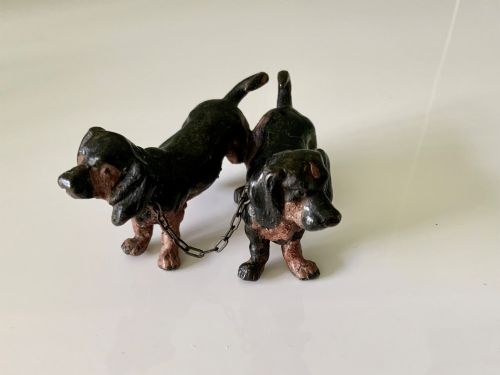
- A technique where paint is applied to a bronze object without heat-firing, often associated with Austrian workshops producing small decorative figures. The paint sits on the surface and can show gentle wear over time.
- Spelter
- A zinc alloy commonly utilised as an economical alternative to bronze for sculptural figures during the late nineteenth and early twentieth centuries. It is softer and lighter than bronze.
- Patination
- The chemical or natural colouration developed on the surface of bronze over time or through intentional treatment by the maker. It enhances the visual depth of the metal.
- Car mascot
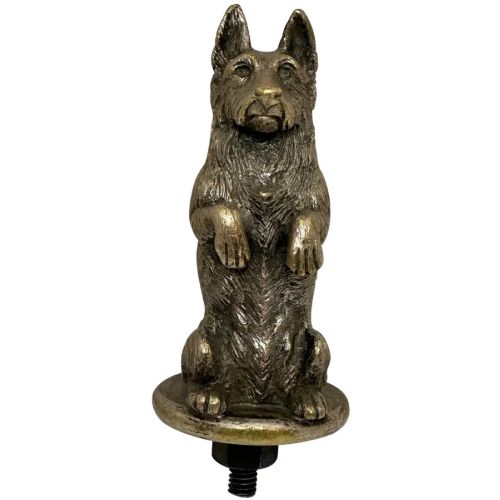
- A decorative metal sculpture mounted on the radiator cap of a motor car, popular during the vintage motoring era. These figures were cast in bronze or silvered metal to withstand travel.
Vintage Bronze Dog: Frequently Asked Questions
How do I identify a vintage bronze dog?
Examine the weight, surface colour, and casting seams of the object to determine its metal composition. True bronze displays a dense heft and deep patination, whereas substitutes like spelter feel lighter and may reveal a grey metal beneath worn spots.
Look for signature engravings on the base or body, alongside foundry stamps that indicate the origin of the casting. Stylistic cues such as the naturalism of the nineteenth-century Animalier school or the geometric lines of Art Deco help narrow the production era.
What is cold-painted bronze?
Cold-painting involves applying polychrome pigments directly to a bronze casting without subjecting the piece to high-temperature kiln firing. This technique allowed Austrian and European workshops to create vibrant, lifelike details on small animal figurines.
Because the paint sits on top of the metal rather than fusing with it, surviving examples often display characteristic flaking or gentle rubbing that confirms their age and handling history.
Where were these dog sculptures placed?
Owners originally placed these metal canine figures on library desks as paperweights, on mantelpieces as decorative ornaments, or mounted them onto bookends and clocks. Larger hounds and sporting dogs served as freestanding floor statues or heavy doorstops.
Automotive enthusiasts also mounted smaller versions onto vehicle radiator caps as mascots during the early twentieth century. Today, collectors display them on tables, shelves, and cabinets.
Are spelter and bronze different?
Spelter is a zinc-based alloy that makers used as a less expensive substitute for bronze, particularly for decorative figures and novelty items. It is softer than bronze and generally lighter in weight.
Bronze consists primarily of copper alloyed with tin, offering superior durability, a resonant sound when struck, and a richer capacity for deep chemical patination. Many period pieces utilise spelter finished with a bronze-look coating.