



Vintage Bronze Clock
A vintage bronze clock brings weight, French design, and mechanical life to a room, turning a practical ticker into a sculptural centrepiece.
Vintage Bronze Clock
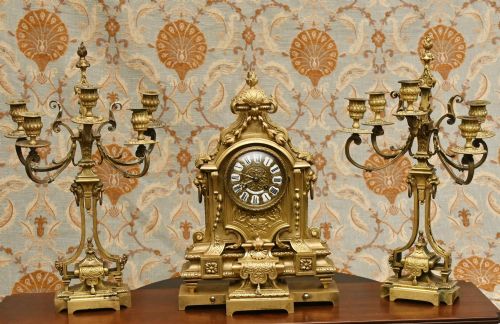
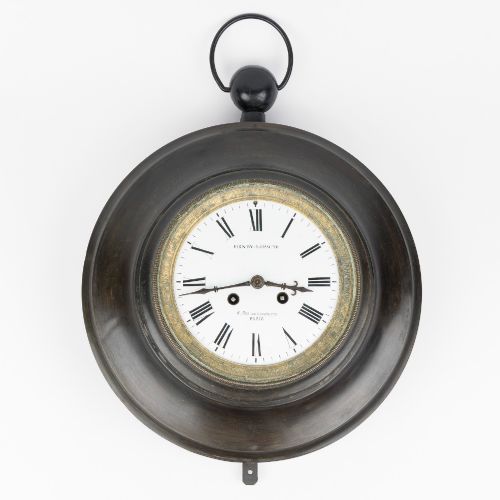
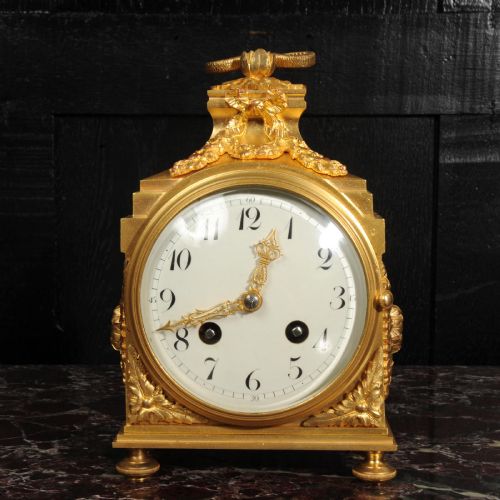
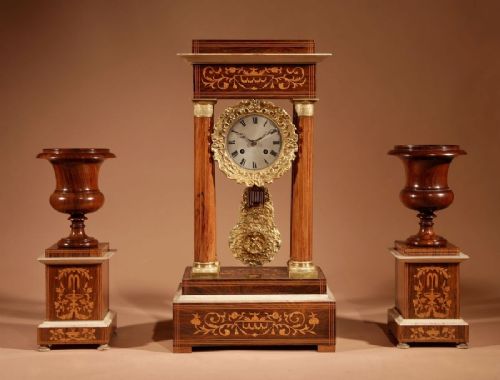
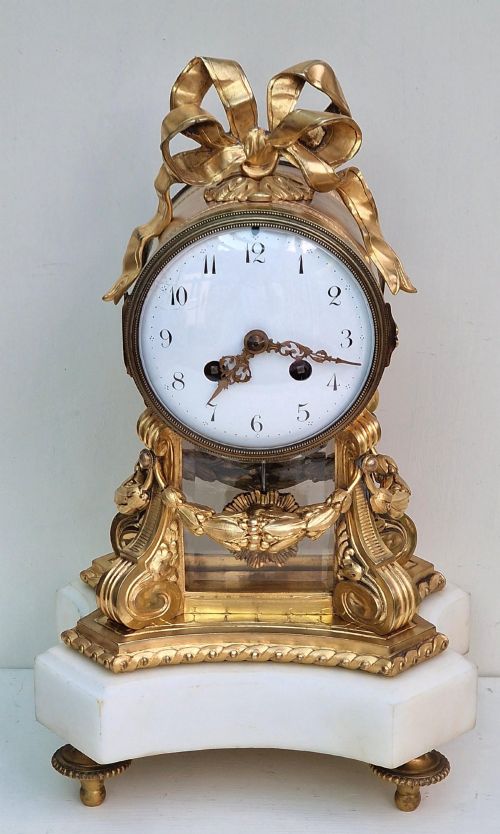
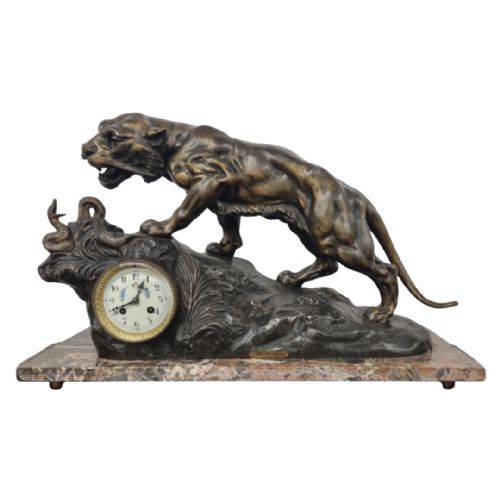
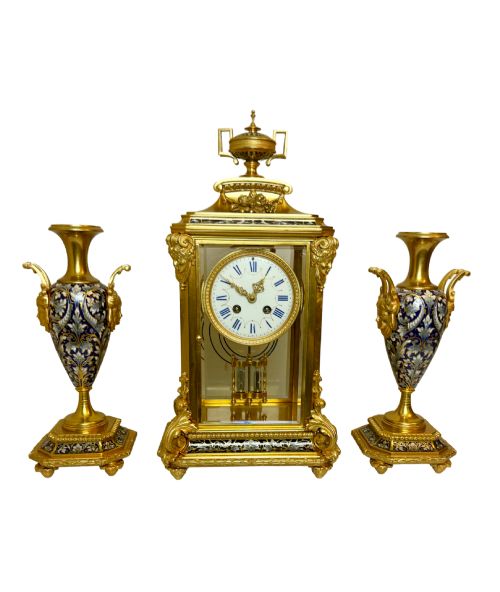
A vintage bronze clock is a mechanical timepiece housed in cast metal, most frequently originating from French workshops during the nineteenth and early twentieth centuries. These objects range from heavy mantel pieces styled in the Rococo or Empire manner to smaller carriage clocks and decorative clock garnitures accompanied by matching side ornaments.
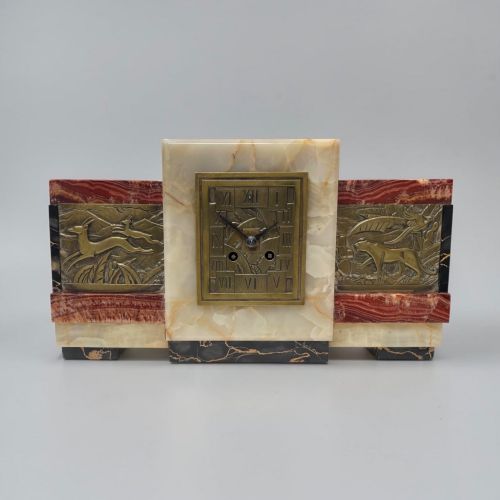
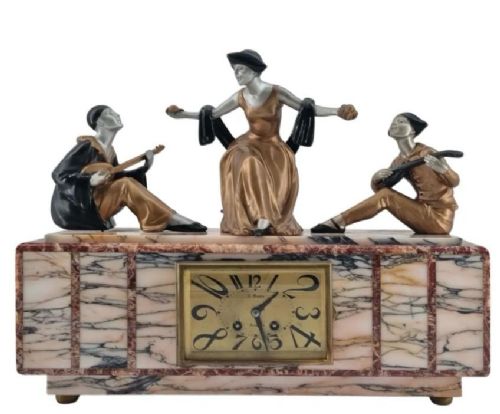
The buyer exploring this selection encounters numerous nineteenth century examples alongside pieces bearing Art Deco geometric forms or Louis XIV revival details. Many incorporate contrasting materials such as white marble, red marble, onyx, or enamel dials set within the bronze framework.
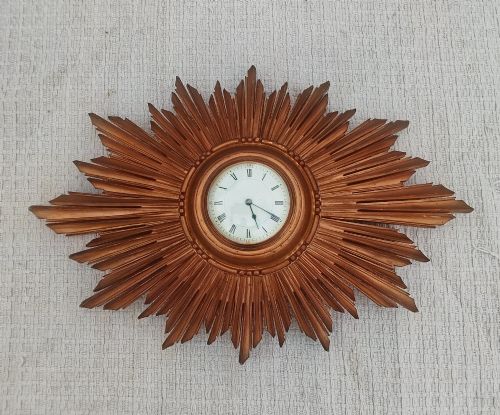
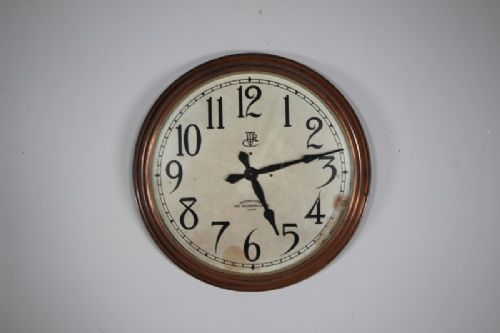
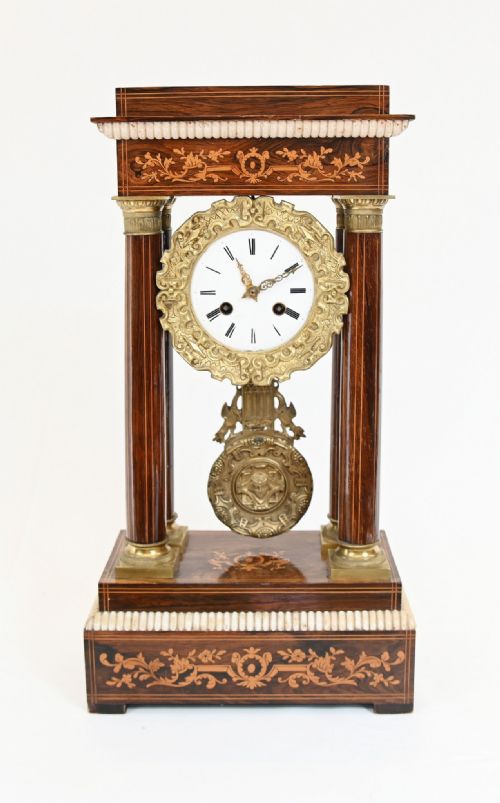
Mantel clocks and portico designs dominate the selection, often driven by eight-day striking movements. Alongside traditional standing clock faces, table clocks and wall-mounted variants appear across Victorian, Edwardian, and later twentieth century periods.
How they were made
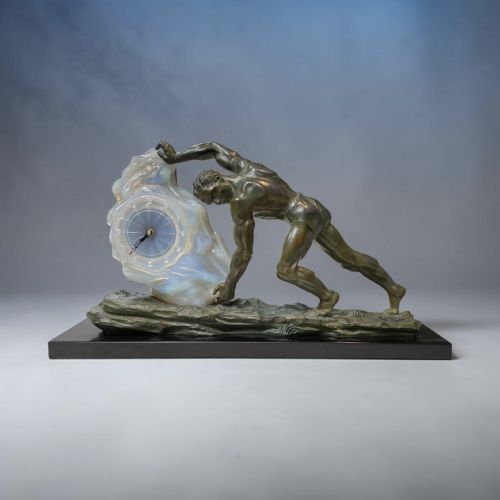
Foundry work relied on casting bronze, brass, or spelter into intricate moulds before applying mercury gilding, ormolu, or patination to the metal surface. Skilled artisans chased the cooled metal by hand to sharpen foliage, scrolls, and figural details.
Clockmakers paired these heavy metal housings with mechanical brass gear trains, often incorporating strike-repeat functions or calendar mechanisms. Dials were frequently fashioned from white enamel with painted numerals, protected behind bevelled glass panes.
Vintage Bronze Clock Retail Price Guide 2026
Typical asking prices for vintage bronze clock among the pieces listed under this phrase on Sellingantiques today, from the lower quarter to the upper quarter. They describe what is for sale here now, not the wider market.
Listings feature French Rococo, Art Deco, and Louis XVI styles executed in gilt bronze, ormolu, marble, and champlevé enamel.
What varies in quality
The sharpness of the cast and the depth of the hand-chasing determine the visual hierarchy among these pieces, separating fluid sculptural modelling from softer, mass-produced execution. Heavy solid bronze or ormolu mounts display crisper articulation than lighter base metals.
Mechanical integrity and the completeness of original garniture sets also divide the range. Intricate movements by known makers that retain their original escapements and mercury gilding command greater attention from serious collectors.
Henry-Lepaute·R Varnier·Sega·Louis Goret·Lenzkirch
The Vintage Bronze Clock Glossary
- Ormolu
- Gilded bronze produced by applying a mercury and gold amalgam to the metal base and heating it. This technique creates a durable golden finish seen on many French decorative pieces.
- Champlevé enamel
- A technique where troughs are dug into a metal surface and filled with coloured glass paste before firing. It provides vibrant decorative panels on clock cases and dials.
- Clock garniture
- A set comprising a central clock flanked by matching decorative objects such as urns or candelabra. These sets were designed to sit symmetrically on a mantelpiece.
- Portico clock
- A architectural clock style supported by four columns resembling a classical gateway. They often feature a suspended pendulum swinging freely within the central opening.
- Spelter
- A zinc alloy used as a cheaper alternative to bronze for casting decorative figures and clock cases. It was frequently painted or electroplated to imitate bronze.
Vintage Bronze Clock: Frequently Asked Questions
How do I wind a vintage bronze clock?
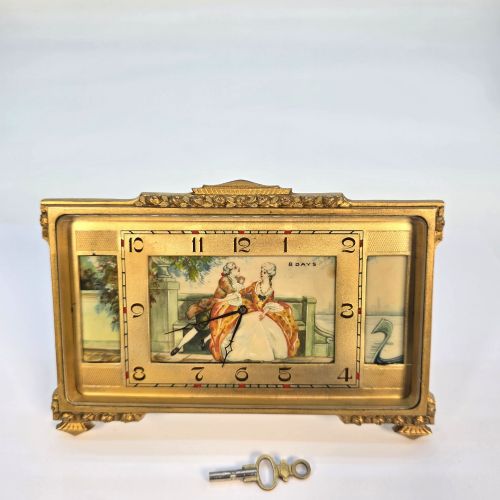
Most mechanical models use a key inserted into winding holes on the dial to tension the internal springs. Care must be taken not to overwind the mainspring.
Striking clocks should be allowed to complete their chime cycle before adjusting the hands forward or backward, depending on the movement type.
Where should I place a heavy mantel clock?
These heavy metal timepieces require a sturdy, level surface such as a fireplace mantel, heavy sideboard, or dedicated wall bracket. Weight distribution matters because uneven placement affects the pendulum swing.
Keeping the clock away from direct sunlight and damp environments protects the delicate enamel dials and gilt bronze surfaces.
How do I tell different French styles apart?
Rococo and Baroque pieces feature asymmetrical scrolls, leaves, and flowing organic lines derived from eighteenth-century design revivals. Empire and Louis XVI styles favour symmetrical geometry, classical columns, and architectural dignity.
Later Art Deco models discard historical motifs entirely in favour of streamlined silhouettes, stylized animal figures, and geometric dial surrounds.
What is a clock garniture?
A clock garniture is a matched decorative set containing a central clock accompanied by two side pieces, such as urns, vases, or candelabra. They were manufactured as a unified decorative scheme for grand interiors.
Displaying them together creates a balanced arrangement across a mantelpiece or large piece of furniture.