



Vintage Breakfront Bookcase
A vintage breakfront bookcase brings architectural presence to a room, offering grand proportions and generous display space for a substantial library.
Vintage Breakfront Bookcase
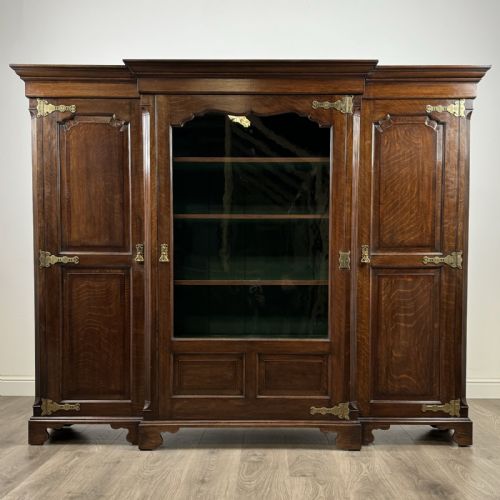
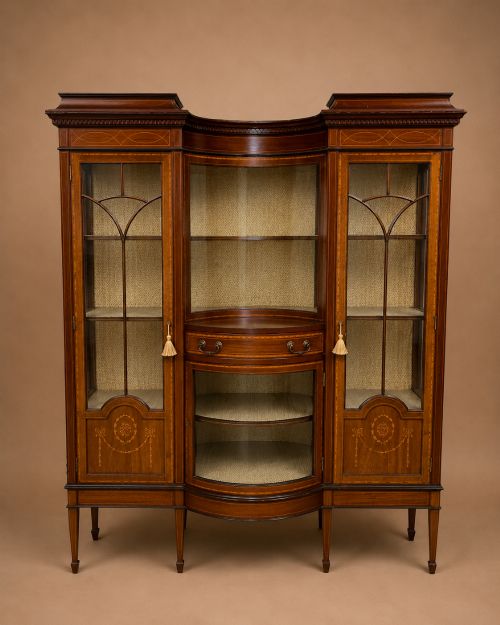
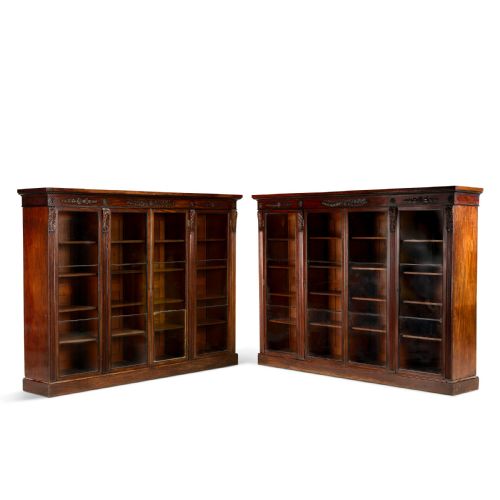
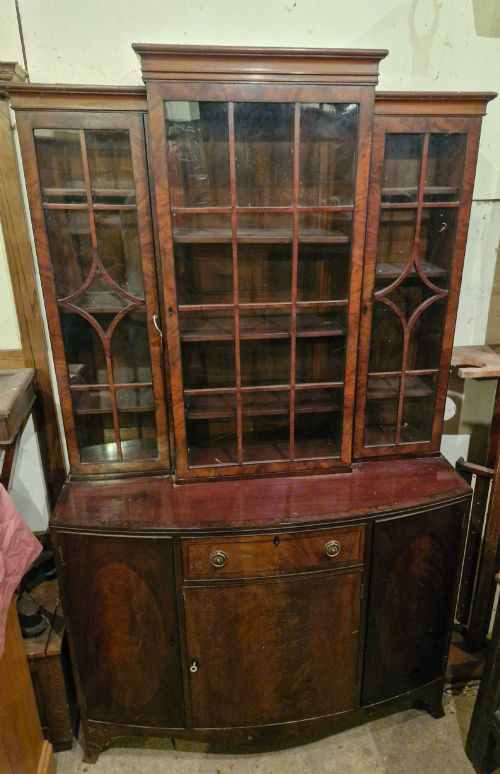
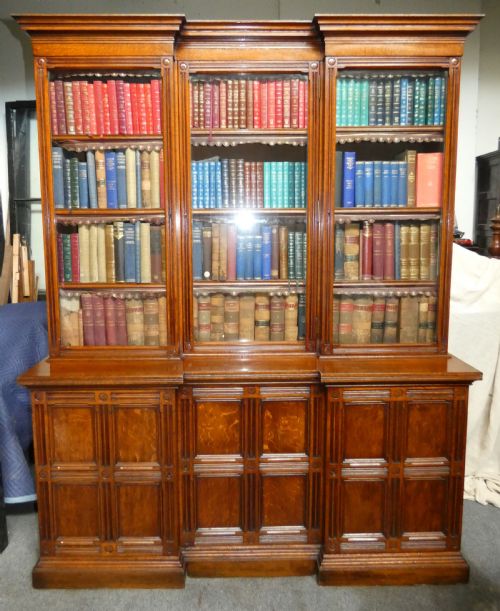
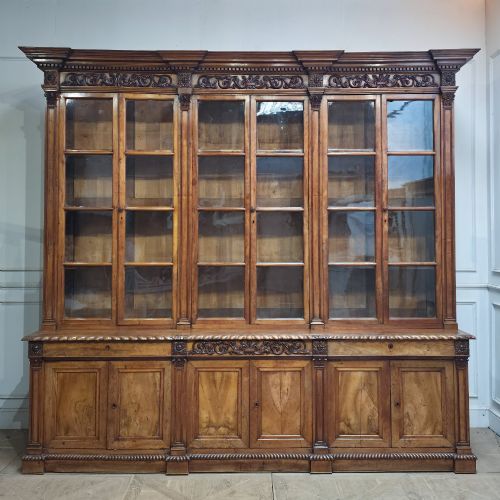
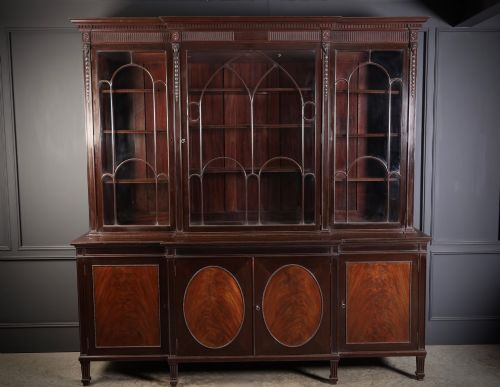
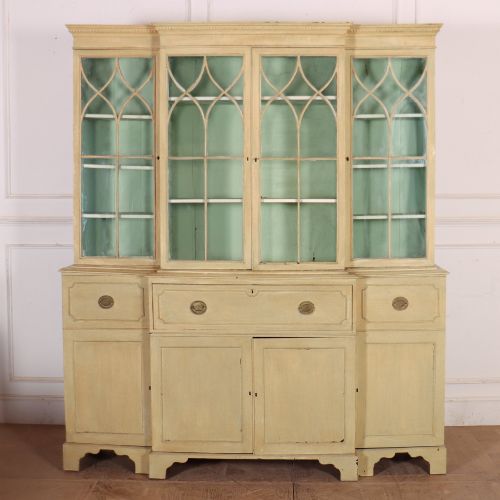
A vintage breakfront bookcase is a large cabinet characterised by a central section that projects forward from the flanking wings. These pieces serve primarily as functional furniture for storing books or exhibiting collections behind glass doors.
The versions most commonly met on this page span the nineteenth and early twentieth centuries, drawing heavily on Georgian, Regency, and Sheraton Revival design vocabulary. Makers of these periods favoured substantial timber carcasses and glazed upper compartments.
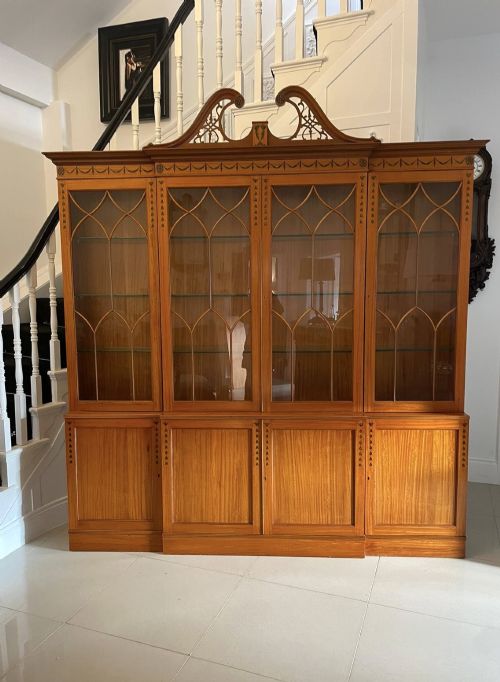
Beyond standard library pieces, related forms include display cabinets, side cabinets, and kitchen dressers sharing the characteristic breakfront outline. Woods such as mahogany and walnut dominate the selection, often enriched with satinwood or fine inlay.
Materials and construction methods
Cabinet makers constructed the primary carcasses of these bookcases using dense hardwoods like mahogany, walnut, and oak, frequently selecting figured veneers for the principal surfaces. Satinwood provides lighter contrast details, while brass hardware secures doors and internal fittings.
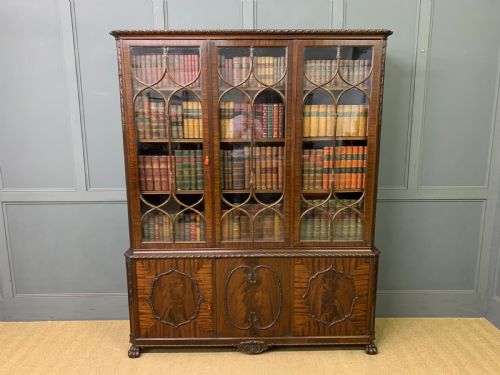
Glazing bars divide the glass panels into geometric panes, a technique requiring precise joinery to support large expanses of glass safely. Painted decoration and intricate inlay work appear on select revival pieces, adding surface pattern to the natural grain of the timber.
Several bookcases boast secret writing compartments designed to hide correspondence from wandering eyes in busy Victorian households.
What separates the finest examples
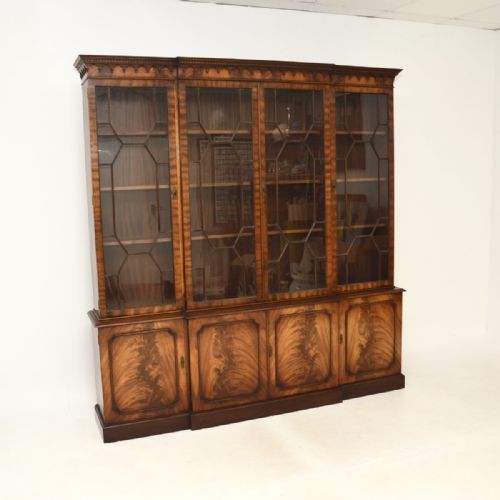
Quality in these large cabinets rests upon the choice of timber and the fidelity of the revival style applied by the workshop. Superior examples display carefully matched flame mahogany or rich walnut veneers across the entire projecting central section.
Proportion and execution of detail mark the distinction between standard production and exceptional craftsmanship. Finer pieces incorporate delicate astragal glazing, refined brass fittings, and integrated architectural cornices that balance the massive scale of the furniture.
Maple & Co.·Lamb & Co
The Vintage Breakfront Bookcase Glossary
- Breakfront
- A cabinet design where the central section extends further forward than the left and right sections. This arrangement creates depth and breaks up the flat facade of a large wall unit.
- Astragal
- A moulding profile used to divide glass panes within a door frame. In bookcase construction, these thin wooden strips form delicate geometric patterns across the upper doors.
- Flame mahogany
- A veneer cut from the fork of a mahogany tree where the branch meets the trunk. It produces a distinctive flickering pattern resembling flames.
- Sheraton Revival
- A late nineteenth and early twentieth-century design movement inspired by the neoclassical work of Thomas Sheraton. Pieces in this style often feature satinwood, painted decoration, and tapered legs.
Vintage Breakfront Bookcase: Frequently Asked Questions
How do I style a breakfront bookcase?
Balance heavy folios on lower wooden shelves and reserve upper glass-fronted sections for smaller volumes or decorative objects. Leave some breathing space between groups of books to prevent the large cabinet from appearing overly crowded.
Keep the room's natural light in mind when positioning such a large piece of furniture. A dark mahogany breakfront anchors a bright study, while a satinwood or painted version suits lighter drawing rooms.
Are the shelves adjustable?
Most period and vintage bookcases use fixed wooden shelves supported on fixed wooden bearers or traditional saw-tooth shelving racks. These older systems limit how frequently you can alter shelf heights compared to modern metal track systems.
When planning your library layout, measure your tallest volumes beforehand to ensure they fit comfortably within the fixed compartments of the cabinet.
How do I distinguish revival styles from original periods?
Revival pieces from the Edwardian era or late nineteenth century often combine construction traits from multiple earlier eras, such as Georgian proportions executed in Edwardian satinwood. Look closely at the secondary timbers inside drawers and the ageing of the cabinet backboards.
Original eighteenth-century pieces display hand-cut joinery and timber movement consistent with age, whereas revival work generally shows more uniform machine-prepared components.