


Vintage Breakfast Server
These vintage breakfast server pieces range from toast racks to egg cruets, offering practical utility and period charm for the morning table.
Vintage Breakfast Server
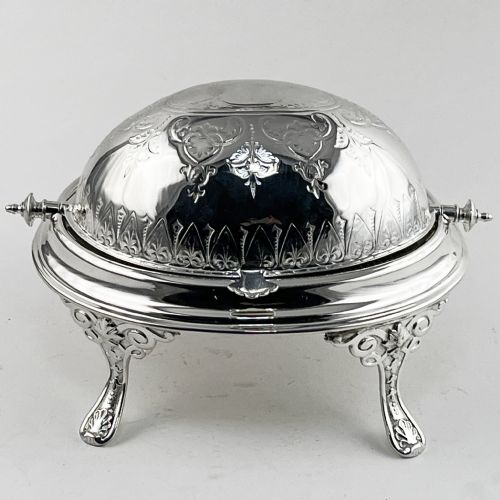
A vintage breakfast server encompasses specialised dining table forms designed for the morning meal, including toast racks, egg cruets, and revolving butter dishes. When searching for a vintage breakfast server, buyers encounter pieces spanning from the nineteenth century through the 1930s. The selection on this page relies heavily on silver plate, sterling silver, porcelain, and oak materials.
Edwardian and Victorian examples dominate the available styles, alongside George V and Art Deco iterations. Toast racks and egg cruet sets form the core of the objects recorded in the evidence. These items reflect the formal morning dining customs of past decades.
Materials and construction methods
Makers utilised silver plate, electroplated nickel silver, and solid sterling silver alongside wooden elements like oak. Metalwork techniques involved casting, shaping, and applying decorative embossing to serveware bodies. Porcelains such as Davenport china appear in specific items like toast racks.
Revolving mechanisms on butter and preserve dishes required precise engineering to ensure smooth rotation of the lidded covers. Metal frames were soldered or constructed to hold individual glass or ceramic liners securely in cruet sets.
The listings show materials spanning silver plate, sterling silver, porcelain, and oak across Victorian, Edwardian, and Art Deco styles.
Markers of distinction
The standard of a vintage breakfast server depends upon the weight of the metal and the crispness of any embossed or engraved decoration. Thicker silver plating resists wear more effectively than thinner applications over nickel silver or base metals.
Design attribution adds another layer of distinction, as seen in pieces produced by notable designers like Christopher Dresser. The integration of contrasting materials, such as combining oak bases with silver plated fittings, indicates considered craftsmanship.
Davenport China·Hukin & Heath
The Vintage Breakfast Server Glossary
- Toast rack
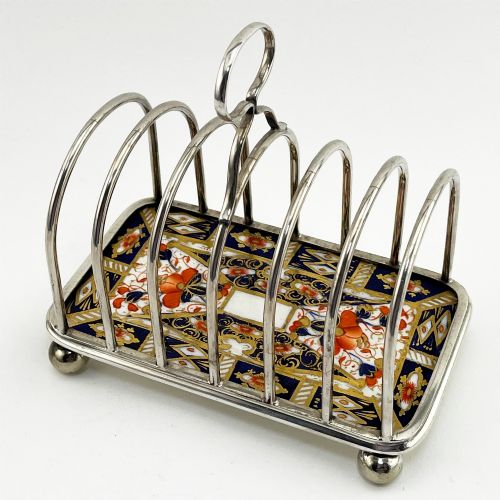
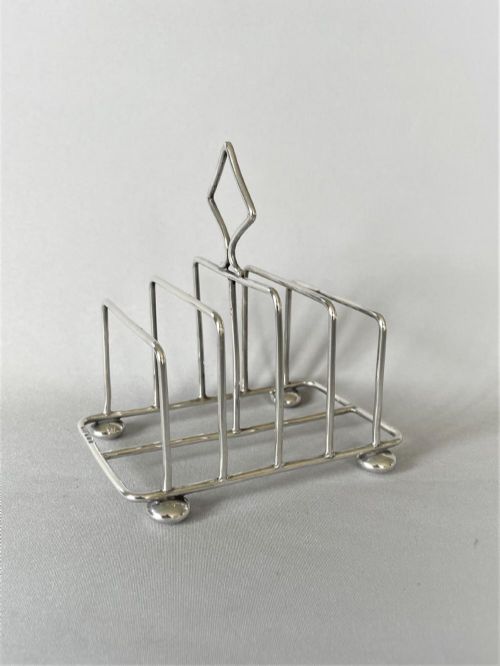
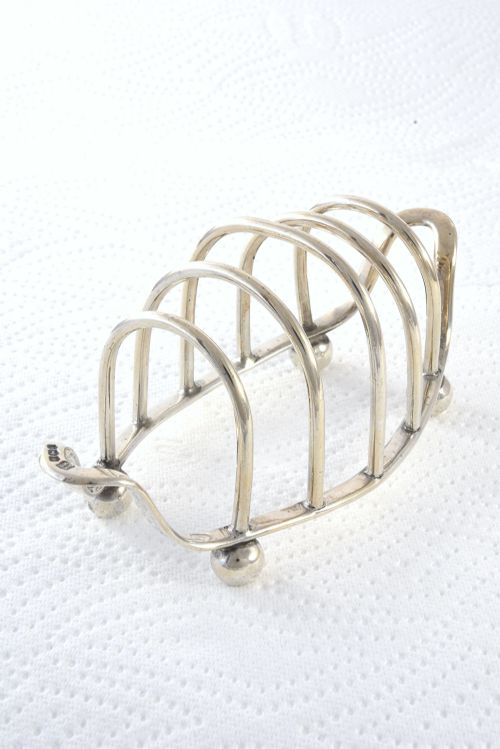
- A small metal frame with multiple arched dividers designed to hold slices of toast upright and prevent them from becoming soggy. They appear in four-slice and six-slice configurations.
- Egg cruet set
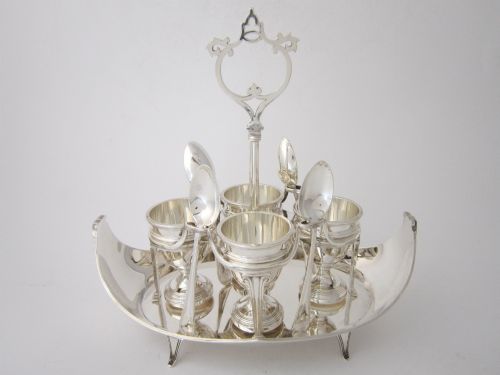
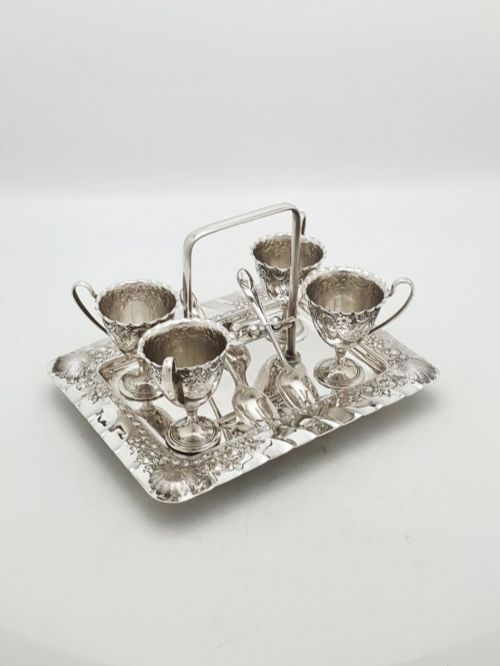
- A matched ensemble featuring egg cups, spoons, and a central stand with a carrying handle, often accompanied by a toast rack. These sets catered to the Victorian and Edwardian breakfast table.
- Silver plate
- A base metal, frequently nickel silver, coated with a layer of pure silver through electroplating. This process allowed manufacturers to produce ornate tableware at a lower cost than solid silver.
- Oeufrier
- A French term for an egg server or cooker. These specialised pieces reflect continental breakfast traditions.
- Entree dish
- A covered serving vessel used for presenting hot food items at the table. They often feature removable handles for versatile usage.
Vintage Breakfast Server: Frequently Asked Questions
What is a breakfast server?
A breakfast server refers to specialised dining accessories created for the morning meal, including toast racks, egg cruets, and butter dishes.
These pieces emerged in various periods from the nineteenth century to the mid-twentieth century to serve specific morning foods.
How do I date a silver toast rack?
Dating relies on hallmarks stamped into sterling silver pieces, which indicate the assay office and year of production.
For silver plated items without official date letters, stylistic cues such as Edwardian proportions or Art Deco geometries provide chronological context.
Were egg cruet sets used daily?
Victorian and Edwardian households utilised egg cruet sets for formal breakfast settings and everyday family meals.
They kept boiled eggs warm in individual cups while providing convenient access to salt and toast.
What maintenance do silver plated servers need?
Silver plated items require gentle cleaning with appropriate silver polish to maintain their reflective surface and prevent tarnish accumulation.
Harsh abrasives must be avoided to protect the underlying electroplated layer from wearing away.