

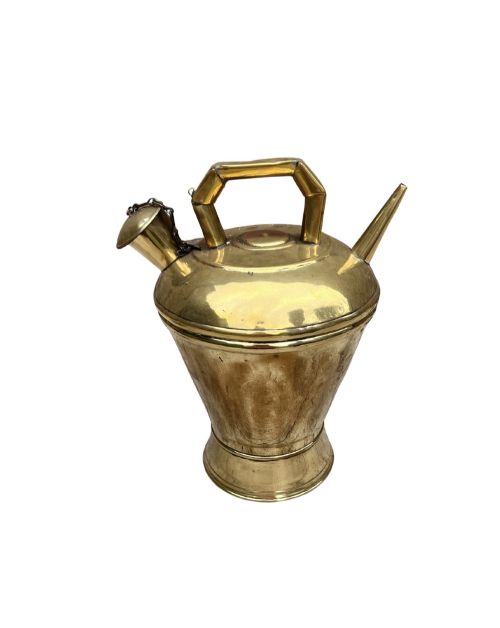
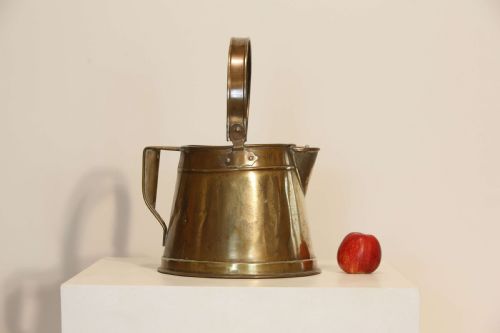
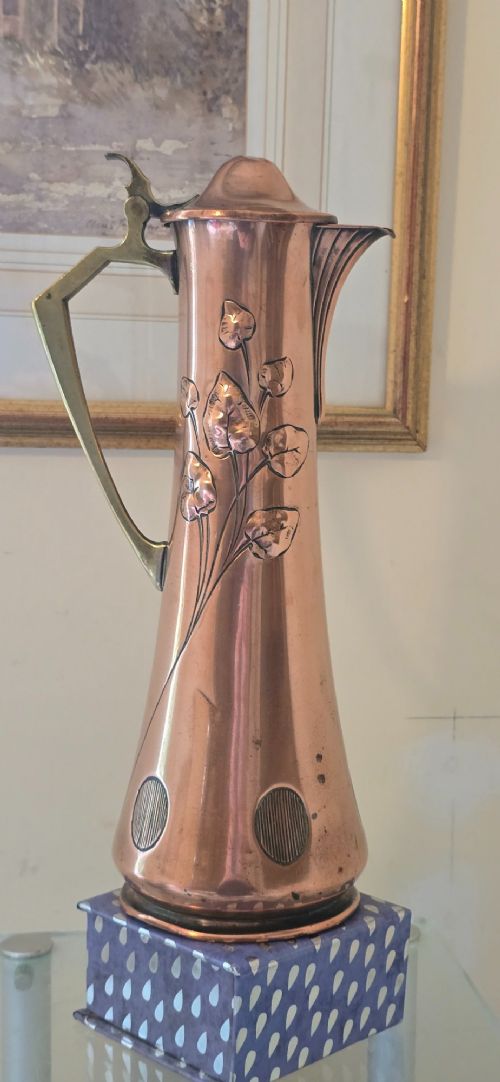


Vintage Brass Water Pitcher
These vintage brass water pitcher examples bring tactile warmth and utilitarian form into domestic spaces.
Vintage Brass Water Pitcher
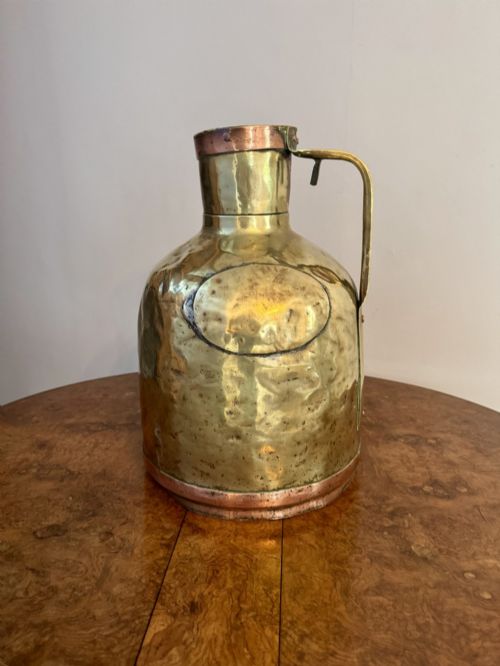
Buyers seeking a vintage brass water pitcher encounter functional vessels originating from the nineteenth century, the Victorian era, and around 1900. These pieces often overlap with categories such as hot water cans, ewers, and coffee pots.
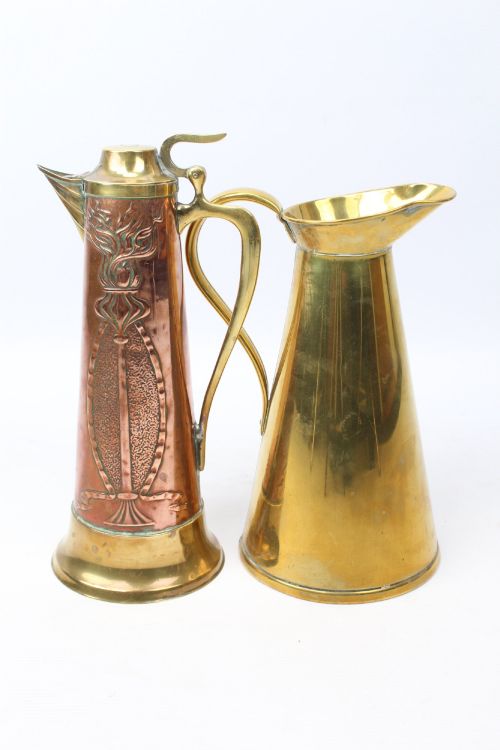
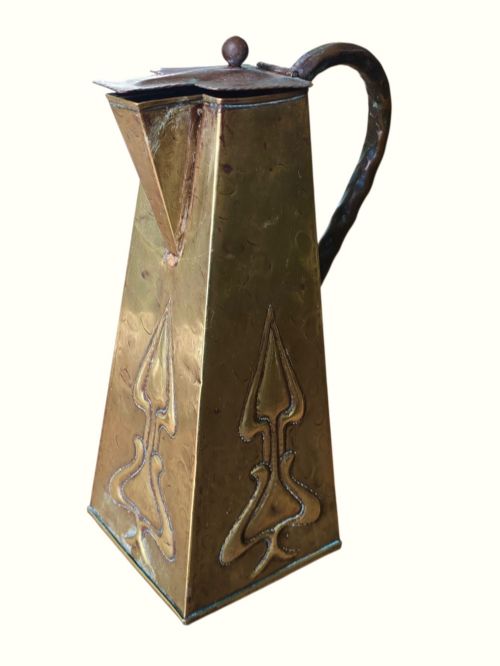
The prevalent aesthetics span Victorian, Arts and Crafts, Art Nouveau, and Middle Eastern designs. Forms range from tall brass jugs to coopered oak bodies banded in brass and combinations of brass and copper.
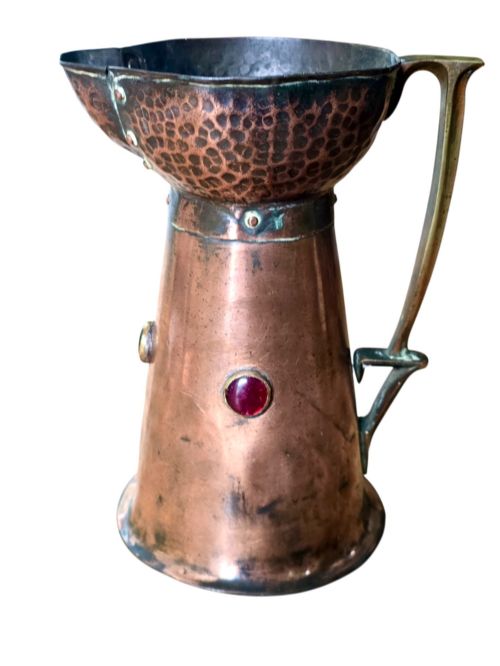
Makers utilise mixed metals and contrasting handles, incorporating elements like ebonised wood and glass. These functional containers served practical domestic or hospitality purposes before becoming decorative interior objects.
Materials and construction methods
These vessels rely on sheet brass and copper, sometimes shaped around coopered oak staves secured by brass bands. Workshops employed hammering, joining, and relief work to build robust utility ware.
Art Nouveau and Arts and Crafts examples display decorative additions such as cabochons and floral relief designs. Handles frequently incorporate ebonised wood or contrasting metals for thermal insulation and grip.
Vintage Brass Water Pitcher Retail Price Guide 2026
Typical asking prices for vintage brass water pitcher among the pieces listed under this phrase on Sellingantiques today, from the lower quarter to the upper quarter. They describe what is for sale here now, not the wider market.
Some jugs wear their hot water duties proudly, doubling as unexpected indoor watering cans for thirsty houseplants.
Assessing quality and craftsmanship
Quality rests in the precision of the metalwork, the integrity of the seams, and the clarity of decorative motifs like cabochons or floral relief. Maker attribution also elevates certain pieces.
Simpler utilitarian vessels contrast with signed works from established firms, where hand-finishing and considered proportions distinguish standard production from finer studio output.
William Soutter & Sons·WMF·H F Fearncombe & Co
The Vintage Brass Water Pitcher Glossary
- Ewer
- A large jug with a wide spout traditionally used for fetching and pouring water. These vessels often feature decorative handles and flared bases.
- Cabochon
- A polished, convex gem or metal ornamentation lacking facets. Makers set these decorative elements into the surface of metalwork.
- Coopered
- Constructed from wooden staves fitted together side by side and bound by metal hoops. This technique is common in traditional bucket and large jug manufacture.
- Ebonised
- Wood treated with a dark finish to imitate ebony. This dark material provides a stark visual contrast against polished brass and copper surfaces.
Vintage Brass Water Pitcher: Frequently Asked Questions
How do Arts and Crafts pieces differ from Victorian items?
Arts and Crafts items focus on visible hand-craftsmanship, simple structural honesty, and minimal ornamentation such as cabochons or hammered textures. Victorian pieces often embrace heavier proportions and more traditional styling.
Design philosophies shifted toward honest construction around 1900, influencing how workshops shaped and decorated domestic brassware.
Where were these metal vessels manufactured?
Production occurred across British workshops, continental European factories, and Middle Eastern regional centres. Each region imparted distinct regional motifs and metalworking traditions.
Factory production coexisted with specialised metal studios, creating a diverse landscape of surviving domestic wares.
How should brass and copper surfaces be maintained?
Maintenance depends on whether a collector prefers a dark aged patina or a bright polished metallic finish. Gentle cleaning preserves the underlying metal without stripping historical character.
Harsh chemical abrasives damage surface details and remove the natural signs of age accumulated over decades.