

Vintage Brass Studded Chairs
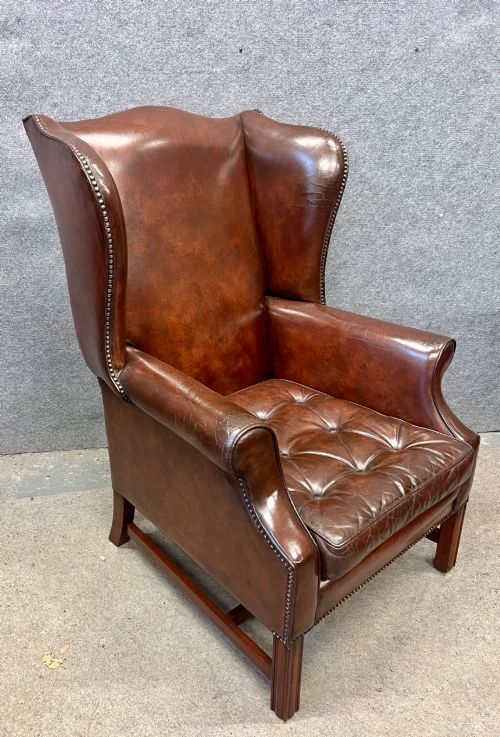
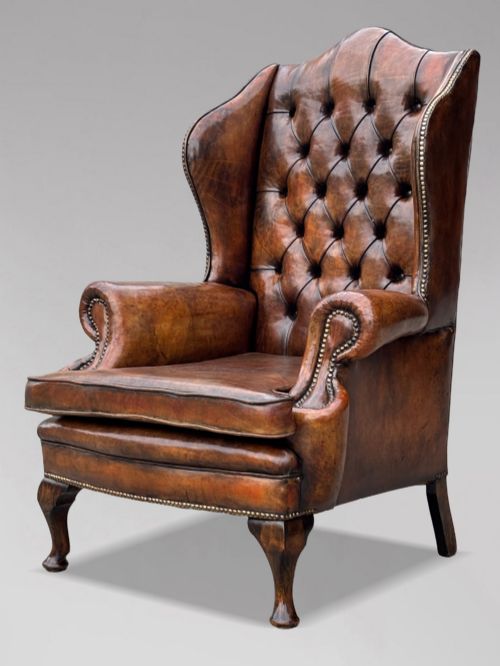
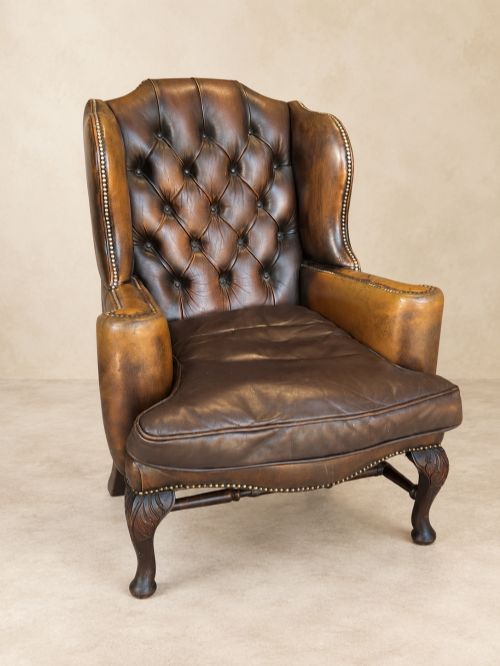
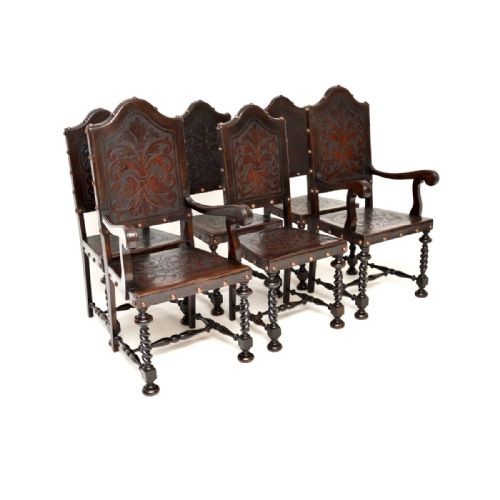
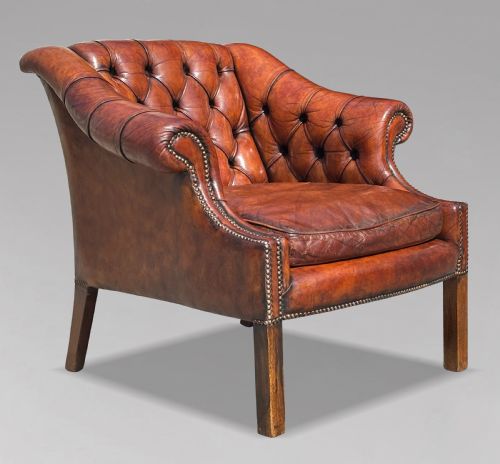
Vintage brass studded chairs bring weight and character to a room, offering deep leather seats secured by rows of metal tacks.
Vintage Brass Studded Chairs
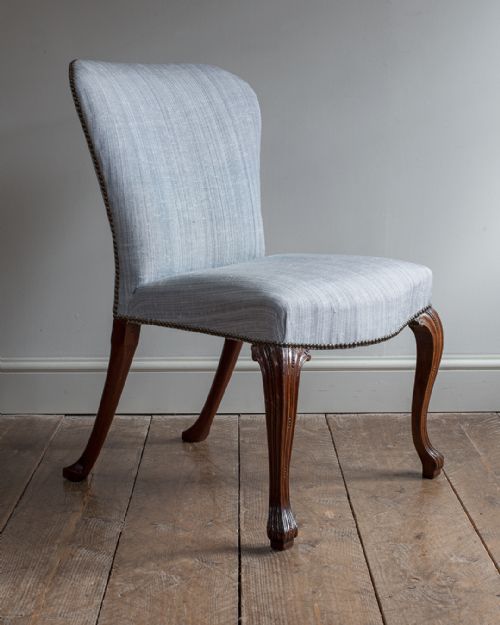
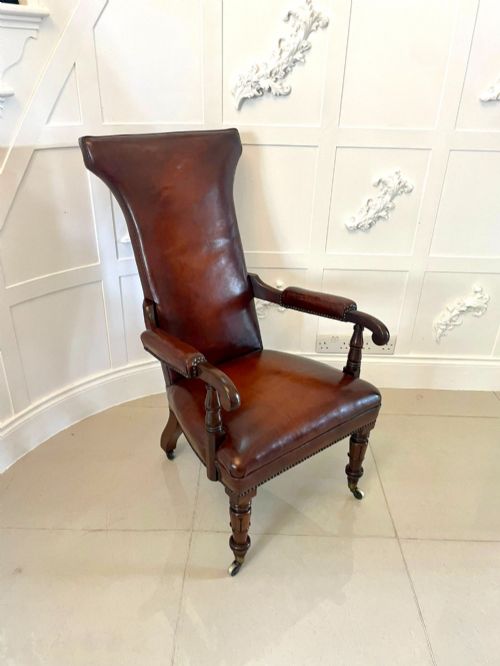
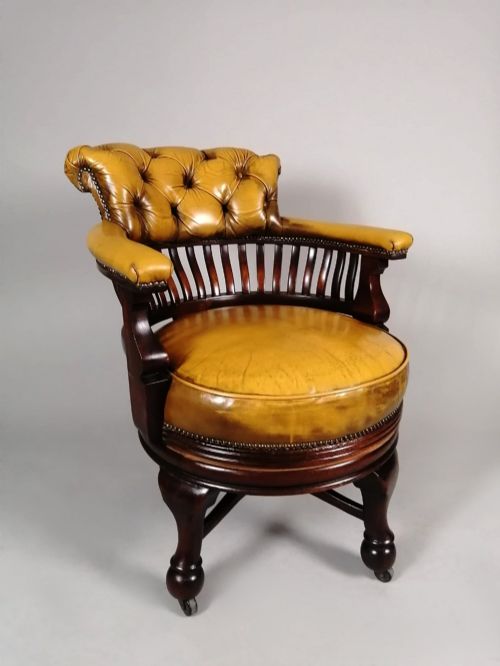
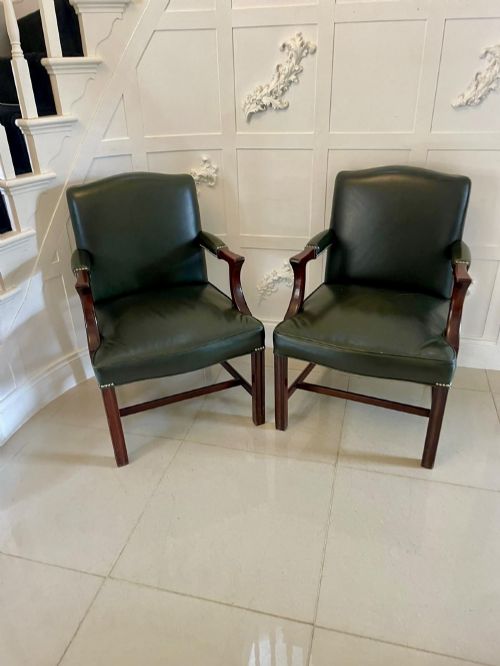
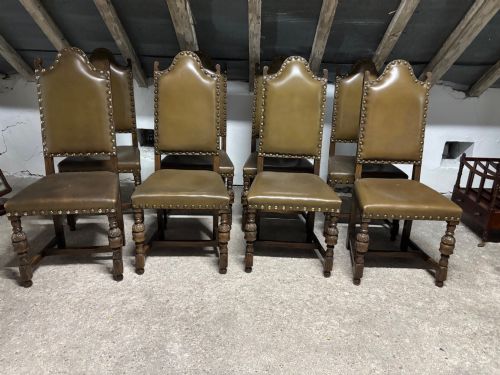
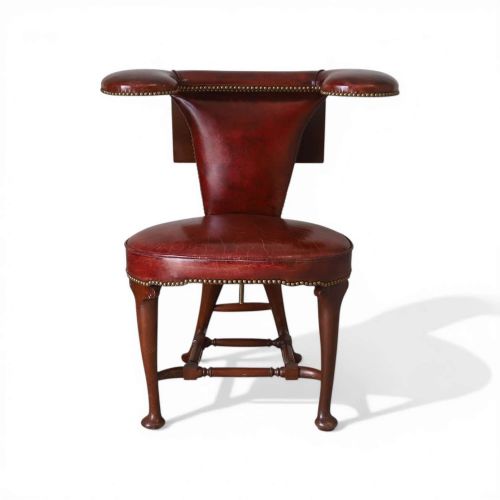
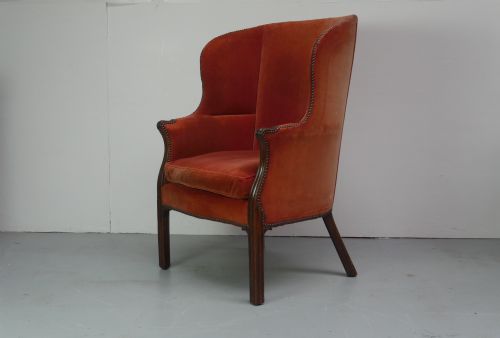
Vintage brass studded chairs encompass a wide variety of seating forms designed for comfort and utility across past centuries. When searching for vintage brass studded chairs, buyers encounter everything from imposing library armchairs and wingbacks to sets of high back dining chairs and revolving desk seats.
The materials span sturdy timbers like mahogany, oak, walnut, and hardwood paired with tactile upholstery. Leather dominates the selections, appearing in shades of brown, tan, and red, often hand-dyed or buttoned, alongside occasional velvet and needlepoint panels.
Origins stretch from English workshops to French Provincial designs, Spanish oak chairs, and Moroccan suites. The dating ranges widely, touching the eighteenth and nineteenth centuries as well as Edwardian, Art Deco, and nineteen-twenties productions.
How They Were Made
Cabinetmakers utilised dense timbers such as mahogany, oak, and walnut to build the foundational frames of these seats. Joinery techniques varied from traditional pinned joints in dining chairs to heavier structural supports required for large wingbacks and library armchairs.
Upholstery involved securing leather or fabric over stuffing, with individual metal tacks hammered in by hand around the borders to hold the materials fast. These brass studs served both a functional purpose in fastening the hides and a decorative role in outlining the scroll arms and backs.
Vintage Brass Studded Chairs Retail Price Guide 2026
Typical asking prices for vintage brass studded chairs among the pieces listed under this phrase on Sellingantiques today, from the lower quarter to the upper quarter. They describe what is for sale here now, not the wider market.
Cockfighting chairs feature a strange reverse posture, designed for gentlemen to straddle the seat backwards while watching bouts.
What Varies in Quality
The grade of timber and the depth of the carving set examples apart, with solid mahogany and figured walnut sitting at the upper end. Finer pieces display refined proportions and hand-finished details rather than mass-produced uniformity.
The integrity of the leather and the regularity of the brass studding dictate visual appeal. Hand-dyed hides that have aged gracefully with natural patination hold a distinct presence compared to flat, uniform modern replacements.
The Vintage Brass Studded Chairs Glossary
- Wingback
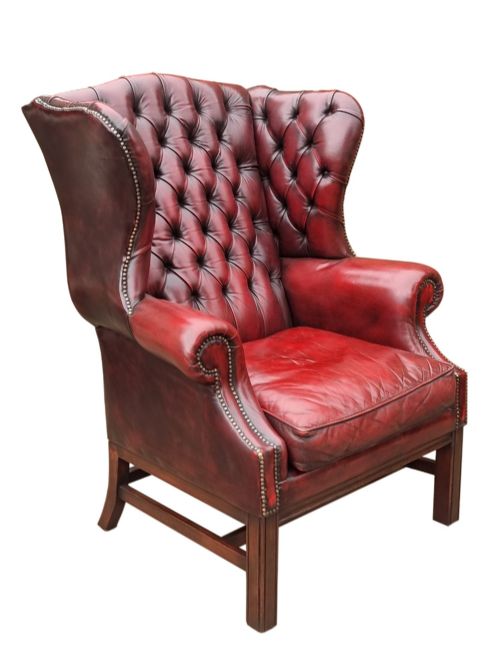
- An armchair with side panels designed to shield the sitter from draughts. These panels extend downward from the back to merge with the arms.
- Carver chair
- An armchair designed to match a set of dining chairs, typically placed at the head of the table. They feature open arms to accommodate dining attire.
- Chesterfield armchair
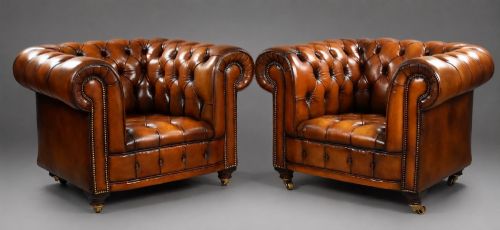
- A heavily upholstered seating form characterised by deep button tufting and rolled arms of equal height to the back. They frequently incorporate rows of brass tacks.
- Gainsborough chair
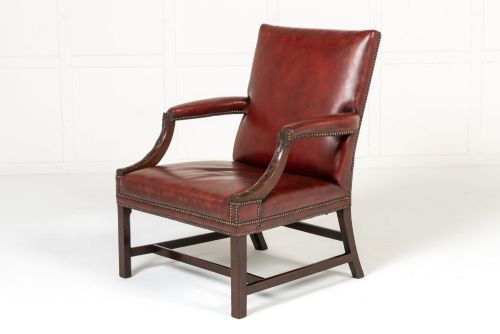
- A wide, open-armed desk chair originating in the eighteenth century. They usually feature upholstered seats and backs with mahogany frames.
- Porters armchair
- A high-backed hooded chair designed to keep out drafts in cold hallways. They often feature enclosed sides and dense padding.
Vintage Brass Studded Chairs: Frequently Asked Questions
How do I care for leather on these chairs?
Apply a suitable leather conditioner periodically to keep the hide supple and prevent drying or cracking. Avoid placing them in direct sunlight or near heat sources.
Dust regularly with a soft cloth and address spills immediately with a dry cloth. Gentle maintenance preserves the natural patination built up over decades.
What is the difference between a club chair and a library chair?
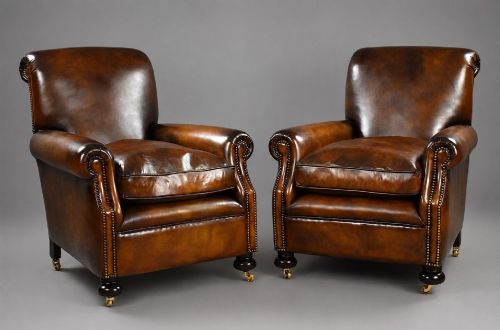
Club chairs typically offer deep, low-slung seating designed for relaxed lounging, often upholstered entirely in thick leather. They emerged strongly in twentieth-century domestic spaces.
Library chairs tend to have firmer, more upright support suited for reading at a desk or table. Their frames often incorporate exposed mahogany or oak woodwork.
Are these chairs suitable for daily office use?
Many examples, such as desk chairs and revolving models, were built specifically for work environments. Their robust hardwood frames handle regular daily seating well.
Ensure the internal padding and height suit your desk setup. Victorian and Edwardian office models combine sturdy mechanical function with traditional upholstery.
How can I tell the age of a chair?
Examine the timber species, joinery methods, and the style of the legs and arms. Eighteenth-century models often show Georgian proportions, while Edwardian and nineteen-twenties pieces reflect later interpretations.
The wear patterns on the leather and the fastening style of the brass studs also provide clues to the period of manufacture.