




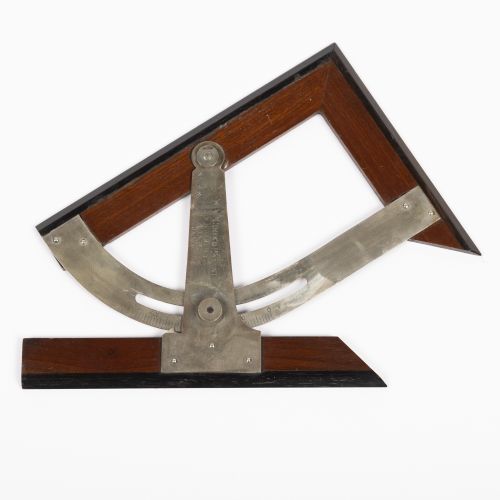

Vintage Brass Measuring Instrument
These vintage brass measuring instruments are precision tools of brass, mahogany, and glass from the nineteenth and early twentieth centuries.
Vintage Brass Measuring Instrument
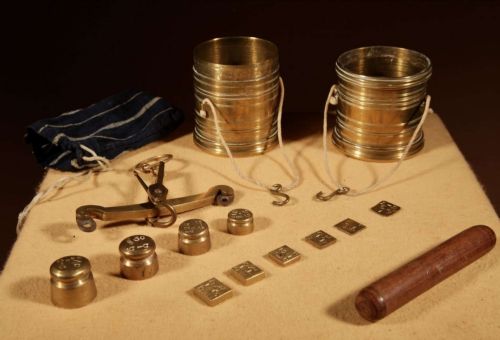
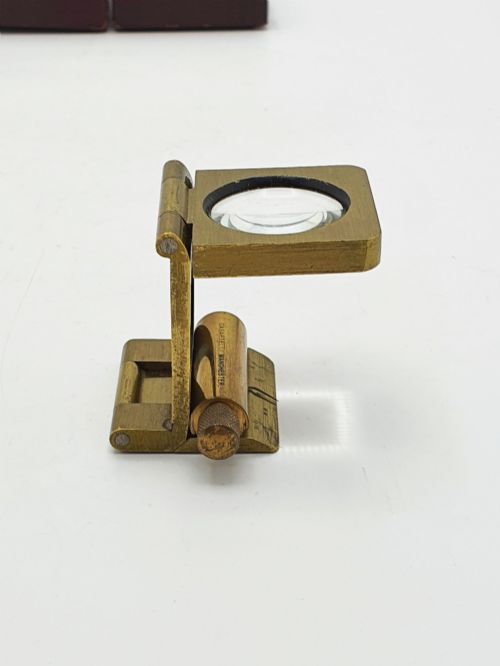
A vintage brass measuring instrument is a scientific or trade device used to gauge weight, length, wind, pressure, or liquid density. When you search for this phrase, you encounter specific apparatus including balance scales, linen testers, theodolites, anemometers, standard yards, thread testers, water pressure gauges, chondrometers, hydrometers, and clinometers.
The versions most likely to meet you on this page originate from nineteenth-century workshops and early twentieth-century industrial makers. These pieces span Victorian, Edwardian, and Georgian periods, alongside specialised items like Dutch bushel balances and governmental standard link floor plaques.
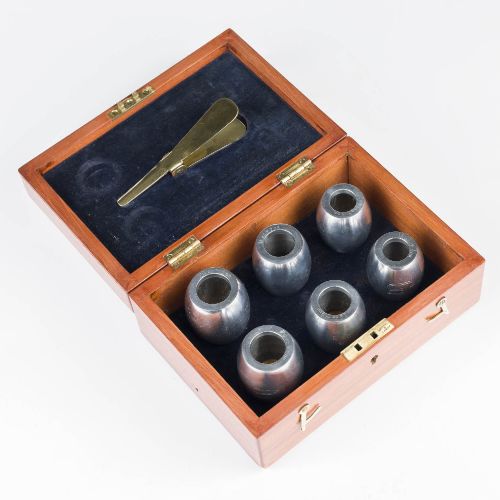
Many of these instruments arrive complete with their original fitted cases made of mahogany or wood, sometimes lined with velvet and incorporating glass elements. They range from portable pocket loupes to heavy pedestal-mounted metres and wall-mounted water pressure gauges.
What varies in quality
Quality depends upon the completeness of the set and the presence of original fitted cases, such as mahogany boxes with velvet interiors. Instruments retaining all original components, like governmental standard weights or full balance sets, stand above incomplete examples.
The precision of the engraved scales and the reputation of the workshop dictate the upper range of these items. Pieces signed by established London makers exhibit finer calibration work and more robust brass casting than anonymous industrial tools.
Listings span the nineteenth and twentieth centuries, featuring periods from Georgian to 1940 alongside materials like brass, mahogany, glass, and velvet.
De Grave Short And Co·W And S Jones·Negretti And Zambra·J Hicks Of London·De Grave And Co
The Vintage Brass Measuring Instrument Glossary
- Theodolite
- A precision optical instrument used for measuring angles in horizontal and vertical planes. It typically mounts on a tripod and incorporates brass circles and telescopic sights.
- Anemometer
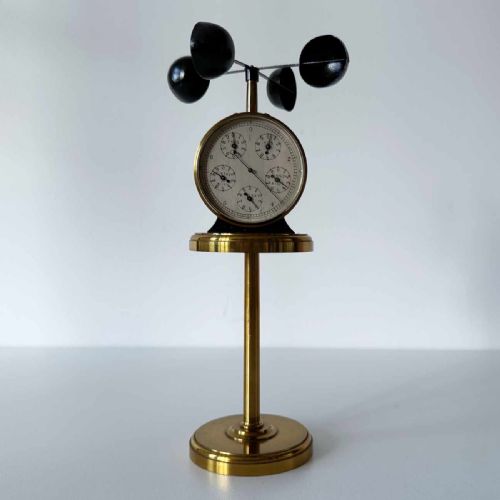
- An instrument designed to measure wind speed and pressure. Examples include portable patterns and large pedestal-mounted metres.
- Hydrometer
- A device used for measuring the specific gravity of liquids based on buoyancy. Sikes hydrometers were standard for determining alcohol proof.
- Chondrometer
- A specialised weighing device used to determine the bushel weight of grain. These usually comprise a brass beam, bucket, and mahogany storage case.
- Clinometer
- A tool for measuring angles of slope, elevation, or depression with respect to gravity. Many incorporate patent designs by scientific instrument makers.
Vintage Brass Measuring Instrument: Frequently Asked Questions
What are vintage brass measuring instruments used for?
These instruments served scientific, industrial, and governmental functions, including surveying land, measuring wind speed, grading grain, and testing water pressure.
Tradespeople and officials utilised them to maintain standardised measurements for linen, thread, alcohol, and official length standards like the yard.
How should I display a vintage brass measuring instrument?
These pieces suit placement on desks, shelves, or within dedicated cabinets where their polished brass and mahogany cases remain visible.
Larger items like pedestal anemometers or wall decor pressure gauges function well as standalone display objects in studies or libraries.
Are these measuring instruments still accurate today?
Most surviving instruments function primarily as decorative antiques, historical artefacts, or collection pieces rather than calibrated tools for modern use.
While physical mechanisms like balance scales and clinometers may still move, their primary value lies in their historical manufacture and scientific heritage.