

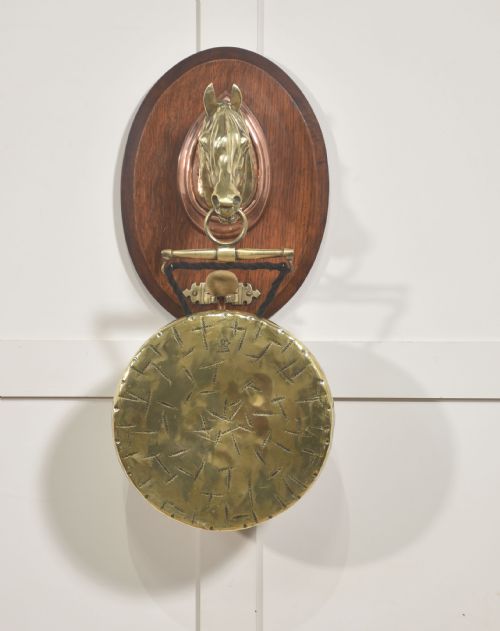


Vintage Brass Meal Chime
A vintage brass meal chime gathers household attention with a clear resonance, offering both period utility and decorative presence.
Vintage Brass Meal Chime
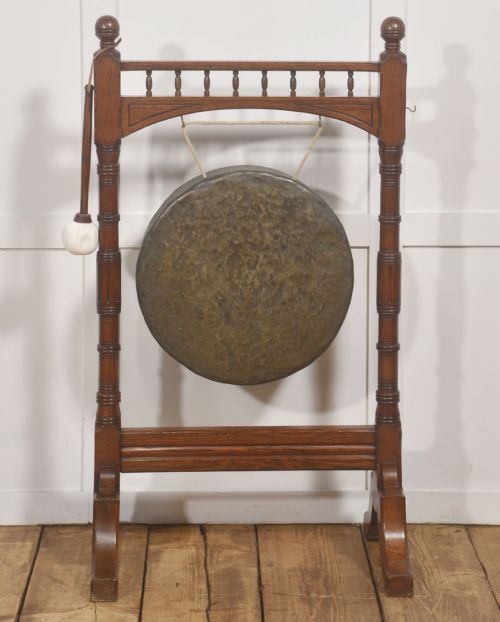
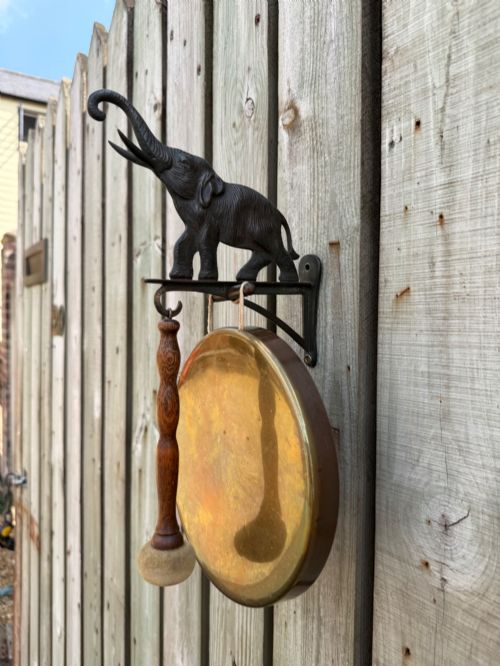
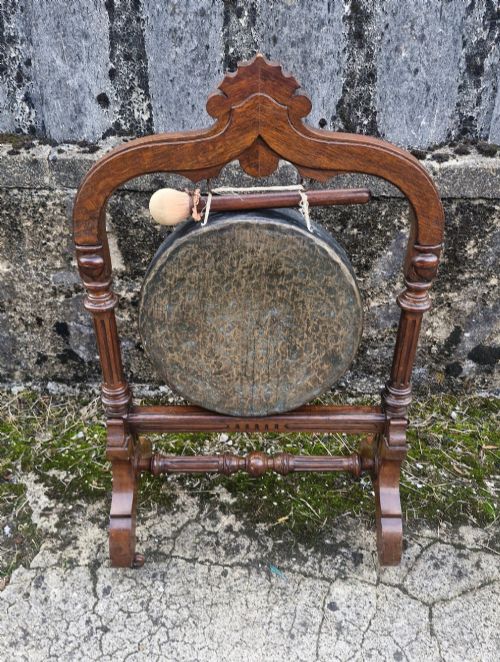
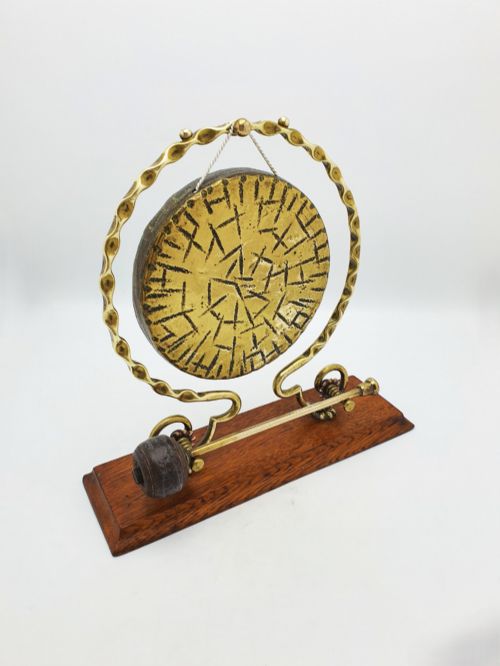
A vintage brass meal chime serves as a traditional call to table, utilising a metal disc or tube struck with a handheld mallet. These items frequently appear as table gongs mounted on wooden frames or as wall-hanging pieces designed for domestic service.
The selections span the nineteenth century, nineteen hundred, the Victorian era, and nineteen twenty, reflecting periods of active home hospitality. Forms range from simple table models to elaborate wall-mounted assemblies with horse head mounts or palazzo designs.
Makers utilised various supporting structures, pairing metal sound elements with oak, walnut, mahogany, wrought iron, and cast iron frames. Buyers encounter styles such as Arts and Crafts, Gothic Revival, Aesthetic Movement, and Art Nouveau across these diverse formats.
How they were made
Artisans formed the primary sound elements from brass, copper, and bronze, sometimes applying silver plating to achieve specific finishes. These resonant metals hang from cords or fixed frames designed to maximise acoustic output when struck.
Supporting structures combine hardwoods like oak and walnut with forged or cast iron, creating stable bases and wall brackets. Carpenters and metalworkers integrated mounts, such as brass horse head motifs, directly into the timber backplates.
Vintage Brass Meal Chime Retail Price Guide 2026
Typical asking prices for vintage brass meal chime among the pieces listed under this phrase on Sellingantiques today, from the lower quarter to the upper quarter. They describe what is for sale here now, not the wider market.
Listings feature pieces spanning the nineteenth century up to nineteen twenty, incorporating brass, copper, bronze, oak, walnut, and wrought iron.
What varies in quality
Distinction across the range lies in the complexity of the frame construction and the artistic merit of the metal mounting. Elaborate woodwork, such as Gothic Revival tracery or specific architectural styling, elevates the physical presence of the object.
The refinement of the cast metal elements and the harmony of the accompanying striker determine the overall execution. Pieces featuring integrated details like horse head mounts or multi-strike palazzo configurations demonstrate greater ambition in design.
The Vintage Brass Meal Chime Glossary
- Dinner gong
- A hanging metal disc or tube struck with a mallet to summon people to meals. These instruments form the core of every meal chime assembly.
- Gothic Revival
- A design style drawing on medieval architectural motifs. Pieces in this aesthetic often feature pointed arches and heavy timber framing.
- Aesthetic Movement
- A late nineteenth-century style prioritising visual beauty over narrative or moral function. Items from this movement display refined surface qualities.
- Art Nouveau
- A decorative style characterised by flowing, organic lines inspired by natural forms. This influence appears in the casting patterns of metal frames.
Vintage Brass Meal Chime: Frequently Asked Questions
How do you sound a meal chime?
You use the handheld striker to hit the suspended metal disc firmly in the centre. This produces the resonant tone designed to carry across rooms.
Ensure the hanging cord allows the metal to vibrate freely without dampening against the frame.
Where were these placed in houses?
Dinner gongs stood on sideboards in dining rooms or hung on walls in hallways and corridors. This placement allowed the sound to reach all living areas effectively.
Wall-mounted versions required secure fixing to bear the weight of both the wooden backplate and the heavy metal gong.
What woods are used for the bases?
Craftspeople predominantly utilised oak and walnut for the supporting frames and wall brackets. Mahogany also appears among the timber selections for table models.
These dense hardwoods provided the structural stability needed to support heavy hanging metal elements.
How do you date a brass meal chime?
Dating relies on identifying stylistic markers from periods like the Victorian era, Arts and Crafts, or Art Nouveau. Construction methods and wood finishes also offer clues to the decade of manufacture.
Earlier examples from the nineteenth century often feature hand-forged ironwork alongside traditional timber joining techniques.