
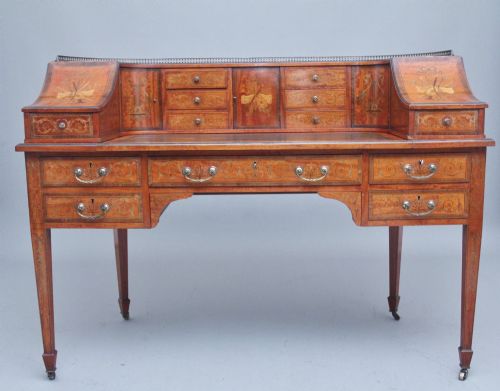
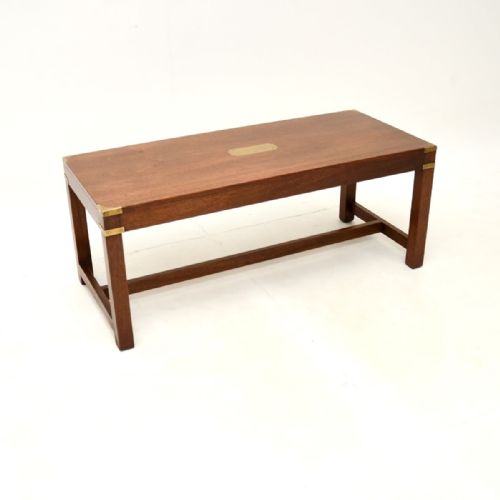
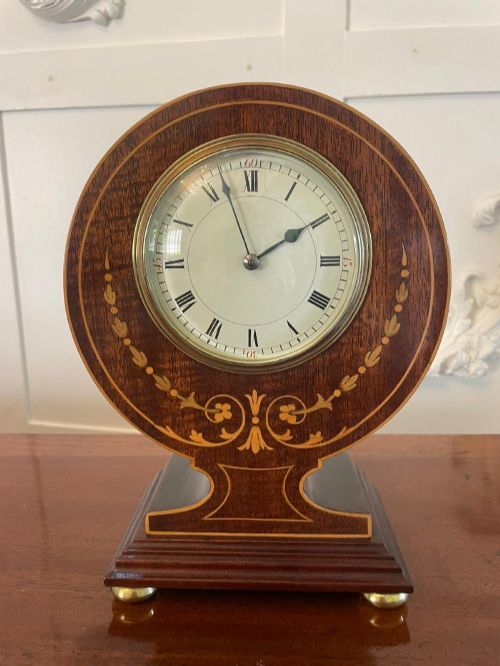
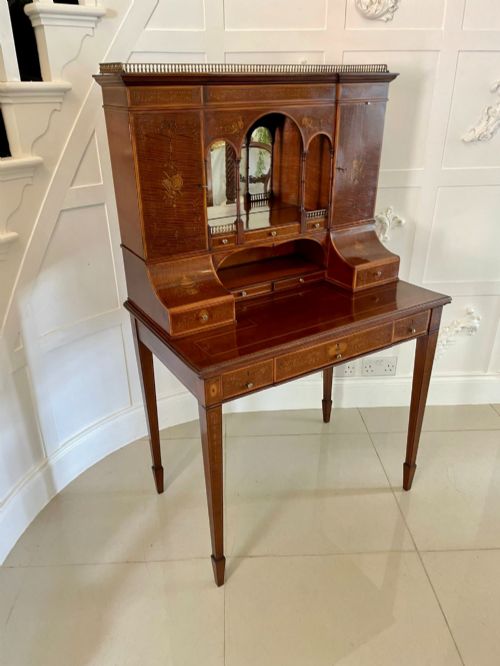
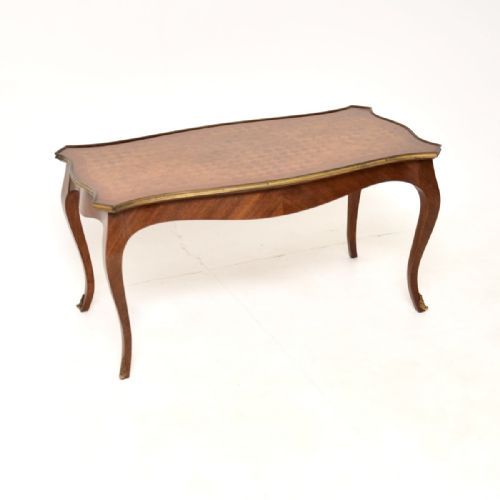
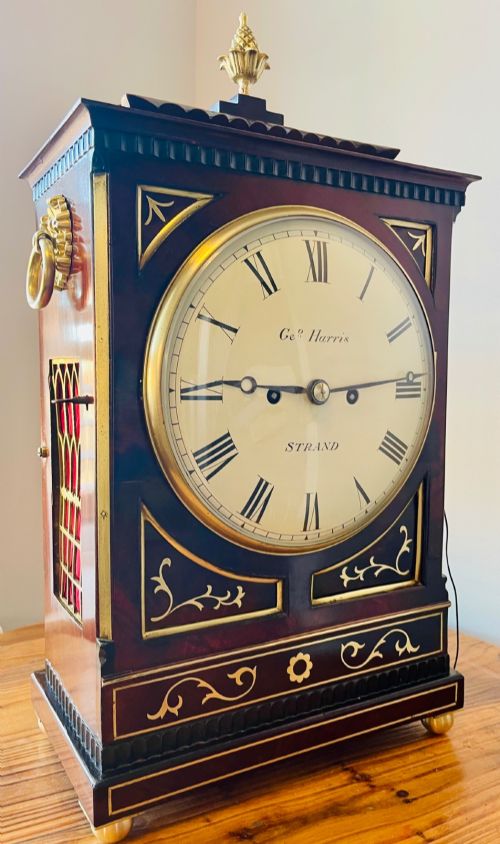
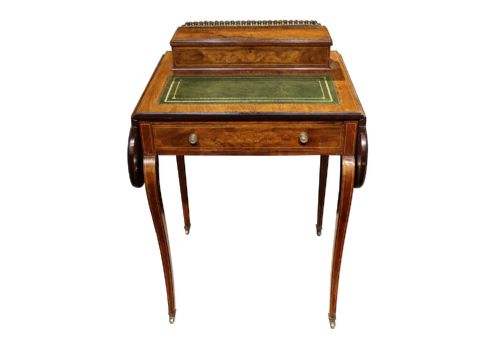
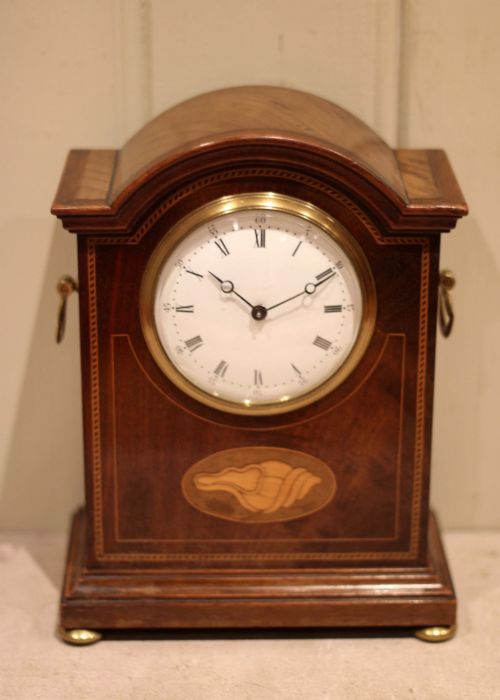
Vintage Brass Inlaid Table
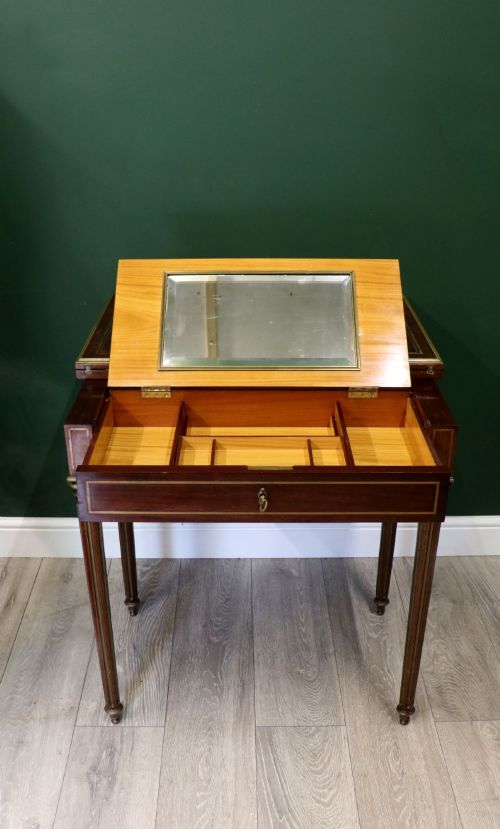
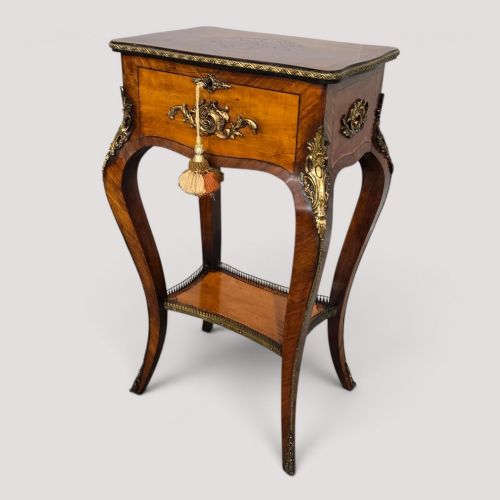
When you choose a vintage brass inlaid table, you acquire a timber piece detailed with metal work from periods spanning the Georgian era to the 1930s.
Vintage Brass Inlaid Table
A vintage brass inlaid table encompasses various forms designed for domestic interiors, including occasional tables, coffee tables, and corner or lamp tables. These items emerge from periods such as the Georgian era, the Regency period, the Edwardian years, and the 1930s.
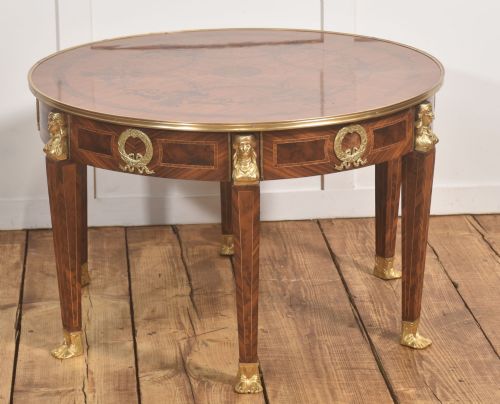
The selection frequently brings together smaller occasional pieces, such as nesting tables and drop-leaf designs, alongside larger dining and centre tables. Anglo-Indian production also contributes circular forms featuring this specific ornamentation.
Makers utilised woods like mahogany, rosewood, satinwood, and walnut as the primary carcase materials, setting off the bright metal detailing against dark or honey-toned timber surfaces.
How they were made
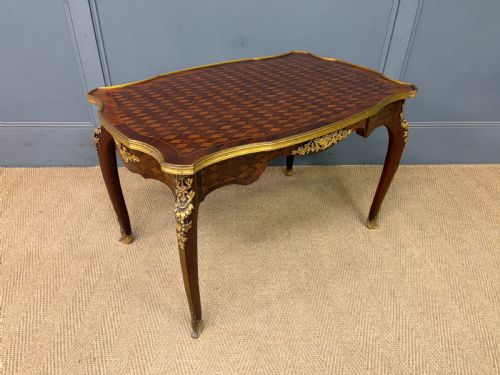
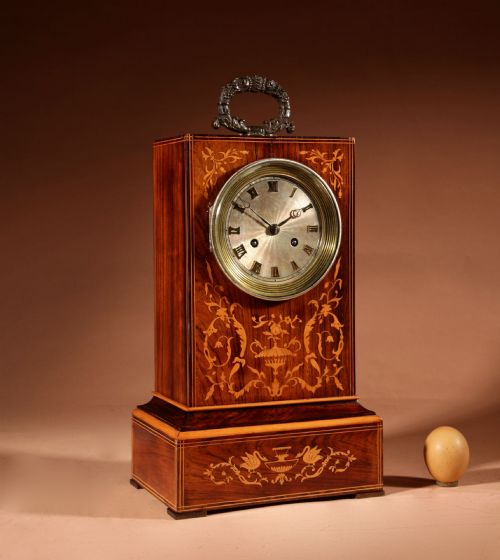
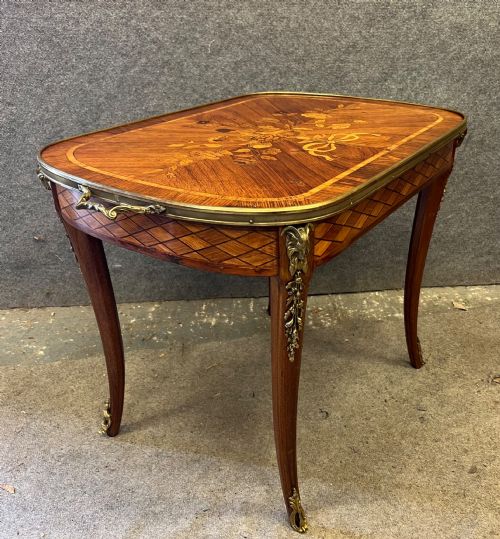
Craftsmen recessed brass stripwork and wire directly into timber surfaces, often combining the metal with satinwood inlay or parquetry to form geometric patterns and floral motifs. The brass sits flush with the surrounding wood, secured in prepared channels.
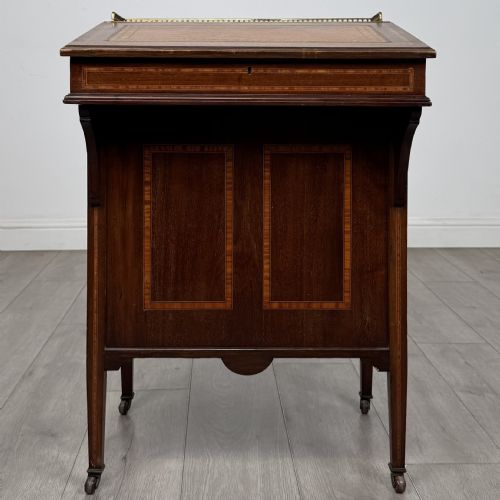
Carpenters constructed the underlying structures using solid hardwoods and veneers, employing traditional joinery methods suited to each period, from Regency rosewood frames to Edwardian mahogany occasional pieces.
Listings feature woods including mahogany, rosewood, satinwood, walnut, and oak paired with brass inlay across Georgian, Regency, and Edwardian periods.
What varies in quality
The precision of the brass inlay work separates standard examples from finer pieces, particularly where the metal meets intricate wood veneers and parquetry without gaps. Clean lines in the brass geometric or scroll patterns indicate skilled hand-cutting.
The choice of timber grain and the matching of secondary woods like rosewood, satinwood, and figured mahogany determine the visual depth of the top. Solid brass fittings and galleries on corner or lamp tables further distinguish the construction standard.
George Orpwood·Thomas Moss·L. Vick of Stroud·Seller of Reading·Bush of London
The Vintage Brass Inlaid Table Glossary
- Parquetry
- A geometric mosaic of wood pieces used for surface decoration. It often appears alongside brass inlay on tables and cabinets.
- Regency
- A British design period spanning the early nineteenth century. Pieces from this time often utilise rosewood and distinct brass detailing.
- Satinwood
- A durable, yellowish timber native to India and Sri Lanka. Craftsmen used it extensively for contrasting inlay work and banding.
- Gallery
- A raised decorative rail surrounding the edge of a table top. They frequently appear in brass on smaller lamp and corner tables.
- Quartetto
- A set of four nesting tables that graduate in size to fit one beneath another. Regency examples in rosewood with brass work frequently take this form.
Vintage Brass Inlaid Table: Frequently Asked Questions
What periods do these tables come from?
The pieces span from the 18th-century Georgian era and the Regency period through to Edwardian designs and the 1930s.
Each era brings distinct timber choices and proportions to the furniture.
How do I care for brass inlay?
Maintain the timber and metal using appropriate furniture wax without abrasive cleaners that might lift the flush brass wire.
Gentle polishing preserves both the brightness of the metal and the condition of the surrounding wood veneer.
Are these tables solid wood?
Most examples combine solid hardwood frames with veneered surfaces where intricate brass inlay and parquetry are applied.
This technique provided stability while allowing craftsmen to create elaborate decorative patterns on the tops.
Where were circular brass inlaid tables made?
Circular variants include Anglo-Indian production in teak alongside European designs in mahogany and walnut.
Regional origins influence both the carving style and the specific layout of the metal work.