





Vintage Brass Indoor Planter
A vintage brass indoor planter brings living greenery inside with nineteenth-century weight and polish.
Vintage Brass Indoor Planter
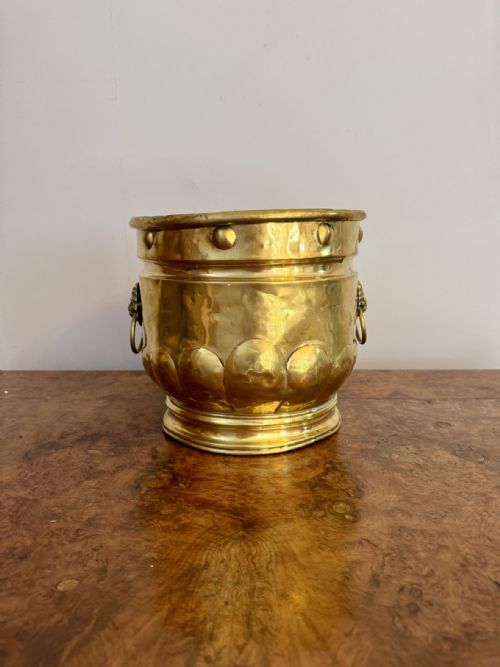
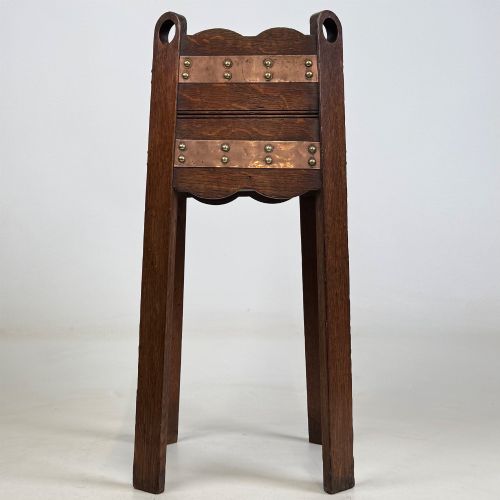
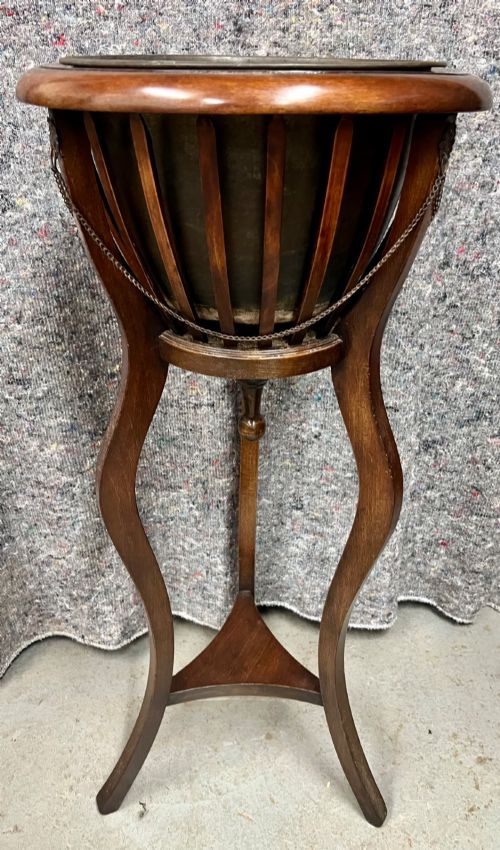
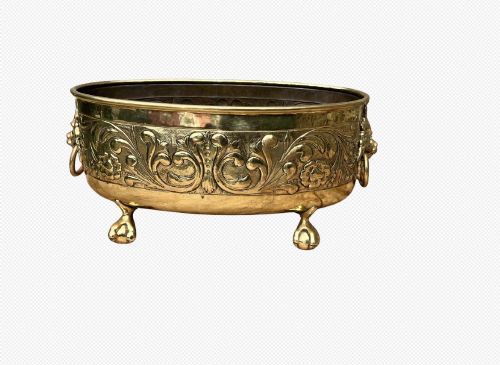
When searching for a vintage brass indoor planter, you encounter vessels designed to hold potted plants within domestic rooms, frequently appearing as jardinières, planter stands, and watering cans. The pieces on this page span from the eighteenth century through the Edwardian period, with Victorian examples appearing most frequently. Forms range from heavy cylindrical vessels and handled bowls to elevated stands fashioned from mahogany, walnut, and box tree.
Makers and workshops across Britain, France, and Belgium produced these containers to sit on tabletops or floor stands, incorporating metal liners or zinc interiors to catch drainage. Stylistic variations cover plain utilitarian utility alongside elaborate movements such as Art Nouveau, Arts and Crafts, and French Louis XV. You will also find combinations of brass paired with copper, ormolu mounts, and ebonised wood.
Materials and construction
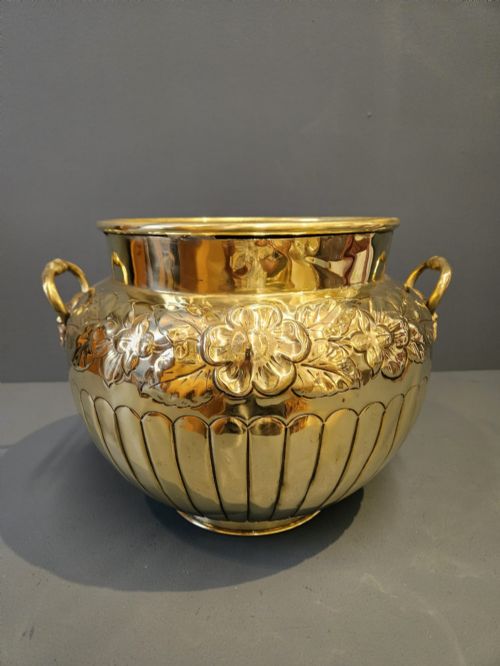
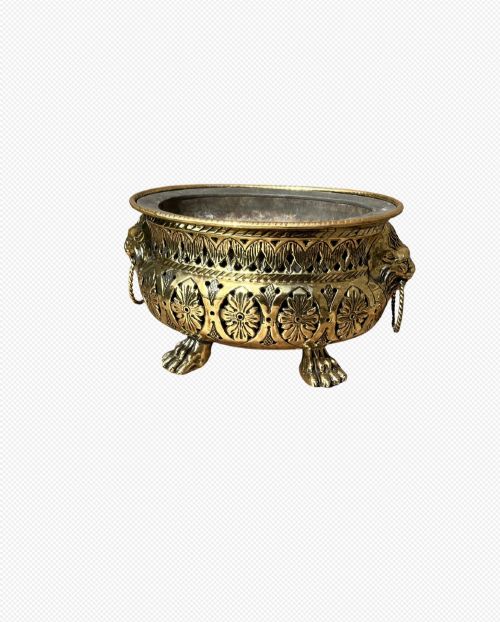
Construction relies heavily on sheet brass and copper, shaped through hammering, embossing, piercing, and casting. Many vessels feature applied handles such as lion masks or drop rings, while others utilise coopered wooden staves bound with brass bands. Heavier items depend on cast brass feet and decorative rims to provide stability when holding damp soil and heavy foliage.
Timber elements in stands and inlaid bodies combine mahogany, walnut, satinwood, and ebonised wood, often enhanced with marquetry or brass stringing. Interior protection typically involves zinc or metal liners designed to prevent moisture from damaging the primary wooden or metallic structure.
Vintage Brass Indoor Planter Retail Price Guide 2026
Typical asking prices for vintage brass indoor planter among the pieces listed under this phrase on Sellingantiques today, from the lower quarter to the upper quarter. They describe what is for sale here now, not the wider market.
Listings feature brass, copper, ormolu, and mahogany across Victorian, Edwardian, and eighteenth-century periods.
Understanding quality differences
Quality rests in the crispness of the hand-chased or embossed detail and the thickness of the metal gauge used in the body. Heavy cast brass handles and robust gauge walls separate substantial country house vessels from lighter, mass-produced items. The integrity of internal liners and the precision of joinery in wooden stands also indicate superior manufacture.
The sophistication of decorative styles, such as fluid Art Nouveau plant motifs or detailed pierced scrollwork, marks the distinction between standard utilitarian items and higher-tier decorative commissions. Preservation of original surfaces, patination, and matching components further elevate the standing of a piece.
Orme Evans And Co
The Vintage Brass Indoor Planter Glossary
- Jardiniere
- An ornamental pot or stand for holding plants or flowers indoors. These vessels often take the form of large bowls or footed vases.
- Dinanderie
- The medieval and later craft of working objects in brass or copper, including embossed vessels and containers. The term applies to ornamental brassware produced in northern Europe.
- Ormolu
- Gilded bronze or brass applied as mounts to furniture and decorative vessels. This technique adds bright metallic highlights to wooden bodies.
- Coopered
- Made with wooden staves fitted together side by side and bound by metal hoops, similar to barrel construction. This technique appears in wooden planter stands.
- Pierced
- Perforated with decorative openings or cut-out patterns in the metal sheet. This method lightens the visual weight of heavy brass vessels.
Vintage Brass Indoor Planter: Frequently Asked Questions
What is a jardiniere?
A jardiniere is an ornamental container designed to hold potted plants inside a home. The term originates from French gardening culture.
These vessels protect tabletops and floors while displaying foliage in domestic rooms and hallways.
How were antique planters used?
Antique planters accommodated indoor potted palms, ferns, and flowering plants during the Victorian and Edwardian eras. They sat on floors, windowsills, or dedicated wooden stands.
Metal liners inside the vessels caught excess water after owners watered their plants.
How do I care for brass planters?
Maintenance involves dusting with a soft cloth and protecting the metal from moisture to preserve the surface. Avoid harsh chemical cleaners that strip away historic patination.
Using a separate inner pot rather than planting directly into the vessel prevents water accumulation and protects the metal.
How do I tell Victorian from Edwardian pieces?
Victorian brass containers often display heavier cast decoration, Gothic influences, or dense embossed patterns. Materials like ebonised wood and heavy brass dominate this era.
Edwardian items frequently introduce lighter proportions, fluted brass bodies, and simpler inlaid woodwork reflecting changing domestic tastes.