





Vintage Brass Hearth Companion
A vintage brass hearth companion brings warmth, weight and polished character to a fireplace, combining utility with decorative presence.
Vintage Brass Hearth Companion
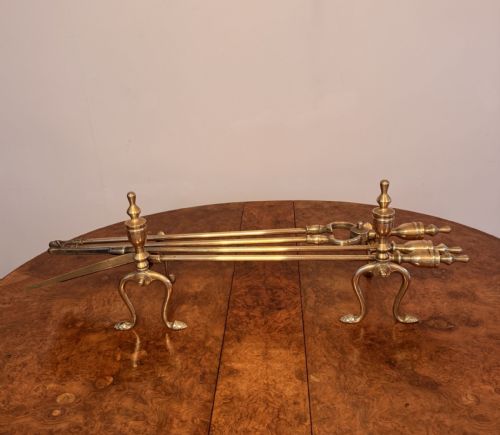
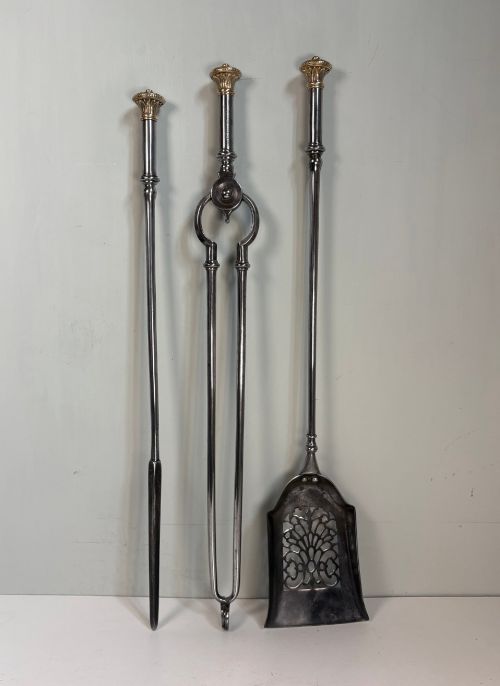
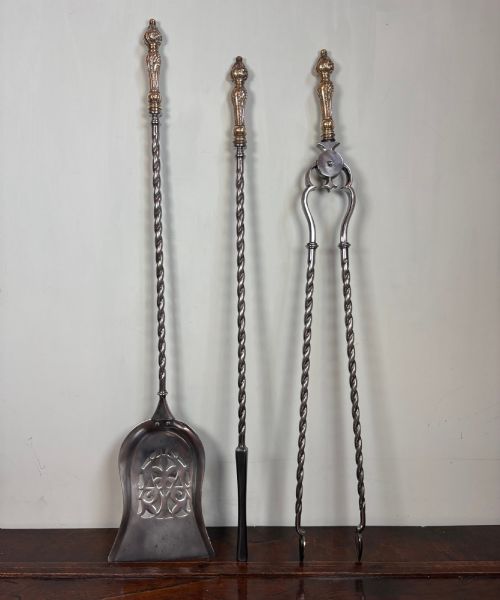
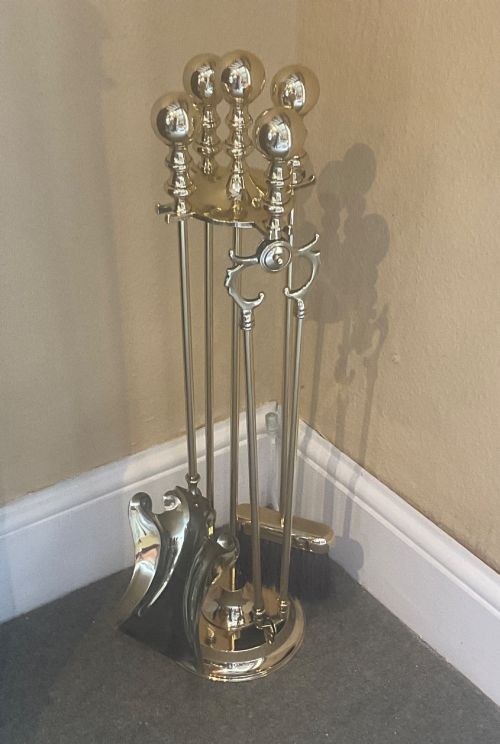
A vintage brass hearth companion gathers essential fireplace accessories into a unified grouping, typically comprising a shovel, poker and tongs arranged on a stand or rest. These functional tool sets and companion sets date from the eighteenth century through the Edwardian era and the early twentieth century.
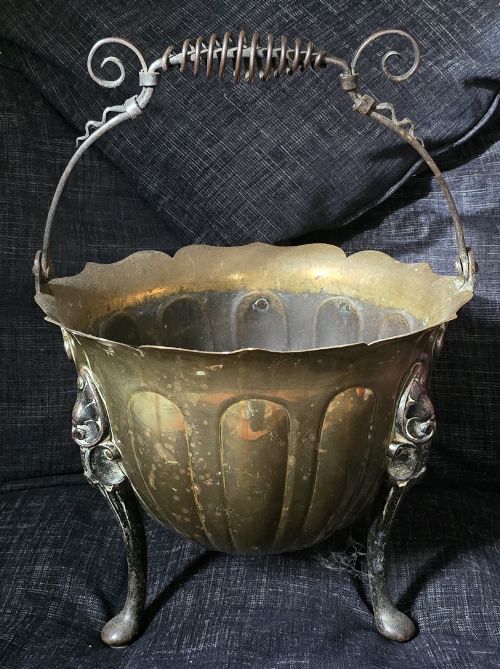
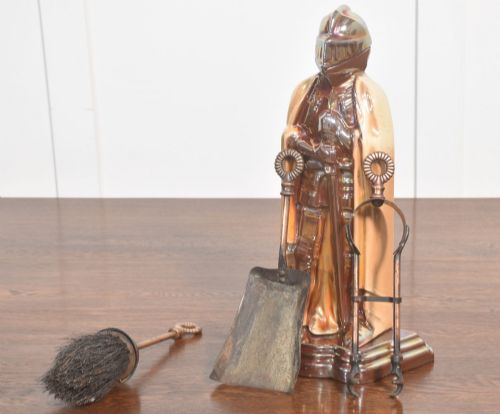
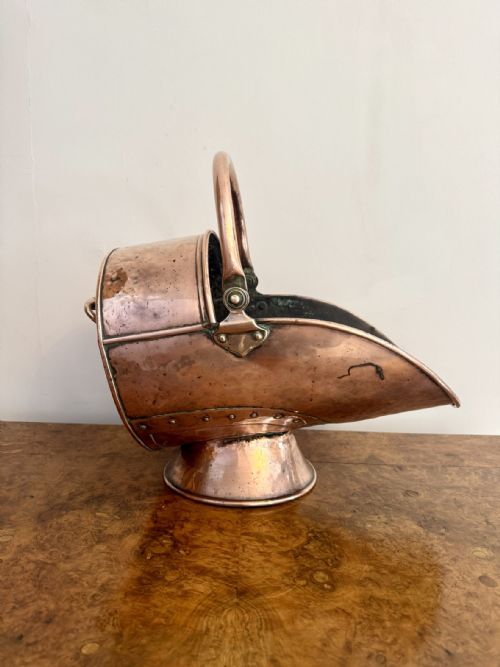
The versions most commonly met on this page originate in the Victorian period, frequently pairing polished brass with steel or iron components. Alongside standard three-piece sets, the selection includes coal scuttles, log bins and companion sets featuring figurative details such as knights or golfers.
How they were made
Maker techniques rely on heavy brass casting and forging, often pairing bright brass handles with robust steel shafts for the fire tools to withstand daily fireplace heat and use. Copper and cast iron also appear frequently, utilised for coal scuttles, log bins and structural bases.
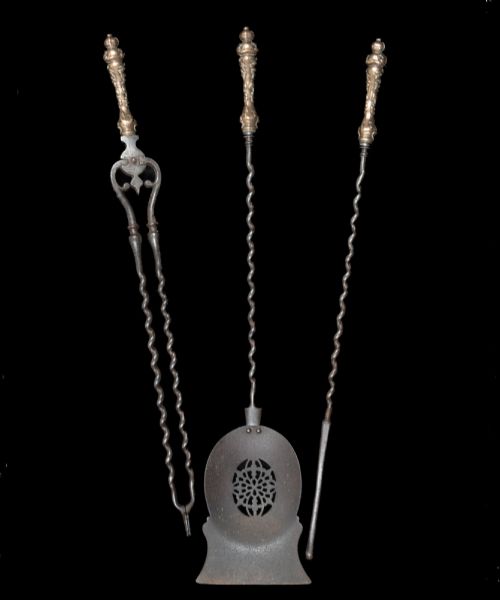
Surface finishing ranges from smooth polished brass to textured rope twist handles and detailed Rococo or Arts and Crafts ornamentation. Metal combinations incorporate gun metal and copper finishes alongside traditional timber elements on specific scuttles and bins.
Vintage Brass Hearth Companion Retail Price Guide 2026
Typical asking prices for vintage brass hearth companion among the pieces listed under this phrase on Sellingantiques today, from the lower quarter to the upper quarter. They describe what is for sale here now, not the wider market.
Materials documented across the inventory include brass, steel, iron, copper, cast iron, gun metal, wood and copper finish.
What varies in quality
Quality rests in the substantial weight of the metal and the integrity of the joins between the handles and the working shafts of the tools. Heavier nineteenth-century pieces demonstrate a more solid construction than lighter twentieth-century variants.
Refinement of detail distinguishes finer examples, visible in crisp casting definition on companion stands, balanced proportions in fire irons and well-preserved original shovels accompanying coal scuttles.
The Vintage Brass Hearth Companion Glossary
- Companion set
- A matched group of fireplace tools, usually including a poker, shovel and tongs, displayed together on a stand or rest. These sets keep hearth maintenance implements organised and accessible.
- Fire irons
- Individual metal implements used for tending a coal or wood fire, comprising pokers, shovels and tongs. They are frequently forged from steel with decorative brass handles.
- Coal scuttle
- A container designed to hold coal for transport to the fireplace, often fashioned from brass or copper with a carrying handle and a matching shovel. Scuttles range from simple bins to Rococo-styled vessels.
- Rococo style
- An ornate decorative design movement characterised by asymmetrical scrollwork, C-scrolls and naturalistic plant motifs. This style appears on companion sets and fire tool handles from later periods.
- Aesthetic Movement
- A late nineteenth-century design focus on visual and material beauty over narrative function. Pieces from this movement display stylised ornamentation and considered craftsmanship.
- Arts and Crafts
- A design movement prioritising traditional handcraftsmanship and honest materials over mass production. Fire irons from this tradition exhibit simplified, robust construction and honest metalwork.
Vintage Brass Hearth Companion: Frequently Asked Questions
What tools come in a set?
A standard companion set includes a poker for adjusting logs or coal, a shovel for clearing ash and tongs for placing fuel. Many sets also incorporate a dedicated stand or a pair of fire dogs to support the tools.
Heavier Victorian and Edwardian examples often include three distinct implements alongside a matching heavy base or rest.
How do I clean brass safely?
Polished brass benefits from gentle dusting and occasional cleaning with a mild, non-abrasive brass cleaner to maintain its lustre. Avoid harsh scouring pads that can scratch the metal surface or remove historic patination.
Steel components on fire tools require light oiling periodically to prevent rust accumulation from damp hearth environments.
Are these tools meant for use?
Most pieces are built from durable brass, steel and iron, making them fully functional for tending an active fireplace. Heavier nineteenth-century iron and steel shafts withstand heat and regular handling with ease.
Some highly decorative examples from the Aesthetic Movement or Rococo style are often displayed primarily for their aesthetic contribution to the room.
How do I date an antique set?
Dating relies on stylistic clues, manufacturing techniques and material combinations recorded across the Victorian, Edwardian and Georgian eras. Earlier eighteenth and early nineteenth-century sets tend to feature heavier steel construction with simpler brass mountings.
Later Victorian and Edwardian pieces frequently showcase elaborate casting, rope twist handles and distinct design movements such as Arts and Crafts or Gothic Revival.