
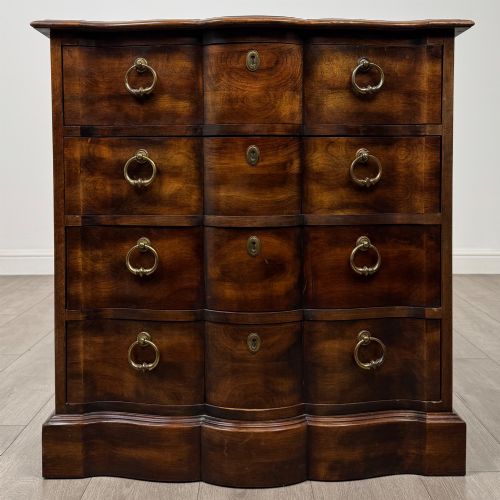
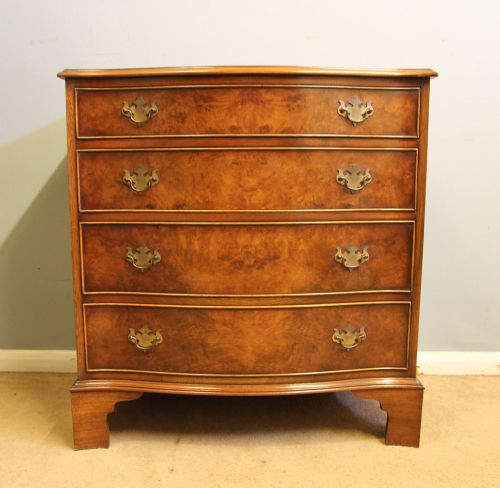
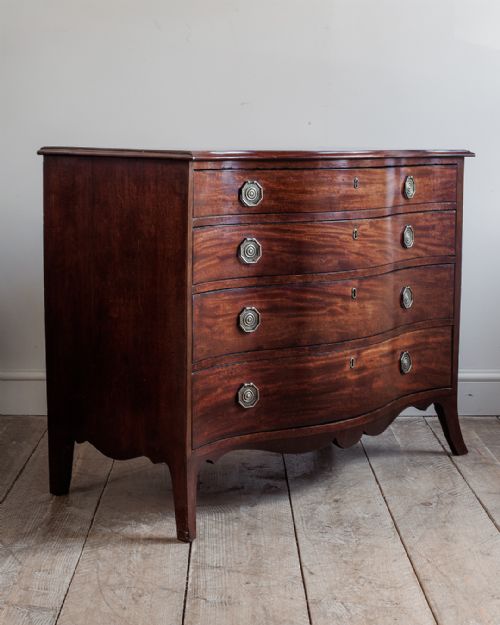
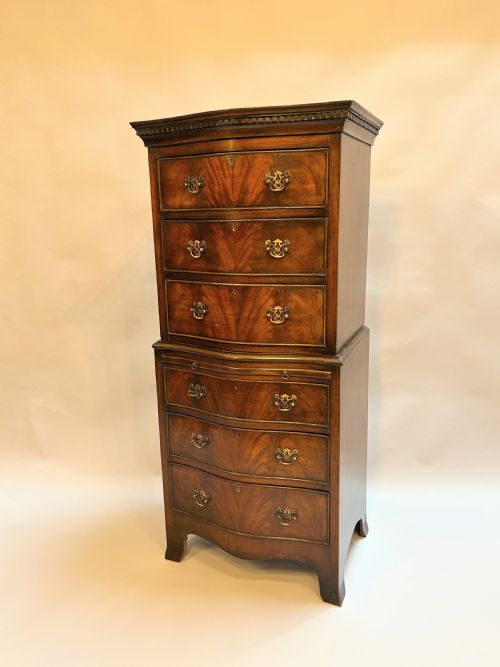
Vintage Brass Front Handle
A vintage brass front handle is typically found mounted to mahogany, oak, or walnut case pieces spanning the Georgian, Regency, and Edwardian periods.
Vintage Brass Front Handle
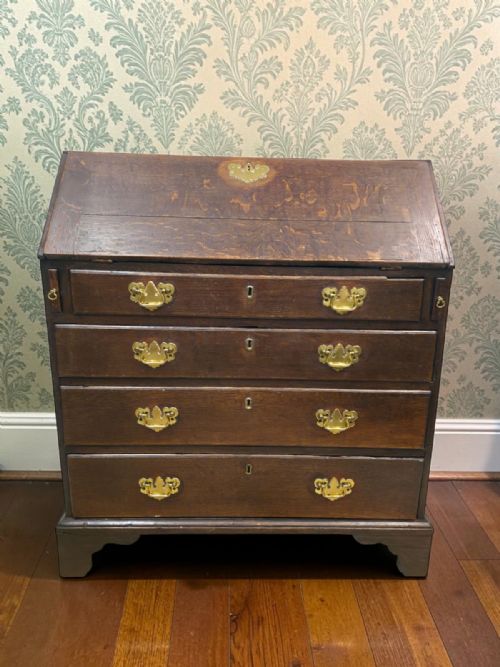
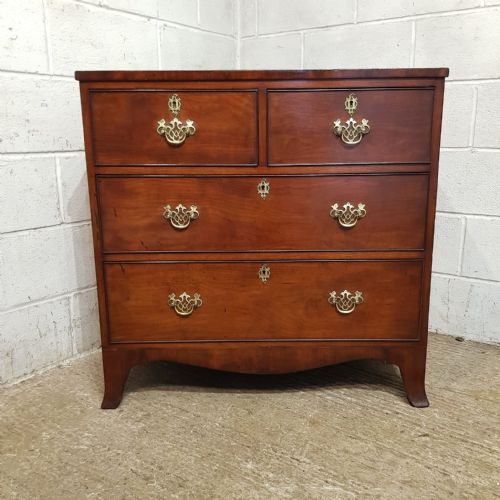
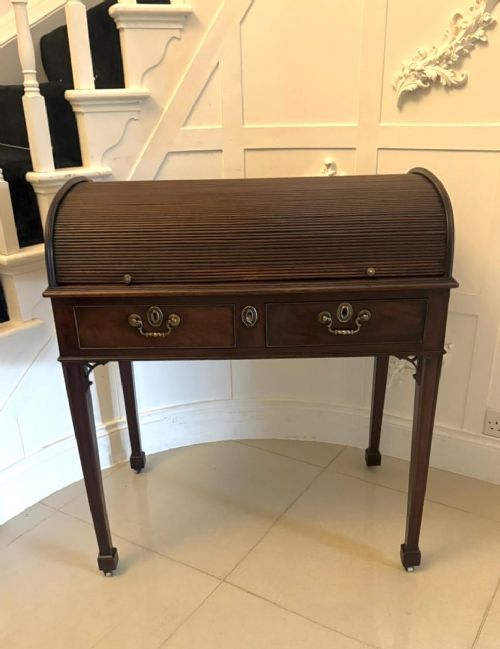
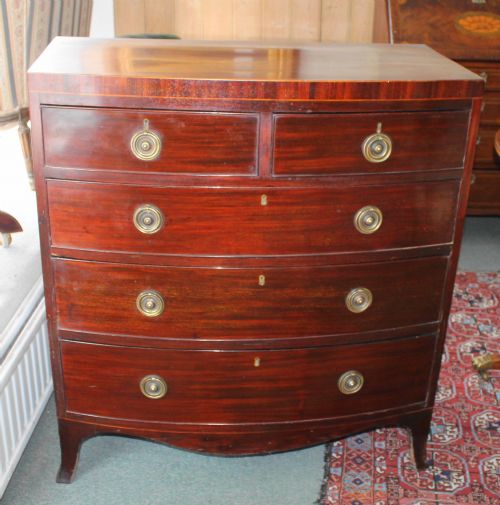
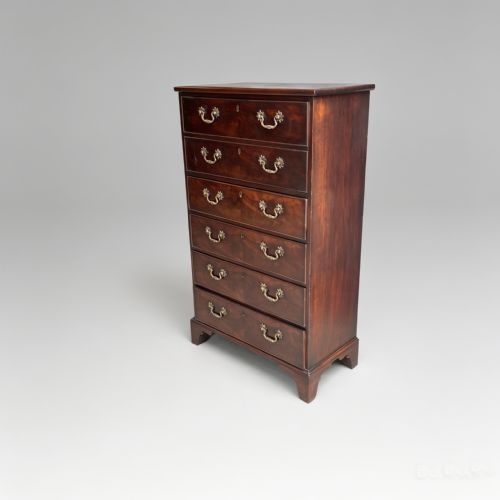
When you search for a vintage brass front handle, you are looking at hardware that secures the drawers of classical case furniture. The pieces on this page mostly take the form of chests of drawers, bureaux, side tables, and cabinets from the eighteenth, nineteenth, and early twentieth centuries.
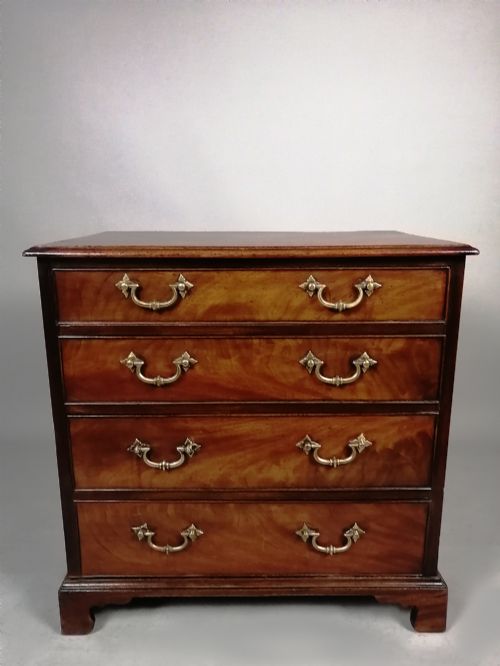
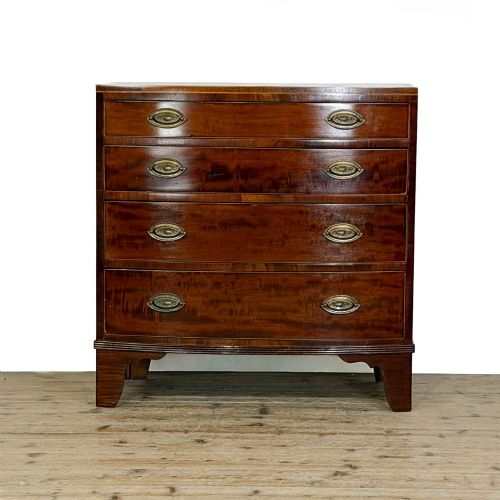
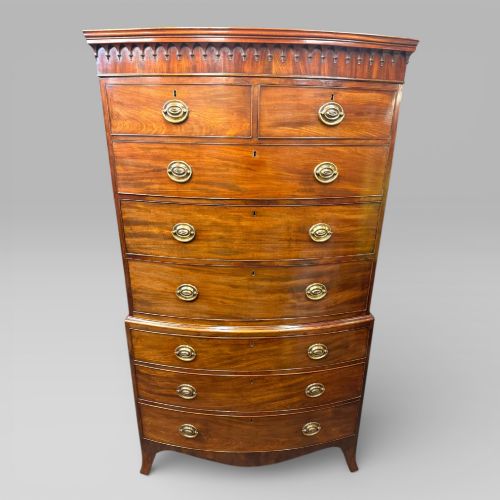
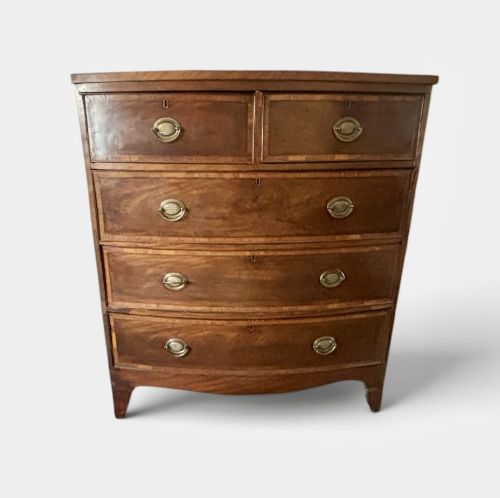
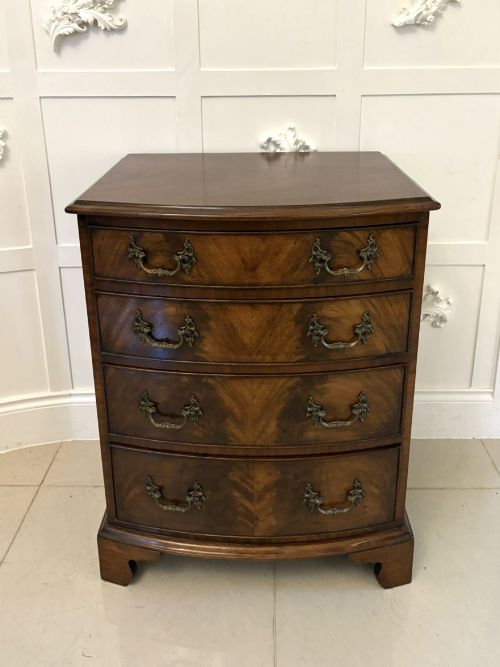
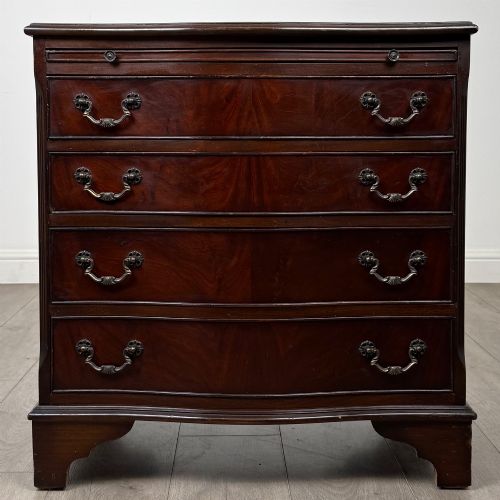
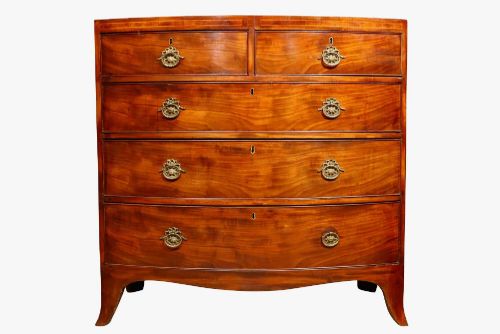
The version you are most likely to meet is a drop handle or pull attached to a mahogany bow front or serpentine chest of drawers. These fixtures provide the functional grip for opening deep drawer boxes constructed in oak or mahogany.
Originating across Georgian, Regency, and Edwardian workshops, these handles punctuate the facades of case furniture built for domestic storage. Their presence defines the visual rhythm of period cabinetry.
How they were made
The hardware itself relies on cast brass, often shaped into oval backplates or drop rings that articulate from central mounting posts. Cabinetmakers secured these through the drawer fronts using threaded pins or wire loops.
The furniture bodies receiving these handles demonstrate traditional cabinetmaking techniques such as oak drawer lining, dovetail joints, and decorative timber veneers including burr walnut, flame mahogany, and satinwood crossbanding.
Selected hardwoods like mahogany and oak form the structural carcasses, shaped into bow fronts or serpentine contours before the brass mounts are fitted to the timber.
Every time you pull a Georgian drawer, a brass ring remembers every hand that opened it since 1790.
What varies in quality
Quality in these items rests upon the crispness of the brass casting and the integrity of its union with the drawer timber. Superior examples exhibit finely detailed backplates and original mounting hardware that sits flush against the polished wood.
The underlying cabinetwork dictates overall merit, separating standard utilitarian storage from high-style pieces featuring figured timber veneers, deliberate grain matching, and meticulous secondary wood selection like oak linings.
Proportion and execution define the hierarchy, where fluent serpentine or bow front curves and well-balanced drawer arrangements elevate the piece far above plain, heavy-handed construction.
The Vintage Brass Front Handle Glossary
- Bow front
- A convex curved cabinet or drawer front that swells outward in the centre. This shape was particularly popular during the Georgian and Regency eras.
- Serpentine
- A wave-like front contour on a chest of drawers, curving outward in the middle and inward at the sides. It demands exceptional skill from the cabinetmaker.
- Crossbanding
- A border technique where thin strips of veneer are laid perpendicular to the grain of the primary surface. It frames the drawer fronts and highlights the brass handles.
- Dovetail
- A joint formed by interlocking wedge-shaped fingers, used to construct sturdy drawer boxes. It is a hallmark of traditional cabinet construction.
- Tallboy
- A tall chest of drawers, often comprising a smaller chest stacked upon a larger base. These pieces provide substantial vertical storage.
Vintage Brass Front Handle: Frequently Asked Questions
What furniture features a vintage brass front handle?
These handles appear predominantly on Georgian, Regency, and Edwardian case furniture, such as mahogany chests of drawers, writing bureaux, and side tables.
They serve as the primary operational hardware for opening drawer boxes across various historical periods.
How do I care for brass handles on antique furniture?
Clean the brass gently with a soft, dry cloth to remove dust without disturbing the aged surface patina.
Avoid harsh chemical polishes that strip historical character from the metalwork and potentially stain the surrounding timber.
Are these handles original to the furniture?
Many pieces retain their period brass hardware, though replacements and period-appropriate restorations do occur in antique cabinetry.
Examining the interior of the drawer front often reveals the original mounting impressions and pin holes.
What woods support these brass handles?
The primary woods framing these handles include figured mahogany, oak, walnut, and burr walnut with occasional satinwood banding.
Secondary timbers like oak commonly line the interior drawer boxes behind the brass facades.